The Devil's Pulpit
A blood-red gorge steeped in dark folklore, where ancient stone and rushing water create Scotland's most atmospheric natural wonder.
The Geology and Mystique of Finnich Glen
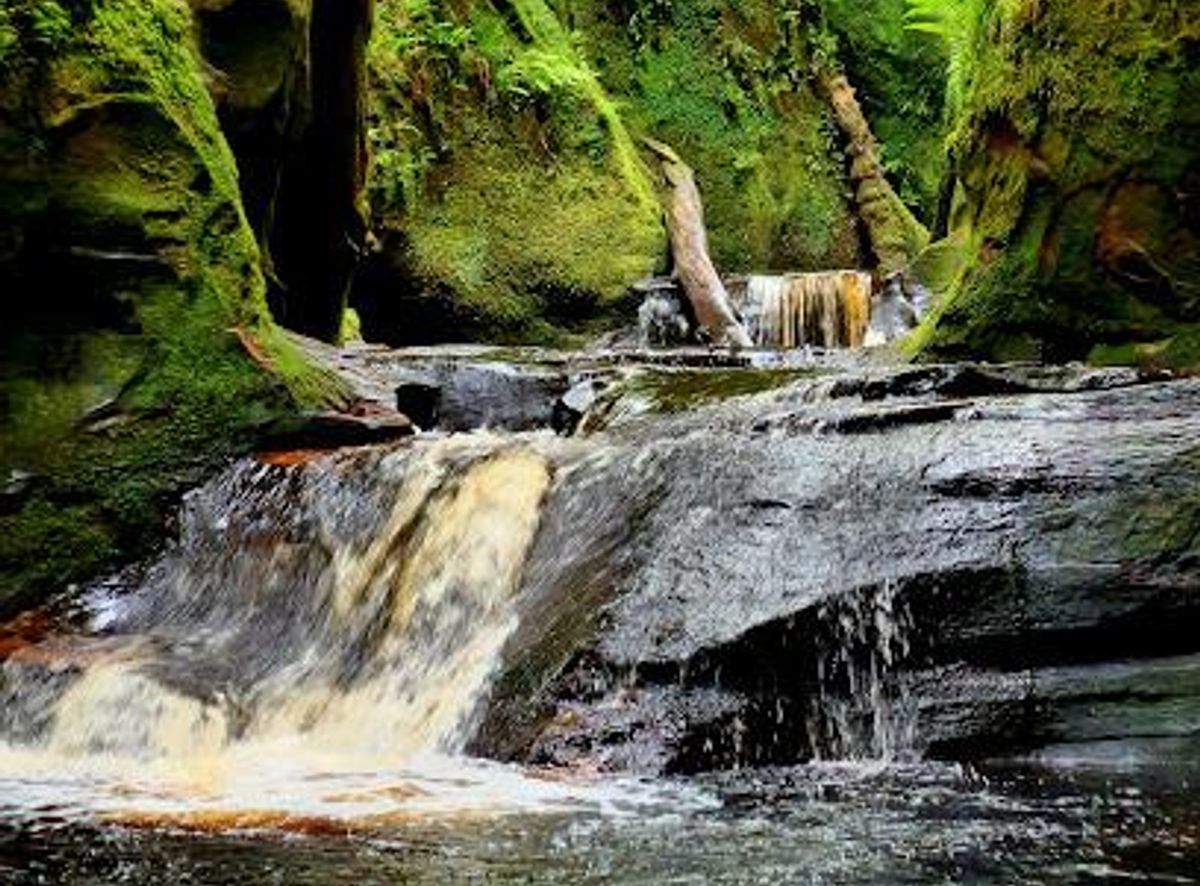
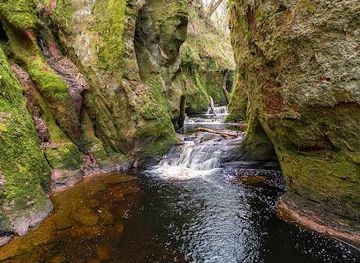
The Devil's Pulpit sits within Finnich Glen, a spectacular 100-foot-deep gorge carved through red sandstone near the village of Drymen, north of Glasgow. The gorge's most distinctive feature is the blood-red hue of its rushing water—a phenomenon caused by the underlying red sandstone rather than any supernatural force, though local legend suggests otherwise. The water's crimson appearance has captivated visitors for centuries and fueled the dark mythology surrounding this place. At the heart of the glen stands the namesake formation: a mushroom-shaped rock that juts above the stream. This distinctive stone is the original "Devil's Pulpit," though over time the entire gorge has come to bear the name. The pulpit itself rises as a natural platform within the gorge, accessible only by wading through the stream or scrambling across moss-covered rocks and ledges.Folklore, Legend, and Dark History
The Devil's Pulpit carries a rich tapestry of folklore that adds to its eerie atmosphere. Local legend claims that Satan himself once stood upon the pulpit, commanding his followers to commit terrible acts upon the surrounding communities—and that the water turned red as a manifestation of this evil. Beyond Satanic tales, the glen has been associated with Druidic rituals, witches' gatherings, and secret meetings held in the shadows of its towering walls. Some accounts suggest the pulpit served as an execution block for witches, while others describe it as a sacred meeting place for ancient peoples seeking refuge in its hidden depths. These stories have made the Devil's Pulpit a place of intrigue and mystery, attracting those drawn to Scotland's darker folklore and hidden histories. The combination of the gorge's dramatic natural features and its legendary past creates an atmosphere that feels genuinely otherworldly.The Descent and Physical Experience
Reaching the Devil's Pulpit itself requires commitment and careful navigation. From the parking area, visitors walk approximately 5–10 minutes along a well-worn path that follows the south side of the gorge through dense forest. The path is generally clear but unmarked, with no protective fencing—the drop to the gorge below is substantial. The journey culminates at "Jacob's Ladder," a steep stone staircase descending into the glen itself. These steps are carved directly into the rock and can be slippery, particularly after rain, requiring careful footing and use of the attached cables. Once at the base of the gorge, visitors must wade through the stream to approach the pulpit itself. The water typically reaches knee-height or higher, making waterproof waders or a willingness to get thoroughly soaked essential. The moss-covered rocks and ledges along the stream bed are slick and unstable. The gorge walls tower overhead, creating a cathedral-like space where sound echoes and the air feels thick with atmosphere. The red water swirls around the pulpit stone, and multiple small waterfalls cascade down the back wall of the gorge, adding to the sense of being in a place apart from the ordinary world.Cultural Significance and Modern Recognition
In recent years, the Devil's Pulpit has gained wider recognition beyond local knowledge. It featured as "Liar's Spring" in the television series Outlander, introducing the location to a global audience. The gorge also appeared in the 2019 film Detective Pikachu, further cementing its place in contemporary popular culture. Despite this increased attention, the site remains relatively undeveloped and unmarked—there are no official signs, visitor facilities, or formal infrastructure. This lack of commercialization preserves the location's wild, untamed character and sense of discovery.The Landscape and Surrounding Environment
The Devil's Pulpit sits just south of Loch Lomond and The Trossachs National Park, positioning it at the threshold between Scotland's lowlands and highlands. The surrounding countryside transitions rapidly from Glasgow's urban sprawl to dense woodland and open moorland. The gorge itself is a pocket of primordial wilderness—moss clings to every surface, ferns unfurl from crevices, and the constant sound of rushing water fills the air. The red sandstone walls, weathered and ancient, seem to absorb light, creating shadows that deepen the sense of mystery. Visitors often describe the atmosphere as simultaneously beautiful and unsettling, peaceful yet charged with an indefinable energy.Local tips
- Arrive early or late in the day to secure parking—the small designated area fills quickly, especially on weekends. Do not park at the B834 intersection as it is now marked for emergency vehicles only.
- Wear waterproof waders or be prepared to wade through knee-high water. Bring extra clothing and a dry bag for valuables. Hiking boots alone are insufficient; the stream bed is slippery and deep.
- Use the cables attached to Jacob's Ladder carefully, especially after rain when the stone steps become extremely slippery and dangerous. Move slowly and deliberately.
- The gorge has no protective fencing and the drop is significant. Stay on marked paths and do not venture beyond safe areas. The location is on private land and remains largely unmarked.
- Visit during daylight hours and check weather forecasts beforehand. The gorge can become treacherous in heavy rain or frost. Mobile signal is unreliable in the glen itself.
A brief summary to The Devil's Pulpit
- A809 &, B834, Glasgow, G63 9QJ, GB
- Monday 12 am-12 am
- Tuesday 12 am-12 am
- Wednesday 12 am-12 am
- Thursday 12 am-12 am
- Friday 12 am-12 am
- Saturday 12 am-12 am
- Sunday 12 am-12 am
Getting There
-
By Car from Glasgow
From Glasgow city centre, follow the A809 road northwest through Bearsden and continue for approximately 30 minutes until you reach the intersection with the B834 near Craighat. There is a small designated parking area at this intersection with space for approximately three vehicles. Alternatively, a lay-by exists further back on the A809. Parking is extremely limited and fills quickly during peak hours. The drive covers roughly 20 miles and takes 30–40 minutes depending on traffic.
-
By Car from Edinburgh
From Edinburgh city centre, follow the A90 and Maybury Road to Glasgow Road (A8), then join the M9 motorway. Exit onto the A811, then continue to the A81 toward Stirling. From Stirling, take the B834 toward the intersection with the A809. The total journey is approximately 90 minutes covering roughly 50 miles. This route passes through central Scotland and offers views of the surrounding landscape.
-
By Public Transport and Walking
First Scotland East operates the X10 bus service from Glasgow, which stops in Killearn, approximately 2 miles from the Devil's Pulpit. Bus services are infrequent, so check schedules in advance. From Killearn, you can walk or cycle to the location. Alternatively, guided tours departing from Glasgow include round-trip transport and a guide to navigate the site. Tour options typically cost between £100–£150 per person and last 3–4 hours.
-
By Bicycle and Bus Combination
Several bus routes pass within easy cycling distance of the Devil's Pulpit. You can take a bus to a nearby village and cycle the remaining distance. This option works well for those comfortable with cycling on rural roads. The approach roads have limited pedestrian infrastructure and fast-moving traffic, so cycle defensively and stay alert.