Blantyre Monument Travel Guide
Free Guide: An 80-foot obelisk in Bishopton honoring Major-General Robert Walter Stuart, the 11th Lord Blantyre, and his Napoleonic War legacy.


A brief summary of Blantyre Monument
An 80-foot obelisk in Bishopton honoring Major-General Robert Walter Stuart, the 11th Lord Blantyre, and his Napoleonic War legacy.
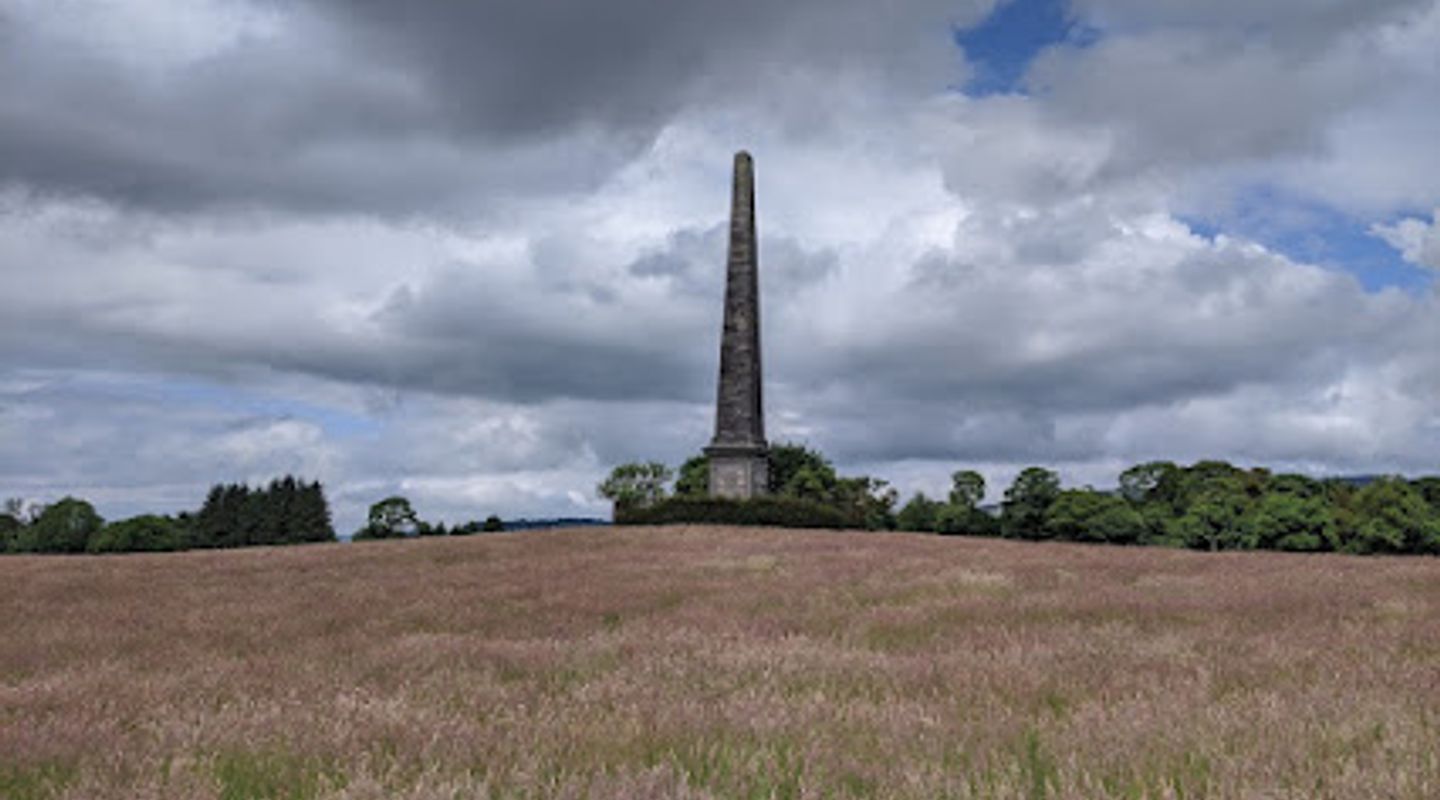
The Blantyre Monument is an 80-foot high obelisk located in Bishopton, Renfrewshire, commemorating Major-General Robert Walter Stuart, the 11th Lord Blantyre. Erected around 1825 and designed by architect William Burn, this historic landmark honors Lord Blantyre’s military service during the Napoleonic Wars alongside the Duke of Wellington. The monument stands prominently near Erskine Golf Course on private farmland and offers a glimpse into Scotland’s rich aristocratic and military heritage.
On-site amenities
 Information boards
Opening hours
- Every dayOpen 24 hours
Opening hours as listed on the venue’s Google Business Profile. Hours can change for services and special events, so check with the venue before you go.
- Address
- Renfrewshire, Bishopton PA7 5PN
Getting there
Car
Bus
Walking
Discover more about Blantyre Monument
A Monument Honoring Military Valor and Aristocratic Heritage
The Blantyre Monument was erected circa 1825 as a memorial to Robert Walter Stuart, the 11th Lord Blantyre, a Major-General in the British Army who served with distinction during the Napoleonic Wars from 1803 to 1815. The 80-foot high obelisk, designed by renowned architect William Burn, stands on a square base and commands a prominent position near Erskine Ferry Road in Bishopton, Renfrewshire. It commemorates Lord Blantyre’s military achievements and his role in Scotland’s aristocratic history.
Historical Context and Local Significance
Lord Blantyre was a notable figure in the early 19th century, living at Erskine House (now Mar Hall Hotel) and serving as the Laird of Erskine. Beyond his military career, he was a benefactor to the local community, having gifted the site and contributed to the construction of the nearby Bishopton Parish Church. The monument’s location near the old crossing point at Dumbuck Ford on the River Clyde suggests historical ties to ancient travel routes and possibly early Christian mission stations.
Architectural Features and Setting
The monument’s obelisk form reflects the neoclassical style popular in memorial architecture of the period. Its height and slender silhouette make it a distinctive landmark visible across the surrounding farmland and golf course. Although situated on private land, the monument can be admired from the roadside, offering visitors a striking visual connection to Scotland’s military past. The craftsmanship and enduring condition of the monument underscore its cultural and architectural value.
Connection to the Blantyre Family Legacy
The Blantyre family played a significant role in the region’s history, with members serving as ministers and landowners dating back to the 16th century. The monument’s coat-of-arms and its proximity to the church gifted by Lord Blantyre highlight the family’s lasting influence on local heritage. Stories suggest that some of the monument’s construction labor may have involved French prisoners from the Napoleonic Wars, adding a layer of historical intrigue, though this remains unverified.
Visitor Experience and Surrounding Landscape
While direct access to the monument is limited due to its location on private farmland, visitors can appreciate its imposing presence from nearby public roads. The surrounding landscape of rolling fields and the adjacent Erskine Golf Course create a tranquil rural setting. The monument stands as a quiet sentinel to Scotland’s martial history, inviting reflection on the sacrifices and legacies of its military leaders.
Preservation and Cultural Importance
Maintained in good condition, the Blantyre Monument is a Category B listed structure, recognized for its historical and architectural significance. It serves as a tangible link to Scotland’s Napoleonic era and the aristocratic families who shaped the region. The monument’s preservation ensures that future generations can continue to engage with this emblem of Scottish heritage and military honor.
Evendo Review Centre
 Google
Guest reviews
Best time to go
Quietest: Jan, Feb & Dec · before 7am or at 8pm
Busy times are Evendo estimates for a typical year, to help you plan. Actual crowds vary with events, school holidays and the weather.
Explore Blantyre Monument on the map
A handpicked selection of must-see spots near Blantyre Monument, mapped for you.
Get your free copy of our complete guide to Blantyre Monument, delivered straight to you.
Everything on this page, from opening hours and how to get there to Eve’s tips and the best time to go, in one PDF you can read offline, print or share.
Already have an account? Sign in
Your Blantyre Monument guide is ready.
We'll send it to · Not you? Sign out

Getting your guide ready…
We are putting together a fresh copy of the Blantyre Monument guide. This can take up to a minute.
This can take a few moments. If your browser asks, choose Allow so the download can start. You'll find the guide in your Downloads folder.
Nothing happened? Download it again
Sorry, the guide is taking longer than usual. Please try again in a minute, or get it by email instead.
Other nearby places you may find interesting
The closest places of the same kind, if this one is not quite what you had in mind.
-
Inchcailloch burial ground Discover Inchcailloch Burial Ground: a sacred island sanctuary blending ancient Gaelic heritage, clan history, and tranquil natural beauty in Loch Lomond.
-
McLennan Arch A classical triumphal arch standing proudly at Glasgow Green, symbolizing the city’s rich heritage and architectural elegance.
Swipe for more places
More to explore near Blantyre Monument

 Best experiences near Blantyre Monument
 Best hotels near Blantyre Monument
 Best landmarks near Blantyre Monument
 Best attractions near Blantyre Monument
 Best shops near Blantyre Monument
 Best restaurants near Blantyre Monument
 Best bars near Blantyre Monument
Do you manage this location?
Take control to get all the benefits, like improved information, better appearance, and stronger visibility across AI-powered discovery.
Explore more

Explore more of Dunbartonshire
Discover the historic charm and natural beauty of Dunbartonshire, Scotland's hidden gem. Perfect for history enthusiasts and nature lovers seeking a serene escape.
Explore Dunbartonshire
Explore more of United Kingdom
Discover the United Kingdom: A blend of rich history, stunning landscapes, and vibrant cities, offering a unique travel experience for every visitor.
Explore United Kingdom