George Square, Glasgow Travel Guide
Free Guide: Glasgow's grand civic square where imperial architecture, historic monuments, and vibrant public life converge.


A brief summary of George Square
Glasgow's grand civic square where imperial architecture, historic monuments, and vibrant public life converge.
George Square is Glasgow's principal civic space, a grand public square named after King George III and laid out in 1781. Surrounded by architecturally significant buildings including the palatial City Chambers and the Merchants' House, the square showcases an impressive collection of statues and monuments dedicated to famous Scots such as Robert Burns, James Watt, Sir Robert Peel, and Sir Walter Scott. Originally developed as an elegant residential square, it has evolved into the heart of Glasgow's civic identity and a focal point for cultural events and celebrations throughout the year.
On-site amenities
 Restrooms
 Drink options
 Food options
 Seating areas
 Information boards
 Trash bins
Opening hours
- Every dayOpen 24 hours
Opening hours as listed on the venue’s Google Business Profile. Hours can change for services and special events, so check with the venue before you go.
- Address
- Glasgow G2 1DH
- Website
Getting there
Public Transport (Subway)
Train
Bus
Walking
Discover more about George Square
From Swampland to Civic Heart
George Square's transformation from humble origins to Glasgow's most prestigious public space is a remarkable story of urban development and civic ambition. In the early 1770s, the site was nothing more than swampy ground belonging to Ramshorn Croft, filled with stagnant green water and used as a place to slaughter horses. Around 1772, Glasgow Corporation purchased this unpromising land with a vision to create something grand. After nearly a decade of preparation work, the square was formally laid out in 1781 and named after King George III, though the original plan to erect a statue of the monarch in the centre was quietly abandoned following American independence and the loss of Glasgow's lucrative tobacco trade.The square opened to the public in 1787, initially as a private residential enclave with elegant townhouses surrounding a central garden. By 1804, the buildings—particularly those on the north side—were being described as exceptionally elegant, surpassing any other structures in the city or indeed in Scotland. The development was driven by influential figures like Dugald Bannatyne, a stocking weaver who, along with partners Robert Smith Jr. and John Thomson, formed the Glasgow Building Company and attracted English capital to fund their ambitious venture.
Imperial Grandeur and Architectural Distinction
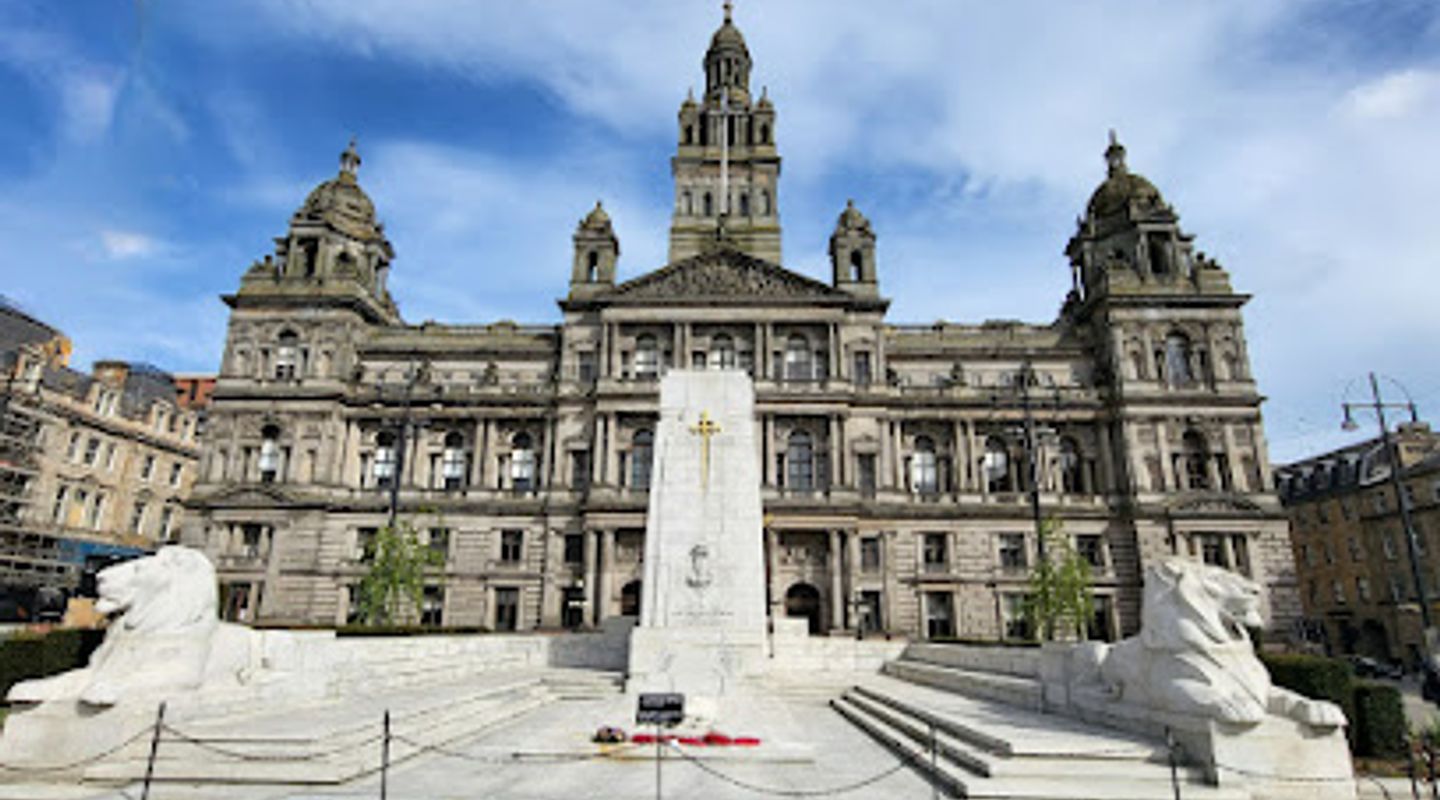
The architectural character of George Square reflects Glasgow's rise as the Second City of the British Empire. The east side is dominated by the palatial City Chambers, a five-storey masterpiece designed by architect William Young. Its foundation stone was laid on 6 October 1883 in a grand ceremony that drew 600,000 people to the square, and the building was completed in 1889. The structure's pediment originally was designed to depict Glasgow with the Clyde at her feet, but this was changed to commemorate Queen Victoria's jubilee, instead showing the monarch with representations of England, Scotland, Ireland, and Wales, alongside figures representing India, Africa, and other colonial territories. The building remains the headquarters of Glasgow City Council and stands as a monument to the city's imperial prosperity.On the west side stands the Merchants' House, a building with deep roots in Glasgow's commercial heritage. Originally constructed in 1775 as the city home of William Cunninghame, one of the famous Tobacco Lords, it was redesigned by architect John Burnet and opened in its current form in 1874. Two additional storeys topped by a distinctive domed tower were added by J.J. Burnet in 1907. The tower is crowned with an emblem of a ship on a globe, a powerful symbol of the sea trade that built Glasgow's wealth. The building also houses the Glasgow Chamber of Commerce, founded in 1783.
Monuments, Memorials, and Civic Memory
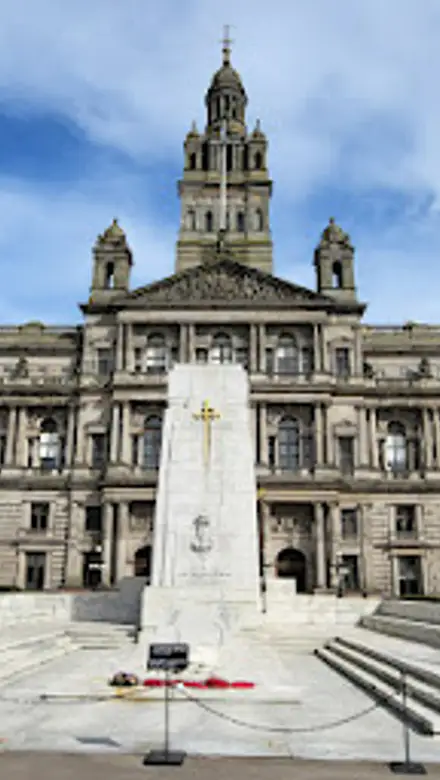
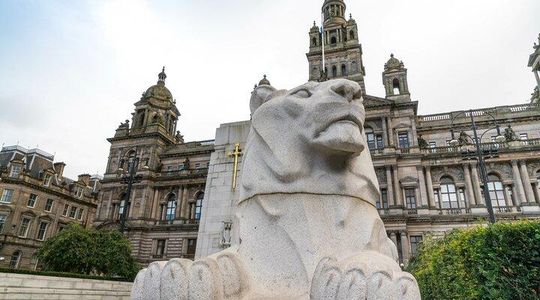
George Square functions as a repository of Glasgow's historical memory, anchored by an extraordinary collection of statues and monuments. The first statue, erected in 1819, commemorated Sir John Moore of Corunna, a military officer. The most iconic monument is the 80-foot-tall column in the centre of the square, completed by 1837, which honours the celebrated author Sir Walter Scott. This striking structure acts as a giant sundial and serves as a focal point for the square's classical composition.The square contains ten statues of notable Scottish figures, including Robert Burns, James Watt, and Sir Robert Peel, alongside equestrian statues of Queen Victoria and Prince Albert. The Glasgow Cenotaph, designed by Sir John James Burnet and unveiled in 1924 by Field Marshal Earl Haig, stands directly in front of the City Chambers. This solemn memorial commemorates the approximately 20,000 Glaswegians killed during the First World War, out of some 200,000 who enlisted. The Cenotaph marks the historic spot where soldiers were recruited and marched off to war, and where returning soldiers took the salute. Each year, the square hosts an Annual Remembrance Ceremony where veterans, civic leaders, and clergy lay wreaths at the Stone of Remembrance.
Evolution into a Public Gathering Space
The transformation of George Square from private residential enclave to public civic space accelerated in the 19th century. In 1825, the city undertook significant improvements, adding winding paths, trees, shrubs, and an iron fence that made the square a pleasant destination for walks and even flower shows. In 1862, Glasgow Corporation assumed management of the square. When the Post Office foundation stone was laid by the Prince of Wales in 1878, the square's iron railings were removed, transverse walks were formed, and flower beds were introduced, opening the space more fully to public use. By 1876, the private gardens had been opened to the public, democratising access to this once-exclusive space.The square's role as Glasgow's hotel centre began in 1842 when the Edinburgh and Glasgow Railway Company opened a rail link between Queen Street and Haymarket in Edinburgh, spurring the construction of numerous hotels around the square. This development cemented George Square's position as a major destination for visitors and commerce.
Contemporary Significance and Cultural Events
Today, George Square remains the vibrant heart of Glasgow's civic identity and a focal point for major cultural events throughout the year. The square hosts celebrations including Piping Live!, Glasgow Loves Christmas, and numerous other festivals and gatherings that draw thousands of residents and visitors. Its iconic architecture and open space have made it a popular location for film and television productions, including memorable scenes from period dramas. The square continues to serve as a backdrop for commercial events and promotional activities, reinforcing its status as Glasgow's most recognisable public space and a symbol of the city's enduring heritage and dynamic present.
Evendo Review Centre
 Google
Guest reviews
Best time to go
Quietest: Jan, Feb & Mar · before 6am or from 11pm
Busy times are Evendo estimates for a typical year, to help you plan. Actual crowds vary with events, school holidays and the weather.
Explore George Square on the map
A handpicked selection of must-see spots near George Square, mapped for you.
Get your free copy of our complete guide to George Square, delivered straight to you.
Everything on this page, from opening hours and how to get there to Eve’s tips and the best time to go, in one PDF you can read offline, print or share.
Already have an account? Sign in
Your George Square guide is ready.
We'll send it to · Not you? Sign out

Getting your guide ready…
We are putting together a fresh copy of the George Square guide. This can take up to a minute.
This can take a few moments. If your browser asks, choose Allow so the download can start. You'll find the guide in your Downloads folder.
Nothing happened? Download it again
Sorry, the guide is taking longer than usual. Please try again in a minute, or get it by email instead.
Unlock the best of George Square
Skip-the-line tickets, guided tours with entry, and walking tours of the area, booked in a few clicks.




Other nearby places you may find interesting
The closest places of the same kind, if this one is not quite what you had in mind.
-
-
-
-
-


Swipe for more places
More to explore near George Square

 Best experiences near George Square
 Best hotels near George Square
 Best landmarks near George Square
 Best attractions near George Square
 Best shops near George Square
 Best restaurants near George Square
 Best bars near George Square
Do you manage this location?
Take control to get all the benefits, like improved information, better appearance, and stronger visibility across AI-powered discovery.
Explore more

Explore more of Glasgow
Discover Glasgow, Scotland's cultural capital, where history, architecture, and vibrant arts scene meet, offering a unique and unforgettable travel experience.
Explore Glasgow
Explore more of United Kingdom
Discover the United Kingdom: A blend of rich history, stunning landscapes, and vibrant cities, offering a unique travel experience for every visitor.
Explore United Kingdom