Broomhill Viaduct Travel Guide
Free Guide: Scotland’s tallest railway viaduct, a towering industrial icon and historic marvel in Larkhall’s landscape.


A brief summary of Broomhill Viaduct
Scotland’s tallest railway viaduct, a towering industrial icon and historic marvel in Larkhall’s landscape.
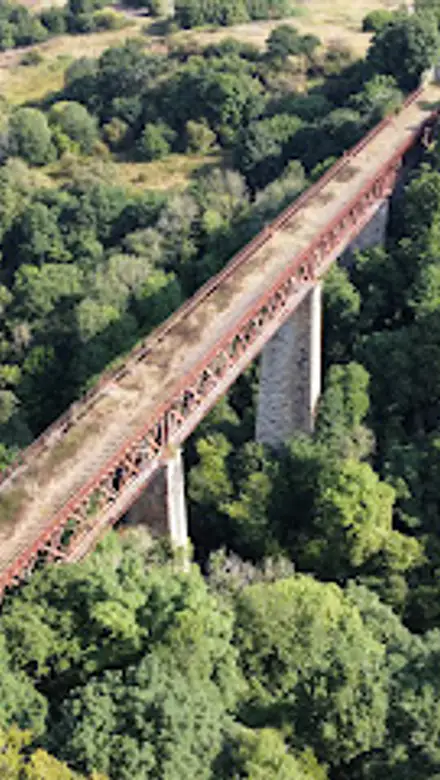
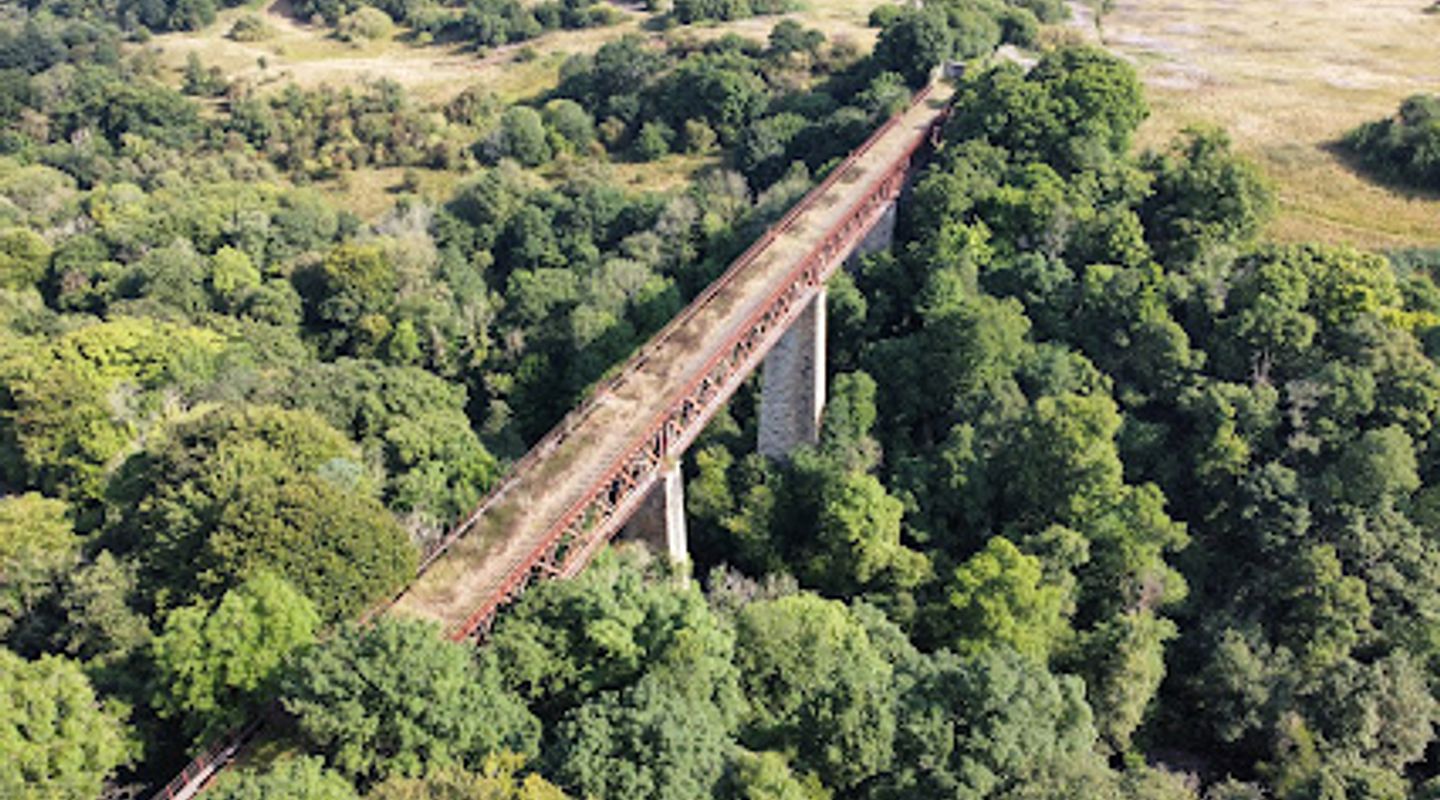
The Broomhill Viaduct, also known as the Larkhall or Morgan Glen Viaduct, is a historic railway structure in Larkhall, Scotland. Built between 1898 and 1904 by Sir William Arrol & Co. for the Caledonian Railway, it spans 285 yards and rises 175 feet above the Avon Water, making it the tallest viaduct in Scotland. Though no longer in use and closed for safety, its striking industrial heritage and dramatic height dominate the local landscape.
On-site amenities
 Restrooms
 Drink options
 Food options
 Seating areas
 Information boards
- Address
- Millheugh Rd, Larkhall ML9 1QZ
- Website
Getting there
Train and Bus Combination
Car Travel
Walking from Larkhall Town Centre
Discover more about Broomhill Viaduct
Engineering Marvel of the Early 20th Century
Constructed over six years from 1898 to 1904, the Broomhill Viaduct was engineered by the renowned Arrol Brothers of Glasgow for the Caledonian Railway company. This impressive structure was part of a railway extension connecting Larkhall to Stonehouse, designed initially as a single line but built to accommodate two tracks. The viaduct stretches approximately 285 yards (261 meters) and towers 175 feet (53 meters) above the Avon Water, making it the highest railway bridge in Scotland and the second highest in Britain. Its central masonry piers were sunk deep into concrete bases for stability, reflecting the advanced engineering techniques of the period.
Historical Significance and Railway Legacy
The viaduct was a critical link in the Caledonian Railway’s mid-Lanarkshire and Ayrshire network, facilitating passenger and freight transport from its opening in 1905 until regular passenger services ceased in 1965. Afterward, it served trains to the nearby Auchlochan Colliery until 1968 when it was officially closed. Despite its disuse, the viaduct remains a powerful symbol of Scotland’s industrial heritage and railway history, standing as a testament to early 20th-century infrastructure development.
Architectural Features and Construction Details
The viaduct’s steelwork was manufactured by the Arrol’s Bridge and Roof Company, with construction led by contractor A H Boyle of Glasgow. Its spans are supported by massive granite bearing blocks and steel girders riveted together with precision. The structure underwent rigorous testing in 1905, including a load test with twelve engines weighing approximately 780 tons, which it passed without detectable vibration, underscoring its robust design.
Current Condition and Preservation Efforts
Since the railway line closure, the Broomhill Viaduct has fallen into a state of disrepair and is closed to public access for safety reasons. In the 1990s, it faced threats of demolition but was saved by local heritage groups advocating for its preservation. It is now a Category B listed structure and is included on the Buildings at Risk Register for Scotland, highlighting both its cultural importance and the urgent need for conservation.
Local Legends and Cultural Context
The viaduct is closely linked with local lore, including stories of the 'Black Lady' ghost associated with nearby Broomhill House. This haunting tale adds a layer of mystique to the site, enriching its cultural narrative. The viaduct’s imposing presence over the Avon Water and its connection to Larkhall’s industrial past make it a poignant landmark within the community.
Visual Impact and Visitor Experience
From vantage points around Larkhall, the viaduct offers striking panoramic views of the surrounding landscape and the Avon Water below. Its towering height and industrial aesthetic provide excellent photographic opportunities, especially for those interested in historic engineering and railway architecture. While access is restricted, the viaduct can be admired from nearby roads and paths, where its scale and craftsmanship remain impressive.
Evendo Review Centre
 Google
Guest reviews
Best time to go
Quietest: Jan, Feb & Dec · before 6am or at 10pm
Busy times are Evendo estimates for a typical year, to help you plan. Actual crowds vary with events, school holidays and the weather.
Explore Broomhill Viaduct on the map
A handpicked selection of must-see spots near Broomhill Viaduct, mapped for you.
Get your free copy of our complete guide to Broomhill Viaduct, delivered straight to you.
Everything on this page, from opening hours and how to get there to Eve’s tips and the best time to go, in one PDF you can read offline, print or share.
Already have an account? Sign in
Your Broomhill Viaduct guide is ready.
We'll send it to · Not you? Sign out

Getting your guide ready…
We are putting together a fresh copy of the Broomhill Viaduct guide. This can take up to a minute.
This can take a few moments. If your browser asks, choose Allow so the download can start. You'll find the guide in your Downloads folder.
Nothing happened? Download it again
Sorry, the guide is taking longer than usual. Please try again in a minute, or get it by email instead.
Other nearby places you may find interesting
The closest places of the same kind, if this one is not quite what you had in mind.
-
-
-
-
-


Swipe for more places
More to explore near Broomhill Viaduct

 Best experiences near Broomhill Viaduct
 Best hotels near Broomhill Viaduct
 Best landmarks near Broomhill Viaduct
 Best attractions near Broomhill Viaduct
 Best shops near Broomhill Viaduct
 Best restaurants near Broomhill Viaduct
 Best bars near Broomhill Viaduct
Do you manage this location?
Take control to get all the benefits, like improved information, better appearance, and stronger visibility across AI-powered discovery.
Explore more

Explore more of Lanarkshire
Discover Lanarkshire: Where Scotland's rich history, stunning landscapes, and vibrant local culture come together for an unforgettable travel experience.
Explore Lanarkshire
Explore more of United Kingdom
Discover the United Kingdom: A blend of rich history, stunning landscapes, and vibrant cities, offering a unique travel experience for every visitor.
Explore United Kingdom