Strathaven Castle Travel Guide
Free Guide: Discover the haunting ruins of Strathaven Castle, a 15th-century fortress steeped in history, legend, and Scottish heritage.


A brief summary of Strathaven Castle
Discover the haunting ruins of Strathaven Castle, a 15th-century fortress steeped in history, legend, and Scottish heritage.
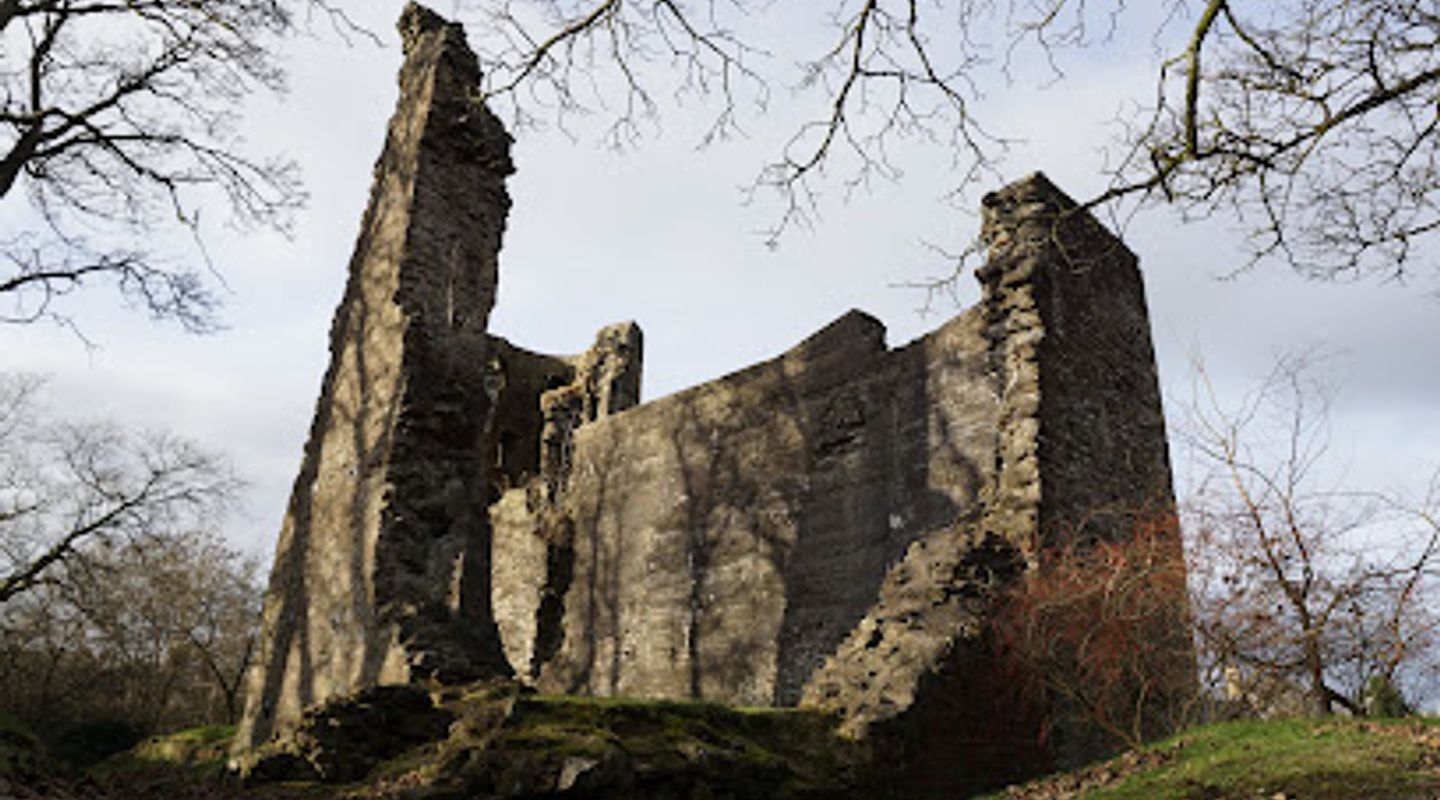
Strathaven Castle, located in the heart of Strathaven, South Lanarkshire, is a ruined 15th-century fortress perched on a rocky mound beside the Powmillon Burn. Originally built around 1350 by the Baird family, the castle has a rich history involving the Earls of Douglas and the Hamilton family. Though largely ruined by conflict, weather, and quarrying, it retains evocative remains including a north wall and tower. Legends of secret passages and a walled-up lady add to its mysterious allure.
On-site amenities
 Seating areas
 Information boards
Opening hours
- Every dayOpen 24 hours
Opening hours as listed on the venue’s Google Business Profile. Hours can change for services and special events, so check with the venue before you go.
- Address
- Stonehouse Rd, Strathaven ML10 6FF
- Website
Getting there
Bus
Car
Walking
Discover more about Strathaven Castle
Origins and Early Fortifications
Strathaven Castle stands on a partly natural, partly artificial rocky mound, strategically defended on three sides by the steep banks of the Powmillon Burn. The earliest fortification on the site likely dates back to the late 12th or early 13th century, initially a wooden tower surrounded by earthworks. Around 1350, the Baird family replaced this with the first stone castle, a narrow rectangular structure with towers at the north-west and south-east corners. This early castle featured a central keep rising five storeys high with thick walls and battlements, surrounded by an outer courtyard wall with turrets.
Political Turmoil and Rebuilding
Ownership passed through several families, including the Sinclairs and Murrays, before the powerful Earls of Douglas took possession. In 1455, King James II suppressed the Black Douglases amid fears of their growing power, resulting in Strathaven Castle being sacked and largely destroyed. The barony was then granted to Sir Andrew Stewart, Lord Avondale, who rebuilt or constructed the castle whose ruins remain today. The castle was further strengthened in the 16th century under the Hamilton family, who acquired it in 1534 and maintained it until the early 18th century.
Decline, Legends, and Ruination
The last resident, Anne, Duchess of Hamilton, lived there until her death in 1716, after which the castle was abandoned. Natural disasters further damaged the structure: lightning struck in 1736, and a storm in 1737 blew off the roof. In the 18th and 19th centuries, locals quarried stone from the ruins for building projects, and the castle served as a marketplace and courthouse. A notable legend tells of a lady of the house who was walled up alive within the castle walls, with human bones reportedly found in the 19th century supporting this chilling tale.
Architectural Features and Conservation
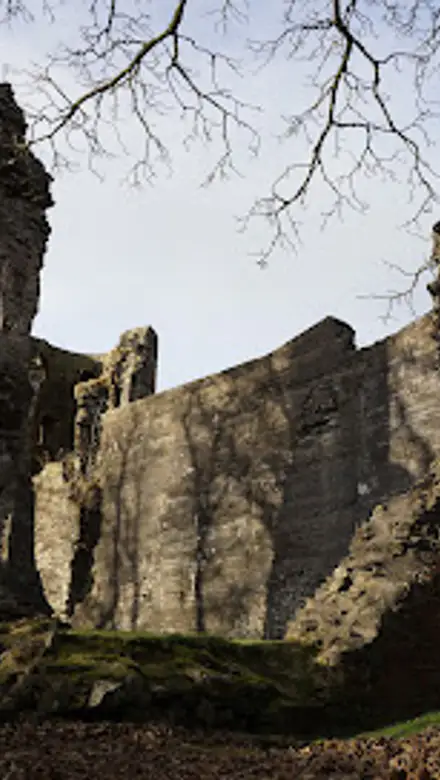
Today, only fragments remain, including the north wall and north-west tower, with the south-east tower reduced to low wall lines. The round tower features wide gunloops and a vaulted basement, reflecting 16th-century defensive adaptations. In 1912, the castle underwent consolidation with concrete reinforcements that altered its historic appearance. Despite these interventions, the ruins retain a haunting atmosphere, evoking centuries of history and mystery.
Setting and Surroundings
Strathaven Castle is situated just south of Stonehouse Road (A71) in the town centre, with the Powmillon Burn curving around it on three sides. The castle’s elevated position on the mound offers views of the surrounding townscape. Although the boardwalk path around the castle was closed, the site remains accessible at all reasonable times, inviting visitors to explore its evocative ruins and imagine the stories embedded in its stones.
Local Significance and Cultural Heritage
The castle is a Scheduled Ancient Monument and a landmark of Strathaven’s medieval heritage. It connects to local legends, including reputed secret tunnels linking the castle to parts of the town and the mysterious White Lady ghost. The site reflects the turbulent history of Scotland’s noble families and the shifting political landscape from the Middle Ages through the early modern period. Today, community groups advocate for its preservation and renewed public access, underscoring its enduring cultural importance.
Evendo Review Centre
 Google
Guest reviews
Best time to go
Quietest: Jan, Feb & Dec · before 6am or at 10pm
Busy times are Evendo estimates for a typical year, to help you plan. Actual crowds vary with events, school holidays and the weather.
Explore Strathaven Castle on the map
A handpicked selection of must-see spots near Strathaven Castle, mapped for you.
Get your free copy of our complete guide to Strathaven Castle, delivered straight to you.
Everything on this page, from opening hours and how to get there to Eve’s tips and the best time to go, in one PDF you can read offline, print or share.
Already have an account? Sign in
Your Strathaven Castle guide is ready.
We'll send it to · Not you? Sign out

Getting your guide ready…
We are putting together a fresh copy of the Strathaven Castle guide. This can take up to a minute.
This can take a few moments. If your browser asks, choose Allow so the download can start. You'll find the guide in your Downloads folder.
Nothing happened? Download it again
Sorry, the guide is taking longer than usual. Please try again in a minute, or get it by email instead.
Other nearby places you may find interesting
The closest places of the same kind, if this one is not quite what you had in mind.
-
-
-
-
-


Swipe for more places
More to explore near Strathaven Castle

 Best experiences near Strathaven Castle
 Best hotels near Strathaven Castle
 Best landmarks near Strathaven Castle
 Best attractions near Strathaven Castle
 Best shops near Strathaven Castle
 Best restaurants near Strathaven Castle
 Best bars near Strathaven Castle
Do you manage this location?
Take control to get all the benefits, like improved information, better appearance, and stronger visibility across AI-powered discovery.
Explore more

Explore more of Lanarkshire
Discover Lanarkshire: Where Scotland's rich history, stunning landscapes, and vibrant local culture come together for an unforgettable travel experience.
Explore Lanarkshire
Explore more of United Kingdom
Discover the United Kingdom: A blend of rich history, stunning landscapes, and vibrant cities, offering a unique travel experience for every visitor.
Explore United Kingdom