

Cadzow Castle Travel Guide
Free Guide: Explore the evocative ruins of Cadzow Castle, a hidden 16th-century stronghold of the Hamiltons set above a dramatic gorge in scenic Chatelherault Country Park.


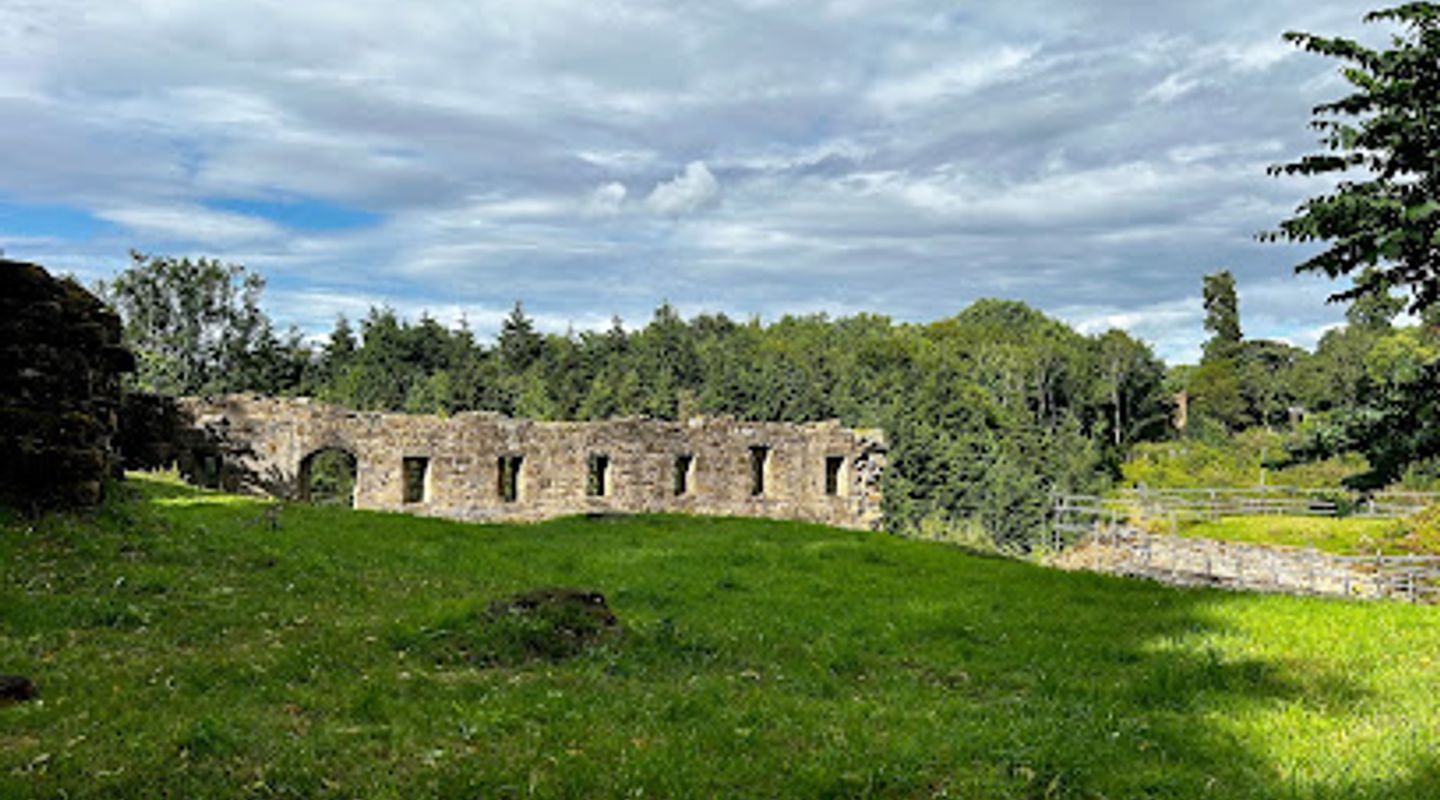
A brief summary of Cadzow Castle
Explore the evocative ruins of Cadzow Castle, a hidden 16th-century stronghold of the Hamiltons set above a dramatic gorge in scenic Chatelherault Country Park.
Cadzow Castle, nestled within Chatelherault Country Park near Hamilton, Scotland, is a striking late-medieval ruin perched above the Avon Water gorge. Built between 1500 and 1550 by the powerful Hamilton family, it served as a fortified refuge and witnessed key moments in Scottish history, including Mary, Queen of Scots’ dramatic stay. Today, the castle’s evocative ruins and surrounding ancient oak woodlands offer a glimpse into Scotland’s turbulent past and romantic heritage.
On-site amenities
 Restrooms
 Drink options
 Food options
 Seating areas
 Information boards
Opening hours
- Every dayOpen 24 hours
Opening hours as listed on the venue’s Google Business Profile. Hours can change for services and special events, so check with the venue before you go.
- Address
- Chatelherault Country Park, Hamilton ML3 7UE
- Phone
- Website
Getting there
Bus
Car
Train plus Walk
Discover more about Cadzow Castle
Origins and Strategic Setting
Cadzow Castle stands on a dramatic promontory overlooking the Avon Water gorge within the grounds of Chatelherault Country Park. The site’s history stretches back to the 12th century when the original Cadzow Castle served as a royal hunting lodge for King David I and his successors. The name Cadzow itself derives from the ancient Celtic settlement that evolved into modern Hamilton. The current ruins, however, date mainly from the early 16th century, constructed between 1500 and 1550 by Sir James Hamilton of Finnart and possibly completed by the 2nd Earl of Arran. The castle’s elevated position above steep cliffs and a deep gorge provided natural defenses, making it a formidable stronghold designed to withstand artillery attacks, a relatively new military technology at the time.
The Hamilton Dynasty and Royal Connections
The Hamilton family, one of Scotland’s most powerful noble houses, built Cadzow Castle as a place of last resort and military refuge. The Hamiltons were closely linked to the Scottish crown, with ties to Mary, Queen of Scots, and the earls of Arran who were near heirs to the throne. The castle played a role in the turbulent political struggles of the 16th century. Mary, Queen of Scots, famously took refuge here in 1568 after escaping captivity at Lochleven Castle. However, the Hamiltons’ allegiance to her led to reprisals: the castle was besieged multiple times and ultimately dismantled in 1579 to prevent further military use.
Architectural Features and Military Significance
Cadzow Castle’s design reflects the evolution of fortification in response to artillery warfare. Notable features include ‘dumb-bell’ and ‘wide-mouthed’ gun loops, allowing defenders to fire upon attackers while protected. The castle’s inner ward, partially obscured by overgrowth, contains remains of substantial masonry and defensive earthworks. A timber bridge once spanned a rock-cut ditch dividing the wards. The castle’s walls were thick and angled with a pronounced batter on the western side, unusual for Scottish castles of the period. Though now a ruin, these elements reveal the castle’s importance as a military bastion in mid-16th-century Scotland.
Romantic Ruin and Landscape Integration
After its military use ended, Cadzow Castle was transformed into a picturesque ruin incorporated into the landscaped grounds of Hamilton Palace. In the 18th and 19th centuries, the castle’s north walls were artificially heightened and waterproofed with clay to enhance its romantic appeal. Nearby, the grand hunting lodge of Chatelherault, designed by William Adam in the 1730s, provided a classical contrast to the castle’s Gothic ruins. The castle and surrounding deer park, including ancient oak woodlands dating to the 1400s, became a symbol of noble heritage and romantic nostalgia.
Preservation and Visitor Experience Today
Today, Cadzow Castle is a Scheduled Ancient Monument managed by Historic Environment Scotland. Visitors can view the evocative exterior ruins from safe vantage points, though the interior is fenced off for preservation and safety reasons. The castle’s setting within Chatelherault Country Park offers scenic woodland walks and spectacular views of the Avon Water gorge. The site’s rich history, dramatic landscape, and connection to Scotland’s royal past make it a compelling destination for history enthusiasts and nature lovers alike.
Legacy and Cultural Significance
Cadzow Castle’s story intertwines royal power, military innovation, and romantic imagination. It inspired literary figures such as Sir Walter Scott and remains a potent symbol of the Hamilton family’s influence and Scotland’s turbulent 16th century. The castle’s ruins, ancient oaks, and landscaped grounds preserve a layered heritage that continues to captivate visitors with echoes of Scotland’s medieval and early modern past.
Evendo Review Centre
 Google
Guest reviews
Best time to go
Quietest: Jan, Feb & Dec · before 7am or at 9pm
Busy times are Evendo estimates for a typical year, to help you plan. Actual crowds vary with events, school holidays and the weather.
Explore Cadzow Castle on the map
A handpicked selection of must-see spots near Cadzow Castle, mapped for you.
Get your free copy of our complete guide to Cadzow Castle, delivered straight to you.
Everything on this page, from opening hours and how to get there to Eve’s tips and the best time to go, in one PDF you can read offline, print or share.
Already have an account? Sign in
Your Cadzow Castle guide is ready.
We'll send it to · Not you? Sign out

Getting your guide ready…
We are putting together a fresh copy of the Cadzow Castle guide. This can take up to a minute.
This can take a few moments. If your browser asks, choose Allow so the download can start. You'll find the guide in your Downloads folder.
Nothing happened? Download it again
Sorry, the guide is taking longer than usual. Please try again in a minute, or get it by email instead.
Other nearby places you may find interesting
The closest places of the same kind, if this one is not quite what you had in mind.
-
-
-
-
-


Swipe for more places
More to explore near Cadzow Castle

 Best experiences near Cadzow Castle
 Best hotels near Cadzow Castle
 Best landmarks near Cadzow Castle
 Best attractions near Cadzow Castle
 Best shops near Cadzow Castle
 Best restaurants near Cadzow Castle
 Best bars near Cadzow Castle
Do you manage this location?
Take control to get all the benefits, like improved information, better appearance, and stronger visibility across AI-powered discovery.
Explore more

Explore more of Lanarkshire
Discover Lanarkshire: Where Scotland's rich history, stunning landscapes, and vibrant local culture come together for an unforgettable travel experience.
Explore Lanarkshire
Explore more of United Kingdom
Discover the United Kingdom: A blend of rich history, stunning landscapes, and vibrant cities, offering a unique travel experience for every visitor.
Explore United Kingdom
