St Johns Beacon, Liverpool Travel Guide
Free Guide: Liverpool’s tallest tower offering panoramic city views, rich history, and a vibrant broadcasting hub in the heart of the city.


A brief summary of St Johns Beacon
Liverpool’s tallest tower offering panoramic city views, rich history, and a vibrant broadcasting hub in the heart of the city.
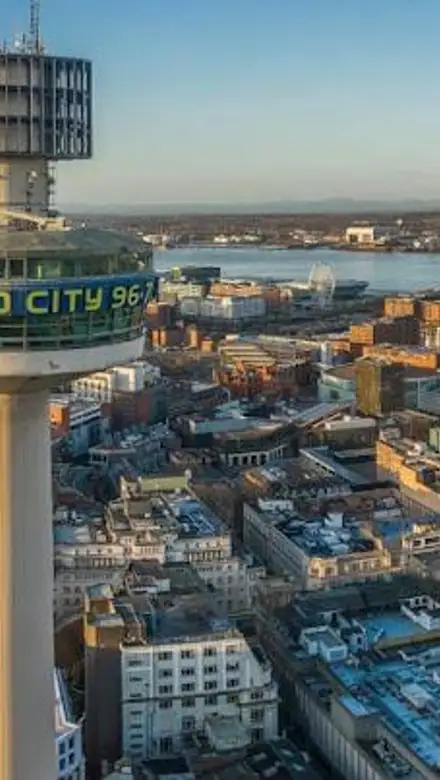
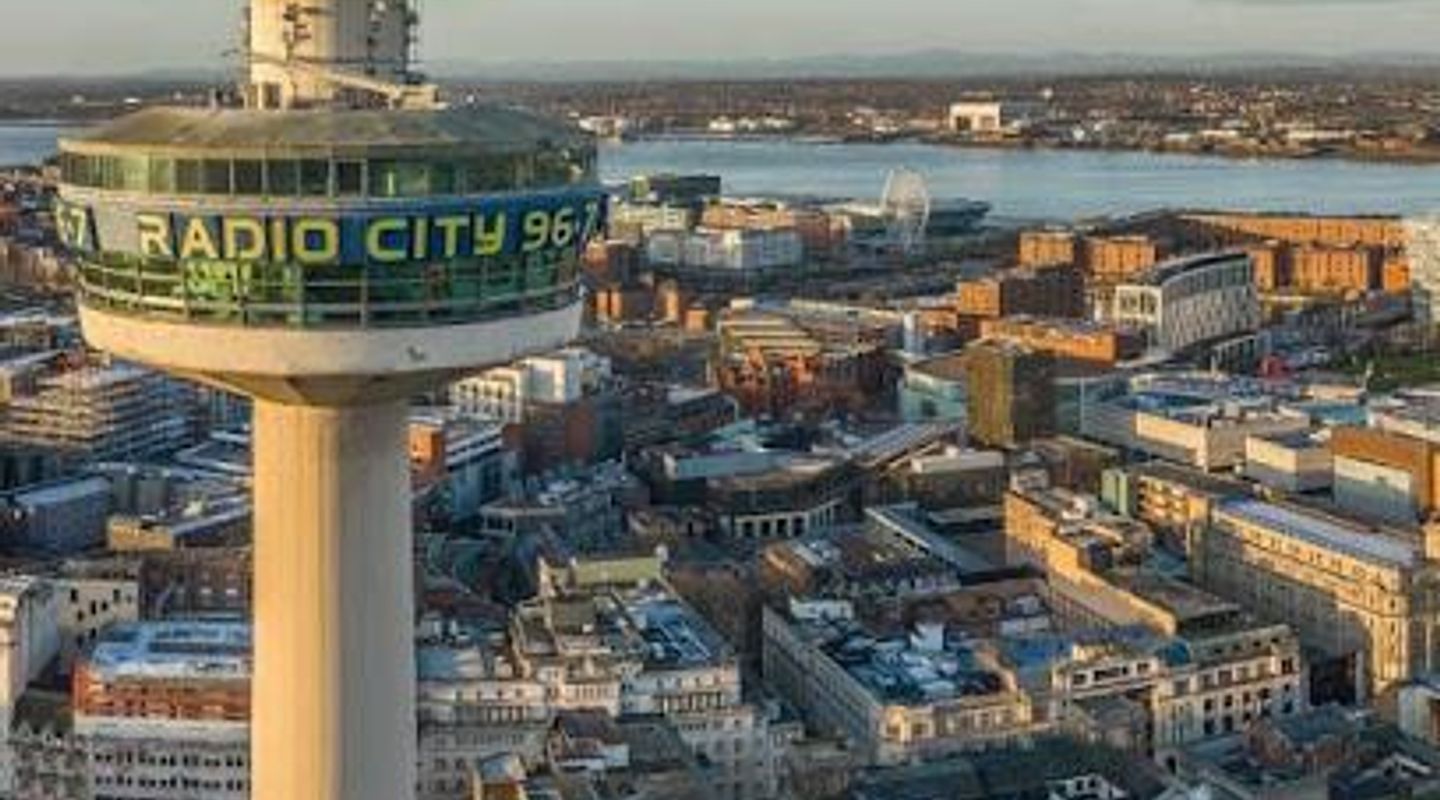
St Johns Beacon, also known as Radio City Tower, is a Grade II listed 138-meter tall communications and observation tower in Liverpool. Built in 1969 and opened by Queen Elizabeth II, it features panoramic city views from its viewing gallery and serves as a hub for local radio broadcasting. Once home to a revolving restaurant, the tower now houses radio studios and offices, illuminated with dynamic lighting that marks special events.
On-site amenities
 Restrooms
 Drink options
 Food options
 Seating areas
 Information boards
Opening hours
- Mon11 am–5:30 pm
- Tue11 am–5:30 pm
- Wed11 am–5:30 pm
- Thu11 am–5:30 pm
- Fri11 am–5:30 pm
- Sat11 am–6 pm
- Sun11 am–6 pm
Opening hours as listed on the venue’s Google Business Profile. Hours can change for services and special events, so check with the venue before you go.
- Address
- St Johns Beacon, 1 Houghton St, Liverpool L1 1RL
- Website
Getting there
Public Transport
Bus
Taxi or Rideshare
Walking
Discover more about St Johns Beacon
Architectural Marvel and Historical Significance
St Johns Beacon stands prominently in Liverpool’s city centre as a striking symbol of mid-20th-century architectural innovation. Designed by James A. Roberts Associates and completed in 1969, the tower reaches 138 meters (453 feet) tall, with an additional 10-meter antenna crowning it as the tallest structure in Liverpool when antennas are included. Opened by Queen Elizabeth II, the tower embodies the spirit of the space age, a fact recognized by Historic England when it awarded the building Grade II listed status in 2020. Its tapering concrete shaft and distinctive crow’s nest structure reflect a blend of technological bravura and futuristic design that has become integral to Liverpool’s skyline.
Evolution from Revolving Restaurant to Radio Hub
Originally, the tower housed a luxurious revolving restaurant at its summit, where the entire floor and facade rotated as a single unit, offering diners sweeping 360-degree views of the city. The roof served as an observation platform, accessible by two high-speed lifts or a staircase of 558 steps. However, the restaurant closed after 18 months due to health and safety regulations, later reopening briefly in 1983 as a Buck Rogers space-themed eatery before closing again. Following years of neglect, the tower underwent a major £5 million refurbishment between 1999 and 2000, transforming it into the home of Radio City 96.7 and Magic 1548. The former restaurant space was converted into radio studios and offices, preserving the original revolving mechanism but fixing it in place.
Panoramic Views and Visitor Experience
Today, visitors can ascend the tower to the viewing gallery, where large outward-leaning windows provide unparalleled panoramic vistas across Liverpool, the Wirral Peninsula, North Wales, and on clear days, even as far as Lancashire and Snowdonia. The viewing experience offers a unique perspective on the city’s architectural landmarks, waterfront, and sprawling urban landscape. The tower’s illumination changes color to mark special events, adding a vibrant visual presence to Liverpool’s night skyline. The visitor experience is enhanced by affordable ticket prices and no time limits, encouraging leisurely exploration and photography.
Cultural and Community Role
Beyond its architectural and broadcasting functions, St Johns Beacon serves as a cultural beacon for Liverpool. It hosts events, exhibitions, and community celebrations, reflecting the city’s dynamic spirit and resilience. The tower’s lighting often commemorates local and national occasions, reinforcing its role as a symbol of unity and pride. Recent proposals, such as a zip wire project linking the tower to Liverpool Central Library, highlight ongoing efforts to integrate the beacon into the city’s cultural fabric, though these have sparked public debate about preserving the landmark’s character.
Structural Details and Accessibility
The tower’s foundation is substantial, measuring 18 meters in diameter and 5.2 meters deep, anchored into sandstone 12 meters below street level. Its slip-formed concrete shaft supports the crow’s nest and antenna, ensuring structural stability. Two lifts provide rapid access to the top in approximately 30 seconds, making the tower accessible to a wide range of visitors. The building is structurally independent of the adjacent shopping centre, emphasizing its distinct presence.
Legacy and Recognition
St Johns Beacon remains a defining feature of Liverpool’s skyline and cultural landscape. Its Grade II listing underscores its architectural and historical importance, celebrating a design that captures the optimism and technological ambition of the late 1960s. As both a radio broadcasting centre and an observation point, it connects Liverpool’s past with its present, inviting locals and tourists alike to appreciate the city from new heights.
Evendo Review Centre
 Google
Guest reviews
Best time to go
Quietest: Jan, Feb & Mar · before 6am or from 11pm
Busy times are Evendo estimates for a typical year, to help you plan. Actual crowds vary with events, school holidays and the weather.
Explore St Johns Beacon on the map
A handpicked selection of must-see spots near St Johns Beacon, mapped for you.
Get your free copy of our complete guide to St Johns Beacon, delivered straight to you.
Everything on this page, from opening hours and how to get there to Eve’s tips and the best time to go, in one PDF you can read offline, print or share.
Already have an account? Sign in
Your St Johns Beacon guide is ready.
We'll send it to · Not you? Sign out

Getting your guide ready…
We are putting together a fresh copy of the St Johns Beacon guide. This can take up to a minute.
This can take a few moments. If your browser asks, choose Allow so the download can start. You'll find the guide in your Downloads folder.
Nothing happened? Download it again
Sorry, the guide is taking longer than usual. Please try again in a minute, or get it by email instead.
Unlock the best of St Johns Beacon
Skip-the-line tickets, guided tours with entry, and walking tours of the area, booked in a few clicks.


Other nearby places you may find interesting
The closest places of the same kind, if this one is not quite what you had in mind.
-
-
-
-
-


Swipe for more places
More to explore near St Johns Beacon

 Best experiences near St Johns Beacon
 Best hotels near St Johns Beacon
 Best landmarks near St Johns Beacon
 Best attractions near St Johns Beacon
 Best shops near St Johns Beacon
 Best restaurants near St Johns Beacon
 Best bars near St Johns Beacon
Do you manage this location?
Take control to get all the benefits, like improved information, better appearance, and stronger visibility across AI-powered discovery.
Explore more

Explore more of Liverpool
Discover Liverpool: A city where maritime heritage meets modern culture, music legends, and sporting glory. An unforgettable destination in the heart of northwest England.
Explore Liverpool
Explore more of United Kingdom
Discover the United Kingdom: A blend of rich history, stunning landscapes, and vibrant cities, offering a unique travel experience for every visitor.
Explore United Kingdom