Murrays' Mill, Manchester Travel Guide
Free Guide: Explore Murrays' Mills, the world’s oldest urban steam-powered cotton mill, where industrial heritage meets modern living in Manchester’s historic Ancoats district.


A brief summary of Murrays' Mill
Explore Murrays' Mills, the world’s oldest urban steam-powered cotton mill, where industrial heritage meets modern living in Manchester’s historic Ancoats district.
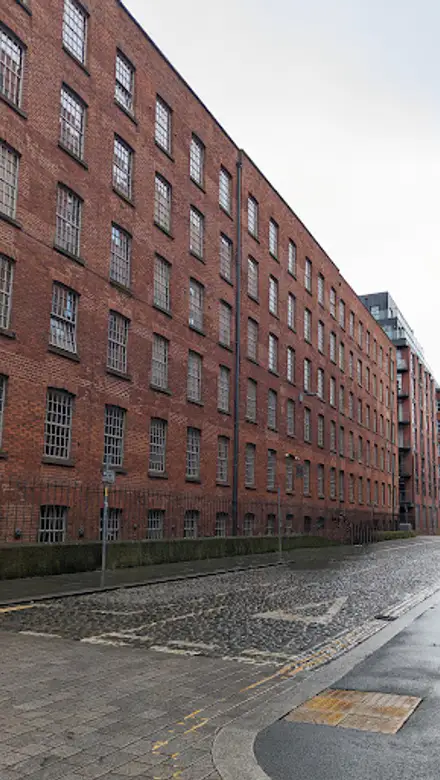
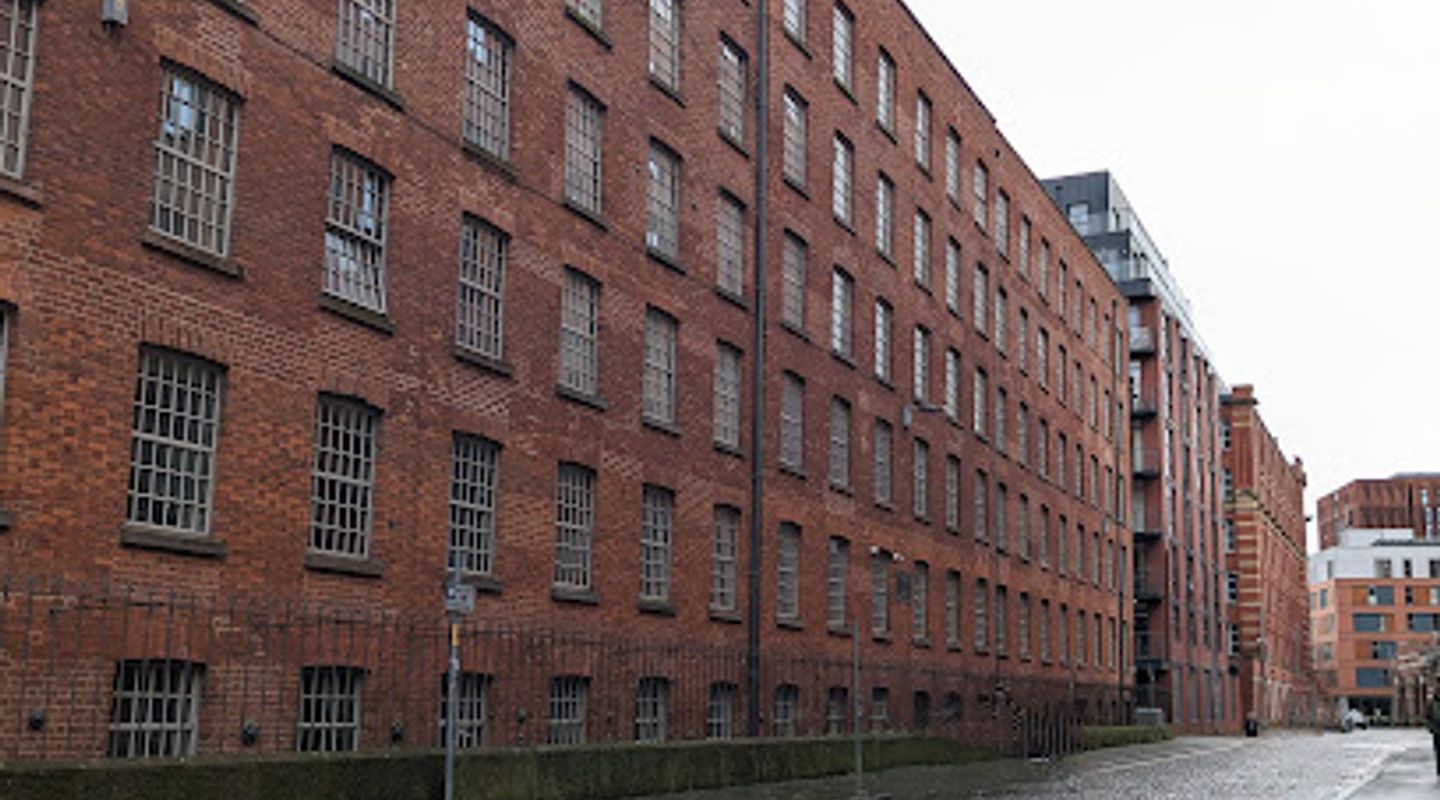
Murrays' Mills in Ancoats, Manchester, is the world's oldest surviving urban steam-powered cotton spinning factory, established in 1797 by Scottish brothers Adam and George Murray. Once the largest mill complex globally, it played a pivotal role in the Industrial Revolution, employing over 1,300 workers at its peak. Today, the historic red-brick buildings have been sensitively restored and repurposed as residential apartments, preserving a vital piece of Manchester's industrial heritage.
On-site amenities
 Restrooms
 Drink options
 Food options
 Seating areas
 Information boards
- Address
- 44 Jersey St, Ancoats, Manchester M4 6LR
- Website
Getting there
Public Transport
Bus
Taxi or Rideshare
Walking
Discover more about Murrays' Mill
Origins of a Revolutionary Industrial Complex
Murrays' Mills traces its roots back to the late 18th century when Adam and George Murray, skilled Scottish textile machinists, migrated to Manchester to capitalize on the burgeoning cotton industry. In 1790, Adam Murray leased land in the Ancoats district, and by 1797 construction began on Old Mill, the first building in the complex. This mill is notable as the world's oldest surviving urban steam-powered cotton spinning factory, pioneering the use of steam engines in textile production. Built from approximately 400,000 handmade bricks, many sourced from clay excavated on-site, Old Mill set a precedent for industrial architecture with its eight-storey height and functional design.
Expansion and Industrial Significance
Following Old Mill, the complex rapidly expanded between 1802 and 1842 to include Decker Mill, New Mill, Little Mill, and the Doubling and Fireproof Mill. By 1806, Murrays' Mills was the largest cotton spinning complex in the world, boasting 84,000 mule spindles and employing around 1,300 workers. The mills were arranged around a quadrangle featuring a private canal basin linked to the Rochdale Canal, facilitating efficient transport of raw cotton, coal, and finished yarn. This integration of waterways and steam power exemplified the cutting-edge industrial infrastructure of the era.
Architectural and Technological Evolution
The mill buildings reflect over a century of technological advancements and architectural adaptations. The original structures exhibit a restrained, functional aesthetic with symmetrical arched doorways and windows. Later additions incorporated gas lighting and electrical power, marking progressive modernization. The brickwork itself tells a story, evolving from handcrafted local bricks to industrially produced units. Despite challenges such as fires and industrial decline in the 20th century, the complex retained much of its historic fabric, including wrought iron gates and memorials honoring its founders.
Decline and Regeneration
Cotton spinning at Murrays' Mills continued until the late 1950s, after which the complex fell into disuse and decay. Recognized for its national historic significance, the site was rescued in the late 1990s by the Ancoats Buildings Preservation Trust with support from heritage and regional development agencies. A major refurbishment led by architectural and engineering firms carefully stabilized and restored the buildings, preserving their character while adapting them for modern use. Today, the mills have been transformed into a vibrant residential community, blending historic charm with contemporary living.
Legacy and Cultural Importance
Murrays' Mills stands as a testament to Manchester’s role as the cradle of the Industrial Revolution and the development of urban industrial architecture. It symbolizes the ingenuity of early industrial entrepreneurs and the social history of thousands of workers who powered the cotton industry. The site’s successful regeneration reflects a broader commitment to preserving industrial heritage while fostering sustainable urban living in Ancoats, once known as the world’s first industrial suburb.
Experiencing Murrays' Mills Today
Visitors to the complex can appreciate the scale and craftsmanship of the red-brick mills, the canal basin’s historic function, and the subtle architectural details that echo its industrial past. The courtyard spaces and wrought iron gates invite reflection on the site’s transformation from a working factory to a modern residential enclave. Murrays' Mills remains a landmark of innovation, resilience, and adaptive reuse within Manchester’s evolving cityscape.
Evendo Review Centre
 Google
Guest reviews
Best time to go
Quietest: Jan, Feb & Dec · before 5am
Busy times are Evendo estimates for a typical year, to help you plan. Actual crowds vary with events, school holidays and the weather.
Explore Murrays' Mill on the map
A handpicked selection of must-see spots near Murrays' Mill, mapped for you.
Get your free copy of our complete guide to Murrays' Mill, delivered straight to you.
Everything on this page, from opening hours and how to get there to Eve’s tips and the best time to go, in one PDF you can read offline, print or share.
Already have an account? Sign in
Your Murrays' Mill guide is ready.
We'll send it to · Not you? Sign out

Getting your guide ready…
We are putting together a fresh copy of the Murrays' Mill guide. This can take up to a minute.
This can take a few moments. If your browser asks, choose Allow so the download can start. You'll find the guide in your Downloads folder.
Nothing happened? Download it again
Sorry, the guide is taking longer than usual. Please try again in a minute, or get it by email instead.
Other nearby places you may find interesting
The closest places of the same kind, if this one is not quite what you had in mind.
-
-
-
-
-


Swipe for more places
More to explore near Murrays' Mill

 Best experiences near Murrays' Mill
 Best hotels near Murrays' Mill
 Best landmarks near Murrays' Mill
 Best attractions near Murrays' Mill
 Best shops near Murrays' Mill
 Best restaurants near Murrays' Mill
 Best bars near Murrays' Mill
Do you manage this location?
Take control to get all the benefits, like improved information, better appearance, and stronger visibility across AI-powered discovery.
Explore more

Explore more of Manchester
Discover Manchester, the dynamic city where industrial heritage meets modern culture, offering a unique blend of history, sports, music, and gastronomy in Northern England.
Explore Manchester
Explore more of United Kingdom
Discover the United Kingdom: A blend of rich history, stunning landscapes, and vibrant cities, offering a unique travel experience for every visitor.
Explore United Kingdom