
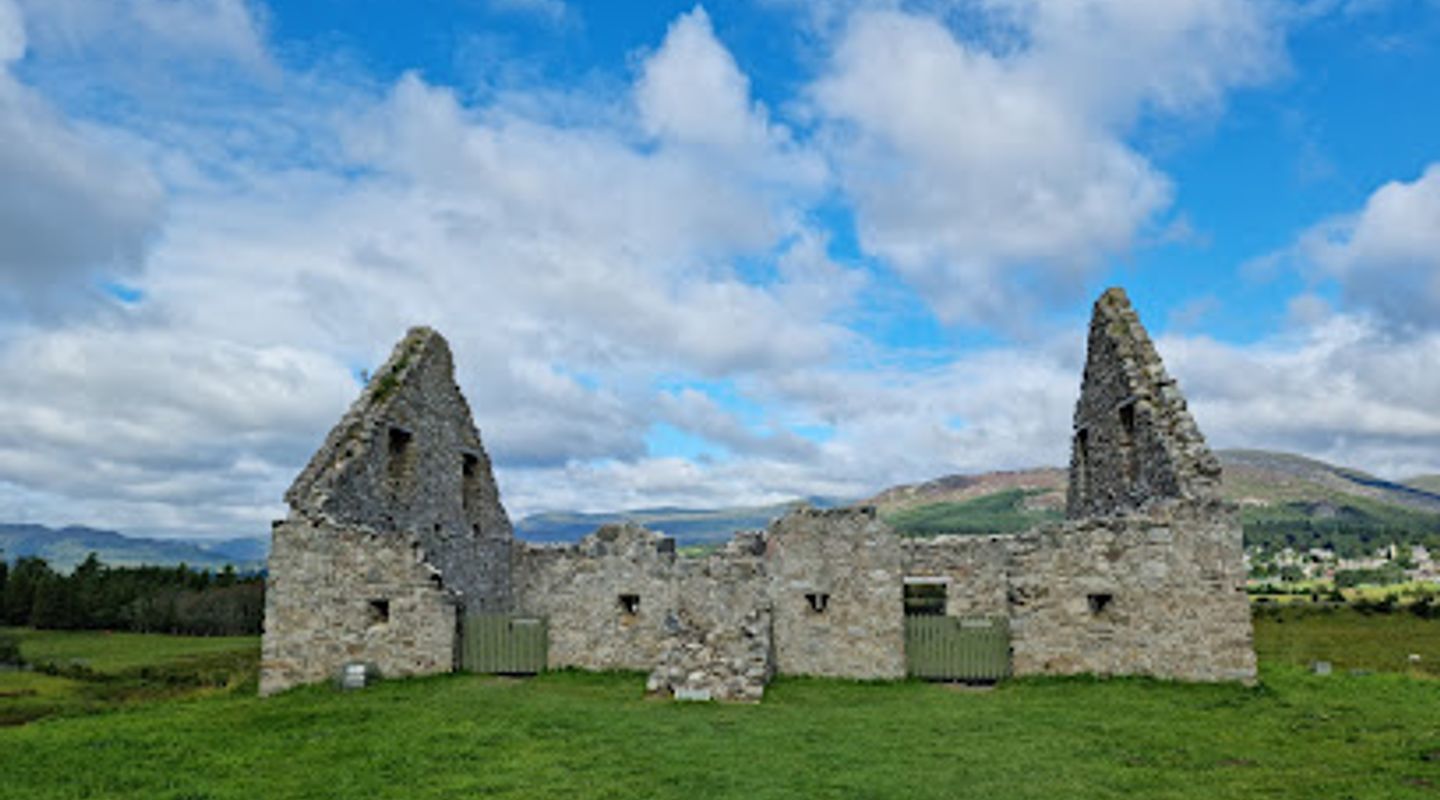
Ruthven Barracks, Perthshire Travel Guide
Explore the evocative ruins of Ruthven Barracks, a commanding 18th-century Highland fortress steeped in Jacobite history and scenic beauty.
Ruthven Barracks, perched on a commanding hill near Kingussie in the Scottish Highlands, is a striking ruin built between 1719 and 1721 to house government troops after the Jacobite Rising of 1715. This historic site, once a bulwark against Jacobite forces, offers panoramic views over the Spey valley and a tangible connection to Scotland’s turbulent 18th-century past. Visitors can explore the evocative remains of the barracks, imagining the soldiers’ lives amid the rugged Highland landscape.
A brief summary to Ruthven Barracks
- Kingussie, GB
- Click to display
- Duration: 1 to 2.5 hours
- Free
-
 Outdoor
- Mobile reception: 4 out of 5

Know before you go
Hi, I'm Eve. Here are a few practical things to know before exploring Ruthven Barracks.
- Visit during clear weather to fully appreciate panoramic views of the Spey valley and Cairngorm Mountains.
- Wear sturdy footwear as the terrain around the barracks is uneven and can be slippery when wet.
- Take time to read the onsite interpretive panels to understand the barracks' role in Jacobite history.
- Combine your visit with nearby Kingussie for amenities and additional Highland attractions.
Do you manage this location?
Take control to get all the benefits, like improved information, better appearance, and stronger visibility across AI-powered discovery. Learn more about listing your business on Evendo
Activate your presenceOther nearby places you may find interesting
The closest places of the same kind, if this one is not quite what you had in mind.
Explore Ruthven Barracks on the Map
A handpicked selection of must-see spots near Ruthven Barracks, mapped for you.
Unlock the Best of Ruthven Barracks
Buy tickets
-
No tickets available
Book tours with entry


Book tours without entry

Getting There
-
Car
Driving from Inverness to Ruthven Barracks takes approximately 1 hour and 15 minutes via the A9 and A86. Parking is available near the site but limited, so arrive early during peak seasons. No parking fees apply.
-
Bus
Regular bus services run from Inverness to Kingussie, taking around 1 hour and 30 minutes. From Kingussie, Ruthven Barracks is a 30-minute walk uphill. Bus fares range from £8 to £12 one way.
-
Walking
From Kingussie town center, a 3 km walk to Ruthven Barracks takes about 30 to 40 minutes on uneven terrain with some steep sections. Suitable for moderately fit walkers; wear appropriate footwear.
For the on-the-go comforts that matter to you
-
 Information Boards
-
 Seating Areas
-
 Trash Bins
Discover more about Ruthven Barracks
Strategic Highland Fortress Born from Conflict
Ruthven Barracks was constructed by George I’s government between 1719 and 1721 following the Jacobite Rising of 1715, designed to house about 120 soldiers tasked with policing the Highlands and enforcing the Disarming Act of 1716. Built atop the mound of earlier medieval fortifications belonging to the Comyn and Gordon families, the barracks replaced older castles whose only surviving feature is the well. The site’s elevated position dominates the head of the Spey valley, offering commanding views visible for miles, underscoring its strategic military importance.Architecture and Military Life in the 18th Century
The barracks comprise two three-storey stone buildings arranged around a central parade ground, enclosed within a protective curtain wall equipped with musket loopholes and bastion towers at opposite corners. The buildings contained six rooms each, with soldiers often sharing beds in cramped conditions. Officers’ quarters, a guardroom, prison, bakehouse, and brewhouse were integrated within the complex. Stables added in 1734 housed up to 30 horses for dragoons who patrolled the military roads connecting the Highlands to the Lowlands, facilitating government control.Role in the Jacobite Risings and Dramatic Siege
Ruthven Barracks played a pivotal role during the Jacobite Risings. In August 1745, a small garrison of 12 redcoats successfully defended the barracks against a 300-strong Jacobite force. However, in February 1746, the Jacobites returned with artillery, forcing the garrison to surrender. Following the decisive Battle of Culloden in April 1746, the remaining Jacobite forces regrouped at Ruthven before dispersing under orders from Bonnie Prince Charlie. The Jacobites burned the barracks upon their retreat, leaving the atmospheric ruins that remain today.Historical Legacy and Present-Day Experience
Today, Ruthven Barracks stands as a poignant monument to Scotland’s turbulent past, maintained as a scheduled monument by Historic Environment Scotland. Visitors can wander the evocative ruins freely at any time, absorbing the layered history and imagining the lives of soldiers and clansmen. Informative plaques and displays enhance understanding of the site’s significance. The peaceful setting, with panoramic views of the Cairngorm Mountains and Spey valley, offers a reflective atmosphere blending history and natural beauty.Ancient Roots and Local Legends
Beneath the 18th-century barracks lie the remnants of two earlier castles dating back to the 13th and 15th centuries, linked to powerful local clans and Scottish nobility. The site has witnessed centuries of conflict, including the Wars of the Three Kingdoms and earlier Jacobite uprisings. Local lore adds a mystical dimension, such as tales of ghostly chess games played by the infamous Wolf of Badenoch, enriching the visitor experience with a touch of Highland myth.Access and Surrounding Landscape
Located near Kingussie, Ruthven Barracks is easily accessible for day trips and offers a serene Highland setting. The surrounding landscape features a mix of moorland and forest with wide views over the valley and distant mountains. The site’s open access and scenic charm make it a favored spot for history enthusiasts, photographers, and nature lovers seeking a quiet, evocative Highland experience.












Your all‑in‑one travel companion app
Explore expert travel guides, compare and book tours, experiences, hotels, and more—all from the palm of your hand. Download now for seamless trip planning wherever your wanderlust takes you.


Explore More of Perthshire
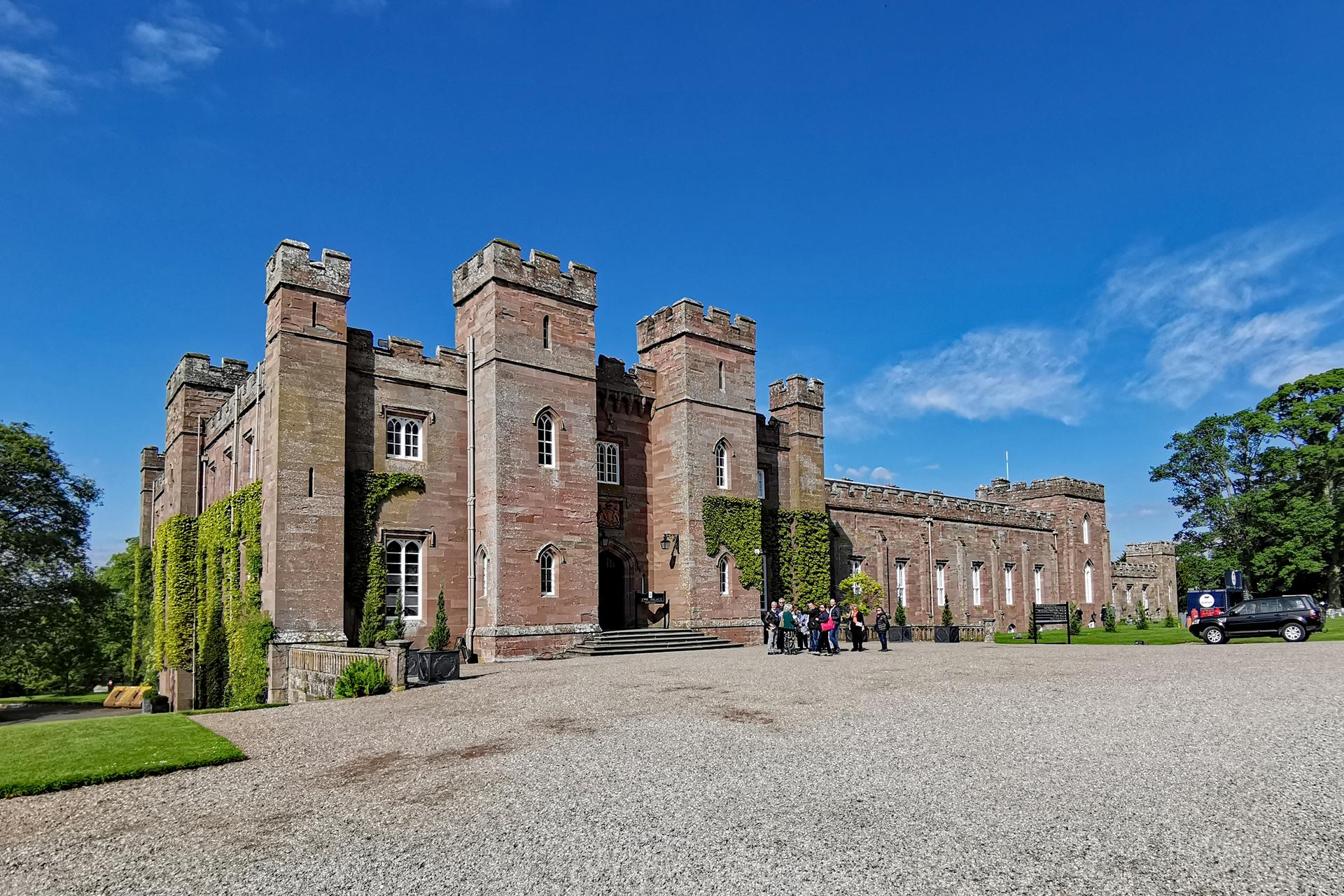
Looking beyond Ruthven Barracks? Discover Perthshire for broader travel guides, local hot-spots, and regional highlights.
Explore Perthshire
Craft small-batch beers and seasonal Taproom pizzas in Blair Atholl's industrial heart, blending innovation, family vibes, and Highland freshness.

Step back in time at Britain’s first open-air museum, where Highland history and heritage come alive across an 80-acre living landscape.
