Abernethy Round Tower Travel Guide
Free Guide: A rare medieval Irish-style round tower in Abernethy, steeped in Pictish heritage and offering sweeping views over Perthshire’s countryside.


A brief summary of Abernethy Round Tower
A rare medieval Irish-style round tower in Abernethy, steeped in Pictish heritage and offering sweeping views over Perthshire’s countryside.
Abernethy Round Tower is a rare medieval Irish-style stone tower located in the village of Abernethy, Perthshire, Scotland. Dating from around 1100 CE, this 22.5-meter tall tower once served as a bell tower and refuge, and is one of only two such towers in Scotland. It features a distinctive Pictish stone mounted on its exterior and offers panoramic views over the surrounding countryside when accessible.
On-site amenities
 Restrooms
 Drink options
 Food options
 Seating areas
 Information boards
Opening hours
- MonClosed
- TueClosed
- Wed10 am–4:30 pm
- Thu10 am–4:30 pm
- Fri9 am–5 pm
- Sat9 am–5 pm
- Sun11 am–4:30 am
Opening hours as listed on the venue’s Google Business Profile. Hours can change for services and special events, so check with the venue before you go.
- Address
- 53 School Wynd, Abernethy, Perth PH2 9JH
- Phone
- Website
Getting there
Bus
Car
Train and Walk
Discover more about Abernethy Round Tower
An Architectural Relic of Celtic Heritage
Abernethy Round Tower stands as a striking example of Irish-style round towers, a form almost unique to Ireland with only two others in Scotland and one on the Isle of Man. Constructed primarily from sandstone around 1100 CE, the tower rises 22.5 meters high with a base diameter of 4.57 meters tapering to 3.96 meters at the top. Its walls are robust, measuring 1.07 meters thick, designed to withstand the test of time and historical conflicts. The tower’s lower twelve layers are built from a different colored stone, suggesting an earlier foundation phase. Originally, it contained six wooden floors connected by ladders, now replaced by an iron spiral staircase installed in the 19th century. The tower’s exterior features a Pictish symbol stone, discovered locally, depicting enigmatic motifs such as a hammer and anvil, which reflect Abernethy’s ancient cultural significance.
Historical Significance and Functions
The tower is closely linked to Abernethy’s ecclesiastical past, once part of a Culdee abbey and later an Augustinian monastery until the mid-16th century dissolution. It is believed to have served as a bell tower for the adjacent church, which has existed since at least the 7th century. Beyond its religious role, the tower provided refuge and storage during times of danger, including Viking raids. A notable historical event commemorated by a plaque on the tower is the homage paid by Malcolm III of Scotland to William the Conqueror in 1072, marking Abernethy as a site of political importance. The tower’s bell, dating from 1782, and a clock installed in 1868 bearing Queen Victoria’s initials, highlight its continued use across centuries.
Archaeological Discoveries and Conservation
Excavations conducted in the early 19th century revealed human remains beneath the tower, including skulls and fragments of urns, indicating the site’s long-standing sacred or burial significance predating the tower’s construction. The tower has undergone various modifications over time, including the addition of windows, an outside clock, and the iron spiral staircase for safer access. Conservation efforts are ongoing to preserve this rare monument, with public access to climb the tower sometimes restricted for safety. When open, the climb rewards visitors with sweeping views over the Firth of Tay and the surrounding Perthshire landscape.
The Tower in the Context of Abernethy Village
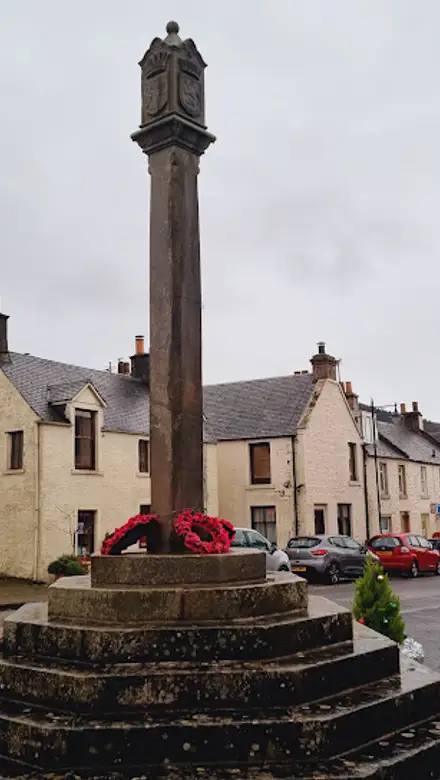
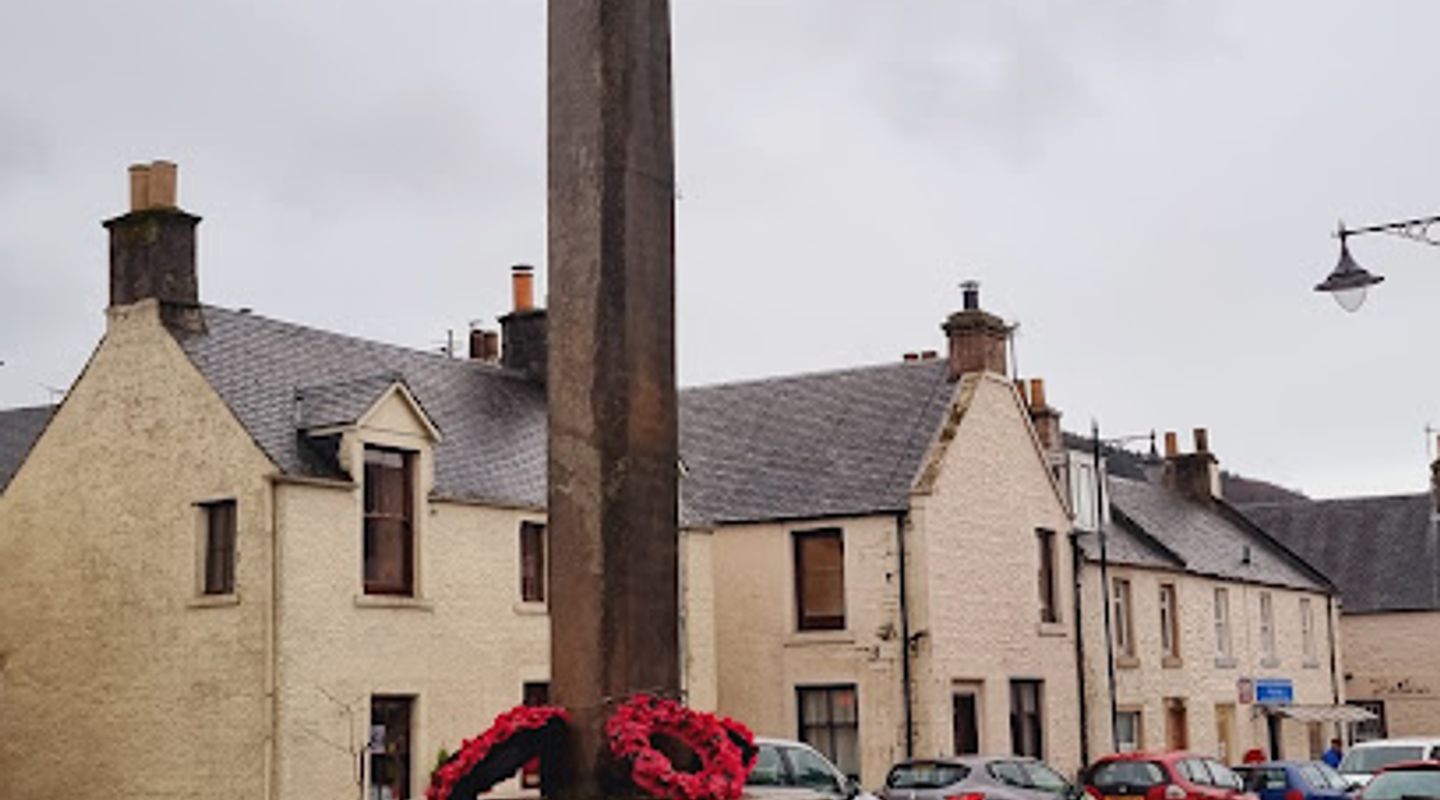
Situated in the churchyard on School Wynd, the tower is a central feature of Abernethy, a village rich in history as a former Pictish religious and political hub. The village itself offers additional heritage attractions, including traditional houses, a Mercat Cross, and a local museum showcasing Pictish stones and artifacts. Abernethy’s location makes it a convenient base for exploring nearby historic sites such as Scone Palace and Falkland Palace, enhancing its appeal for visitors interested in Scotland’s medieval past.
Visitor Experience and Accessibility
Visitors can view the tower’s exterior year-round, with climbing access typically available from May to September via a key held at the nearby Museum of Abernethy or Berryfields Tea Room. The climb involves ascending approximately 100 steps within the narrow spiral staircase, which may not be suitable for all visitors. The tower’s elevated viewing platform provides a unique vantage point over the rural landscape, offering a tangible connection to Scotland’s early medieval era. The surrounding churchyard adds a tranquil atmosphere, punctuated by historic gravestones and the presence of the tower’s iron jougs, a medieval instrument of public punishment.
Symbolism and Cultural Legacy
Abernethy Round Tower embodies the fusion of Irish ecclesiastical architecture with Scottish Pictish heritage, symbolizing the cultural and religious exchanges of the early medieval period. The Pictish stone affixed to the tower serves as a reminder of Abernethy’s importance as a spiritual and political center in Pictland. The tower’s survival through centuries of change, conflict, and modernization underscores its resilience and enduring legacy as a monument of Scottish history and identity.
Evendo Review Centre
 Google
Guest reviews
Best time to go
Quietest: Jan, Feb & Dec · before 3am
Busy times are Evendo estimates for a typical year, to help you plan. Actual crowds vary with events, school holidays and the weather.
Explore Abernethy Round Tower on the map
A handpicked selection of must-see spots near Abernethy Round Tower, mapped for you.
Get your free copy of our complete guide to Abernethy Round Tower, delivered straight to you.
Everything on this page, from opening hours and how to get there to Eve’s tips and the best time to go, in one PDF you can read offline, print or share.
Already have an account? Sign in
Your Abernethy Round Tower guide is ready.
We'll send it to · Not you? Sign out

Getting your guide ready…
We are putting together a fresh copy of the Abernethy Round Tower guide. This can take up to a minute.
This can take a few moments. If your browser asks, choose Allow so the download can start. You'll find the guide in your Downloads folder.
Nothing happened? Download it again
Sorry, the guide is taking longer than usual. Please try again in a minute, or get it by email instead.
Other nearby places you may find interesting
The closest places of the same kind, if this one is not quite what you had in mind.
-
-
-
-
-


Swipe for more places
More to explore near Abernethy Round Tower

 Best experiences near Abernethy Round Tower
 Best hotels near Abernethy Round Tower
 Best landmarks near Abernethy Round Tower
 Best attractions near Abernethy Round Tower
 Best shops near Abernethy Round Tower
 Best restaurants near Abernethy Round Tower
 Best bars near Abernethy Round Tower
Do you manage this location?
Take control to get all the benefits, like improved information, better appearance, and stronger visibility across AI-powered discovery.
Explore more
Explore more of Perthshire
Discover Perthshire: Scotland's Heartland of Natural Beauty, Cultural Heritage, and Outdoor Adventure.
Explore Perthshire
Explore more of United Kingdom
Discover the United Kingdom: A blend of rich history, stunning landscapes, and vibrant cities, offering a unique travel experience for every visitor.
Explore United Kingdom