

Dryhope Tower Travel Guide
Free Guide: A ruined 16th-century fortress where Border legend and Scottish history converge beside St Mary's Loch.


A brief summary of Dryhope Tower
A ruined 16th-century fortress where Border legend and Scottish history converge beside St Mary's Loch.
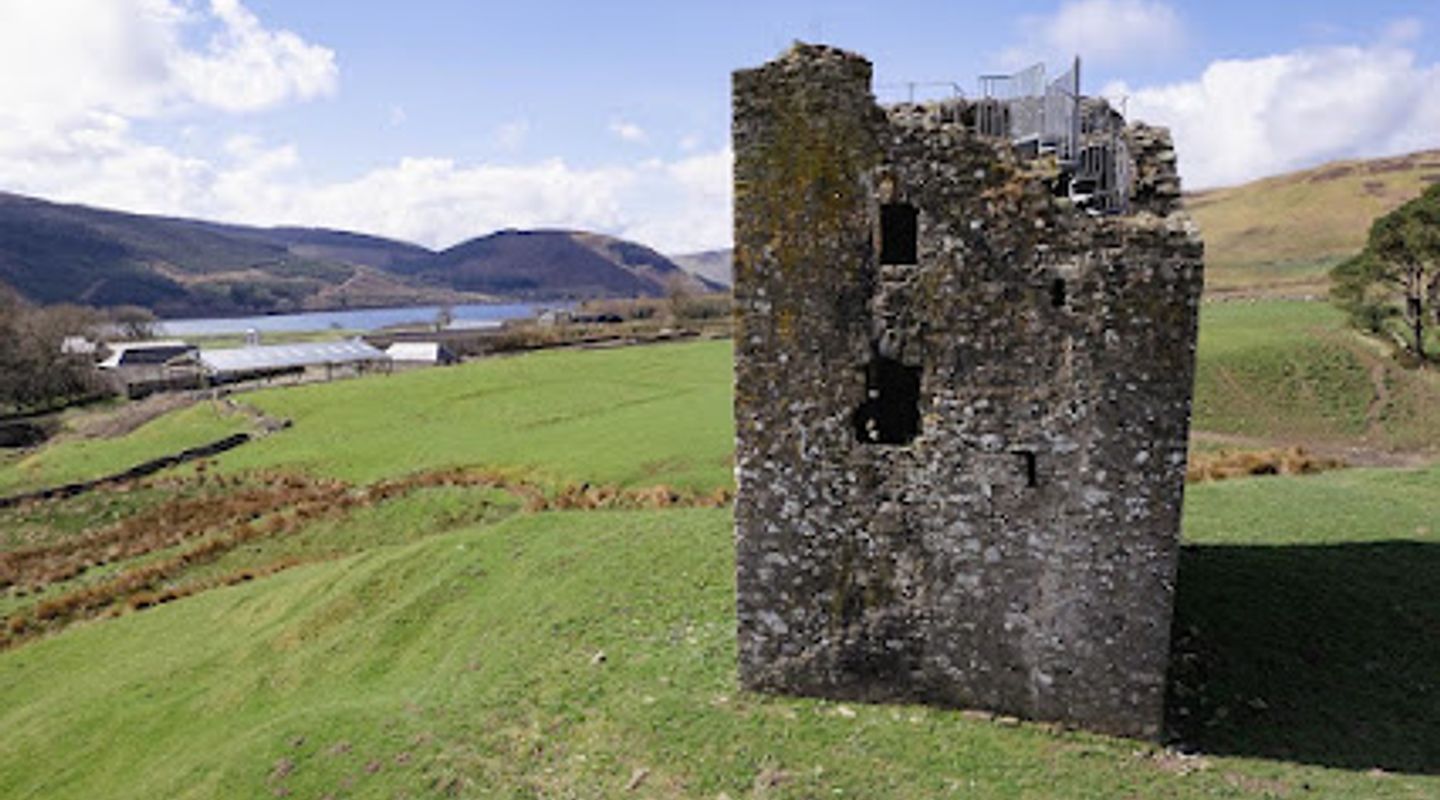
Dryhope Tower is a ruined 16th-century peel tower overlooking St Mary's Loch in the Scottish Borders, steeped in Border history and legend. Built around the 1530s–1550s as a defensive stronghold for the Scott family, this four-storey tower features vaulted basements, gunloops, and the remains of a protective barmkin courtyard. Famous as the home of Mary Scott, the 'Flower of Yarrow'—an ancestor of Sir Walter Scott—the tower was slighted in 1592 by King James VI but rebuilt by 1613. Today, this scheduled monument stands as a haunting reminder of the turbulent Border Reiver era.
On-site amenities
 Information boards
Opening hours
- Every dayOpen 24 hours
Opening hours as listed on the venue’s Google Business Profile. Hours can change for services and special events, so check with the venue before you go.
- Address
- Dryhope, Selkirk TD7 5LF
Getting there
Southern Upland Way Walking Route
Vehicle Access to Nearby Parking
St Mary's Loch Visitor Route
Guided Tour or Local Knowledge
Discover more about Dryhope Tower
A Fortress Born from Conflict
Dryhope Tower emerged from one of Scotland's most violent periods. In 1535, the Scottish Parliament issued a statute requiring large landholders in the Borderlands to construct fortified stone buildings—barmkins with walls one ell thick and six ells high—to protect themselves, their tenants, and their goods during troubled times. Dryhope was likely raised in response to this mandate, built sometime between the 1530s and 1550s by the Scott family, who held the lands of Dryhope. The tower's rectangular plan, originally four storeys tall, was constructed from local stone with vaulted basements and a turnpike stair spiralling upward from one corner to the hall on the first floor, which was also vaulted. The walls were pierced with gunloops, allowing defenders to repel attackers from protected positions. A courtyard enclosed by a curtain wall contained ranges of outbuildings, creating a self-contained defensive settlement.
The Flower of Yarrow and Border Legend
Dryhope Tower is forever linked to one of Scotland's most romantic and tragic tales. Mary Scott, known as the 'Flower of Yarrow,' was born at Dryhope, daughter of the house and ancestor of the celebrated author Sir Walter Scott. In 1576, she married Walter Scott of Harden, known as 'Auld Wat,' one of the most notorious Border reivers of his age. Their union bound two powerful families, but it was also marked by bloodshed. The Border ballad 'The Dowie Dens of Yarrow' immortalizes the violent events surrounding Mary, recounting in several versions how her suitor was waylaid and slain by her brothers, with much carnage ensuing. This ballad, deeply rooted in the oral traditions of the Borderlands, transformed Mary into a legendary figure whose name echoes through Scottish folklore.
Destruction and Restoration
Dryhope's fate took a dramatic turn in 1592 when political intrigue brought royal wrath upon the Scott family. Wat Scott of Harden had fallen out of favour with King James VI due to his association with Francis Stewart, 1st Earl of Bothwell, and involvement in an attack on Falkland Palace. In response, King James VI levied an army and marched through the forest, systematically slighting—partially dismantling—the fortified houses of his opponents. Dryhope was among the Scott of Harden fortalices that suffered this fate, its walls breached and its defensive capability destroyed. Yet the tower's story did not end in ruin. By 1613, it had been rebuilt, suggesting the family's determination to restore their seat. However, the tower gradually fell into terminal decay during the latter part of the 17th century. The property eventually passed to the senior branch of the Scotts, the Dukes of Buccleuch, and later came under the stewardship of the Philiphaugh Estate.
Landscape and Setting
Dryhope Tower occupies a strategically significant position in the valley of the Yarrow Water, approximately equidistant between the burghs of Moffat and Selkirk. The site itself was naturally protected on two sides: to the east by the Dryhope Burn and to the west by the Kirkstead Burn, providing additional defensive advantages. The tower overlooks St Mary's Loch, a substantial body of water that dominates the landscape and would have served as both a visual landmark and a barrier to potential attackers. The surrounding moorland and hills create a dramatic, windswept setting that evokes the harsh realities of Border life during the 16th and 17th centuries.
Architectural Features and Construction
The surviving structure reveals the sophisticated defensive architecture of the peel tower tradition. The rectangular tower originally rose four storeys, with walls up to ten feet thick capable of withstanding siege and assault. The vaulted basement provided secure storage for provisions and valuables, while the vaulted first-floor hall served as the principal living space. Gunloops—small openings designed for firearms—pierce the walls, indicating that Dryhope was built during the transition from medieval siege warfare to early modern artillery. The turnpike stair, a spiral staircase occupying one corner, allowed defenders to move between floors while maintaining a defensible position. The barmkin courtyard, enclosed by a curtain wall, contained additional buildings for servants, soldiers, and livestock, making the complex largely self-sufficient during times of siege or raid.
Modern Preservation and Heritage Status
In recent decades, Dryhope Tower has undergone stabilisation work to arrest its decay and preserve it for future generations. The monument has been consolidated and cleared of vegetation, and it has been designated a scheduled monument by Historic Environment Scotland, recognising its national significance as a rare surviving example of Border peel tower architecture and its importance to Scottish cultural heritage. Today, the tower stands as a tangible link to the turbulent Border Reiver era, a period when families like the Scotts defended their lands through fortification, alliance, and sometimes ruthless violence. The ruins invite visitors to imagine the lives lived within these walls—the political intrigue, the family bonds, the constant threat of raid and counter-raid that defined life in the Borderlands.
Evendo Review Centre
 Google
Guest reviews
Best time to go
Quietest: Jan, Feb & Dec · before 7am or from 7pm
Busy times are Evendo estimates for a typical year, to help you plan. Actual crowds vary with events, school holidays and the weather.
Explore Dryhope Tower on the map
A handpicked selection of must-see spots near Dryhope Tower, mapped for you.
Get your free copy of our complete guide to Dryhope Tower, delivered straight to you.
Everything on this page, from opening hours and how to get there to Eve’s tips and the best time to go, in one PDF you can read offline, print or share.
Already have an account? Sign in
Your Dryhope Tower guide is ready.
We'll send it to · Not you? Sign out

Getting your guide ready…
We are putting together a fresh copy of the Dryhope Tower guide. This can take up to a minute.
This can take a few moments. If your browser asks, choose Allow so the download can start. You'll find the guide in your Downloads folder.
Nothing happened? Download it again
Sorry, the guide is taking longer than usual. Please try again in a minute, or get it by email instead.
Other nearby places you may find interesting
The closest places of the same kind, if this one is not quite what you had in mind.
-
-
-
-
-


Swipe for more places
More to explore near Dryhope Tower

 Best experiences near Dryhope Tower
 Best hotels near Dryhope Tower
 Best landmarks near Dryhope Tower
 Best attractions near Dryhope Tower
 Best shops near Dryhope Tower
 Best restaurants near Dryhope Tower
 Best bars near Dryhope Tower
Do you manage this location?
Take control to get all the benefits, like improved information, better appearance, and stronger visibility across AI-powered discovery.
Explore more
Explore more of Roxburghshire
Discover the enchanting landscapes and rich history of Roxburghshire, a picturesque region in the Scottish Borders known for its ancient castles, scenic hills, and vibrant market towns.
Explore Roxburghshire
Explore more of United Kingdom
Discover the United Kingdom: A blend of rich history, stunning landscapes, and vibrant cities, offering a unique travel experience for every visitor.
Explore United Kingdom
