George Square, Scotland Travel Guide
Glasgow's grand civic heart, where imperial architecture, historic monuments, and public memory converge.
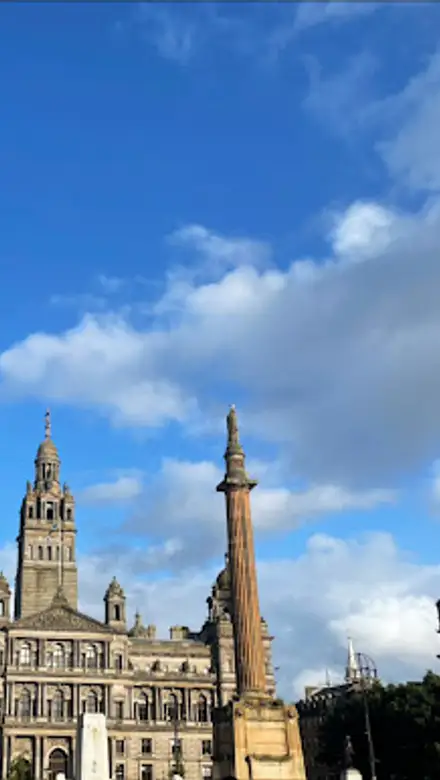
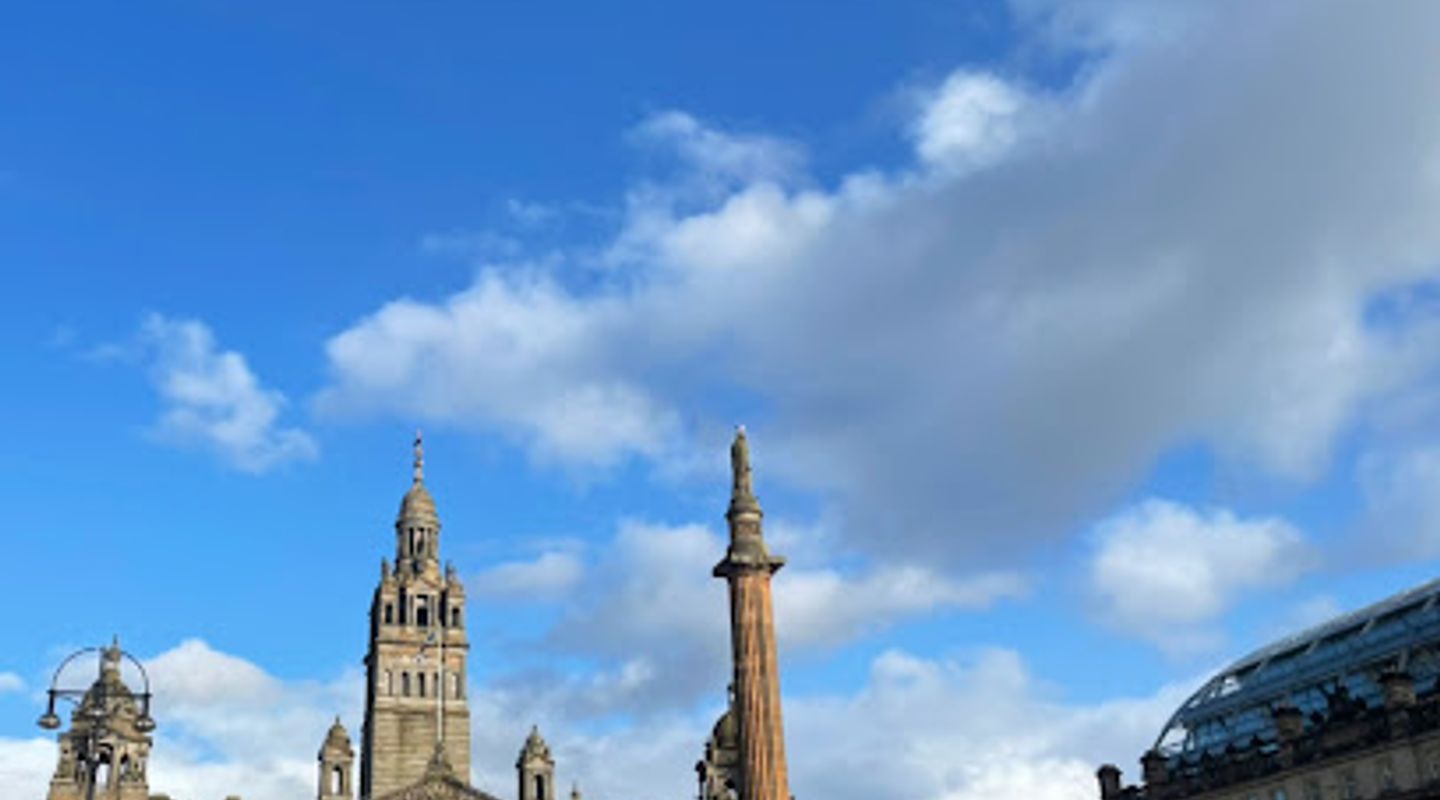
George Square stands as Glasgow's principal civic space, a grand public square named after King George III and laid out in 1781. Surrounded by architecturally significant buildings including the palatial City Chambers and the historic Merchants' House, the square showcases an impressive collection of statues and monuments dedicated to notable Scottish figures such as Robert Burns, James Watt, Sir Robert Peel, and Sir Walter Scott. Originally developed as an elegant residential square, it has evolved into the cultural and administrative heart of Glasgow, hosting major events throughout the year and serving as a focal point for the city's heritage and contemporary life.
A brief summary to George Square
- Glasgow, G2 1DH, GB
- Click to display
- Duration: 1 to 3 hours
- Free
-
 Outdoor
- Mobile reception: 5 out of 5

Know before you go
Hi, I'm Eve. Here are a few practical things to know before exploring George Square.
- Visit early morning or late afternoon to avoid peak crowds and capture the best light for photography, particularly for the City Chambers and Sir Walter Scott's monument.
- Take time to read the plaques and inscriptions on each statue and monument to understand the historical figures and events they commemorate.
- Plan your visit around major events like Piping Live! or Glasgow Loves Christmas! for a vibrant atmosphere, or avoid these periods if you prefer a quieter experience.
- Explore the surrounding buildings including the Gallery of Modern Art (housed in the former Royal Exchange building) and the City Chambers' ornate interior when open to the public.
- The square is fully accessible and free to explore at any time, making it ideal for flexible scheduling and multiple visits to appreciate different aspects of its architecture and history.
Do you manage this location?
Take control to get all the benefits, like improved information, better appearance, and stronger visibility across AI-powered discovery. Learn more about listing your business on Evendo
Activate your presenceOther nearby places you may find interesting
The closest places of the same kind, if this one is not quite what you had in mind.
Explore George Square on the Map
A handpicked selection of must-see spots near George Square, mapped for you.
Unlock the Best of George Square
Buy tickets
-
No tickets available
Book tours with entry


Getting There
-
Public Transport - Subway
Glasgow Subway serves the city centre with multiple stations within walking distance. Buchanan Street Station is approximately 5–7 minutes' walk from George Square. Journey times from outer areas typically range from 15–25 minutes depending on origin. Single fares cost around £1.75 to £2.00 GBP. Service runs frequently throughout the day, with reduced frequency in evenings and Sundays. The subway is accessible and well-signposted.
-
Public Transport - Bus
Multiple bus routes serve the city centre and stop near George Square on Queen Street, Buchanan Street, and surrounding roads. Journey times from residential areas typically range from 20–40 minutes depending on route and traffic. Single fares cost approximately £1.75 to £2.00 GBP. Buses run frequently throughout the day with reduced service in evenings. Real-time information is available at bus stops and online.
-
Walking from Glasgow Central Station
Glasgow Central Station is approximately 10–12 minutes' walk from George Square. Exit the station and head north through the city centre via Argyle Street or Queen Street. The route is flat, well-lit, and clearly signposted. This is a straightforward walk suitable for most mobility levels, though luggage may be cumbersome during peak times.
-
Taxi or Ride-Share
Taxis and ride-share services operate throughout Glasgow. Journey times from the airport or outer areas typically range from 20–45 minutes depending on traffic and distance. Fares vary but typically range from £15 to £40 GBP for journeys from central locations. Taxis can be hailed on the street or booked in advance. The square has taxi ranks on surrounding streets.
For the on-the-go comforts that matter to you
-
 Restrooms
-
 Drink Options
-
 Food Options
-
 Seating Areas
-
 Trash Bins
-
 Information Boards
Discover more about George Square
From Marshland to Civic Heart
George Square occupies land that underwent a remarkable transformation. In the late 18th century, the site was swampy ground belonging to Ramshorn Croft, filled with stagnant water and used for slaughtering horses. Glasgow Corporation purchased this unpromising terrain around 1772 and spent nearly a decade converting it into a grand residential square. The square was formally laid out in 1781 and named after King George III, though a planned statue of the monarch was quietly abandoned after American independence and the collapse of Glasgow's lucrative tobacco trade. The square officially opened in 1787, marking the beginning of its evolution from private residential space to public civic landmark.Architectural Grandeur and Imperial Ambition
The buildings framing George Square embody Glasgow's rise as the Second City of the British Empire. The east side is dominated by the palatial City Chambers, designed by architect William Young. Its foundation stone was laid on 6 October 1883 in a spectacular ceremony that drew 600,000 people and was declared a public holiday. The building was completed in 1889 and inaugurated by Queen Victoria herself, becoming the headquarters of Glasgow City Council. The structure's five storeys and ornate design showcase imperial grandeur, with its pediment originally intended to depict Glasgow sending manufactures to the world, later modified to celebrate Queen Victoria's jubilee with representations of the monarch and colonial subjects.On the west side stands the Merchants' House, originally constructed in 1775 as the city home of William Cunninghame, one of Glasgow's famous Tobacco Lords. The building features a distinctive domed tower crowned with a ship on a globe, symbolizing the maritime trade that built Glasgow's wealth. Designed by John Burnet and opened in 1874, it was expanded with two additional storeys by his son J.J. Burnet in 1907. The Merchants' House represents the guildry established in 1603 to support Glasgow's merchants and craftspeople, and it houses the Glasgow Chamber of Commerce, founded in 1783.Monuments to Memory and Achievement
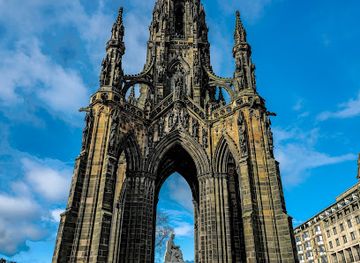
The square contains one of Scotland's most significant collections of public statuary. Ten statues commemorate notable Scottish figures, with Sir Walter Scott's monument dominating the centre—an 80-foot tall column completed in 1837 that serves as both memorial and sundial. The first statue, erected in 1819, honoured Sir John Moore of Corunna. Additional monuments celebrate Robert Burns, James Watt, and Sir Robert Peel, each representing different aspects of Scottish cultural and scientific achievement. The equestrian statues of Queen Victoria and Prince Albert stand side by side on the square's west side, added to commemorate the prince's life after his death in 1861.The Glasgow Cenotaph, designed by Sir John James Burnet and unveiled in 1924 by Field Marshal Earl Haig, stands directly in front of the City Chambers. This solemn war memorial commemorates approximately 20,000 Glaswegians killed during the First World War, out of roughly 200,000 who enlisted. The cenotaph marks the historic spot where soldiers were recruited and marched to war, and where returning soldiers took the salute. It remains the focal point of the Annual Remembrance Ceremony, when veterans, civic leaders, and clergy lay wreaths at the Stone of Remembrance.Evolution into Public Space
The square's transformation from private to public space occurred gradually. In 1825, the city undertook improvements by adding winding paths, trees, shrubs, and an iron fence, creating an attractive venue for walks and flower shows. Glasgow Corporation assumed management in 1862. When the Post Office foundation stone was laid by the Prince of Wales in 1878, the square's iron railings were removed, transverse walks were formed, and flower beds were introduced. In 1876, Glasgow Corporation opened the previously private central gardens to the public, democratizing access to this prestigious civic space.Contemporary Significance and Events
Today, George Square functions as Glasgow's principal gathering place and cultural hub. Throughout the year, it hosts major events including Piping Live!, Glasgow Loves Christmas!, and various commercial and civic celebrations. The square has served as a filming location for major productions, including a memorable 1940s-themed scene from a popular television series. Its position at the geographical and symbolic heart of Glasgow, surrounded by world-class architecture and rich historical monuments, makes it an essential destination for understanding the city's imperial past, industrial heritage, and contemporary identity.












Your all‑in‑one travel companion app
Explore expert travel guides, compare and book tours, experiences, hotels, and more—all from the palm of your hand. Download now for seamless trip planning wherever your wanderlust takes you.


Explore More of Scotland
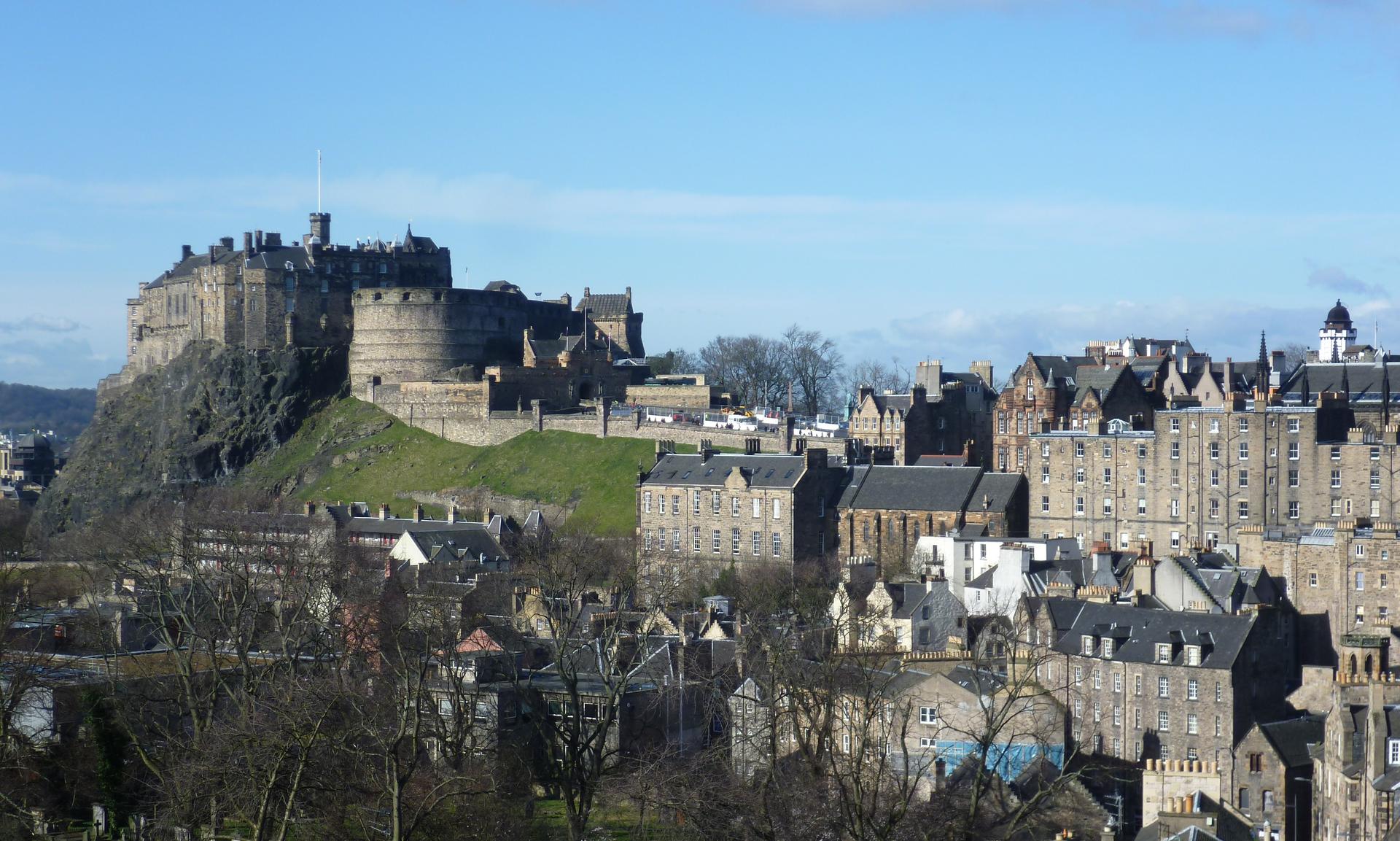
Looking beyond George Square? Discover Scotland for broader travel guides, local hot-spots, and regional highlights.
Explore Scotland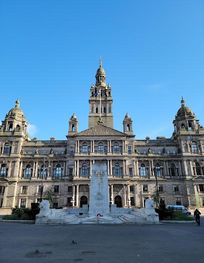
A grand Victorian town hall in the heart of Glasgow, where civic power meets opulent architecture and free guided tours reveal the city’s proud history.
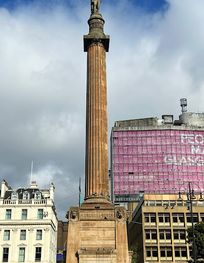
A towering Gothic tribute to Sir Walter Scott in Glasgow’s historic George Square, celebrating Scotland’s literary heritage.