Elibank Castle Travel Guide
Free Guide: Explore the evocative ruins of Elibank Castle, a 16th-century Scottish Border fortress with stunning valley views and rich clan history.


A brief summary of Elibank Castle
Explore the evocative ruins of Elibank Castle, a 16th-century Scottish Border fortress with stunning valley views and rich clan history.
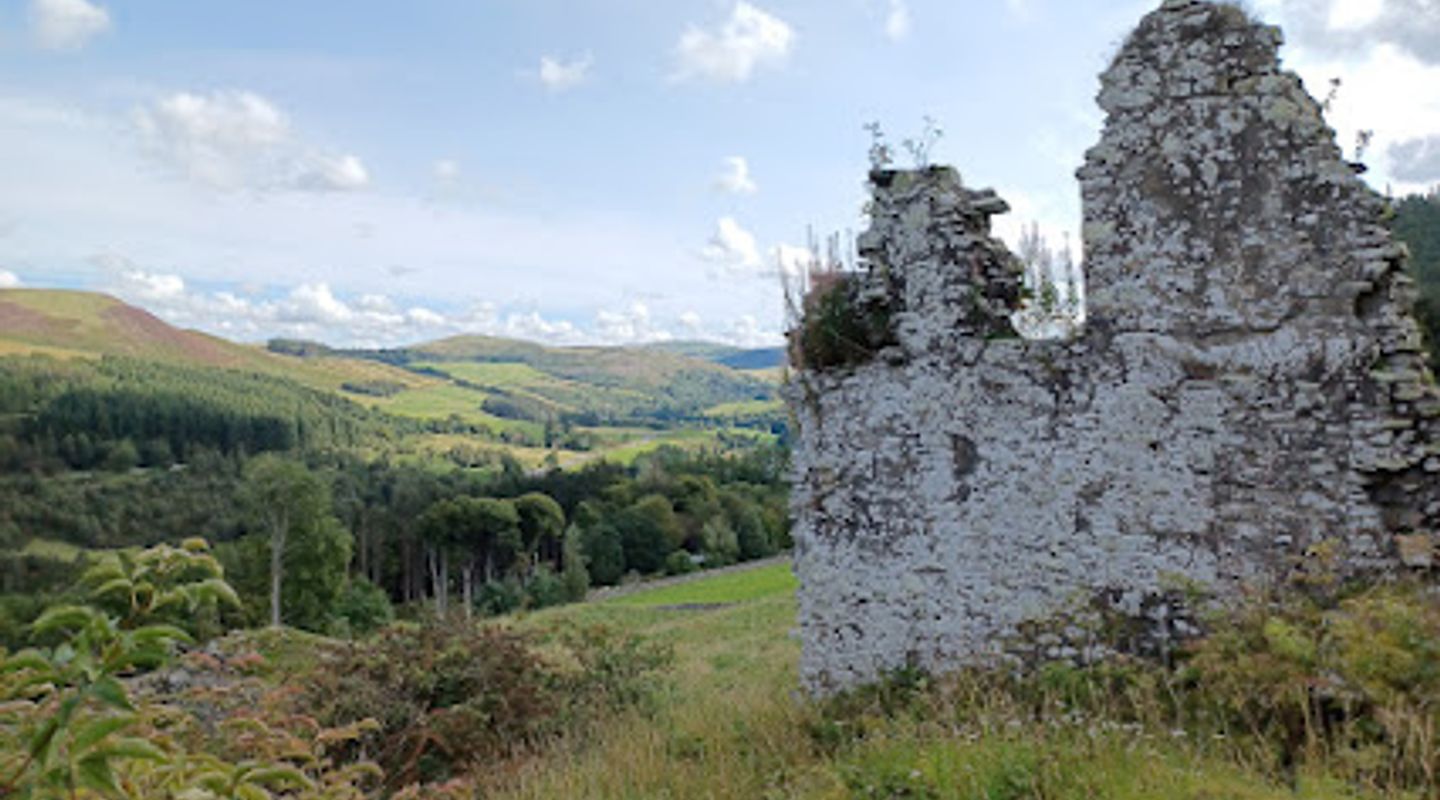
Elibank Castle, located near Walkerburn in the Scottish Borders, is a late 16th-century ruined fortified house once home to the influential Murray family. Set on an artificial plateau with commanding views over the Tweed valley, the castle features vaulted basements, a surviving tower, and remnants of terraced gardens. Though now a romantic ruin, it reflects centuries of Scottish history, clan rivalries, and architectural evolution.
On-site amenities
 Information boards
 Seating areas
 Trash bins
- Address
- Walkerburn EH43 6DA
- Website
Getting there
Car
Bus
Walking
Discover more about Elibank Castle
Origins and Early Foundations
Elibank Castle, originally known as Eliburn, dates back to the early 16th century when King James IV granted the lands and forests of Aleburne to Catherine Douglas and her family in 1511. The charter required the construction of a substantial stone house with supporting structures such as a hall, chambers, barns, stables, and gardens. This early structure, likely built by the Liddell family, is thought to have been a rectangular tower located on the north-west corner of the site. The castle’s location on a roughly square, artificially created plateau on the hillside provided a strategic vantage point over the Tweed valley, a vital border region between Scotland and England.
The Murray Family and Castle Transformation
In the late 16th century, around 1594-95, Sir Gideon Murray acquired Eliburn, renamed it Elibank, and undertook significant remodeling. The castle was expanded into an L-plan building with a main block measuring approximately 21 by 6.9 meters and a projecting square wing. The vaulted basement chambers, lit by arrow-slit windows, and the surviving tower at the north end of the main block are key features from this period. Sir Gideon’s enhancements reflected both defensive needs and the status of his family, who were later elevated in the Baronetage of Nova Scotia and the peerage as Lords Elibank.
Architectural Features and Landscape
The castle’s architecture includes vaulted basements divided into chambers, arrow-slit windows designed for defense, and a spiral staircase leading to upper floors. The northern tower, possibly the oldest surviving part, contains a vaulted first floor and remnants of a fireplace. The surrounding hillside was terraced and landscaped to create formal gardens and a walled lane, emphasizing the castle’s role as a prestigious residence. These terraces and gardens would have offered both aesthetic pleasure and practical use, such as orchards and beehives, as originally mandated in the 1511 charter.
Historical Context and Clan Rivalries
Elibank Castle was a focal point in the turbulent borderlands, witnessing centuries of clan conflicts, particularly between the Murrays and the Scotts. The castle’s strategic location made it a stronghold during these feuds, and its owners were notable figures in Scottish history. Stories and legends, such as that of Lady Agnes Murray and the cattle rustler known as Muckle Mou’ed Meg, add a colorful human dimension to the site’s history. By the 18th century, the castle had fallen into ruin, reflecting the decline of the border defensive system and changing political landscapes.
The Castle Today and Visitor Experience
Today, Elibank Castle stands as a romantic ruin nestled in the scenic Tweed valley, near the village of Walkerburn. Visitors can explore the remains of its walls, vaulted chambers, and tower, imagining life in a bygone era. The site offers tranquil views over the valley and a peaceful atmosphere that invites reflection on Scotland’s rich heritage. Though largely roofless and weathered by time, the castle’s ruins convey a sense of endurance and historical significance.
Legacy and Cultural Significance
Elibank Castle represents a tangible link to Scotland’s border history, noble families, and architectural evolution from the 16th century onward. Its association with the Murray family and their rise in status encapsulates the social dynamics of the period. The castle’s ruins also contribute to the cultural landscape of the Scottish Borders, a region steeped in stories of clan warfare, resilience, and heritage preservation. As a protected historical monument, Elibank Castle continues to inspire interest and respect among historians, locals, and visitors alike.
Evendo Review Centre
 Google
Guest reviews
Best time to go
Quietest: Jan, Feb & Dec · before 6am or at 9pm
Busy times are Evendo estimates for a typical year, to help you plan. Actual crowds vary with events, school holidays and the weather.
Explore Elibank Castle on the map
A handpicked selection of must-see spots near Elibank Castle, mapped for you.
Get your free copy of our complete guide to Elibank Castle, delivered straight to you.
Everything on this page, from opening hours and how to get there to Eve’s tips and the best time to go, in one PDF you can read offline, print or share.
Already have an account? Sign in
Your Elibank Castle guide is ready.
We'll send it to · Not you? Sign out

Getting your guide ready…
We are putting together a fresh copy of the Elibank Castle guide. This can take up to a minute.
This can take a few moments. If your browser asks, choose Allow so the download can start. You'll find the guide in your Downloads folder.
Nothing happened? Download it again
Sorry, the guide is taking longer than usual. Please try again in a minute, or get it by email instead.
Other nearby places you may find interesting
The closest places of the same kind, if this one is not quite what you had in mind.
-
Bowhill House & Grounds Explore Bowhill House’s Victorian heritage, scenic woodland walks, and family adventure playground in the heart of the Scottish Borders.
-
A Selkirk Legacy Discover the tranquil riverside heritage and rich cultural legacy of Selkirk along the scenic Ettrick Water.
-
Halliwell's House Museum Discover Selkirk’s oldest building and its rich local history through engaging exhibits and historic charm in the heart of the Scottish Borders.
-
Smailholm Tower Explore Smailholm Tower, a striking 15th-century border peel house with rich history, stunning views, and ties to Sir Walter Scott’s literary legacy.
-
Sir Walter Scott's Courtroom Step into the historic courtroom where Sir Walter Scott served justice and explore the rich legacy of Scotland’s literary and legal heritage in Selkirk.
Swipe for more places
More to explore near Elibank Castle

 Best experiences near Elibank Castle
 Best hotels near Elibank Castle
 Best landmarks near Elibank Castle
 Best attractions near Elibank Castle
 Best shops near Elibank Castle
 Best restaurants near Elibank Castle
 Best bars near Elibank Castle
Do you manage this location?
Take control to get all the benefits, like improved information, better appearance, and stronger visibility across AI-powered discovery.
Explore more

Explore more of Selkirkshire
Discover the enchanting beauty and rich history of Selkirkshire, the heart of the Scottish Borders, where nature, tradition, and culture come together.
Explore Selkirkshire
Explore more of United Kingdom
Discover the United Kingdom: A blend of rich history, stunning landscapes, and vibrant cities, offering a unique travel experience for every visitor.
Explore United Kingdom