Sheffield War Memorial, Sheffield Travel Guide
A solemn and iconic Grade II* listed cenotaph in Sheffield city centre, honoring the city's wartime sacrifices with striking sculptures and historic symbolism.
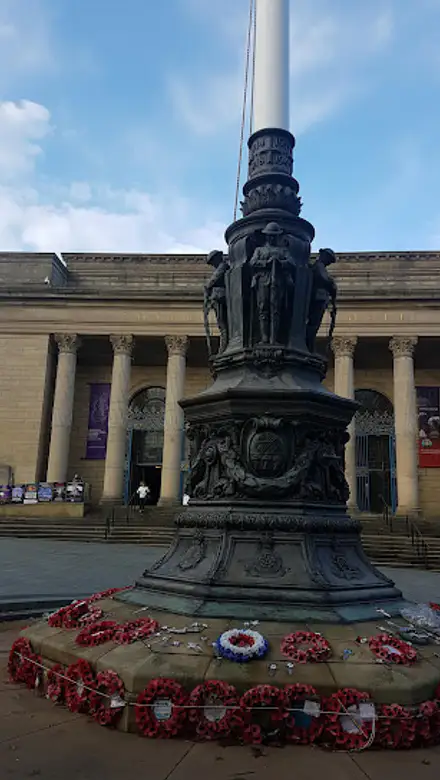
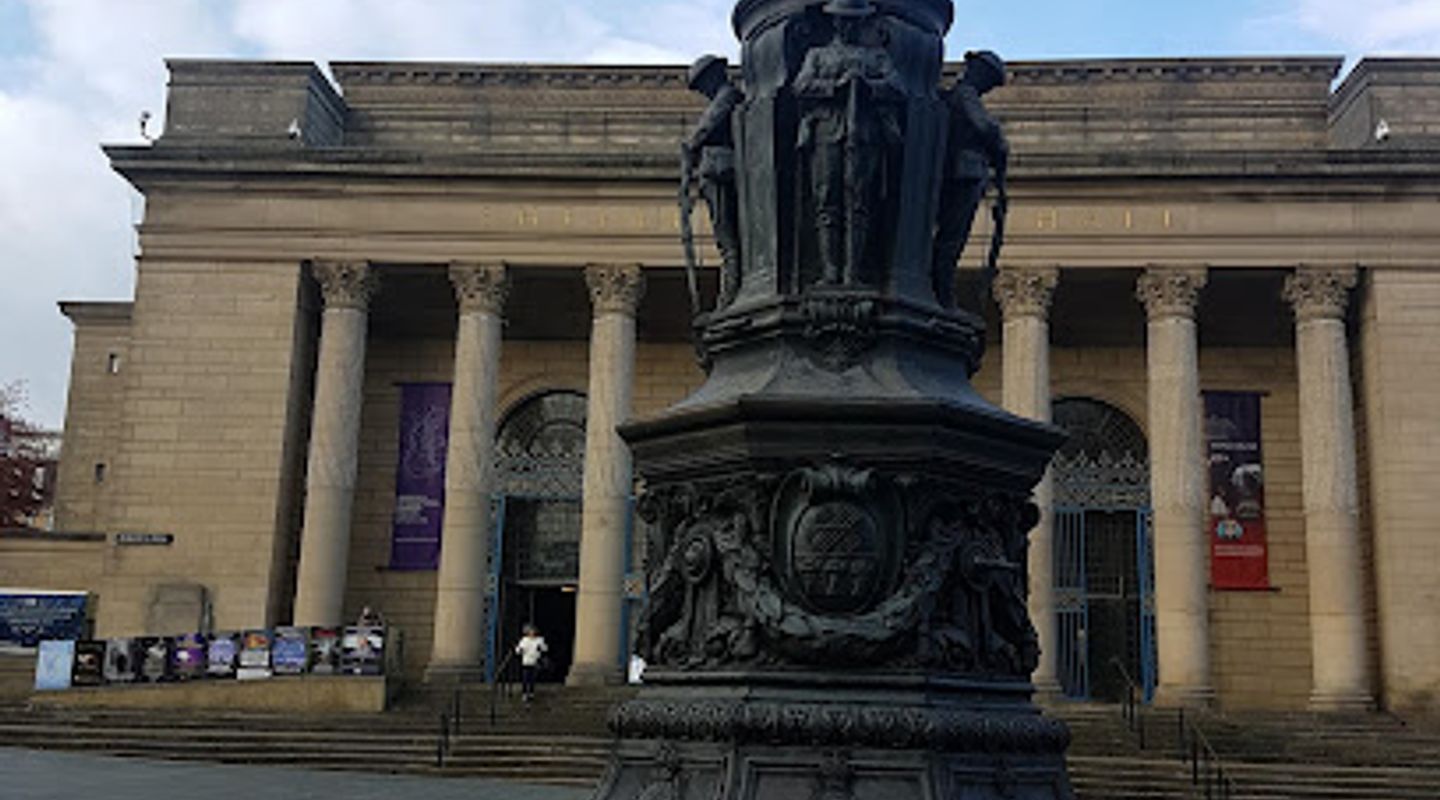
The Sheffield War Memorial, also known as the Sheffield Cenotaph, is a Grade II* listed monument located at Barker's Pool in Sheffield city centre. Unveiled in 1925, it commemorates the sacrifices of Sheffield’s servicemen from the World Wars. The memorial features a striking 25-metre-high white flagpole atop a bronze base with four solemn soldier statues and emblems representing the British armed forces and Sheffield’s heritage.
A brief summary to Sheffield War Memorial
- S1, Barker's Pool, Sheffield, Sheffield City Centre, Sheffield, GB
- Click to display
- Duration: 0.5 to 1.5 hours
- Free
-
 Outdoor
- Mobile reception: 4 out of 5

Know before you go
Hi, I'm Eve. Here are a few practical things to know before exploring Sheffield War Memorial.
- Visit during Remembrance Day ceremonies to experience the memorial’s profound communal significance.
- Take time to observe the detailed bronze statues and emblems representing Sheffield’s military units.
- Combine your visit with nearby Sheffield City Hall and Barker’s Pool to explore the civic heart of the city.
- Visit in daylight for the best views and photographic opportunities of the memorial’s intricate details.
Do you manage this location?
Take control to get all the benefits, like improved information, better appearance, and stronger visibility across AI-powered discovery. Learn more about listing your business on Evendo
Activate your presenceOther nearby places you may find interesting
The closest places of the same kind, if this one is not quite what you had in mind.

Explore Sheffield War Memorial on the Map
A handpicked selection of must-see spots near Sheffield War Memorial, mapped for you.
Getting There
-
Public Transport
Take Sheffield’s tram services to the Cathedral stop, located approximately 800 meters from Barker's Pool. From there, it is a 10-15 minute walk through city centre streets. Trams run frequently with tickets costing around £2.50-£4.00 one way.
-
Bus
Multiple bus routes serve Sheffield city centre with stops near Barker's Pool, including routes 18, 52, and 120. Travel times vary from 15 to 30 minutes depending on origin. Single fares typically range from £2.00 to £3.50.
-
Car
Driving to Barker's Pool is possible but parking is limited. Nearby public car parks such as the Millennium Galleries or Orchard Square offer hourly rates from £2.50 to £4.00. Expect a 10-20 minute walk from parking to the memorial.
-
Walking
If staying in Sheffield city centre, the memorial is easily accessible on foot. Walking times from key landmarks like Sheffield Station are about 15 minutes over mostly flat, paved terrain.
For the on-the-go comforts that matter to you
-
 Restrooms
-
 Drink Options
-
 Food Options
-
 Seating Areas
-
 Information Boards
Discover more about Sheffield War Memorial
Origins and Purpose of the Memorial
The Sheffield War Memorial was commissioned after intense public debate following the First World War, reflecting the city’s deep desire to honour its fallen. More than 5,500 Sheffield men died in the conflict, prompting the establishment of a committee to decide on a fitting tribute. After considering multiple proposals, the site chosen was Barker's Pool, a central public square in Sheffield, where shops were demolished to create a dignified setting. The memorial was designed by Charles Denny Carus-Wilson, head of the University of Sheffield's School of Architecture and a decorated war veteran himself. Funded by public donations totaling £5,435, it was unveiled on 28 October 1925 by General Sir Charles Harington and dedicated by the Bishop of Sheffield Leonard Burrows.Architectural and Artistic Features
The memorial’s most striking feature is its 25-metre (82-foot) high flagpole, fashioned from mild steel by Earle's Shipbuilding of Hull and painted white. Topping the pole is a gilded ball and crown, symbolizing honor and sovereignty. The flagpole rises from a 5.3-metre-high bronze base sculpted by George Alexander, the only war memorial created by this artist. The base includes four statues of soldiers standing with bowed heads and rifles reversed, a traditional sign of mourning. Around the octagonal base are emblems representing the British Army, Royal Navy, Royal Air Force, and the city of Sheffield, alongside badges of eight local army units, linking the memorial intimately to the city’s military heritage.Historical Significance and Preservation
The memorial bears the scars of history, including shrapnel damage from bombing during the Second World War, which was deliberately left unrepaired to preserve its authenticity. Additional dates marking subsequent conflicts were added after the Second World War. Recognized for its architectural and historic importance, the memorial was designated a Grade II listed building in 1983 and upgraded to Grade II* status in 2016. Restoration efforts have taken place periodically, notably after Barker's Pool was pedestrianized in 1989 and again in 2005 when the flag-raising mechanism was replaced.Setting and Atmosphere at Barker’s Pool
Situated in the heart of Sheffield’s city centre, Barker's Pool provides a spacious, contemplative environment for the memorial. The open square, adjacent to the City Hall, allows visitors to approach and reflect on the sacrifices commemorated. The memorial’s solemn figures and symbolic emblems create a powerful atmosphere of remembrance and respect. The site is a focal point for civic ceremonies, particularly on Remembrance Day, drawing the community together in shared memory.Connections to Sheffield’s Broader War Heritage
The Sheffield War Memorial is part of a wider network of commemorations across the city, which includes numerous smaller memorials and Rolls of Honour such as those at local churches and neighborhoods. These collectively tell the story of Sheffield’s contribution and losses in the World Wars. The memorial’s design and location emphasize the city’s commitment to preserving the memory of those who served and died, while also linking to the national tradition of cenotaphs as symbolic empty tombs honoring the war dead.Visitor Experience and Cultural Impact
Visitors to the Sheffield War Memorial encounter a site that blends architectural dignity with poignant symbolism. The bronze soldiers’ bowed heads invite quiet reflection, while the soaring flagpole and detailed emblems celebrate the city’s military identity. The memorial’s presence in a busy urban square makes it accessible for both locals and tourists, serving as a daily reminder of sacrifice amidst the rhythms of city life. Its Grade II* listing ensures ongoing preservation, allowing future generations to connect with Sheffield’s wartime history.












Your all‑in‑one travel companion app
Explore expert travel guides, compare and book tours, experiences, hotels, and more—all from the palm of your hand. Download now for seamless trip planning wherever your wanderlust takes you.


Explore More of Sheffield
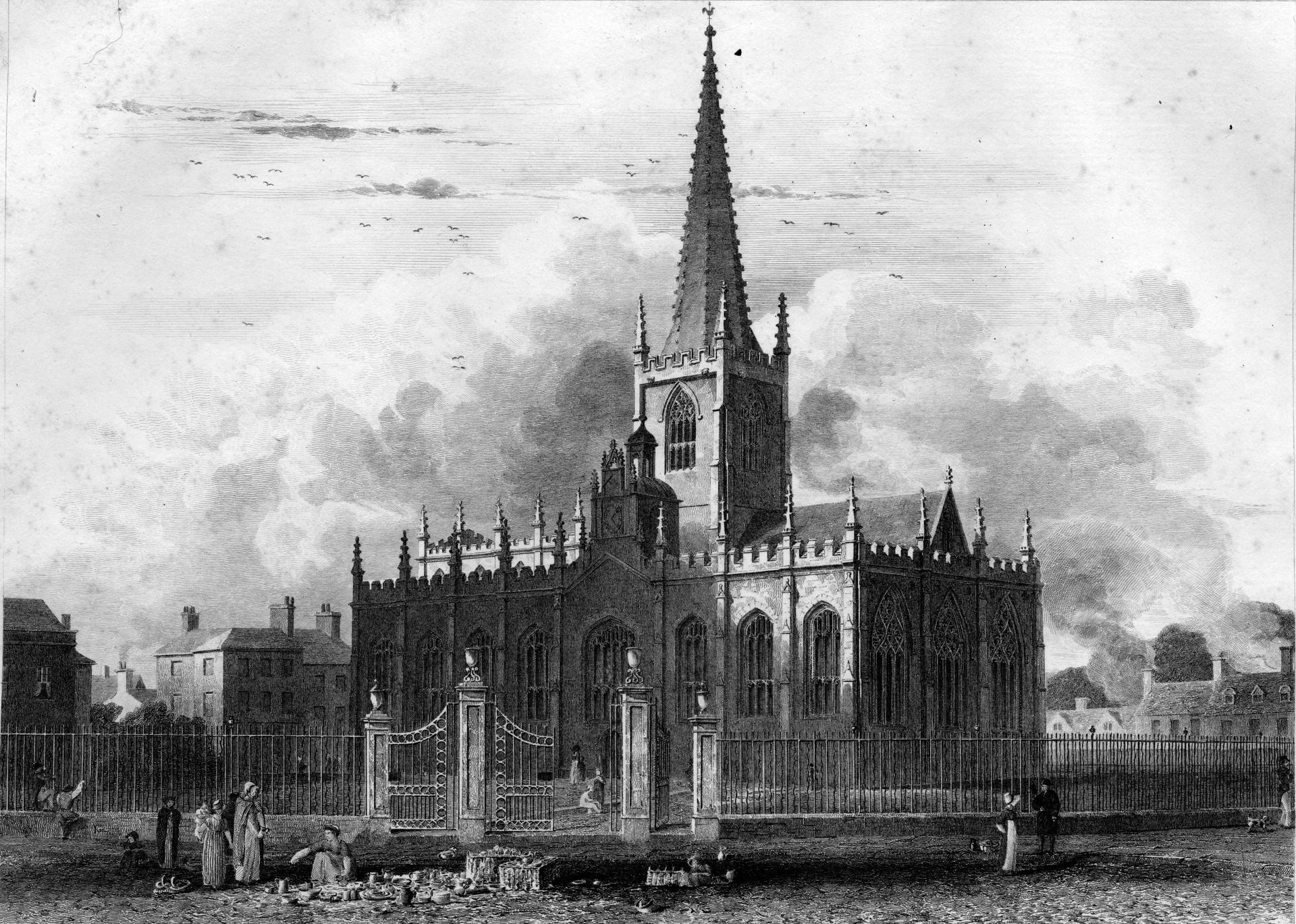
Looking beyond Sheffield War Memorial? Discover Sheffield for broader travel guides, local hot-spots, and regional highlights.
Explore Sheffield
Explore the ancient Bronze Age Nine Ladies Stone Circle on Stanton Moor—a mystical site of legend, ritual, and timeless beauty in Derbyshire.

A grand Victorian landmark with an iconic clock tower, intricate stonework, and serene Peace Gardens in Sheffield’s vibrant city centre.