

Blackness Castle, Stirling Travel Guide
Free Guide: Explore Blackness Castle, the mighty 15th-century fortress on the Firth of Forth known as the ‘ship that never sailed’, rich in history and stunning views.


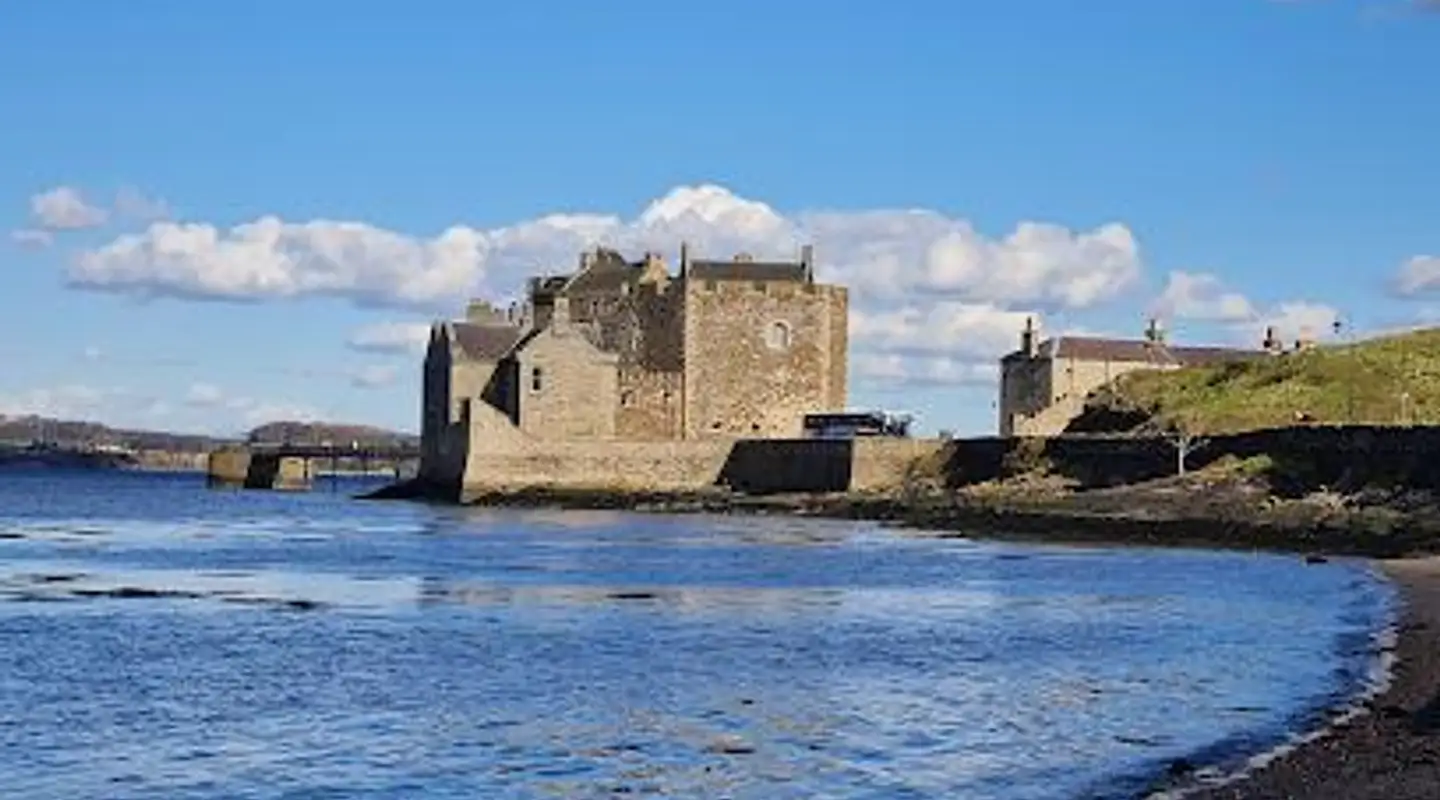
A brief summary of Blackness Castle
Explore Blackness Castle, the mighty 15th-century fortress on the Firth of Forth known as the ‘ship that never sailed’, rich in history and stunning views.
Blackness Castle, perched on the southern shore of the Firth of Forth near Linlithgow, is a striking 15th-century fortress known as the ‘ship that never sailed’. Originally built by the powerful Crichton family and later a royal stronghold, it served as a garrison fortress, state prison, and ammunition depot. Visitors can explore its well-preserved towers, courtyards, and battlements while enjoying panoramic views of the river and surrounding coastline.
On-site amenities
 Restrooms
 Drink options
 Food options
 Seating areas
 Picnic areas
 Information boards
 Visitor centre
Opening hours
- Every day10 am–4 pm
Opening hours as listed on the venue’s Google Business Profile. Hours can change for services and special events, so check with the venue before you go.
- Address
- Blackness, Linlithgow EH49 7NH
- Phone
- Website
Getting there
Train and Bus
Car
Walking from Linlithgow
Discover more about Blackness Castle
Origins and Early Power
Blackness Castle was constructed in the 1440s by Sir George Crichton, a prominent Scottish noble and Lord High Admiral. Positioned strategically on the Firth of Forth, it served as the main port for the nearby Royal Burgh of Linlithgow, a favored residence of Scottish monarchs. In 1453, the castle and its lands were annexed by King James II, becoming crown property and marking the start of its long royal association. The Crichtons were influential, and the castle reflected their power and prestige.
Transformation into a Military Stronghold
Between 1534 and 1542, under King James V and the expertise of Sir James Hamilton of Finnart, Blackness underwent extensive fortifications to become one of Scotland’s most advanced artillery castles. Its design emphasized brute strength over subtlety, with thick masonry walls and multiple gun ports providing all-around firepower. This transformation was driven by the threat from England during the turbulent Reformation and Wars of the Rough Wooing. The castle’s formidable defenses were tested repeatedly, notably during Oliver Cromwell’s 1650 siege, which left visible scars from heavy bombardment.
A Storied Prison and Military Base
Beyond its military role, Blackness Castle functioned as a state prison for high-profile captives, including Cardinal David Beaton and the 6th Earl of Angus. The castle’s central keep offered relatively comfortable quarters for noble prisoners, while common captives faced harsh conditions in the sea-flooded dungeon below. After the Union of Scotland and England in 1707, the British Army maintained the castle as a garrison, and during the late 18th and early 19th centuries, it housed French prisoners of war. By the late 19th century, Blackness became Scotland’s central ammunition depot, with significant modifications such as roofing over the courtyard and constructing barracks and a cast-iron pier.
Architectural Features and Visitor Experience
Blackness Castle’s layout resembles a great stone ship, earning it the nickname ‘the ship that never sailed’. Visitors can explore its labyrinthine entrance, spiral staircases, curtain walls, and towers, many offering sweeping views across the Firth of Forth toward Fife and the iconic Forth Rail Bridge. The castle’s rugged setting on exposed rock and cobbled grounds adds to its authentic atmosphere. Its role as a filming location for productions like Outlander and Hamlet enhances its cultural significance.
Access and Preservation Today
Managed by Historic Environment Scotland, Blackness Castle is open to the public with facilities including a visitor center, gift shop, and picnic areas. Access involves uneven terrain and historic staircases, which may challenge visitors with mobility issues. The site is well-preserved, with visible historical damage and restorations telling the story of its military and penal past. The castle remains a powerful symbol of Scotland’s turbulent history and architectural resilience.
Legacy and Cultural Impact
Blackness Castle stands as a testament to Scotland’s medieval and early modern history, reflecting shifts in warfare, politics, and royal authority. Its enduring image as a fortress shaped like a ship captures the imagination, while its layered history—from noble residence to prison and ammunition depot—provides rich context for visitors. The castle’s dramatic location and evocative ruins continue to inspire historians, filmmakers, and travelers alike.
Evendo Review Centre
 Google
Guest reviews
Best time to go
Quietest: Jan, Feb & Dec · before 7am or at 8pm
Busy times are Evendo estimates for a typical year, to help you plan. Actual crowds vary with events, school holidays and the weather.
Explore Blackness Castle on the map
A handpicked selection of must-see spots near Blackness Castle, mapped for you.
Get your free copy of our complete guide to Blackness Castle, delivered straight to you.
Everything on this page, from opening hours and how to get there to Eve’s tips and the best time to go, in one PDF you can read offline, print or share.
Already have an account? Sign in
Your Blackness Castle guide is ready.
We'll send it to · Not you? Sign out

Getting your guide ready…
We are putting together a fresh copy of the Blackness Castle guide. This can take up to a minute.
This can take a few moments. If your browser asks, choose Allow so the download can start. You'll find the guide in your Downloads folder.
Nothing happened? Download it again
Sorry, the guide is taking longer than usual. Please try again in a minute, or get it by email instead.
Unlock the best of Blackness Castle
Skip-the-line tickets, guided tours with entry, and walking tours of the area, booked in a few clicks.




Other nearby places you may find interesting
The closest places of the same kind, if this one is not quite what you had in mind.
-
-
-
-
-


Swipe for more places
More to explore near Blackness Castle

 Best experiences near Blackness Castle
 Best hotels near Blackness Castle
 Best landmarks near Blackness Castle
 Best attractions near Blackness Castle
 Best shops near Blackness Castle
 Best restaurants near Blackness Castle
 Best bars near Blackness Castle
Do you manage this location?
Take control to get all the benefits, like improved information, better appearance, and stronger visibility across AI-powered discovery.
Explore more

Explore more of Stirling
Discover Stirling: A city where history comes alive amidst stunning landscapes and cultural richness in the heart of Scotland.
Explore Stirling
Explore more of United Kingdom
Discover the United Kingdom: A blend of rich history, stunning landscapes, and vibrant cities, offering a unique travel experience for every visitor.
Explore United Kingdom
