

Limekilns Travel Guide
Free Guide: Historic Limekilns village on Fife’s Firth of Forth coast blends medieval port heritage with tranquil seaside charm.


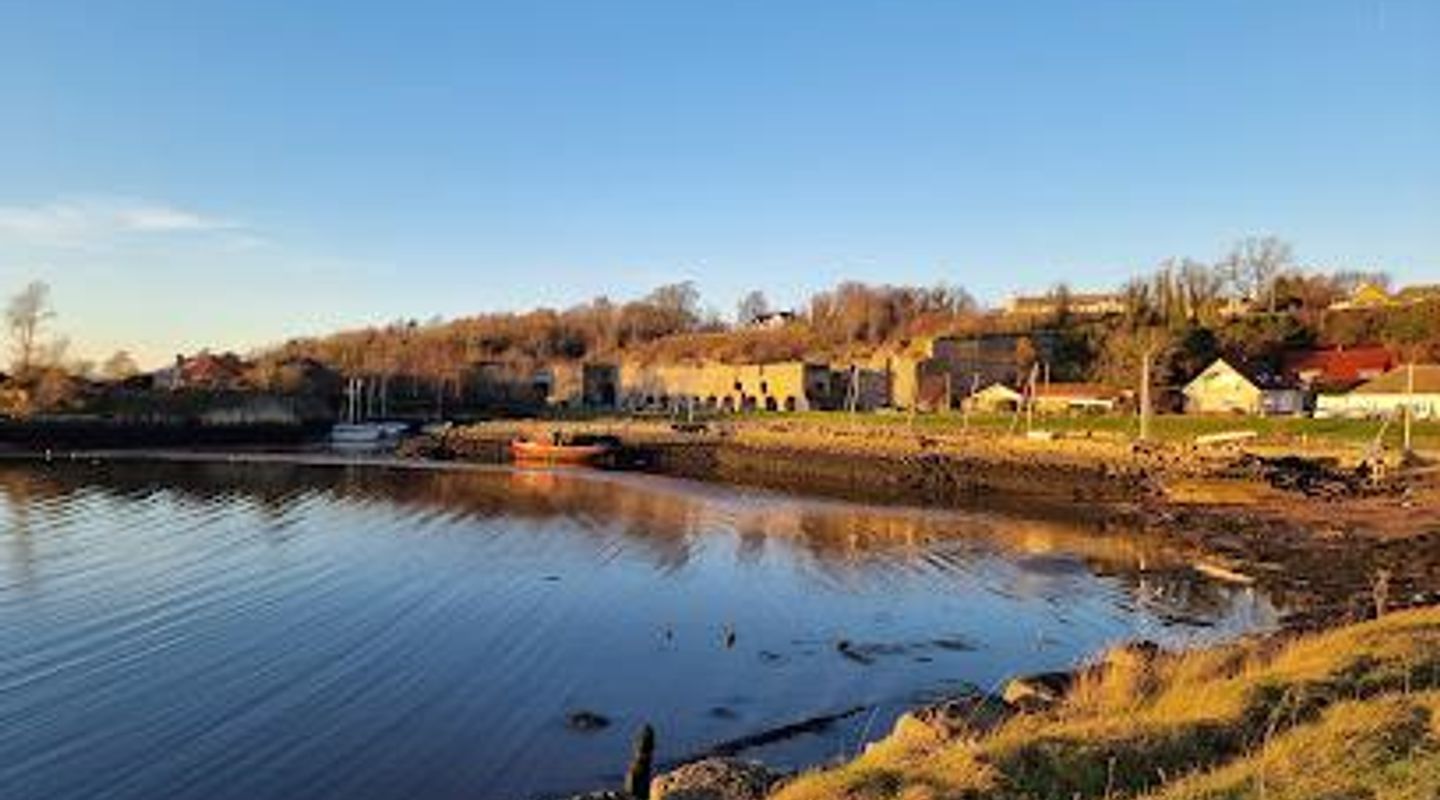
A brief summary of Limekilns
Historic Limekilns village on Fife’s Firth of Forth coast blends medieval port heritage with tranquil seaside charm.
Limekilns is a charming historic village on the north shore of the Firth of Forth in Fife, Scotland. Dating back to the 14th century, it was once the main port for nearby Dunfermline and a center for lime production. Today, Limekilns offers a picturesque coastal setting, rich heritage, and connections to Scottish royalty and maritime trade, making it a captivating destination for history and nature enthusiasts.
On-site amenities
 Seating areas
 Information boards
 Restrooms
 Food options
 Drink options
- Address
- Limekilns
Getting there
Train and Bus
Car
Ferry and Bus
Discover more about Limekilns
Medieval Origins and Maritime Significance
Limekilns traces its roots back to the 14th century when it was known as Galletts, serving as the principal port for the inland town of Dunfermline. Its natural harbour, sheltered by the rocky ridge called The Ghauts, provided docking facilities for small to medium-sized cargo and transport ships. This strategic location enabled Limekilns to engage in trade with ports across the Baltic Sea and France, playing a vital role in regional commerce until the 17th century. The village's maritime legacy is further enriched by its role as the northern terminus of a ferry linking it to Bo'ness across the Firth of Forth, a route famously echoed in Robert Louis Stevenson's novel "Kidnapped."
The Lime Industry and Economic Evolution
The village's name reflects its historic lime production industry, which began early due to the local limestone's importance for farming and construction. Lime kilns fueled by charcoal and later coal converted limestone to quicklime, which was exported along Scotland’s east coast. By the mid-18th century, this industry shifted westwards to the nearby village of Charlestown, where large industrial-scale lime kilns still stand as ruins. Despite this shift, Limekilns retained a diverse industrial character over the centuries, including shipbuilding, soap making, and brewing, contributing to its economic vitality beyond lime production.
Royal Connections and Architectural Heritage
Limekilns lies within lands historically owned by the Earls of Elgin, whose estate, Broomhall House, overlooks the village. The oldest surviving building, the King's Cellar, dates from the early 1500s and is reputed to have served as a royal wine cellar or warehouse associated with Dunfermline’s royal residence. Over time, it has had varied uses including as a school and chapel, and today functions as a Freemasons Lodge. The village also features two 18th-century harbours: Bruce Haven, built to export coal from Fife’s coalfields, and Limekilns Harbour, both reflecting the area's maritime and industrial heritage.
Scenic Coastal Village Atmosphere
Today, Limekilns is a tranquil and picturesque village, prized for its coastal charm and historical ambiance. Its location on the Firth of Forth offers scenic waterfront views and a peaceful environment, aided by its bypass from major roads. The village’s setting combines natural beauty with a rich tapestry of history, making it an appealing spot for visitors interested in heritage, maritime history, and quiet seaside walks.
Legacy and Cultural Significance
Limekilns’ long history as a port and industrial village has left a lasting imprint on the region. Its connection to Scottish royalty, maritime trade routes, and the evolution of lime production highlight its importance in Scotland’s economic and cultural development. The village’s story is intertwined with the broader historical narratives of Fife and the Firth of Forth, offering insight into Scotland’s coastal communities and their changing fortunes over centuries.
Preservation and Visitor Experience
While Limekilns is quieter today, its heritage is preserved in its architecture and landscape. The village appeals to those seeking a blend of history and coastal tranquility, with access to nearby Charlestown’s lime kilns and other historic sites. Visitors can appreciate the layered past of this small but significant village, from medieval port to industrial hub, framed by the natural beauty of Scotland’s east coast.
Evendo Review Centre
 Google
Guest reviews
Best time to go
Quietest: Jan, Feb & Dec · before 6am or from 11pm
Busy times are Evendo estimates for a typical year, to help you plan. Actual crowds vary with events, school holidays and the weather.
Explore Limekilns on the map
A handpicked selection of must-see spots near Limekilns, mapped for you.
Get your free copy of our complete guide to Limekilns, delivered straight to you.
Everything on this page, from opening hours and how to get there to Eve’s tips and the best time to go, in one PDF you can read offline, print or share.
Already have an account? Sign in
Your Limekilns guide is ready.
We'll send it to · Not you? Sign out

Getting your guide ready…
We are putting together a fresh copy of the Limekilns guide. This can take up to a minute.
This can take a few moments. If your browser asks, choose Allow so the download can start. You'll find the guide in your Downloads folder.
Nothing happened? Download it again
Sorry, the guide is taking longer than usual. Please try again in a minute, or get it by email instead.
Other nearby places you may find interesting
The closest places of the same kind, if this one is not quite what you had in mind.
-
-
-
-
-


Swipe for more places
More to explore near Limekilns

 Best experiences near Limekilns
 Best hotels near Limekilns
 Best landmarks near Limekilns
 Best attractions near Limekilns
 Best shops near Limekilns
 Best restaurants near Limekilns
 Best bars near Limekilns
Do you manage this location?
Take control to get all the benefits, like improved information, better appearance, and stronger visibility across AI-powered discovery.
Explore more

Explore more of Stirlingshire
Discover Stirlingshire: A historic gem in central Scotland, where ancient castles, scenic landscapes, and vibrant culture unite to create an unforgettable travel experience.
Explore Stirlingshire
Explore more of United Kingdom
Discover the United Kingdom: A blend of rich history, stunning landscapes, and vibrant cities, offering a unique travel experience for every visitor.
Explore United Kingdom
