

Free Sanpete Valley Travel Guide & Mobile App
Explore Sanpete Valley with free travel guides. Discover regional history, expert tips, proposed trips, and audio guides on web or mobile app.


Explore Sanpete Valley’s pioneer towns, historic Manti, farm country and mountain recreation in the quieter heart of central Utah.
Read more about Sanpete Valley
Getting to and around Sanpete Valley
How to get there
Transportation
Best attractions in Sanpete Valley
Sanpete Valley’s attractions are spread through a working agricultural landscape rather than gathered in one resort complex. Manti provides the principal heritage experience, with the Manti Utah Temple, historic streets and local museums setting the context for nineteenth-century settlement. Spring City rewards careful exploration of its preserved homes, stone buildings and active arts community, while Ephraim combines historic architecture with the educational and cultural presence of Snow College. Palisade State Park, near Sterling, is the valley’s main developed recreation area, offering a reservoir for boating and fishing, camping and a golf course. The roads towards the Wasatch Plateau lead to hiking, fishing, hunting and winter activities, with conditions becoming more remote and weather-dependent at higher elevations. Smaller communities such as Mount Pleasant, Moroni and Fountain Green provide local history, churches, cemeteries, farms and views across the basin. Visitors interested in archaeology, Indigenous history or pioneer settlement should seek current information from local museums and public agencies rather than entering unmarked or private sites.
-
Church of Jesus Christ of Latter-day Saints
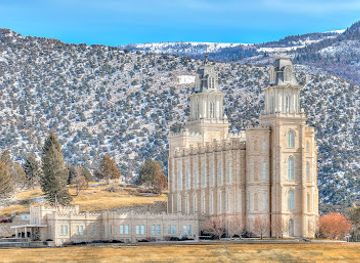
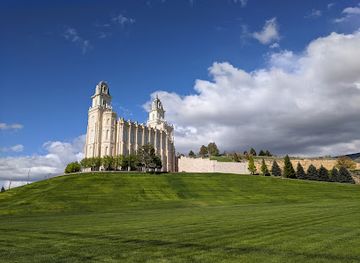
Manti Utah Temple
Explore the breathtaking Manti Utah Temple, a stunning architectural gem and serene religious destination in the heart of Utah.
Best landmarks in Sanpete Valley
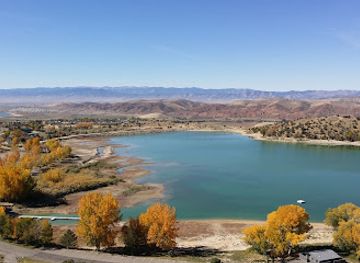
The Manti Utah Temple is Sanpete Valley’s defining landmark, rising above Manti in locally quarried pale limestone and representing the scale and ambition of the valley’s early Latter-day Saint settlers. Its grounds and interior access are governed by the policies of The Church of Jesus Christ of Latter-day Saints, but the exterior is visible from public approaches and surrounding parts of the town. Spring City’s historic district is another important landmark landscape: stone and adobe-influenced homes, workshops and public buildings preserve the form of a nineteenth-century settlement while remaining part of a lived-in community. In Ephraim, the campus and historic buildings associated with Snow College contribute a distinct institutional character. The Sanpete Valley itself is also a geographical landmark, defined by the open floor of the basin and the sharp rise of the San Pitch Mountains and Wasatch Plateau. Palisade State Park adds a contrasting water landscape near Sterling, where reservoir, upland vegetation and surrounding mountains create one of the region’s most recognisable recreational settings.
-
Historical place
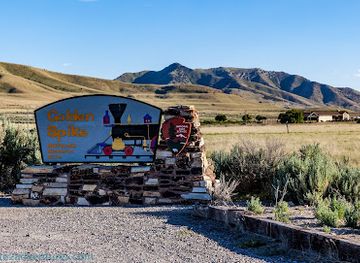
Golden Spike National Historical Park
Discover the legacy of the First Transcontinental Railroad at Golden Spike National Historical Park, where history and nature come together.
-
Historical place museum
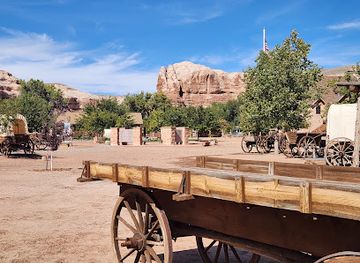
Bluff Fort Historic Site
Experience the pioneering spirit at Bluff Fort Historic Site, a captivating historical museum in Utah with engaging exhibits and knowledgeable guides.
-
State park
Palisade State Park
Explore the beauty of Palisade State Park, a natural paradise in Utah, perfect for outdoor activities, camping, and family fun in a serene landscape.
-
Church of Jesus Christ of Latter-day Saints
Manti Utah Temple
Explore the Manti Utah Temple, a historic architectural gem of the Church of Jesus Christ of Latter-day Saints, and find peace in its serene surroundings.
Explore Sanpete Valley on the map
Plan your trip on one map. See where the top cities, national parks and sights are, and book hotels and experiences in a few clicks.
Best hotels in Sanpete Valley
Best restaurants in Sanpete Valley
Dining in Sanpete Valley reflects rural Utah, with cafés, family restaurants, bakeries, diners, pizza places and traditional American eateries concentrated in the larger towns. Manti, Ephraim and Mount Pleasant offer the broadest choice, while smaller communities may have limited service and reduced evening options. Local food culture is connected to farming and ranching, so seasonal fruit, garden produce, dairy products, baked goods and locally raised meats appear more often than highly formalised regional cuisine. Community events and farmers’ markets, when operating, can provide a better introduction to local produce than a standard restaurant menu. The valley also follows wider Utah traditions of hearty breakfasts, burgers, sandwiches, desserts and family-style meals, alongside Mexican and other familiar American options. Because establishments are dispersed and some operate on small-town schedules, confirm current opening arrangements and avoid assuming that a restaurant will serve late or remain open between communities.
-
American
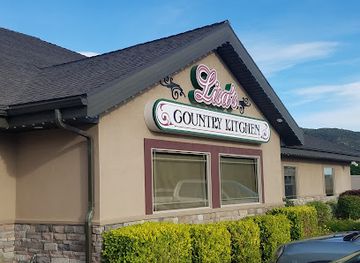
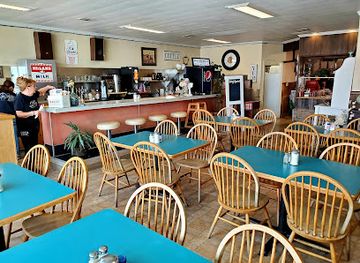
Lisa's Country Kitchen
Experience hearty American breakfasts and classic comfort food at Lisa's Country Kitchen in Nephi, Utah—a must-visit dining destination.
-
Restaurant
Mom's Cafe
Experience the warmth of home-cooked meals at Mom's Cafe in Salina – where every dish tells a story.
-
Breakfast
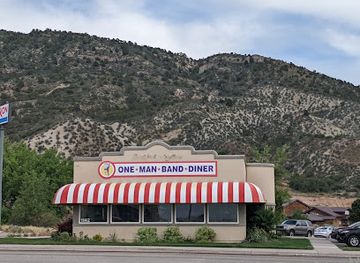
One Man Band Diner
Discover the delightful flavors of One Man Band Diner in Nephi - where every breakfast is an adventure!
-
Hamburger
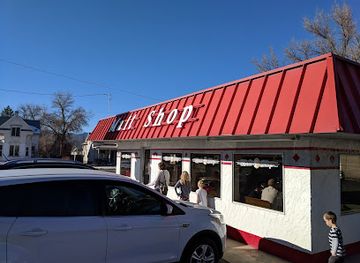
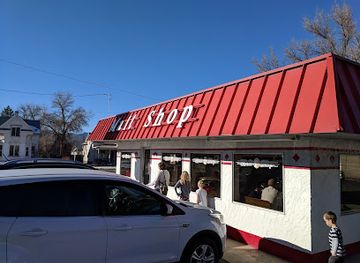
The Malt Shop
Experience classic American burgers and delightful desserts at The Malt Shop in Ephraim - where nostalgia meets deliciousness!
Best bars in Sanpete Valley
Evening life in Sanpete Valley is modest and community-oriented rather than centred on nightclubs. Traditional restaurants, cafés and local gathering places provide most of the after-dark activity, with the largest selection generally found in Ephraim, Mount Pleasant and Manti. Snow College brings a younger population to Ephraim, but nightlife remains influenced by the town’s small scale and the region’s religious culture. Live performances, college events, seasonal celebrations and community programmes may offer more distinctive evenings than commercial clubbing. Visitors should not expect a dense bar district or late-night transport between towns. Alcohol licensing and service vary by establishment under Utah law, so check current arrangements rather than assuming every restaurant serves alcohol. In rural parts of the valley, an evening walk beneath dark skies, a meal with local residents or a scheduled cultural event may be the more characteristic choice.
-
Hamburger
The Malt Shop
Experience the best of American comfort food at The Malt Shop, featuring delicious burgers and delightful desserts in Ephraim, Utah.
-
Bar
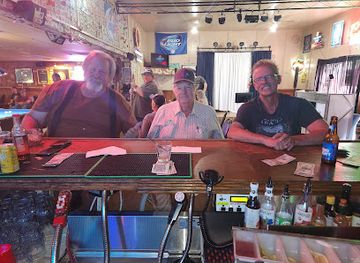
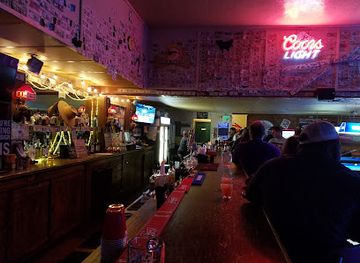
Triangle Bar
Experience the vibrant local nightlife at Triangle Bar in Mt Pleasant, where good times and cold drinks await in a cozy atmosphere.
Best nightclubs in Sanpete Valley
Evening life in Sanpete Valley is modest and community-oriented rather than centred on nightclubs. Traditional restaurants, cafés and local gathering places provide most of the after-dark activity, with the largest selection generally found in Ephraim, Mount Pleasant and Manti. Snow College brings a younger population to Ephraim, but nightlife remains influenced by the town’s small scale and the region’s religious culture. Live performances, college events, seasonal celebrations and community programmes may offer more distinctive evenings than commercial clubbing. Visitors should not expect a dense bar district or late-night transport between towns. Alcohol licensing and service vary by establishment under Utah law, so check current arrangements rather than assuming every restaurant serves alcohol. In rural parts of the valley, an evening walk beneath dark skies, a meal with local residents or a scheduled cultural event may be the more characteristic choice.
-
Bar
Triangle Bar
Experience the local vibe and enjoy affordable drinks at Triangle Bar, a beloved gathering place in Mount Pleasant, Utah.
-
Night club
Regis Club
Discover the vibrant nightlife at Regis Club, Helper's top spot for music, dancing, and unforgettable evenings in Utah.

Get your free copy of our complete guide to Sanpete Valley, delivered straight to you.
Everything on this page, from attractions and restaurants to essentials and local phrases, in one PDF you can read offline, print or share.
Already have an account? Sign in
Your Sanpete Valley guide is ready.
We'll send it to · Not you? Sign out

Getting your guide ready…
We are putting together a fresh copy of the Sanpete Valley guide. This can take up to a minute.
This can take a few moments. If your browser asks, choose Allow so the download can start. You'll find the guide in your Downloads folder.
Nothing happened? Download it again
Sorry, the guide is taking longer than usual. Please try again in a minute, or get it by email instead.
Sanpete Valley essentials
Currency and Payment
Safety
Emergency Situations
Do's and Don'ts
Local Tips
From Eve
Local phrases worth knowing
You don't need to get them perfect. A few words go a long way, and locals appreciate the effort.
Basics
| English | Local | Say it |
|---|---|---|
| Hello | Howdy | [How-dee] |
| Goodbye | See ya | [See yah] |
| Yes | Yep | [Yep] |
| No | Nope | [Nope] |
| Please/You're welcome | Please | [Please] |
| Thank you | Thanks | [Thanks] |
| Excuse me/Sorry | Pardon me | [Pardon me] |
| How are you? | How ya doin'? | [How ya doin'?] |
| Fine. And you? | Good, and you? | [Good, and you?] |
| Do you speak English? | Can you speak English? | [Can you speak English?] |
| I don't understand | I don't get it | [I don't get it] |
Eating & Drinking
| English | Local | Say it |
|---|---|---|
| I'd like to see the menu, please | Can I see the menu, please? | [Can I see the menu, please?] |
| I don't eat meat | I don't do meat | [I don't do meat] |
| Cheers! | Cheers! | [Cheers!] |
| I would like to pay, please | I'd like to settle up, please | [I'd like to settle up, please] |
Emergencies
| English | Local | Say it |
|---|---|---|
| Help! | Help! | [Help!] |
| Go away! | Leave me alone! | [Leave me alone!] |
| Call the Police! | Call the cops! | [Call the cops!] |
| Call a doctor! | Get a doctor! | [Get a doctor!] |
| I'm lost | I can't find my way | [I can't find my way] |
| I'm ill | I'm not feelin' well | [I'm not feelin' well] |
Shopping
| English | Local | Say it |
|---|---|---|
| I'd like to buy... | I want to buy... | [I want to buy...] |
| I'm just looking | Just browsing | [Just browsing] |
| How much is it? | What’s the price? | [What’s the price?] |
| That's too expensive | That's way too much | [That's way too much] |
| Can you lower the price? | Can you give me a better deal? | [Can you give me a better deal?] |
Time & Numbers
| English | Local | Say it |
|---|---|---|
| What time is it? | What time ya got? | [What time ya got?] |
| It's one o'clock | It's one | [It's one] |
| Half past (10) | Half past ten | [Half past ten] |
| Morning | Mornin' | [Mornin'] |
| Afternoon | Afternoon | [Afternoon] |
| Evening | Evenin' | [Evenin'] |
| Yesterday | Yesterday | [Yesterday] |
| Today | Today | [Today] |
| Tomorrow | Tomorrow | [Tomorrow] |
| 1 | One | [One] |
| 2 | Two | [Two] |
| 3 | Three | [Three] |
| 4 | Four | [Four] |
| 5 | Five | [Five] |
| 6 | Six | [Six] |
| 7 | Seven | [Seven] |
| 8 | Eight | [Eight] |
| 9 | Nine | [Nine] |
| 10 | Ten | [Ten] |
Transport & Directions
| English | Local | Say it |
|---|---|---|
| Where's a/the...? | Where's the...? | [Where's the...?] |
| What's the address? | What's the address? | [What's the address?] |
| Can you show me (on the map)? | Can you point it out? | [Can you point it out?] |
| When's the next (bus)? | When's the next bus? | [When's the next bus?] |
| A ticket (to ....) | One ticket to... | [One ticket to...] |
History of Sanpete Valley
Ute Homeland and Early Exploration
Before Euro-American settlement, the Sanpete Valley was part of the homeland and seasonal landscape of Ute peoples, including bands associated with the broader central Utah region. The valley’s water, grasslands and sheltered geography supported movement, hunting and gathering. Spanish and later American exploration brought outside mapping and trading contacts, but the most decisive transformation followed the arrival of Latter-day Saint settlers in the nineteenth century. Indigenous history remains essential to understanding the valley, even though later town planning and agriculture dominate its visible landscape.
Latter-day Saint Settlement, 1849–1850s
Latter-day Saint colonisation began in Sanpete Valley in 1849, when settlers established Manti and soon founded other communities along the valley floor. They laid out town plots, diverted streams for irrigation and developed farms, livestock holdings, mills and workshops. Manti became the principal settlement, while Ephraim, Spring City, Mount Pleasant, Moroni and smaller towns extended the agricultural network. The valley’s distinctive grid plans, stone buildings and historic public structures largely date from this period of organised settlement.
The Sanpete War and Frontier Conflict
Relations between settlers and Ute communities deteriorated as colonisation restricted access to land, water and game. In 1853, the killing of Ute leader Wakara’s associate, Chief Sanpitch, helped trigger the conflict commonly called the Walker War, which affected central Utah and included violence and displacement in the Sanpete region. A later conflict, the Black Hawk War of the 1860s, again brought attacks, reprisals and the temporary abandonment of some settlements. These events are a difficult but important part of the valley’s history.
Stone Towns and Scandinavian Influence
Many settlers in Sanpete were converts from Scandinavia and other parts of Europe. Their skills, religious networks and agricultural experience influenced the valley’s communities, while locally available stone produced durable houses, barns, churches and civic buildings. Manti’s temple and the surviving historic architecture of Spring City are especially clear expressions of nineteenth-century building traditions. Spring City’s preservation is notable because its historic fabric remains integrated with a living community rather than existing solely as a reconstructed museum setting.
The Manti Utah Temple, 1877–1888
Construction of the Manti Utah Temple began in 1877 and continued until its dedication in 1888. Built from locally quarried oolitic limestone on a prominent hillside, it became the valley’s most recognisable architectural landmark and a major expression of the resources and labour invested by early settlers. The temple also helped establish Manti as a regional religious and civic centre. Its exterior remains a defining feature of the Sanpete landscape, although access to interior spaces is reserved according to the church’s policies.
Railways, Agriculture and Regional Trade
Rail connections and improved roads linked Sanpete Valley farms and towns with wider Utah markets, supporting the movement of livestock, grain, dairy products and other agricultural goods. Irrigation remained central to prosperity in a dry climate, and local communities developed a mixture of farming, ranching and small-scale processing. Transport modernisation did not turn Sanpete into an industrial centre, but it strengthened the valley’s role as an agricultural district and made its towns more closely connected to central Utah.
Modern Community and Rural Continuity
During the twentieth and twenty-first centuries, Sanpete Valley retained its agricultural base while adding education, tourism, public services and small businesses to the local economy. Snow College in Ephraim brought a significant student presence and broadened the valley’s cultural life. Heritage conservation, outdoor recreation and events such as the annual Manti Mormon Miracle Pageant, historically staged near the temple, have drawn visitors, although event arrangements can change. Today the valley balances long-established communities with new residents, seasonal visitors and continuing farm production.
Sanpete Valley in Photos
Browse through our photo collection highlighting the charm and character of the destination.
Neighbouring regions of Sanpete Valley
The closest regions to Sanpete Valley, if you have time for more than one.
-

-

-

-

-


Swipe for more regions
Explore more

Explore more of Utah
Explore Utah's stunning national parks, rich cultural heritage, and year-round outdoor adventures. Discover why this diverse state is a top destination for travelers.
Explore Utah