

Gregorian Etruscan Museum, Vatican City Travel Guide
Discover the rich heritage of the Etruscans at the Gregorian Etruscan Museum in Vatican City, home to stunning artifacts and timeless treasures from ancient Etruria.
Nestled within the sacred walls of Vatican City, the Gregorian Etruscan Museum offers a captivating glimpse into the ancient civilization of the Etruscans. Established by Pope Gregory XVI in 1837, this museum houses an extensive collection of artifacts that span centuries, providing a detailed narrative of the Etruscan way of life. From intricately designed pottery to grand tomb frescoes, the museum's exhibits tell the story of a people who laid the groundwork for Roman culture. As you wander through the museum's ten rooms, you will encounter a variety of objects that showcase the Etruscans' exceptional craftsmanship and artistic prowess. Highlights include the famous Etruscan bronze sculptures, such as the 'Mars of Todi,' and the exquisite collection of gold jewelry that reveals their advanced metallurgical skills. Each artifact is accompanied by informative descriptions that offer insight into the historical and cultural context of the Etruscan civilization. A visit to the Gregorian Etruscan Museum is not only a journey through ancient history but also a testament to the enduring legacy of the Etruscans. The museum's serene atmosphere, combined with its rich displays, makes it a must-visit destination for history enthusiasts and curious travelers alike. Whether you are an avid archaeologist or a casual tourist, the Gregorian Etruscan Museum promises an enriching experience that will leave you with a deeper appreciation for this ancient civilization.

Know before you go
Hi, I'm Eve. Here are a few practical things to know before exploring Gregorian Etruscan Museum.
- Visit early in the morning to avoid crowds and enjoy a more peaceful experience.
- Consider taking a guided tour for detailed insights into the exhibits and Etruscan history.
- Allocate at least two hours to fully explore the museum's extensive collection.
- Combine your visit with a trip to the nearby Vatican Museums to make the most of your time in Vatican City.
- Check the museum's schedule for temporary exhibitions that may offer unique displays and artifacts.
Explore Gregorian Etruscan Museum: Things to Do, Places to Eat, Hotels & More
Handpicked recommendations for top attractions, local dining, accommodations, and more

Best attractions in Gregorian Etruscan Museum
Top-rated picks
Best Attractions

St. Peter's Basilica
Explore the grandeur of St. Peter's Basilica, an architectural marvel and spiritual center in the heart of Vatican City, rich in history and art.

Sistine Chapel
Explore the Sistine Chapel in Vatican City, where art, history, and spirituality converge in a breathtaking masterpiece of Renaissance art.

Giulio Cesare - Circuito Cinema
Discover the heart of Roman cinema at Giulio Cesare - Circuito Cinema, where timeless films meet modern comforts in the Eternal City.

My Best Tour
Experience the beauty and history of Rome with My Best Tour, where expert guides lead you through unforgettable sightseeing adventures.

Best landmarks in Gregorian Etruscan Museum
Top-rated picks
Best Landmarks

St. Peter's Basilica
Discover the awe-inspiring St. Peter's Basilica, a masterpiece of Renaissance architecture and a sacred site in the heart of Vatican City, rich in history and beauty.
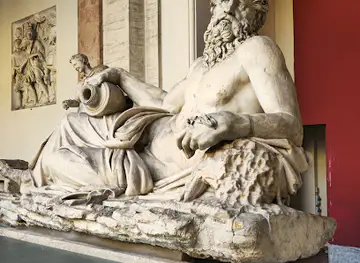
Vatican Museums
Discover the breathtaking art and history at the Vatican Museums, home to the Sistine Chapel and masterpieces by Michelangelo and Raphael.

Sistine Chapel
Discover the breathtaking artistry of the Sistine Chapel, home to Michelangelo's masterpieces, in the heart of Vatican City.

Saint Peter's Square
Discover the grandeur of Saint Peter's Square, a historic plaza in Vatican City that embodies faith and artistry.

Best restaurants in Gregorian Etruscan Museum
Top-rated picks
Best Restaurants

Pastasciutta
Experience authentic Italian cuisine at Pastasciutta, where fresh pasta meets affordability in the heart of Rome.

Ristorante dei Musei
Experience authentic Italian cuisine at Ristorante dei Musei in Rome – home to delicious pizzas and warm hospitality.

Caffè Delle Commari
Discover Caffè Delle Commari: A blend of exquisite coffee, creative cocktails, and authentic Italian cuisine in the heart of Rome.

La Soffitta Renovatio
Experience authentic Italian flavors at La Soffitta Renovatio – where every meal is a celebration of tradition and taste.

Best bars in Gregorian Etruscan Museum
Top-rated picks
Best Bars

Caffè Delle Commari
Experience the authentic flavors of Italy at Caffè Delle Commari, a charming bar and coffee shop in the heart of Rome, perfect for coffee lovers and cocktail enthusiasts alike.

Be.Re. + Trapizzino
Experience the best of Roman street food at Be.Re. + Trapizzino, where tradition meets innovation in a lively gastropub atmosphere.

Caffè Vaticano
Discover the authentic taste of Italian coffee at Caffè Vaticano, a beloved espresso bar in the heart of Rome, perfect for tourists seeking a local experience.

Bar L'Ottagona
Discover the essence of Roman hospitality at Bar L'Ottagona, where authentic cuisine meets a vibrant atmosphere in the heart of Rome.

Best nightclubs in Gregorian Etruscan Museum
Top-rated picks
Best Nightclubs

The Basement - Pub. Cocktail Bar. Events
Experience the vibrant nightlife of Rome at The Basement, a lively pub and cocktail bar offering exquisite drinks and a welcoming atmosphere.

Saxophone Live Pub
Experience the vibrant nightlife of Rome at Saxophone Live Pub, where live music and a cozy atmosphere come together for an unforgettable evening.

Alexanderplatz Jazz Club
Discover the vibrant jazz scene at Alexanderplatz Jazz Club, where live music creates unforgettable nights in the heart of Rome.

Titan Club
Discover the vibrant nightlife at Titan Club, a Latin American disco and live music venue in the heart of Rome, perfect for an unforgettable cultural experience.

Best shops in Gregorian Etruscan Museum
Top-rated picks
Best Shops

Mercato Trionfale
Discover the essence of Italian cuisine at Mercato Trionfale, Rome's premier fresh food market featuring local flavors and culinary delights.

Flying Tiger Copenhagen
Explore Flying Tiger Copenhagen in Rome for quirky gifts, home goods, and toys that make unforgettable souvenirs.

Foot Locker
Explore Foot Locker in Rome for the latest in trendy sneakers and sportswear, embodying the spirit of fashion and functionality.

Pergamino Caffè
Discover the warmth and charm of Pergamino Caffè, a delightful coffee shop in Rome serving exceptional brews and pastries in a cozy atmosphere.

Explore Gregorian Etruscan Museum on the Map
A handpicked selection of must-see spots in Gregorian Etruscan Museum, mapped for you.
Gregorian Etruscan Museum Essentials
-
The Gregorian Etruscan Museum is located within the Vatican City. The nearest international airport is Leonardo da Vinci International Airport (Fiumicino) in Rome, approximately 30 kilometers away. From the airport, you can take a train to Roma Termini, the main railway station in Rome, and then a metro to Ottaviano-San Pietro station, which is a short walk from the Vatican Museums entrance.
-
Within Rome, the most convenient way to reach Vatican City is by using the metro system. Take Line A (the orange line) to Ottaviano-San Pietro station. From there, it's a 10-minute walk to the Vatican Museums entrance. Alternatively, buses 49, 32, 81, and 982 stop near the Vatican. Taxis and ride-sharing services are also readily available throughout the city.
-
The official currency in Vatican City is the Euro (€). Credit and debit cards are widely accepted, especially in the Vatican Museums and surrounding areas. However, it's advisable to carry some cash for small purchases and in case of any technical issues with card machines. ATMs are available near the museum entrance and around Vatican City.
-
Vatican City and the surrounding areas are generally safe for tourists. However, be cautious of pickpockets, especially in crowded areas and public transport. Avoid carrying large amounts of cash and keep your belongings secure. There are no specific high-crime areas targeting tourists, but always stay vigilant and aware of your surroundings.
-
In case of an emergency, dial 112 for immediate assistance. The Vatican City has its own security and emergency services, but Italian emergency services can also respond quickly. It's recommended to have travel insurance that covers medical emergencies. For minor health issues, nearby pharmacies in Rome can provide over-the-counter medications.
-
Fashion: Do dress modestly, especially when visiting religious sites. Avoid wearing revealing clothing. Religion: Do respect local customs and traditions. Always cover your shoulders and knees when entering religious sites. Public Transport: Do be respectful and give up your seat to elderly passengers. Don't eat or drink on public transport. Greetings: Do greet people with a polite 'Buongiorno' (Good Morning) or 'Buonasera' (Good Evening). Eating & Drinking: Do try local delicacies and accept food offerings graciously. Don’t refuse hospitality, as it is considered impolite.
-
To experience the Gregorian Etruscan Museum like a local, consider visiting early in the morning or late in the afternoon to avoid the largest crowds. Purchase tickets in advance online to skip the long queues. Take your time to explore each exhibit, as the museum houses an extensive collection of Etruscan artifacts. Don’t miss the Etruscan jewelry section, which is a highlight.
When is the best time to visit Gregorian Etruscan Museum?
Useful Local Phrases for Gregorian Etruscan Museum
You don't need to speak the language perfectly. Even learning a few simple words can make conversations warmer—and locals usually appreciate the effort.
— Eve

Here are the phrases I use most often in Gregorian Etruscan Museum. Try a few—you'll be surprised how far they go! 😊
❤️
-
- HelloCiao
[chow] - GoodbyeArrivederci
[ahr-ree-veh-DEHR-chee] - YesSì
[see] - NoNo
[noh] - Please/You're welcomePer favore/Prego
[pehr fah-VOH-reh/PRAY-goh] - Thank youGrazie
[GRAH-tsyeh] - Excuse me/SorryMi scusi/Scusa
[mee SKOO-zee/SKOO-zah] - How are you?Come stai?
[KOH-meh stai] - Fine. And you?Bene. E tu?
[BEH-neh. eh too] - Do you speak English?Parli inglese?
[PAHR-lee een-GLEH-zeh] - I don't understandNon capisco
[non kah-PEES-koh]
- HelloCiao
-
- I'd like to see the menu, pleaseVorrei vedere il menù, per favore
[vohr-RAY veh-DEH-reh eel meh-NOO pehr fah-VOH-reh] - I don't eat meatNon mangio carne
[non MAHN-joh KAR-neh] - Cheers!Salute!
[sah-LOO-teh] - I would like to pay, pleaseVorrei pagare, per favore
[vohr-RAY pah-GAH-reh pehr fah-VOH-reh]
- I'd like to see the menu, pleaseVorrei vedere il menù, per favore
-
- Help!Aiuto!
[ah-YOO-toh] - Go away!Vattene!
[VAHT-teh-neh] - Call the Police!Chiamate la polizia!
[kyah-MAH-teh lah poh-LEE-tsya] - Call a doctor!Chiamate un dottore!
[kyah-MAH-teh oon doh-TAW-reh] - I'm lostMi sono perso
[mee SOH-no PEHR-soh] - I'm illSto male
[stoh MAH-leh]
- Help!Aiuto!
-
- I'd like to buy...Vorrei comprare...
[vohr-RAY kohm-PRah-reh] - I'm just lookingSto solo guardando
[stoh SOH-loh gwar-DAHN-doh] - How much is it?Quanto costa?
[KWAHN-toh KOS-tah] - That's too expensiveÈ troppo caro
[eh TROH-poh KAH-roh] - Can you lower the price?Può abbassare il prezzo?
[pwoh ahb-bah-SAH-reh eel PRET-zoh]
- I'd like to buy...Vorrei comprare...
-
- What time is it?Che ore sono?
[keh OH-reh SOH-noh] - It's one o'clockÈ l'una
[eh LOO-nah] - Half past (10)Sono le dieci e mezza
[SOH-no leh dyeh-CHEE eh MEHT-tsah] - MorningMattina
[maht-TEE-nah] - AfternoonPomeriggio
[poh-meh-REE-joh] - EveningSera
[SEH-rah] - YesterdayIeri
[YEH-ree] - TodayOggi
[OH-jee] - TomorrowDomani
[doh-MAH-nee] - 1Uno
[OO-no] - 2Due
[DOO-eh] - 3Tre
[TREH] - 4Quattro
[KWAH-troh] - 5Cinque
[CHEEN-kweh] - 6Sei
[SEH-ee] - 7Sette
[SEHT-teh] - 8Otto
[OH-ttoh] - 9Nove
[NOH-veh] - 10Dieci
[DYEH-chee]
- What time is it?Che ore sono?
-
- Where's a/the...?Dov'è...?
[doh-VEH] - What's the address?Qual è l'indirizzo?
[kwahl eh leen-DEER-eet-tsaw] - Can you show me (on the map)?Può mostrarmi (sulla mappa)?
[pwoh moh-STRAHR-mee SOOL-lah MAHP-pah] - When's the next (bus)?Quando è il prossimo (autobus)?
[KWAHN-doh eh eel PROHS-si-moh OW-toh-boo] - A ticket (to ....)Un biglietto (per ....)
[oon beelyeh-TTO pehr]
- Where's a/the...?Dov'è...?
History of Gregorian Etruscan Museum
-
The Gregorian Etruscan Museum was founded by Pope Gregory XVI in 1837. Its establishment was part of a broader initiative to preserve the rich archaeological heritage of Italy, with a particular focus on Etruscan artifacts. The museum was intended to house the numerous discoveries from the Etruscan civilization, which thrived in Italy before the rise of Rome.
-
The museum boasts one of the world's most comprehensive collections of Etruscan artifacts. Among its treasures are intricately crafted pottery, bronze sculptures, and gold jewelry. The collection also includes the famous Sarcophagus of the Spouses, a finely carved terracotta monument depicting a reclining couple, which offers invaluable insights into Etruscan funerary practices and social customs.
-
Over the years, the Gregorian Etruscan Museum has undergone several expansions and renovations to accommodate its growing collection and to enhance the visitor experience. Notably, in the early 20th century, additional galleries were added to display newly acquired artifacts. Modernization efforts in recent decades have ensured that the museum remains a state-of-the-art facility, equipped with advanced climate control and security systems.
-
The museum's collection has been significantly enriched by numerous archaeological excavations in various parts of Italy, particularly in the regions of Tuscany, Umbria, and Lazio. These excavations have unearthed a wealth of Etruscan artifacts, ranging from everyday household items to elaborate ceremonial objects. Each discovery has provided new insights into the Etruscan way of life, their religious beliefs, and their interactions with neighboring cultures.
-
The Gregorian Etruscan Museum is not only a repository of ancient artifacts but also a center for education and cultural exchange. It regularly hosts temporary exhibitions, educational workshops, and lectures that delve into various aspects of Etruscan history and culture. These initiatives are designed to engage both scholars and the general public, fostering a deeper appreciation of Italy's ancient heritage.
-
Among the museum's many significant exhibits is the Regolini-Galassi Tomb, one of the richest Etruscan tombs ever discovered. Excavated in Cerveteri in 1836, the tomb contained a wealth of grave goods, including gold ornaments, silver vessels, and intricately decorated bronze objects. The artifacts from this tomb provide a glimpse into the opulence and sophistication of Etruscan society.
-
The Gregorian Etruscan Museum is an integral part of the Vatican Museums, one of the largest and most visited museum complexes in the world. As part of this esteemed institution, the Gregorian Etruscan Museum contributes to the Vatican Museums' mission of preserving and showcasing humanity's artistic and cultural heritage. Its collections complement those of other museums within the complex, offering a comprehensive view of ancient civilizations.
-
The Gregorian Etruscan Museum plays a crucial role in advancing research on the Etruscan civilization. It collaborates with academic institutions and researchers worldwide, providing access to its collections for study and analysis. The museum's findings have been published in numerous scholarly articles and monographs, contributing to the growing body of knowledge on the Etruscans.



Cities near Gregorian Etruscan Museum
The closest cities to Gregorian Etruscan Museum, if you have time for more than one stop.


Your all‑in‑one travel companion app
Explore expert travel guides, compare and book tours, experiences, hotels, and more—all from the palm of your hand. Download now for seamless trip planning wherever your wanderlust takes you.


Gregorian Etruscan Museum in Photos
Browse through our photo collection highlighting the charm and character of the destination.

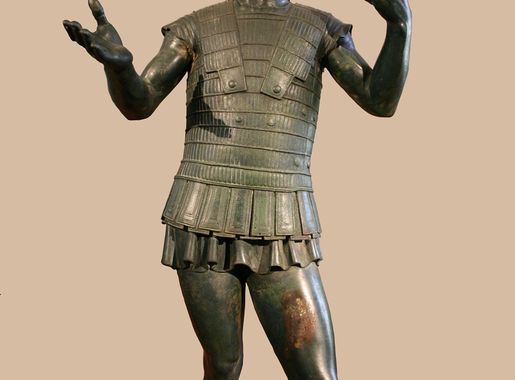


The Gregorian Etruscan Museum: A Timeless Journey Through Ancient Etruria
Nestled within the sacred walls of Vatican City, the Gregorian Etruscan Museum offers a captivating glimpse into the ancient civilization of the Etruscans. Established by Pope Gregory XVI in 1837, this museum houses an extensive collection of artifacts that span centuries, providing a detailed narrative of the Etruscan way of life. From intricately designed pottery to grand tomb frescoes, the museum's exhibits tell the story of a people who laid the groundwork for Roman culture. As you wander through the museum's ten rooms, you will encounter a variety of objects that showcase the Etruscans' exceptional craftsmanship and artistic prowess. Highlights include the famous Etruscan bronze sculptures, such as the 'Mars of Todi,' and the exquisite collection of gold jewelry that reveals their advanced metallurgical skills. Each artifact is accompanied by informative descriptions that offer insight into the historical and cultural context of the Etruscan civilization. A visit to the Gregorian Etruscan Museum is not only a journey through ancient history but also a testament to the enduring legacy of the Etruscans. The museum's serene atmosphere, combined with its rich displays, makes it a must-visit destination for history enthusiasts and curious travelers alike. Whether you are an avid archaeologist or a casual tourist, the Gregorian Etruscan Museum promises an enriching experience that will leave you with a deeper appreciation for this ancient civilization.
Explore More of Vatican City
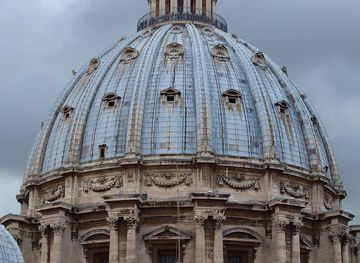
Looking beyond Gregorian Etruscan Museum? Discover Vatican City for broader travel guides, local hot-spots, and regional highlights.
Explore Vatican City