

15 Days Private Tour: Classical Tour
 Lamia, GR
 100% of travellers recommend this
Highlights
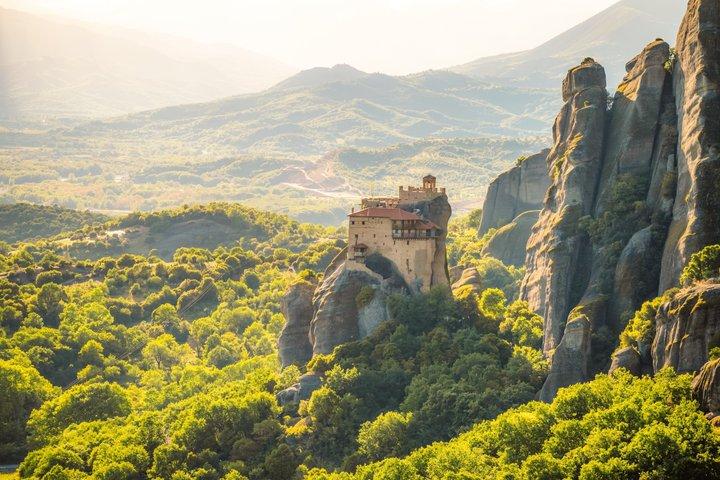
- Explore the breathtaking monasteries of Meteora
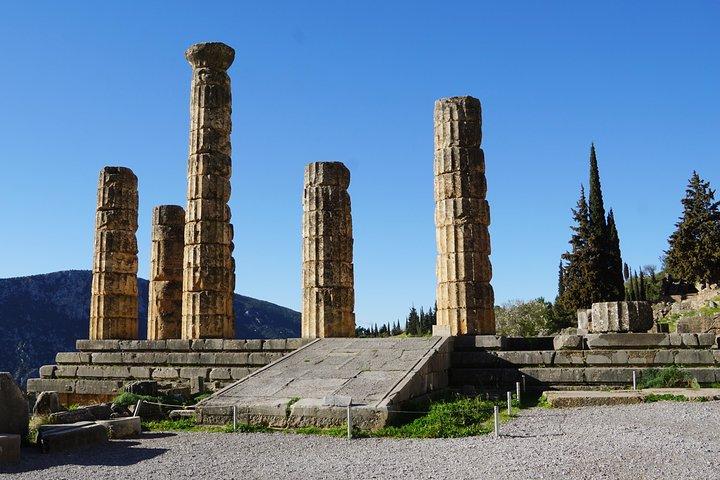
- Discover the ancient ruins of Delphi and Olympia
- Experience the vibrant culture of Thessaloniki
- Wander through picturesque villages of Zagorohoria
- Visit the historic battlefield of Thermopylae
-
Private Vehicle Transport
-
Professional Driver Included
-
Hotel/AirBnb Pickup & Drop-off
-
Bottled Water Provided
-
Wheelchair Accessible
-
Duration 15 Days
Embarking on a 15-day Classical Tour through Greece offers travelers an unparalleled journey through time, history, and breathtaking landscapes. They will explore iconic sites like Thermopylae, Meteora, and the ancient ruins of Delphi, all while being guided by professional drivers who share their in-depth historical knowledge. From the mystical monasteries suspended in the cliffs of Meteora to the vibrant streets of Thessaloniki and the serene beauty of Ioannina, every moment is infused with cultural richness. As they traverse scenic routes, they will indulge in traditional Greek cuisine and experience the natural splendor of the countryside. This tour promises not just sightseeing, but a deep connection with Greece's roots, making it an unforgettable adventure for history enthusiasts and nature lovers alike.
At a Glance
-
 Free cancellation
-
 15 days
-
 Instant Confirmation
-
 Available in English
-
 Wheelchair accessible
-
 Mobile voucher
-
 Private Tour
-
 Guided
-
 Family friendly

Featured Reviews

Experience the beauty and history of Greece on this 15-day private tour, visiting iconic sites and hidden gems with expert drivers.
Included
-
 OtherHotel/ AirBnb/ Port pick up & drop-off
 -
OtherBottled water
-
OtherProfessional Drivers with Deep knowledge of history. [Not licensed to accompany you in any site.]
-
OtherTransport by private vehicle
Excluded
-
 OtherAccommodation (We work with some of the best hotels. We have to know the number of the rooms)
 -
OtherEntrance Fees
-
OtherLicensed Tour guide on request (Additional cost)
Pickup
Check if pick-up is available from your location, you will select during checkout (providers may allow other pickup locations)

What to expect
Campo della battaglia delle Termopili
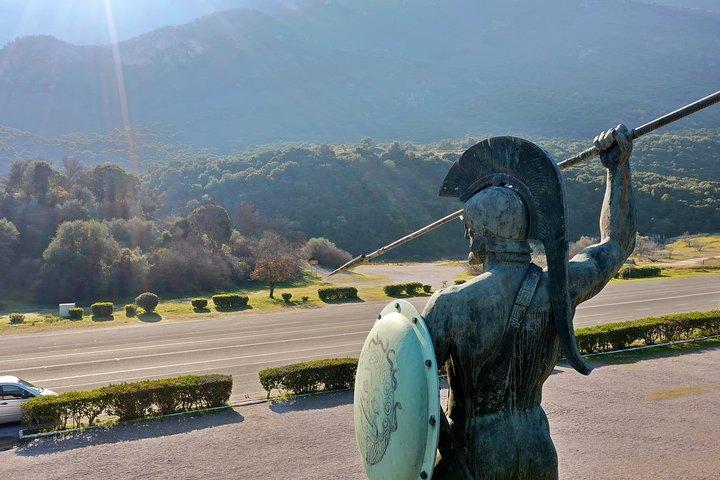
On our way we will visit the battlefield of Thermopylae where back in 480 BC Leonidas and his 300 died for freedom.
15 minutes
 Admission Not Included
Leonidas Monument
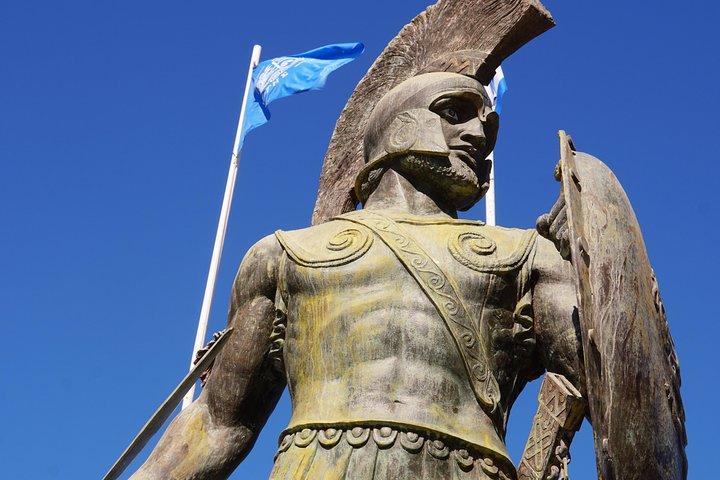
To complete the visit you will see the statue of Leonidas standing right opposite Kolonos Hill where the persisting Spartans left their last breath.
10 minutes
Kainotomiko Kentro Istorikis Enimerosis Thermopylon
In the historical center of the site you will enjoy a 3D movie, traveling through the time you will feel the presence of all who died for their freedom under a foreign conqueror.
30 minutes
Admission Not Included
Kalambaka
Following we will continue with a drive through the mountains, not taking the national highway, to see the real Greek country side. Passing by the cities of Lamia, Trikala and Karditsa we will reach Kalambaka, a beautiful small city that is dominated by the Meteora. You will have time to take an evening walk and enjoy a local dinner after settling at the hotel.
Great Meteoron Monastery
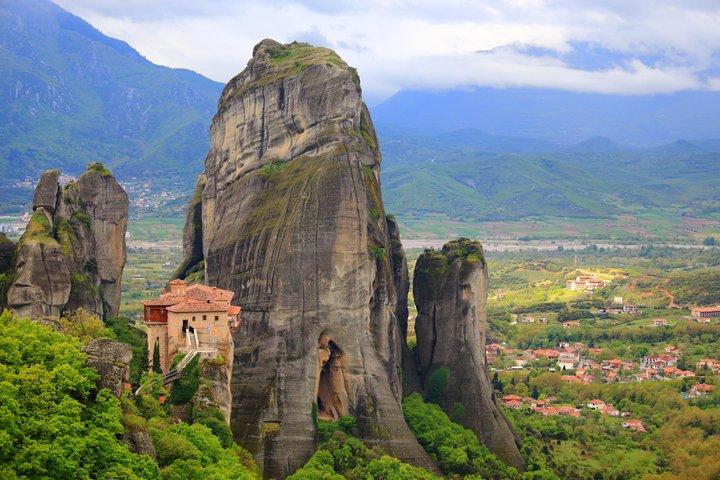
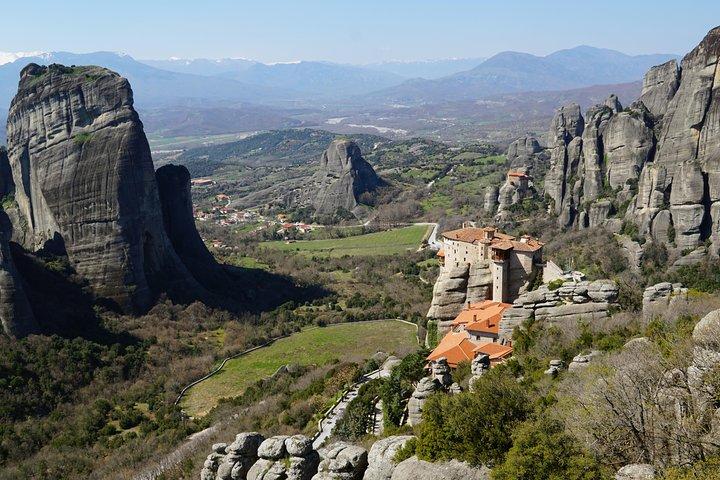
We will visit the monasteries and a closer look at the holy rocks. On the rocks that are like suspended in the air (that’s what Meteora means) there is one of the largest and most important complexes of Eastern Orthodox Monasteries, still in use. Meteora combines natural beauty and cultural heritage, a fact that make them a unique destination between the world’s monuments. Great Meteoron is the biggest and most impressive.
60 minutes
Admission Not Included
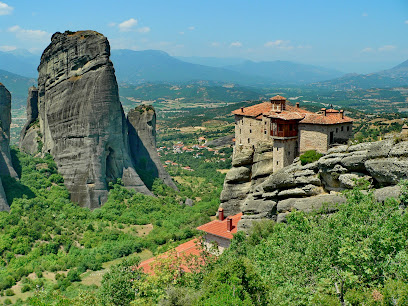
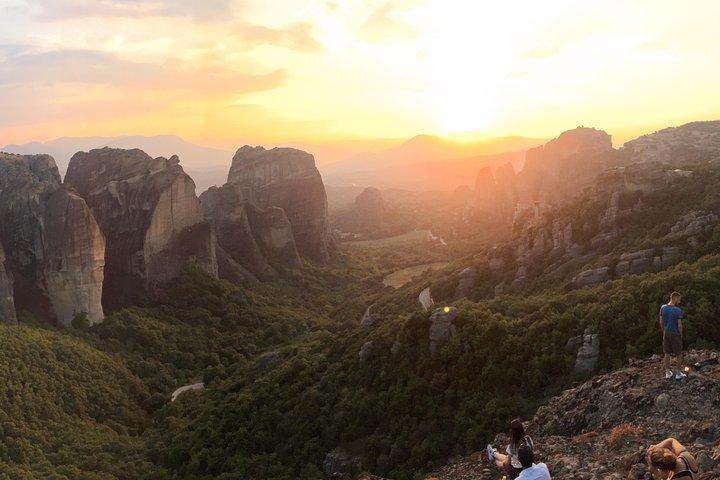
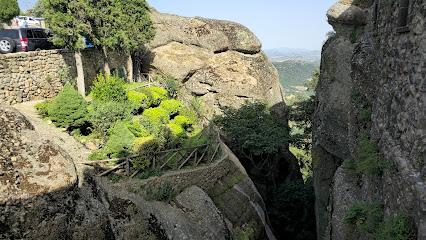
The beautiful wall-paintings of the Catholicon were executed in 1560. Visit Roussanou for a different view of the surrounding cliffs and the adjacent Monasteries. Follow the pathway from this monastery to the upper main road and discover an off-the-road panoramic view point spot that allows you to walk on bear rocks!
30 minutes
Admission Not Included
The Holy Monastery of Agios Stefanos is one of the few female monasteries of Meteora. The exact date of the monastery's construction is unknown but according to some evidence it was built in the 15th century.
30 minutes
Admission Not Included
Dion Archaeological Park
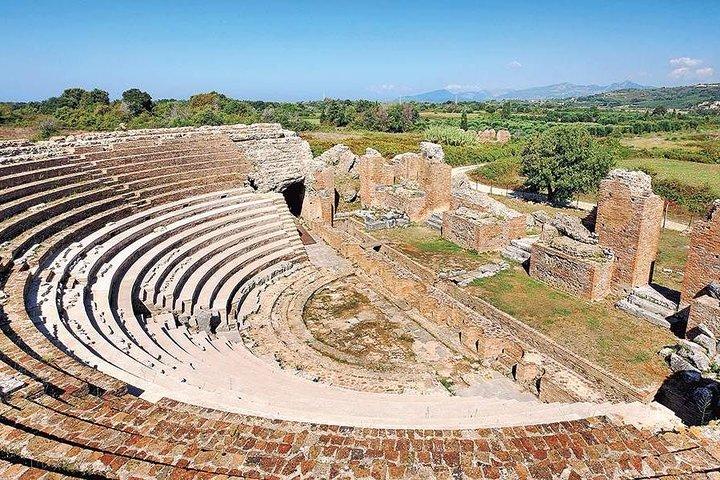
We will drive towards the site of Dion following the national highway, reaching the village of Dion, we will find the site and the archaeological museum of Dion, an ancient Greek city named after Zeus (in Greek Dias) that preserved its importance in the Macedonian Period. There Philip II and his son Alexander the Great made sacrifices to the Gods after conquering the Ancient Greek world and from there Alexander The Great started his expedition towards to Asia. It was a city with of a huge strategic importance according to the Macedonian Kings. Today you can visit sanctuary of Isis and other Egyptian Gods, the oldest sanctuary of Goddess Dimitra, a Hellenistic theater, a roman theater and a stadium, the mansion of Dionysos with its wonderful mosaic decoration and many more public and private buildings.
60 minutes
Admission Not Included
Archaeological Museum of Dion
Located in the present-day settlement of Dion, only 500 meters from the entrance of the archaeological space, the museum displays finds from various excavations over the years. The finds have been organized according to the areas from which they were excavated on the site, and include discoveries from ancient Pydna and other archaeological spots in Pieria. In the basement visitors can watch an educational film titled «Daily Life in Ancient Dion», and screenings of audiovisual materials related to ancient Dion and Olympus.
60 minutes
Admission Not Included
Litochoro
After having lunch at the village of Dion we will drive on the foothills of mountain Olympus to reach the mountainous, scenic village of Litochoro where we will stay the rest of the day and overnight. Litochoro is the closest location to Mt Olympus at sea level making it a popular destination for people that want to start climbing up the mountain. So we will stay on the foothill of the highest mountain in Greece, of the mountain were the 12 Gods of Olympus lived, according to the Greek Mythology.
60 minutes
Aigai Theater
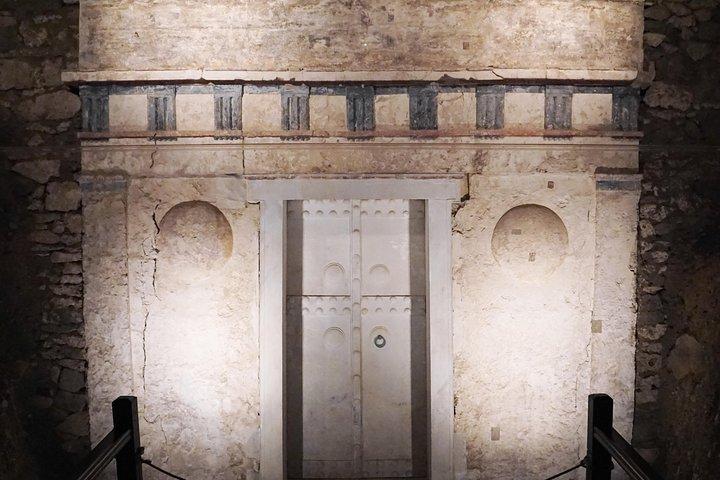
The city of Aigai, the ancient first capital of the Kingdom of Macedonia, was discovered in the 19th century near Vergina, in northern Greece. The most important remains are the monumental palace, lavishly decorated with mosaics and painted stuccoes, and the burial ground with more than 300 tumuli, some of which date from the 11th century B.C. One of the royal tombs in the Great Tumulus is identified as that of Philip II, who conquered all the Greek cities, paving the way for his son Alexander and the expansion of the Hellenistic world.
Admission Not Included
Museum of the Royal Tombs of Aigai (Vergina)
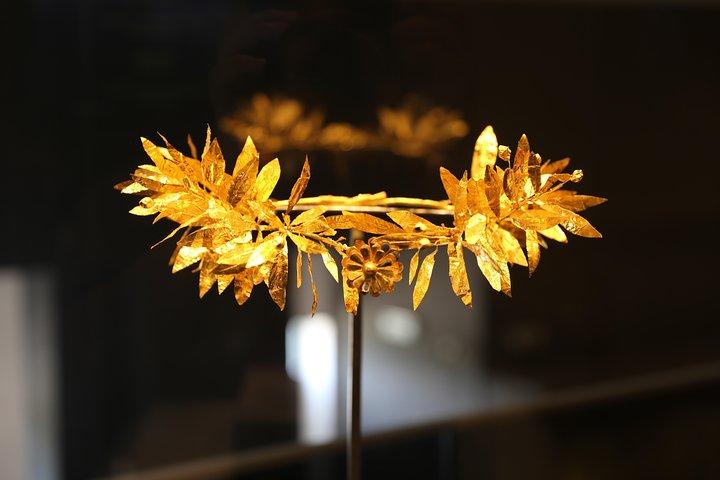
You will be able to visit the museum that developed around the original location of the Royal Tombs full of their golden belonging and more importantly you will face the imposing tomb of Philip II, father of the Alexander the Great.
60 minutes
Admission Not Included
Pella Region
Pella is one of the most important sites of the Hellenistic Period. It was chosen to be the capital of the huge Macedonian Empire in the end 5th century BCE. The archaeological site consists of public baths, sanctuaries, villas of wealthy Macedonians with unique mosaic decoration and of course the Agora of the city. The city originally covered an area of 400 hectares and it gradually became the cultural and commercial center of the empire. More importantly Alexander the Great was born in Pella.
30 minutes
Archaeological Museum of Pella
The museum of Pella is a modern museum that opened in 2009 and has nothing to envy from other Greek museums located in big cities.
30 minutes
Admission Not Included
Thessaloniki
We will drive to Thessaloniki to overnight.
Thessaloniki
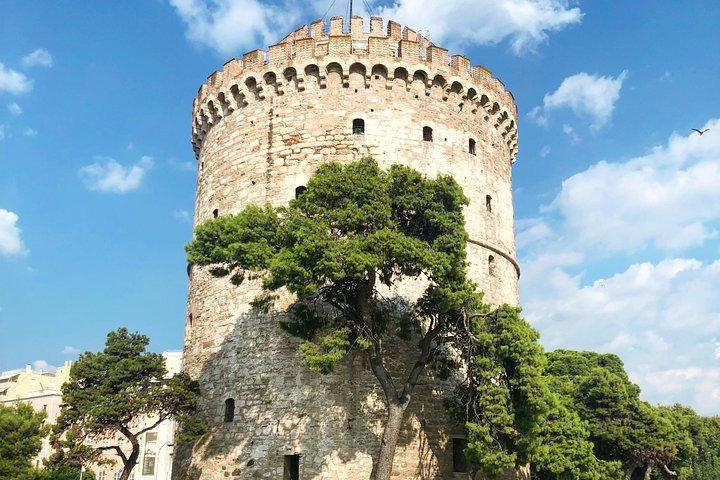
We will drive around this beautiful city to see all the highlights of the co-capital. The White Tower, the Arch of Galerius, the Rotunda, the Roman Agora and the cathedral of the Patron Saint Demetrius, the city wall and the Ano Poli (upper City) that offers you a breathtaking view of the city and the Aegean Sea. Then we will have a traditional northern Greek lunch at the region of “Ladadika”. The rest of the day will be free to enjoy more of the city at your own pace visit museums, walk in Aristotelous Square or visit the central commercial streets.
600 minutes
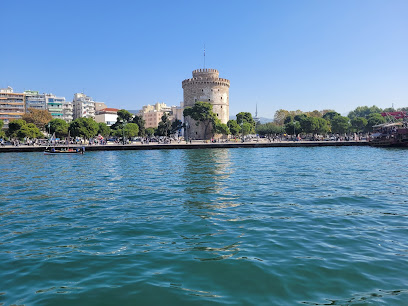
The White Tower of Thessaloniki is a monument and museum on the waterfront of the city of Thessaloniki, capital of the region of Macedonia in northern Greece. The present tower replaced an old Byzantine fortification, known to have been mentioned around the 12th century, that the Ottoman Empire reconstructed to fortify the city's harbour sometime after Sultan Murad II captured Thessaloniki in 1430. The tower became a notorious prison and scene of mass executions during the period of Ottoman rule.
15 minutes
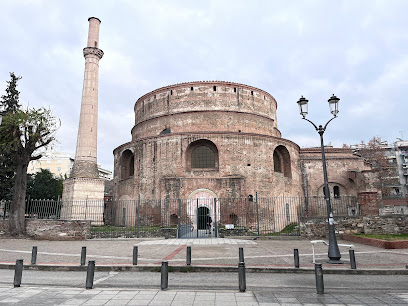
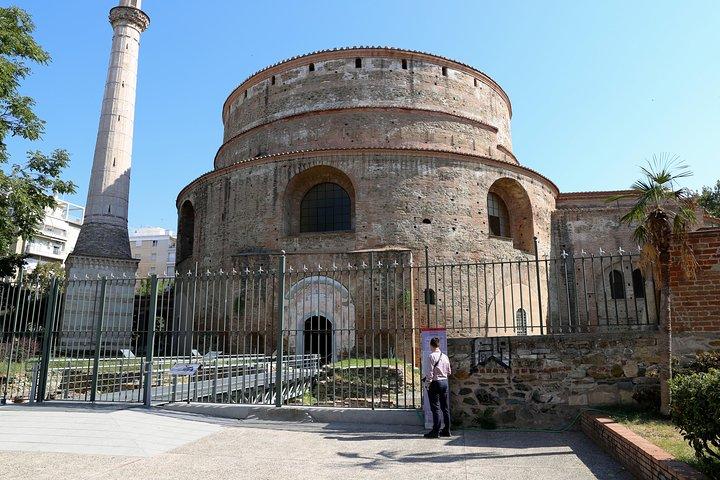
The emblematic monument of Thessaloniki, was constructed in the early 4th century AD, on the turning point between the pagan with the Christian world, probably as a temple for ancient cult worship or as a mausoleum for Constantine the Great (306-337).
15 minutes
Admission Not Included
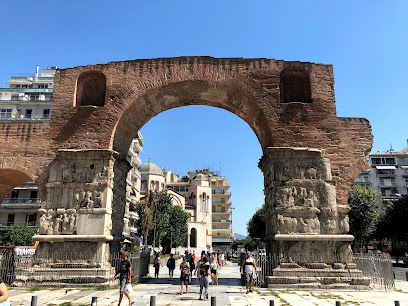
One of the most characteristic monuments of Thessaloniki is the Arch of Galerius, located on the upper side of the Via Egnatia, a short distance from the Rotunda. (The Rotunda is a building with internal niches, serving as a place of worship). The Arch of Galerius is a glorious monument, whose purpose was not practical, but memorial and honorary. It is a triumphal arch built shortly before 305 AD to honor the Roman Emperor Galerius, after the final victory over the Persians. The triumphal arch that was positioned perpendicular to the ancient Egnatia, which crossed the city (west to east) forming a part of the Roman Palace of Galerius, which was developed through the current squares of Navarinou and Hippodrome.
20 minutes
Heptapyrgion of Thessaloniki
Ano Poli (Upper City). The Heptapyrgion is a Byzantine and Ottoman-era fortress situated on the north-eastern corner of the Acropolis of Thessaloniki. Despite its name, which means "Fortress of Seven Towers", it features ten, and was probably named after the Yedikule Fortress in Constantinople. It served as the major redoubt of the city's acropolis, as well as the seat of its garrison commander in Ottoman times, until the late 19th century.
30 minutes
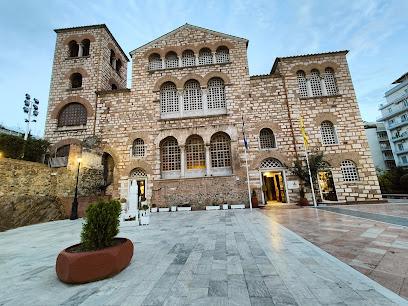
The Church of Saint Demetrius is the main sanctuary dedicated to Saint Demetrius, the patron saint of Thessaloniki, dating from a time when it was the second largest city of the Byzantine Empire. It is part of the site Palaeochristian and Byzantine Monuments of Thessaloniki on the list of World Heritage Sites by UNESCO since 1988. Underneath the Church is the place where St Demetrios, along with other Christians of the early Roman period, were martyred.
20 minutes
Metsovo
This tree-shaded village, retaining its traditional character, dots the mountain side below Katara Col in the Mountain Range of Pindos. Metsovo is full of life throughout the year generously offering you its natural surrounding beauties. Particularly during winter, the famous vlach village, birthplace of various national benefactors, is Epirus’ beloved tourist destination.
60 minutes
Perama Cave
Set on the western shore of the lovely Lake Pamvotis, Ioannina is one of northern Greece's most atmospheric cities, and one of its more cultured and wealthy, as it was famous throughout the Ottoman Empire for its silver artisans. The walls of its old fortified city, the Kastro, enclose a tranquil quarter, spiked with minarets, and an island in the lake is a quiet, car-free escape. Just before Ioannina we will reach the region of Perama. Here you can visit the Cave of Perama, this timeless cave (covering a distance of 1,5 km) is full of openings with beautiful formations of stalagmites and stalactites created 1,5 million years ago.
60 minutes
Admission Not Included
Pavlos Vrellis Museum of Greek History
It is the biggest museum of wax effigies in Greece and also a great heritage in our history. Everything in this museum, from the moment their idea was perceived until the stage of its creation, was handcrafted by a man, who wanted to enliven elements of his country’s history with lots of love and passion.
20 minutes
Admission Not Included
Dodoni Sanctuary and Theatre
We will drive to the Ancient Greek Oracle of Dodoni where a huge site is preserved. It reveals where the ancient Greek theater, the Temple and the Oracle of Zeus functioned.
40 minutes
Admission Not Included
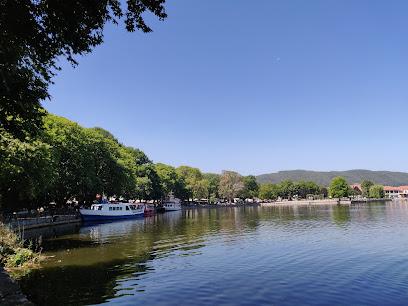
The lake is also one of a kind as it is the only one in the world that has a small inhabited island and it’s just across from the city.
60 minutes
Admission Not Included
Zagorohoria
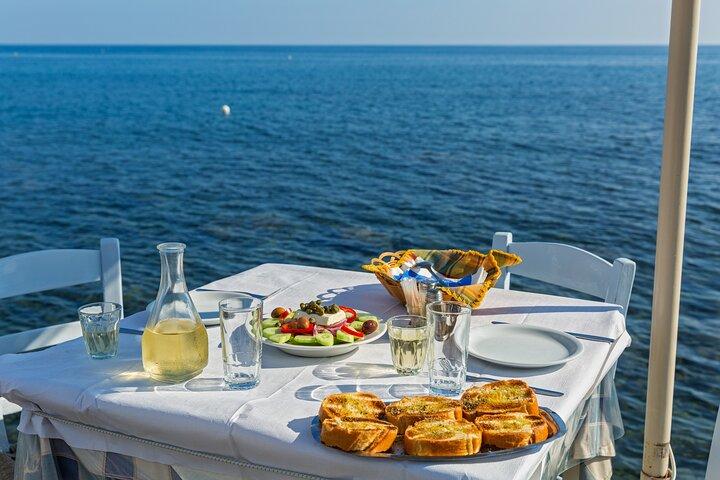
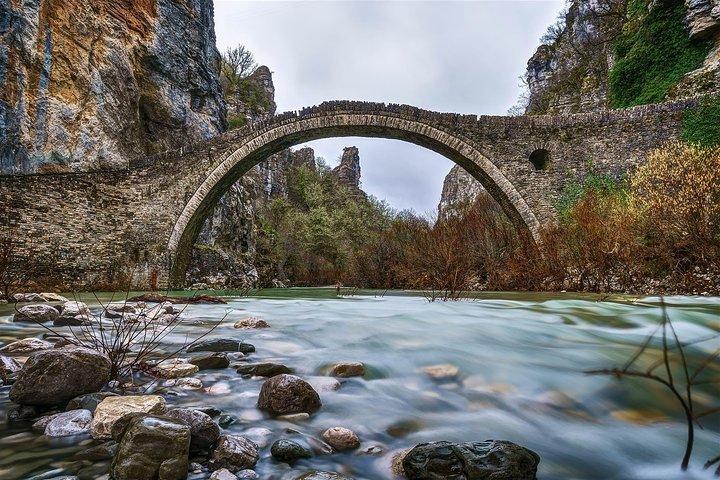
Next day we will depart from Ioannina for a day tour in Zagorohoria. This is a group of picturesque, elevated villages and small bridges above the river. There you will have a traditional Greek lunch before we return back to Ioannina to spend the rest of the day.
600 minutes
Ioannina Castle
The southeast part of Ioannina is a beautiful fortified old town, and it’s the area’s historic landmark. This is the oldest Byzantine fortress in Greece, continuously inhabited until today.
60 minutes
Mount Parnassus
You will have a breathtaking view of the mountains full of olive trees literally in front of you.
Monastery of Hosios Loukas
Our next stop is going to be the monastery of Hosios Loukas, which represents the second golden age of Byzantine art (11th -12th century) in particular its golden mosaic decoration and fine architecture.
60 minutes
Delphi Ancient Town
Delphi is a town on Mount Parnassus in the south of mainland Greece. It's the site of the 4th-century-B.C. Temple of Apollo, once home to a legendary oracle.
Temple of Apollo
At the site you will visit the temple of Apollo where Pythia spoke to the oracles.
60 minutes
Admission Not Included
Delphi Archaeological Museum
In the museum you will be able to see the famous charioteer and Gold Ivory statues.
60 minutes
Admission Not Included
Arachova
Aráchova is a mountainous village nestling picturesquely at the foot of Mt. Parnassós in Viotia, Southern Greece.It is the most cosmopolitan winter destination in Greece, a great favorite for passionate ski lovers and celebrities, or just first-time visitors who wish to relax in a dreamy mountainous setting with modern tourism facilities. Its modern ski resort, its close proximity to Athens, and its breathtaking mountainous landscape are the strongest reason why. Apart from the mountain activities, Aráchova is also famous for its bustling nightlife and as the favorite mountain resort of Athenians.
120 minutes
Diakofto
Diakofto is a small seaside town with a magnificent view of the Corinthian Gulf. The town is mainly known for the train “Odontotos” which crosses the Vouraikos Gorge on a beautiful route until Kalavrita. In the summer period the visitor has the opportunity to visit the coasts of Diakofto and during the winter visitors of the area visit the magnificent ski center of Kalavrita.
60 minutes
Diakopto
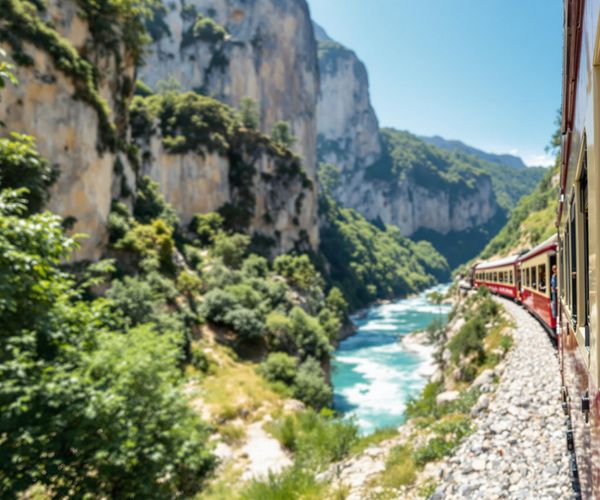
Get on the special train of Diakofto, the most scenic and graphic train route in Greece passing through tunnels and a canyon, coming in contact with the purest Greek nature, the train will leave you at Kalavrita after a short ride.
60 minutes
Admission Not Included
Kalavrita
Kalavryta is a mountainous small town full of narrow streets, cafes and restaurants, where you can find many locally produced products like honey, herbs, spices, pasta e.t.c. Kalavryta also played an important role in Greek history. It was in the legendary Agia Lavra (a monastery of the territory) that the Greek War of Independence began. In 1821 the first revolutionaries took an oath "to fight or die" for freedom and the flag of the revolution was raised there. The site is also a martyr of World War II. In 1943 one of the most vicious holocausts in Greek territory took place here. The town is dominated by inscriptions and crosses commemorating that fact. At Kalavryta we will have lunch and spend the night.
480 minutes
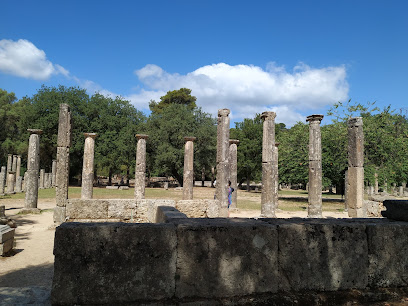
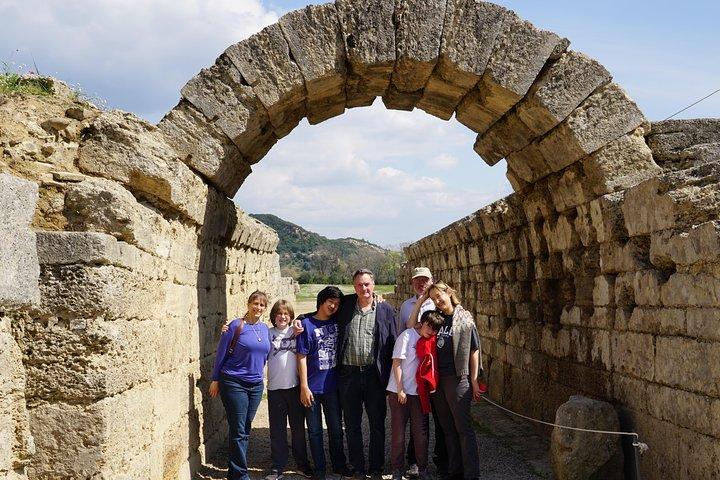
We will visit the archaeological site and the museum of Ancient Olympia. This is one of the largest sites in Greece, the birthplace of the Olympic Games and the Sanctuary of Olympian Zeus. Walking through the site you will pass by the Gymnasium, the Palaistra, the workshop of Phidias, the Temple of Zeus and you will end up at the Stadium where for every four years the Greeks competed for glory and for spiritual elevation honoring their cities.
60 minutes
Admission Not Included
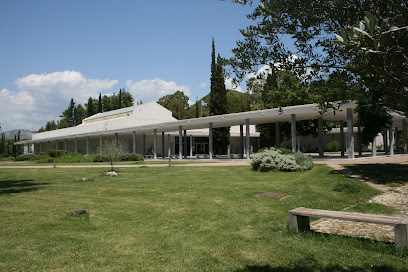
The museum is also quite unique as it includes the renowned statue “Hermes of Praxiteles” with its perfect analogies and tools that belonged to Phidias himself. With the tools he created one of the seven wonders of the world “the gold ivory statue of Zeus”.
60 minutes
Admission Not Included
Museum of the Olympic Games
The Museum of the History of the Ancient Olympic Games hosts 463 ancient works, from the Temple of Zeus at Olympia, and other museums in the Greek territory. The exhibits cover a wide chronological range, from the 2nd millennium BC until the 5th century AD. Ancient exposed in thematic units and through them yperchilietis shows the history of the Olympic games, the longest ancient institution. Apart from ancient art, the visitor has the possibility of detailed information through the rich visual material. After a walking in the footsteps of ancient athletes we will take our lunch at the village.
30 minutes
Admission Not Included
Ancient Messini
The remains of this vast ancient city are as extensive as those of Olympia and Epidavros, yet Ancient Messini receives only a fraction of their visitors. Picturesquely situated on a hillside below the village of Mavromati and still undergoing excavation, the site comprises a large theatre, an agora (marketplace), a sizeable Sanctuary of Asclepius and one of the most impressive Ancient Greek stadiums. Entry includes the small museum at the site turn-off; don't miss the impressive Arcadian Gate 800m beyond, ei
120 minutes
Admission Not Included
Stoupa
Stoupa is a newly built little village at the south of Peloponnese. The picturesque sandy beaches, the small rivers, the caves, the beautiful harbors and the hill with the castle are some of the reasons more and more tourists visit every year this magical place. The name of the village was originally “Potamos” which means river in Greek and is related with the river of the area. The name finally changed to “Stoupa”, a word coherent with sails, because of the sails the locals put into water in order to make them softer.
120 minutes
Kardamyli
Kardamili is a wonderful, picturesque, historic, coastal village of Messiniaki Mani which is situated 35km southeastern to the city of Kalamata. There, the visitor can admire overgrown mountain sides, olive groves, wonderful beaches, well cared stone mansions of traditional architecture of Mani, verdant gardens and the lovely, picturesque small port.
120 minutes
Areopoli
Areopoli is a town on the Mani Peninsula. The word Areopoli, which means "city of Ares", the ancient Greek god of war, became the official name in 1912. It was the seat of Oitylo municipality. The Greek War of Independence was started at Areopoli on March 17, 1821 by Petros Pierrakos, also known as Petros Mavromichalis, the last bey of Mani. Now Areopoli has grown into a flourishing town. Its tower houses, constructed with field stones, are distinct from the traditional blue and white buildings that characterize many Greek villages.
360 minutes
Caves of Diros
The cave of Diros, is found 10 km from Gytheio and 5 km from the Pyrgos Dirou. Actually there are three caves, the Alepotrypa, Katafigi and Glyfada. This is a unique experience traveling barely a subterranean river length 1,600 m. The magic of the color, and the beautiful shapes, formed by the stalactites and stalagmites makes a unique spectacle. After the ongoing research at the cave of Diros to date, the total length reaches 6.500 meters and is still unknown the final length.
60 minutes
Admission Not Included
Acropolis and Ancient Theater
Following that we will spend the rest of our time in Sparta known as the eternal rival city of the Athenian Democracy. Sparta revolved around a different Cosmo theory for the ancient Greek standards. Initially known as the birth place of Helen of Troy and the Kingdom of Menelaus (in Mycenaean period), Sparta was organized as a purely military society in the ancient Greek period. It was the city of the two Kings were a few aristocrats ruled and of course the city where Leonidas and his 300 Spartans marched from to face the Persian army Thermopoylae in 480 BCE.
20 minutes
Leonidas Monument
Continuing we will pass in front of the stadium where the statue of King Leonidas stands marking the ending point of Spartathlon race (Athens – Sparta 245,3 km).
10 minutes
Museum of the Olive and Greek Olive Oil
We will visit the museum of (olive and) olive oil and learn many things about the most famous products of Greece.
15 minutes
Admission Not Included
Mystras
We will head towards Mystras.Reaching Mystras you will automatically understand why this location stands so unique within the Greek sites. Known as the ghost city, fortified on a citadel, Mystras is one of the two locations in Greece that preserves not only medieval churches but also ordinary houses, mansions and palaces of the Byzantine Empire in combination with Frankish elements.
Archaeological Site of Mystra
Walking in the site on the upper point you will reach the citadel and enjoy a magnificent view of the surrounding areas while walking down hill you will meet the palaces and the Royal courtyards. Although known as the ghost city most of the monasteries are still in use and the monks will gladly show you around their small society. Before you exit you will come across the chapel of St. Demetrios, on its floor survives a plaque depicting a two head eagle (the symbol of Byzantium). It was on this very plaque that Konstantine Palaiologos kneeled before he was crowned the last emperor of the Byzantium.
120 minutes
Admission Not Included
Monemvasia
Monemvasia is a living old city, developed on an island that is connected to the Greek mainland. A fortress and a prosperous city of the Byzantine empire Monemvasia (literally means one entrance) still survives, the narrow streets, the mansions, the small houses, the churches , the wall, the gate and the citadel, the city is still inhabited. Here history comes truly alive, we will spend half of our day at Monemvasia where you can have lunch by the sea upon the old wall and walk in the city continually discovering new points of interest.
180 minutes
Agia Sofia Church
Agia Sofia (St Sophia's Church), the main sanctuary in Monemvasia's upper town, is a large Byzantine church built on the edge of a cliff with a vertiginous view of the bay below. Beyond the Venetian loggia that makes up the façade, the interior is palpably calm and refreshing. Admire the impressive dome, finely sculpted marble capitals and fragments of 13th century frescoes.
20 minutes
Archaeological Site Mycenae
Dated to the 2nd millennium B.C.E. representing what Homer wrote about, Achilles, Agamemnon and Helen of Troy. The palace of Mycenae gave its name to a whole era.
60 minutes
Admission Not Included
Lion Gate
In the site you will see the famous Lions Gate (the oldest architectural sculpture in Europe), the cyclopean walls, the burial circle A and the remains of Agamemnon’s Palace.
10 minutes
Admission Not Included
Archaeological Museum of Ancient Mycenae
Worth visiting there is also a modern museum exhibiting the findings of the “City Of Gold".
30 minutes
Admission Not Included
Citadel and Treasury of Atreus
Before setting off again we will make a small stop at the treasury of Atreus, the best preserved Tholos tomb, one of the finest examples of the Mycenaean architecture.
10 minutes
Admission Not Included
Nafplio
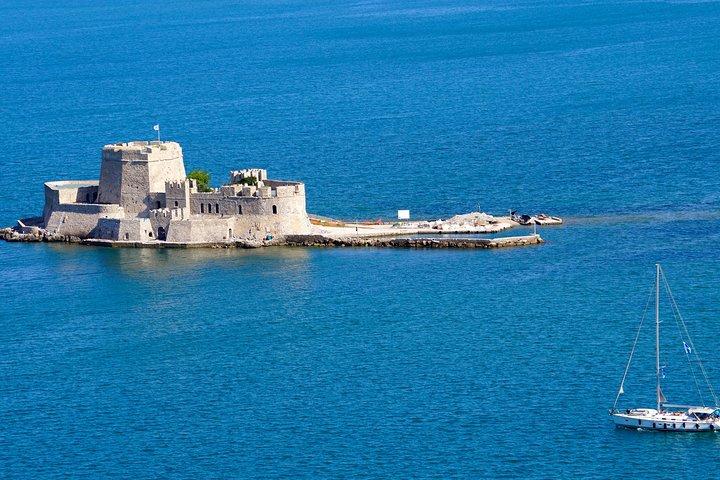
We will move towards a more recent history of Greece and the city of Nafplion. Considered as the most scenic city, Nafplion functioned as the capital of Greece until 1834. This romantic city offers you an outstanding combination of fortresses and castles (Palamidi, Bourtzi), a huge harbour open to the Aegean Sea and the unique architecture of the old city of Nafplion revealing Venetian, neoclassical and oriental elements. After walking around the picturesque old city we will stop for lunch at a traditional tavern by the sea.
120 minutes
Acronauplia
We will drive up to the castle of Acronafplia for a panoramic view of Nafplion.
20 minutes
Tiryns
Tiryns is a Mycenaean archaeological site in Peloponnese, and the location, from which mythical hero Heracles performed his 12 labors.
60 minutes
Admission Not Included
Sanctuary of Asklepios
Our next stop will be the site of Epidaurus. After just a short drive you will be able to visit one of the most important ancient sanctuaries dedicated to the God Asclepius, the god of healing and medicine, located in an ideal environment and spread over a hilly area.
30 minutes
Admission Not Included
The Ancient Theatre of Epidaurus
The highest point is the theater of Epidaurus. The best preserved ancient Greek theater dated 4th century B.C.E.It is proof of what fantastic miracles the ancient Greek minds could create. You can test the acoustics, great even today. Climb up until the upper seats just to close your eyes and dream you attended an ancient Greek tragedy.
30 minutes
Admission Not Included
Archaeological Museum of Nemea
Nemea is mainly known for the Nemean Games, its ancient Greek stadium and the Temple Of Zeus but it is also famous for its vineyards. Nemea has the most wineries in Greece as grape growing has been a tradition here since ancient times. Back at the site apart from the museum and the sanctuary, the stadium makes the difference. Nemea has one of the best preserved stadiums found so far and it is located on a higher level. Of special intrest are the tunnels through which the athletes entered the stadium.
60 minutes
Admission Not Included
Ancient Corinth (Archaia Korinthos)
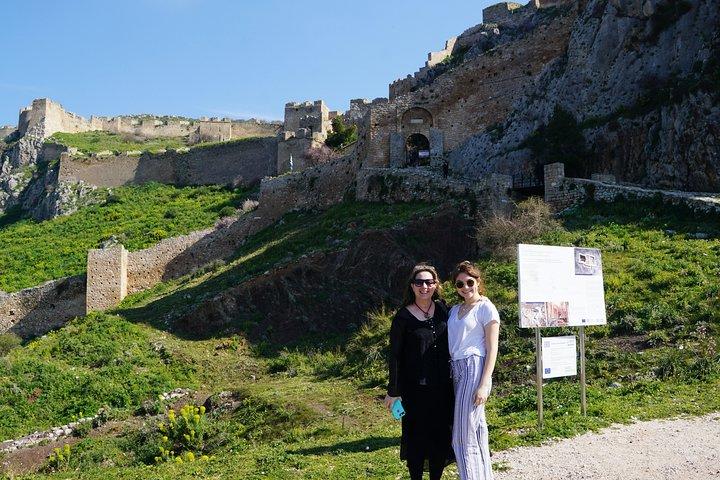
Ancient Corinth, located at the foot of the hill includes the Roman Agora of Corinth, the temple of God Apollo and a small museum. Apart from its archaeological and historical interest though the site is also one of the most popular religious destinations in Greece. In this amazing place the Apostle Paul preached Christianity, was judged by the tribunal in the Agora and established the best organized Christian church of that period.
60 minutes
Admission Not Included
Temple of Apollo
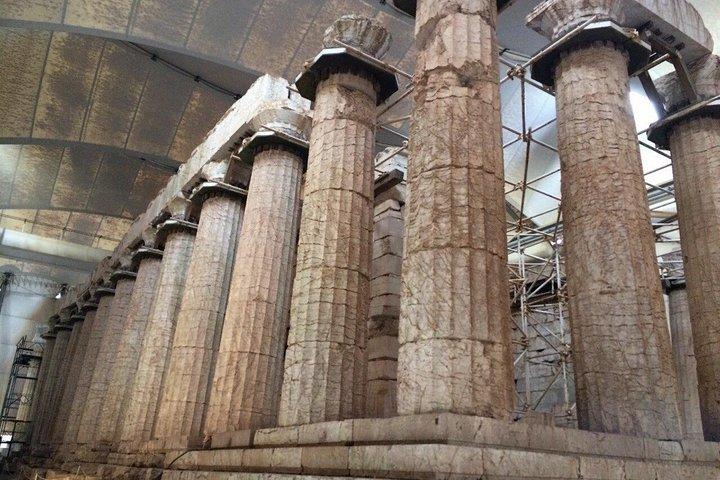
We will visit the Temple of Apollo which is located in the in the Ancient city of Corinth.The temple of Apollo at Corinth is one of the earliest Doric temples in the Peloponnese and the Greek mainland. Built around 560 B.C.E., of local monolithic limestone on top of an imposing, rocky hill to the north of Acrocorinth, the Archaic temple was an emblem for the Greek city of Corinth, reflecting its growth and prosperity.
5 minutes
Admission Not Included
Acrocorinth
We will visit the castle of Acrocorinth,the oldest and largest castle in southern Greece, for some amazing photos.
20 minutes
Corinth Canal
Our last stop is the Corinth Canal. Opened in 1892 separating the Peloponnese peninsula from the rest of Greece and connecting the Saronic Gulf to the Corinthian Sea. You will have time to walk across on a pedestrian bridge to admire the canal closer, (if you’re game) on some days bungee jumping is an option.
15 minutes
Athens
We will drive back to Athens.
The experience can be subject to change due to bad weather or unforseen circumstances. We always endeavour to give you the best possible experience.
Additional Information
-
 Accommodation (If you need our help we work with some of the best hotels in each area, we only need to know the number of the rooms)
 -
Infants and small children can ride in a pram or stroller
-
Specialized infant seats are available
-
Suitable for all physical fitness levels
-
The drivers are not licensed to accompany you inside any site or museum. If you require a licensed guide to tour the sites with you, you need to hire one additionally. If you have any questions you can contact us on the phone number provided by Viator.
-
The duration of the tours is approximate, the exact duration will depend on the time of day and traffic conditions
-
Transportation options are wheelchair accessible
-
Wheelchair accessible
What our experts say
-
 Try local delicacies in Ioannina.
 -
Visit the Perama Cave for stunning views.
-
Explore the ancient ruins in Delphi.
-
Don't miss the unique architecture in Meteora.
-
Sample wines in Nemea, famous for vineyards.

More About this Experience
Greece is calling, and what better way to answer than with the mesmerizing 15 Days Private Tour: Classical Tour? This incredible journey is a dream come true for history buffs, adventure seekers, and anyone longing to explore the rich tapestry of Greece's past and present. Over 360 hours, travelers will have the chance to visit iconic landmarks and hidden gems, from the stunning monasteries of Meteora to the ancient ruins of Olympia. With a private vehicle at their disposal and professional drivers who are history aficionados, guests can relax and soak in the breathtaking scenic routes and natural beauty that unfold around them. Whether it's walking through the ancient streets of Delphi or savoring local delicacies in charming villages, this tour is designed to provide a comprehensive and intimate experience of Greece's classical heritage. What can travelers expect from this once-in-a-lifetime experience? The 15 Days Private Tour: Classical Tour promises an immersive exploration of the country’s most celebrated sites, allowing participants to walk in the footsteps of philosophers, warriors, and gods. From the battlefield of Thermopylae to the majestic heights of Mount Olympus, every day presents new adventures and opportunities to connect with Greece’s storied past. Expect detailed insights from knowledgeable drivers, who may not accompany guests into sites but will enrich the journey with fascinating narratives and local lore. The tour includes convenient hotel and port pickups, as well as bottled water to keep everyone refreshed. This is not just a tour; it's an opportunity to create lasting memories, make new friends, and fall in love with Greece's enchanting landscape. The 15 Days Private Tour: Classical Tour is perfect for a wide range of travelers. Whether you're a solo adventurer, a couple on a romantic getaway, or a family seeking to bond over shared experiences, this tour caters to all. It’s also wheelchair accessible, ensuring that everyone can partake in the wonders of Greece regardless of physical fitness levels. The luxurious nature of the private tour means that guests can customize their experience, making it ideal for those who crave flexibility. From history enthusiasts to food lovers, art admirers to nature seekers, this tour offers something for everyone, making it an inclusive journey through one of the world's most captivating countries. Why book this tour? Because it’s not just about seeing sights; it’s about experiencing the heart and soul of Greece. This journey stands out for its unique blend of historical exploration, cultural immersion, and stunning landscapes. Travelers can expect a personalized experience that goes beyond standard tourism. With private transport and the freedom to choose how to spend their time, guests can delve deep into the local culture, sample authentic cuisine, and forge unforgettable memories. The professional drivers serve as local guides, sharing their knowledge and passion while giving travelers the space to enjoy their adventure at their own pace. This thoughtful approach transforms a simple tour into a rich tapestry of experiences, making it a choice that resonates with the heart. For those considering this adventure, there are a few things to keep in mind. Although the drivers are not licensed to accompany guests inside sites or museums, the option to hire a licensed guide is available upon request for an additional fee. Accommodation is not included, but the tour operators work with some of the best hotels, ensuring a comfortable stay. With transportation options available for all physical abilities, including specialized seats for infants, this tour is accessible to everyone. Flexibility is key; travelers can reach out with any questions or special requirements. Prepare for an unforgettable journey through the stunning landscapes and remarkable history of Greece, where every moment is an opportunity for discovery. Feedback from travelers who have embarked on the 15 Days Private Tour: Classical Tour has been overwhelmingly positive. Many rave about the impeccable organization and the passion of the drivers, who bring history to life with their engaging storytelling. Guests appreciate the well-planned itinerary that balances sightseeing with downtime, allowing for personal exploration. The chance to visit lesser-known sites alongside famous landmarks is often highlighted as a unique advantage. Travelers also commend the accessibility and comfort of the tour, ensuring that everyone in the group can participate fully. The overall sentiment is one of satisfaction and joy, with many saying this tour exceeded their expectations and left them with cherished memories of Greece.
Journals from our explorers at this location





Your all‑in‑one travel companion app
Explore expert travel guides, compare and book tours, experiences, hotels, and more—all from the palm of your hand. Download now for seamless trip planning wherever your wanderlust takes you.


This is a popular product and the date you are looking for just sold out. Next available date is
