

Uzbekistan Silk Road Discovery
 Tashkent, UZ


Highlights
- Explore stunning architectural wonders of Samarkand
- Immerse in vibrant cultures at local bazaars
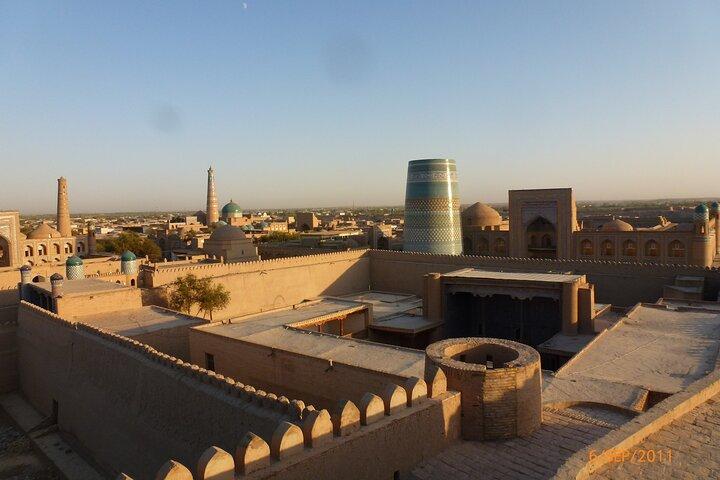
- Discover ancient history in Khiva's Ichan Kala
- Experience authentic Uzbek cuisine and hospitality
- Witness traditional silk production in Fergana Valley
-
Duration 264 hours
-
Private Tour
-
10 nights accommodation
-
Breakfast included
-
Entrance tickets included
-
Visa support provided
They invite travelers to embark on an exhilarating journey through Uzbekistan, tracing the legendary Silk Road. With 264 hours of immersive exploration, this adventure reveals the mystical allure of Tashkent’s bustling bazaars, the ancient charm of Khiva’s Ichan Kala, and the architectural marvels of Samarkand's Registan Square. Guests will wander through the serene Fergana Valley, uncovering secrets of silk production and masterful ceramics. Each stop unveils a rich tapestry of history, culture, and authentic Uzbek cuisine, all guided by expert locals. Comfortable accommodations and seamless travel make this tour not just a trip, but a once-in-a-lifetime experience filled with unforgettable memories. From vibrant markets to breathtaking monuments, they will discover the heart and soul of Uzbekistan, a land where every corner tells a story, and every moment is a celebration of life.
At a Glance
-
 Free cancellation
-
 11 days
-
 Available in German, Russian, Japanese, English, French
-
 Mobile voucher
-
 Private Tour
-
 Guided
-
 Family friendly

Embark on an unforgettable 11-day Silk Road adventure through Uzbekistan's historic cities, cultural treasures, and stunning landscapes.
Included
-
 OtherVisa support if needed
 -
OtherTrain Khiva-Bukhara, High speed train Bukhara-Samarkand-Tashkent, Tashkent-Kokand, Margilan-Kokand
-
Other24 hour customer service.
-
OtherEntrance tickets to all sights & museum
-
OtherAll Fees and Taxes
-
Other10 nights in centrally located 3* or boutique hotel
-
In-vehicle air conditioningAir-conditioned vehicle
-
Breakfast
Excluded
-
 OtherTips for guides & driver
 -
OtherFoto Museum charge to be paid cash at entrance $1-2/site
-
OtherSingle room supplement $20/single room/night is to be paid on spot
-
OtherDomestic airline ticket Tashkent-Nukus starting at $50/ticket
Meeting Point
Our representative will meet you with a sign with your name

77RP+J94, Turkiston Street, Tashkent , Uzbekistan

End Point
Our representative will meet you with a sign with your name

77RP+J94, Turkiston Street, Tashkent , Uzbekistan
Pickup
Check if pick-up is available from your location, you will select during checkout (providers may allow other pickup locations)

What to expect
Meeting Point
Our representative will meet you with a sign with your name
Tashkent
Arrival in Tashkent, our driver will pick you up from the airport/railway station and drive you to hotel.
30 minutes
Tashkent
Our guide will pick you up from the hotel and start excursion in Tashkent
15 minutes

Established in 2006, the Museum of the History of Timurids, also known as the Amir Timur Museum, has become a prominent landmark in Tashkent. The museum's grandiose building exemplifies refined architecture, featuring a round structure topped by a large blue dome. Graceful columns adorn the entire perimeter, seemingly supporting the roof, while the windows are designed in the form of arched niches. The facade is intricately decorated, and the building is surrounded by fountains, drawing the attention of all visitors to the capital. The museum boasts a collection of over three thousand exhibits, showcasing the ancient history of the region. These include paintings, historical documents related to Amir Timur's life, unique manuscripts, weapons, clothing, utensils, and coins, each representing a piece of history.
60 minutes
 Admission Included
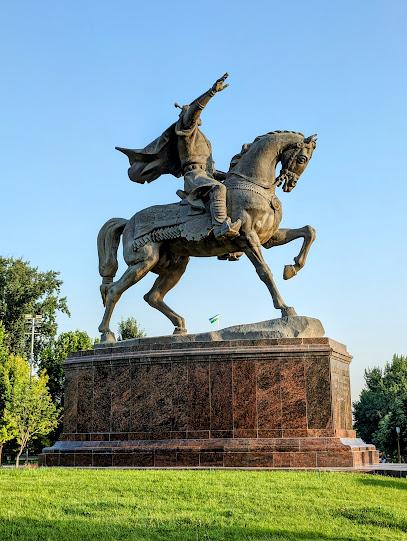
mir Timur Square in Tashkent has a rich history dating back to the 19th century when it was established as a small park surrounded by educational and governmental buildings. The square features a monumental equestrian statue of Amir Timur, the 14th-century ruler known for founding a vast empire. The square underwent reconstruction in 2009, transforming into a modern plaza with fountains and greenery. Surrounding the square are notable buildings such as the Uzbekistan Hotel, the University of Law, and the Forums Palace, which hosts important state and international events. The square is also home to the Tashkent Chime, a historic landmark symbolizing the city. With its central location and historical significance, Amir Timur Square remains a vibrant hub in Tashkent, reflecting the city's rich cultural heritage and modern development.
30 minutes
Mustaqillik Maydoni
Independence Square, located in central Tashkent, is a popular gathering spot with beautiful fountains. Its history dates back to the 19th century when it was the site of a Kokand Khan palace. Later, it became known as Lenin Square during the Soviet era, featuring a monument to Lenin. After Uzbekistan's independence in 1991, it was renamed Independence Square, with a new monument symbolizing the country's sovereignty. Today, the square hosts festive events and is adorned with modern buildings and green spaces, making it a vibrant part of Tashkent's urban landscape.
30 minutes
Courage Earthquake Memorial
The Monument of Courage in Tashkent commemorates the devastating 1966 earthquake. The earthquake, with a magnitude of 8.3, left half the city homeless. The monument features a black labradorite cube with the date of the earthquake and a clock showing the time of the quake. The statue depicts a woman protecting a child, symbolizing the city's resilience and the reconstruction efforts that followed.
30 minutes
Minor Mosque
The Minor Mosque in Tashkent which opened in 2014, is a modern architectural gem. With its white marble finish and turquoise dome, it stands out in the cityscape. The mosque's capacity exceeds 2400 people and features a beautiful open front part with terraces and a grand hall with a gold-plated mihrab. Situated on the Ankhor Channel embankment, it has quickly become a favorite spot for evening walks among city residents.
30 minutes
Admission Included
Chorsu Bazaar Tashkent
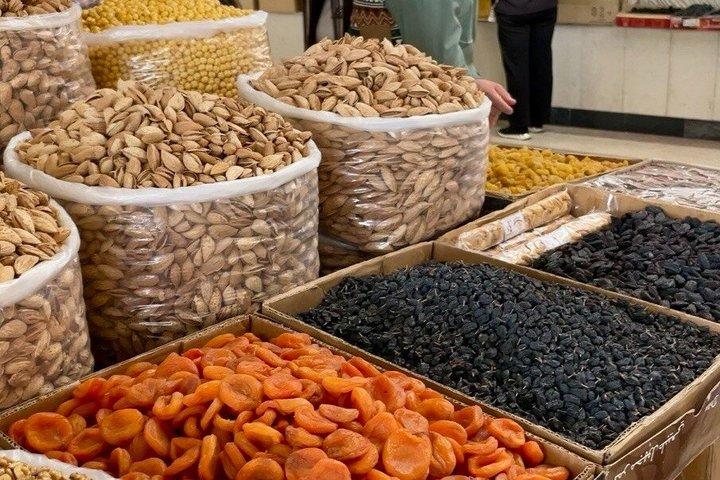
The Chorsu Bazaar in Tashkent, over a century old, is a vibrant hub of activity. Its traditional domed structures offer respite from the hot climate. The complex includes a magnificent three-story building with shops, basement passages, and back rooms. The bazaar offers a variety of goods, including fresh fruits, dried fruits, bread, meat, and local delicacies. Adjacent choykhonas serve delicious meals, while nearby handicraft shops offer hand-made souvenirs. A visit to this historical bazaar is a must when exploring Tashkent.
30 minutes
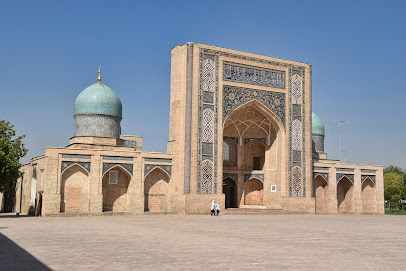
Hast-Imam Square, also known as Hazrati Imam, is a spiritual center and a picturesque attraction in Tashkent. Surrounded by historic mud-brick homes that survived the 1966 earthquake, it houses several architectural treasures including the madrasah of Barak-Khan, Tilla Sheikh Mosque, and the mausoleum of Hazrati Imam. The complex also hosts the Islamic Institute of Imam al-Bukhari and a library of oriental manuscripts, including the famous Ottoman Koran. The new mosque, built in 2007, features stunning woodcarving and two minarets in the style of the 16th century, creating a mesmerizing ambiance, especially at night.
60 minutes
Admission Included
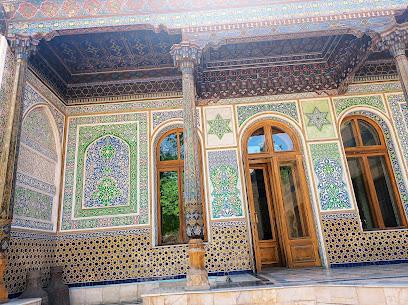
The Museum of Applied Art of Uzbekistan has a rich history, dating back to 1927 when it was first established as the Museum of Handicrafts. In 1997, it was granted state status and received its current name. The museum boasts a collection of over 7,000 samples of applied arts, including handmade embroidery, skull caps (tyubeteyka), jewelry, carpets, and other crafts from the 19th century to the present day. The exhibits are categorized into three groups: traditional works, those created since the 19th century, and modern art with colorful ornaments. Additionally, the museum features two gift shops offering works by modern Uzbek masters.
60 minutes
Admission Included
Tashkent Metro tour guide
The Tashkent Metro, the first underground system in Central Asia, was completed and opened in 1977. Each station features unique architectural elements such as marble and granite finishes, rows of columns, colorful bas-reliefs, and more.
30 minutes
Admission Included
Nukus
Take a evening flight to Nukus, arrival in Nukus and accommodation.
120 minutes
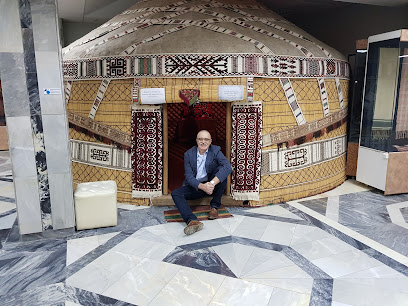
Also known as Karakalpakstan State Museum of the Arts or simply Nukus Museum of Art, it has aptly been nicknamed “Louvre in the Sands”. In the summer of 2009, writers from The New York Times’s "Leisure" column and the International Herald Tribune advised art-savvy readers who are generally “difficult to surprise” to “visit the Nukus Museum before dying”, evoking the famous phrase of Ilya Ehrenburg “to see Paris and die!” In 2015, The Telegraph rated the city of Nukus #2 among “10 Extraordinary Destinations You Have Probably Never Heard Of”, citing Savitsky Art Museum as a key reason for this nomination
180 minutes
Admission Included
Ayaz-Kala
After the museum, driving to Desert Fortresses, first of them is Ayaz Kala: On the colorful cliffs of one the Sultauizdag eastern spurs, in the Kyzyl Kum desert there survived ruins of one of the largest castles of ancient Khorezm– Ayaz-Kala. Folk legends associate the name of the fortress of with the name of the legendary warrior-slave Ayaz. Ayaz is a Central Asian Turkic folklore hero. The semi-mythical hero, according to a legend, threw himself at an Amazon princess who lived in the Kirk-Kiz fortress. The archaeologists claim that the Ayaz-Kala fortress belongs to the II century AD – a heyday of the Kushan Empire. Stretching in a chain from East to West it was part of a system of frontiers, built to protect the oasis on the side of the desert. All fortresses were located on a visible distance from each other, probably in order to make transmission of signals of approaching enemy convenient.
40 minutes
Admission Included
Topraq-Kala
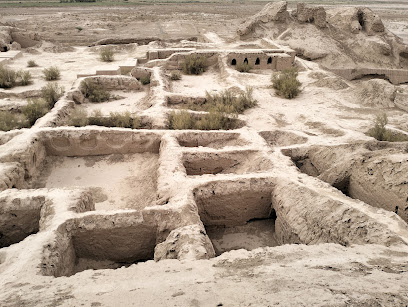
Toprak Kala is an excavated town dating back to the 1st to 5th cent. AD and is considered as the most important monument on Chorezm from the Kushan time. It's ground plan is 500m x 300m and it was surrounded by a wall made of bricks, 10 to 15 m high. The King's Palace in the north western part of the town was built on an elevated base rising about 15 m above the rest of the town. Three monumental towers, 25 m high, still exist. In front of the palace was the temple area with the holy fire. The town was divided by streets into several districts with blocks of dwellings with 150 to 200 rooms. The Kings's Hall covered an area of 280 squqre meters.
40 minutes
Admission Included
Khiva
Drive to Khiva, accommodation. Evening walk in a light up old city of Khiva by your own.
180 minutes
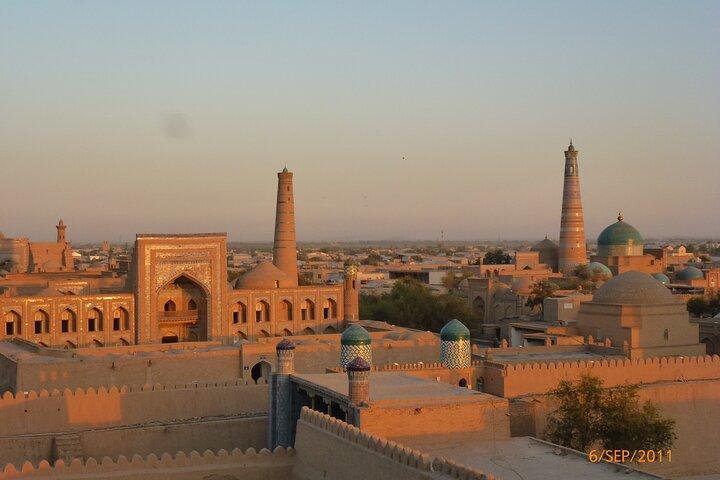
Itchan Kala
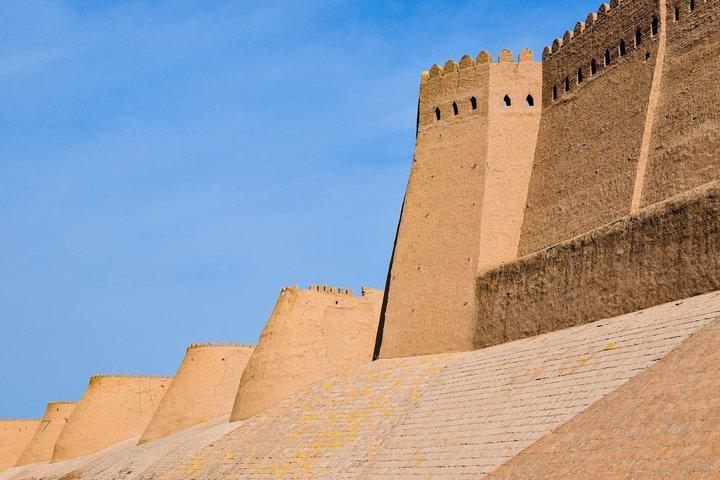
Itchan Kala has a history that spans over two millennia. The inner town has 26 hectares and was built according to the ancient traditions of Central Asian town buildings, as a regular rectangle (650 by 400 meters) elongated from south to north and closed by brick fortification walls that are up to ten meters high. Ichan Kala was the site of the Khan's palace. High officials clergy and rich merchants used to live here. The ordinary people, small merchants, craftsmen, and peasants lived in Dishan Kala
30 minutes
Admission Included
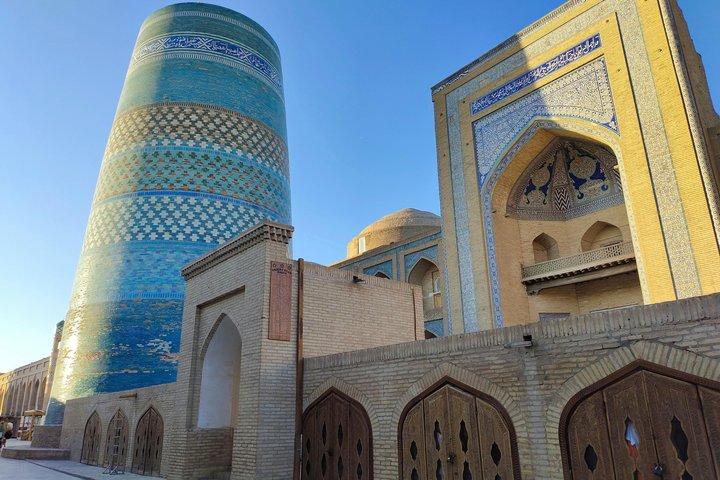
Kalta Minor Minaret
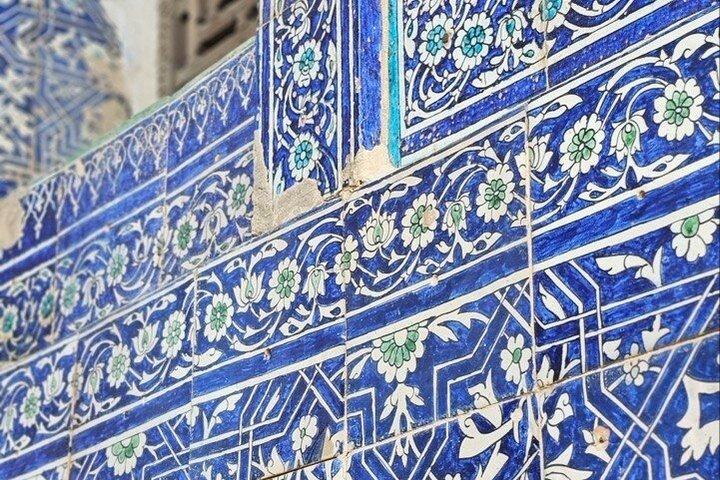
The minaret is well regarded, thanks to its unique decor and its incompleteness. The Kalta-minor is a unique minaret completely covered with glazed tile and majolica. It was commissioned in 1851 by Mohammed Amin Khan, the ruler of Khiva, as an architectural marvel intended to rise over 70 meters. But the construction stopped at a height of 29 m, which is why the name the Kalta-minor (or Short minaret) was assigned to it.
30 minutes
Admission Included
Citadel Kunya-ark
Kunya Ark is a fortified citadel at the heart of Khiva, nestled against the western ramparts of the Ichan Kala immediately north of the city's west gate. Originally built as early as the 12th century, the nucleus of its current layout was first constructed by Arang Khan (r. 1688-94). The Ark is the largest of Khiva's myriad buildings.
60 minutes
Admission Included
Pakhlavan Makhmud Mausoleum
Pahlavan Mahmud is a local poet and philosopher who was famous for his heroic strength and the ability to heal people. Originally the construction of the mausoleum was very modest but soon there was built khanaka and a mosque where pilgrims said their prayers. Later the building was rebuilt into a magnificent construction with the largest dome in the city, covered with blue tiles.
30 minutes
Admission Included
Juma Mosque
Khiva's Juma, or Friday Mosque is a unique architecture wonder with 64 hand hand-carved columns of different designs.
30 minutes
Admission Included
Islam Khodja Complex
The Islam-Khodja complex stands to the southeast of the main east-west street in Khiva's Ichan-Kala (old city) and includes a madrasa and minaret. The site is named after Islam Khodja, the grand vizier (and also a first cousin) of Muhammad Rahmi Bahadur II.
30 minutes
Admission Included
Stone Palace (Tash Khauli)
Located in the eastern part of Ichan-Kala, Tash-Khauli Palace built in 1830 - 1838 is an example of Khorezm architectural grandeur of those times. The palace was built by order of Allakuli-Khan.
30 minutes
Admission Included
Bukhara
Take a morning or afternoon train to Bukhara
360 minutes
Lyab-i-Hauz
Dating back to the 16th and 17th centuries, the Lyab-i Hauz Ensemble remains a prominent square in Bukhara. It stands out as a popular tourist destination, offering a serene and historical atmosphere. Located in southeast Shakhristan near the main Bukhara trade street, Lyab-i Hauz is often frequented by tourists looking for a peaceful place to rest and admire its grandeur.
60 minutes
Admission Included
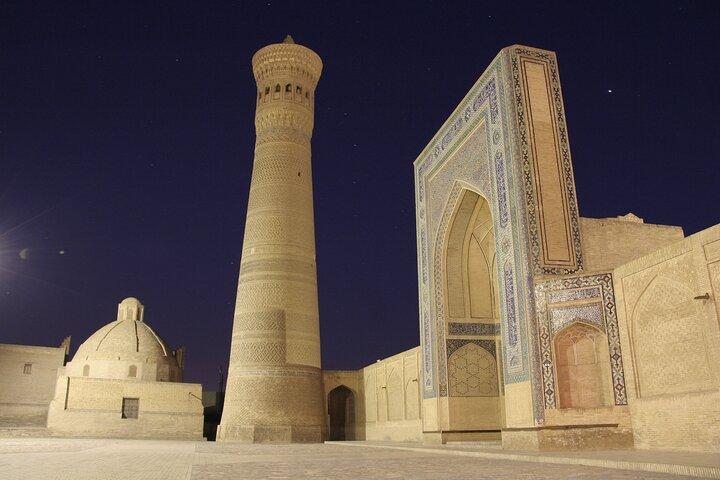
Poi Kalyan Mosque
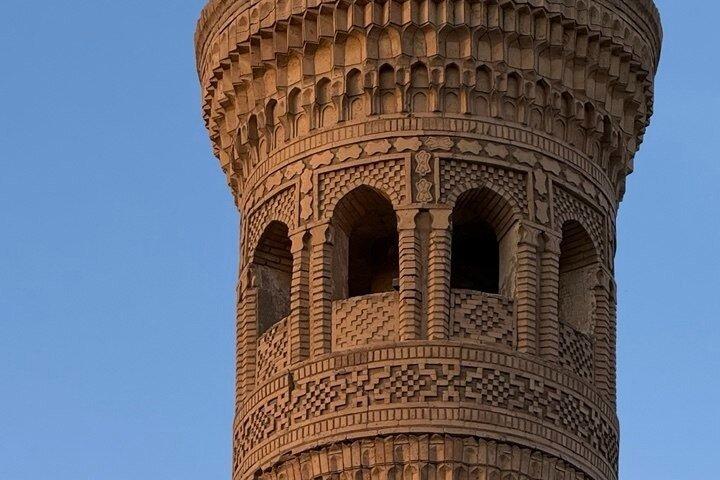
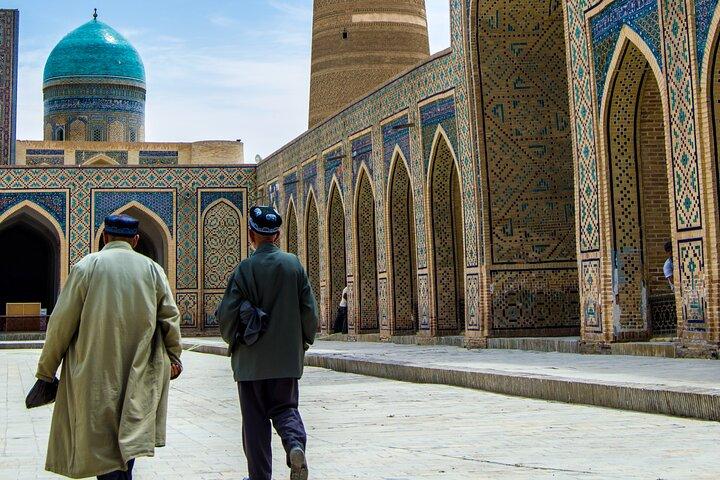
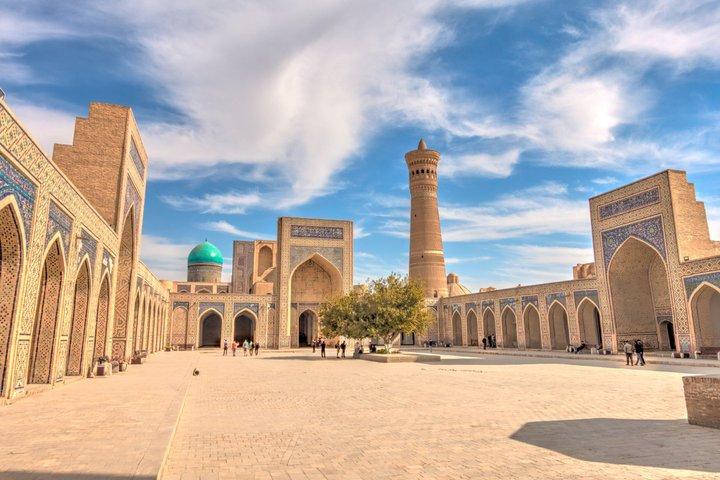
The Kalyan Minaret, standing at 45.6 meters, is the sole remaining section of the Kara-Khalid era mosque constructed by Mohammad Arslan Khan in 1127, predating the Mongol invasions. Despite its age, this remarkable structure survived the early days of the city, even astonishing Genghis Khan to the extent that he chose not to order its destruction. Today, it remains the focal point of the city, situated in the Po-i-Kalyan square.
30 minutes
Admission Included
Ark of Bukhara
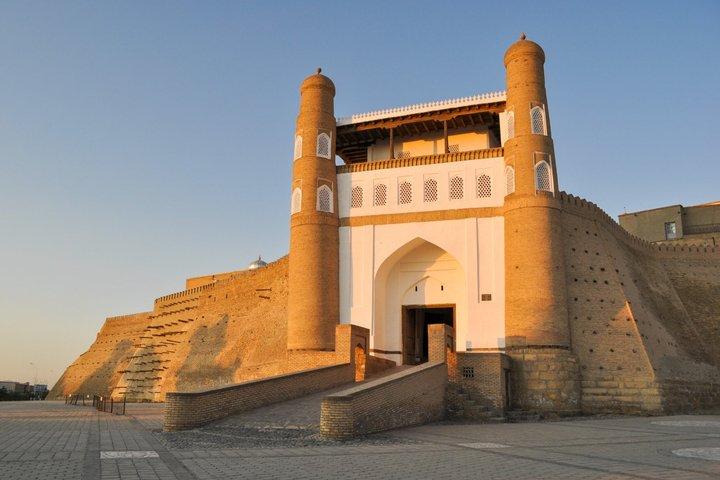
The Ark, a regal enclave within Bukhara, stands as the city's oldest edifice, serving as the residence of Bukhara's rulers for more than a thousand years. It is as ancient as the city of Bukhara itself, with its origins lost in the mists of antiquity. However, it undoubtedly served as the nucleus around which the medieval town of Bukhara evolved.
60 minutes
Admission Included
Trading Domes
A vibrant, ancient bazaar with an Eastern ambiance, adorned with workshops of skilled artisans.
60 minutes
Magoki Attori Mosque and carpet meusium
The oldest mosque in Central Asia, which has a rich history of serving as both a Buddhist and Zoroastrian temple, showcases remarkable brickwork architecture.
30 minutes
Admission Included
Bolo Hauz Mosque
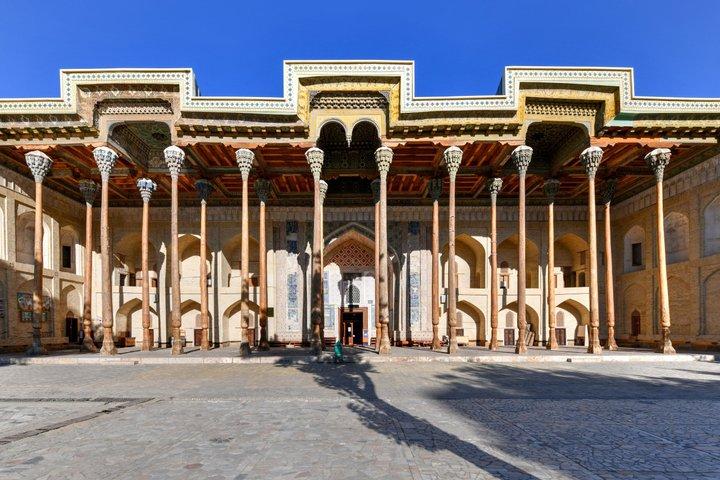
Bolo Hauz, situated across from the Ark Fortress, forms a Kosh layout with the latter, symbolizing the historical resistance between them. Its name, meaning "above the pool," derives from the octagonal hauz, or man-made pond, situated directly in front of it. Construction began in 1712, during the early years of Abu'l-Faiz Khan's reign (r. 1711-47), making it one of Bukhara's final and most exquisite major structures before the modern era.
30 minutes
Admission Included
Bukhara
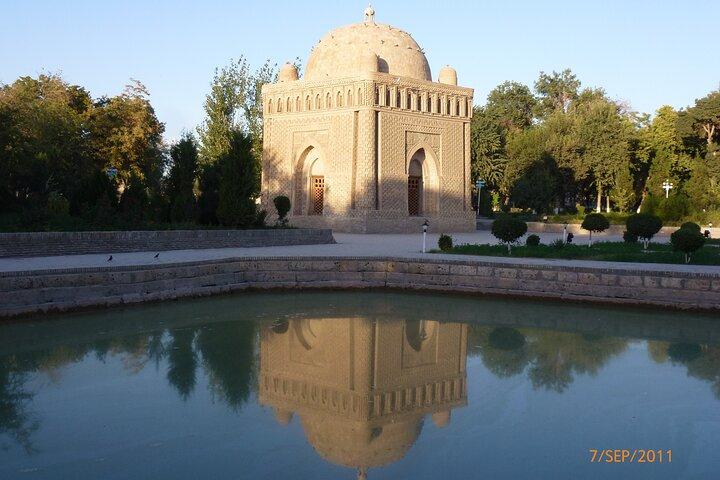
Explore the city at your leisure or opt for a half-day tour of the Bukhara countryside, which includes visits to the Summer Residence of the Emir, the Bakhautdin Naqsband Mausoleum, and the Samani Mausoleum.
240 minutes
Samarkand
Afternoon bullet train to Samarkand
120 minutes
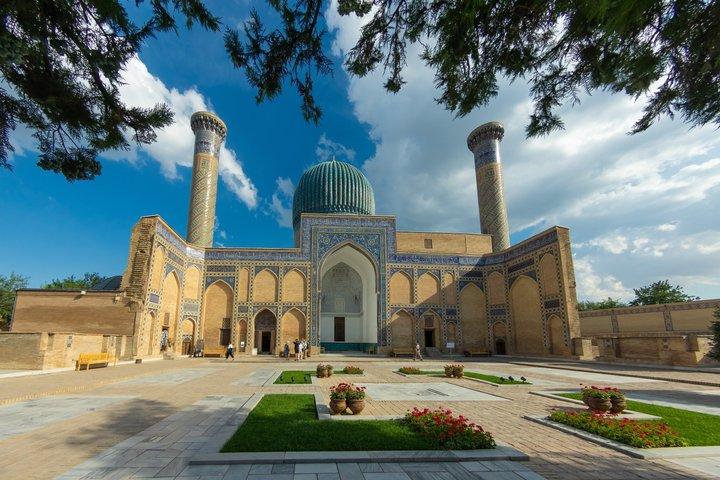
Gur Emir Mausoleum
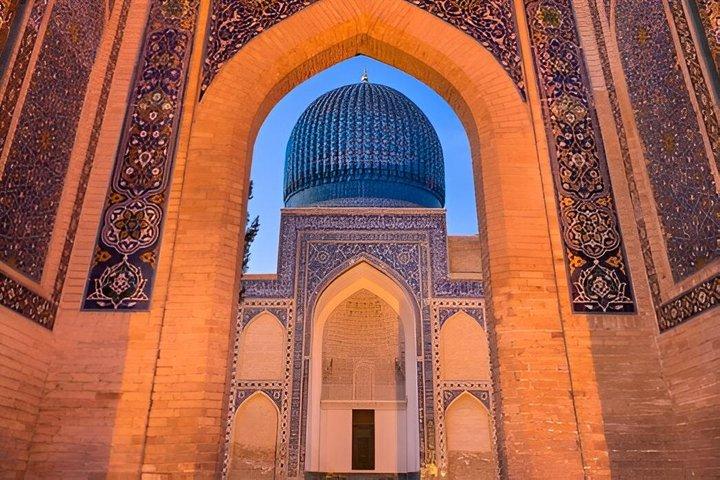
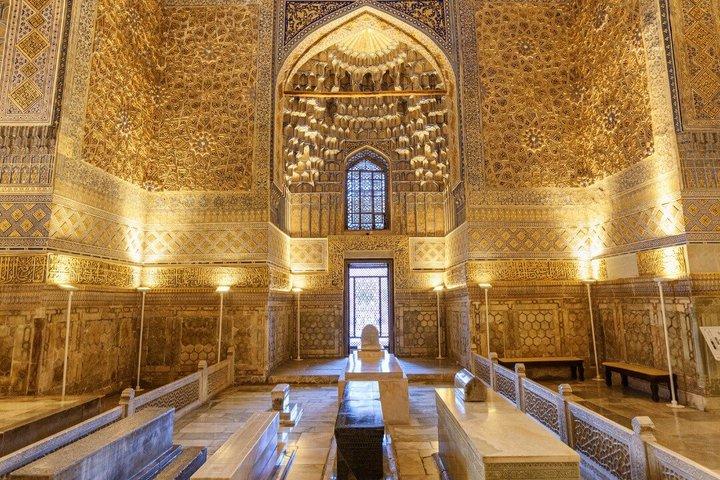
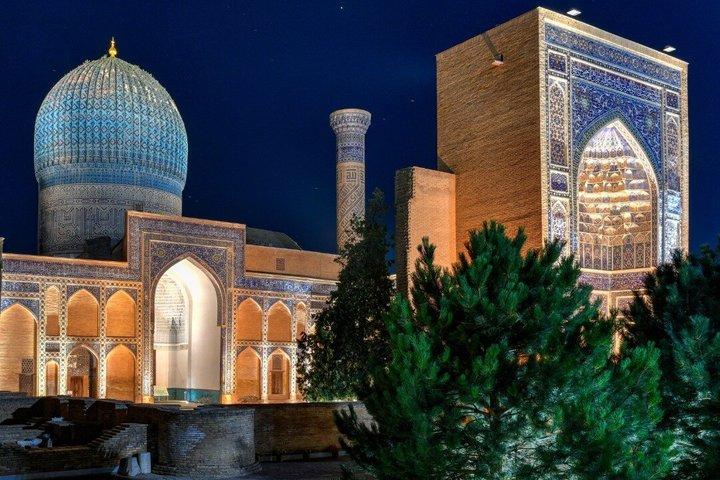
The Gur-Emir Mausoleum stands as a testament to Tamerlane's unparalleled conquests and enduring legacy. Visitors can explore his tomb within the beautifully reconstructed mausoleum, which dates back to 1404-1405 and was further developed in the 15th and 17th centuries. The mausoleum also houses the largest piece of jade (greenstone) in the world, offering a unique opportunity to reflect on Tamerlane's life and achievements.
60 minutes
Admission Included
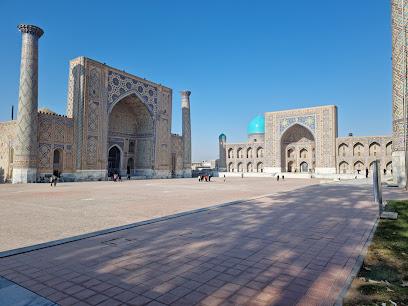
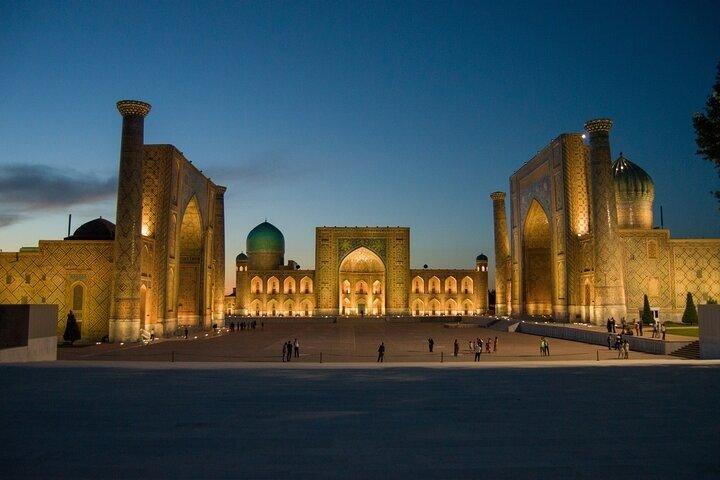
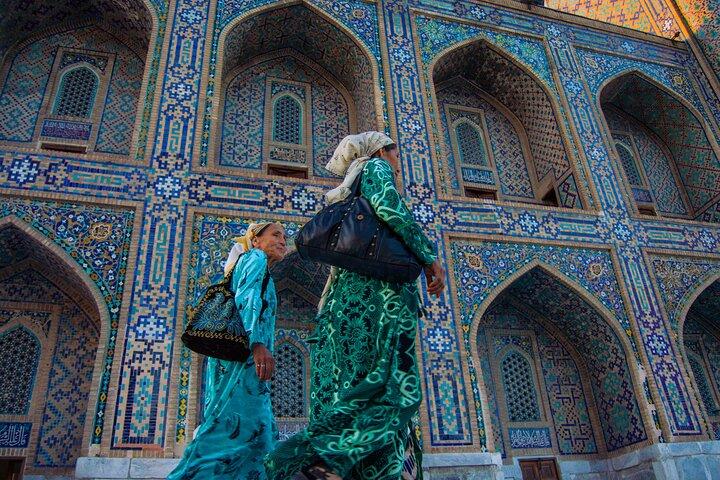
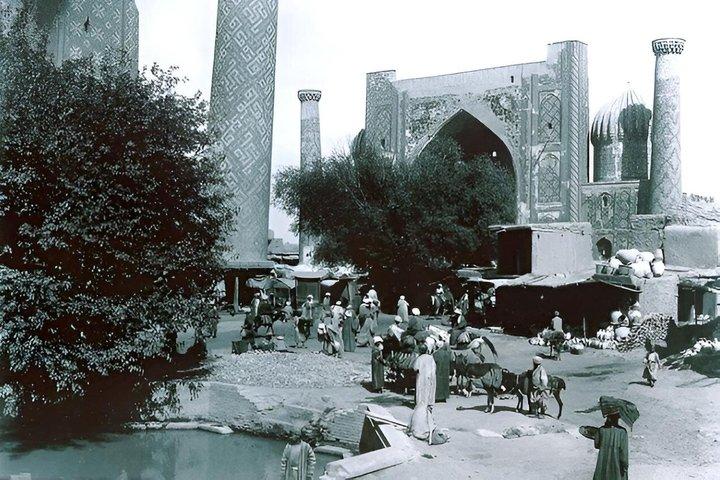
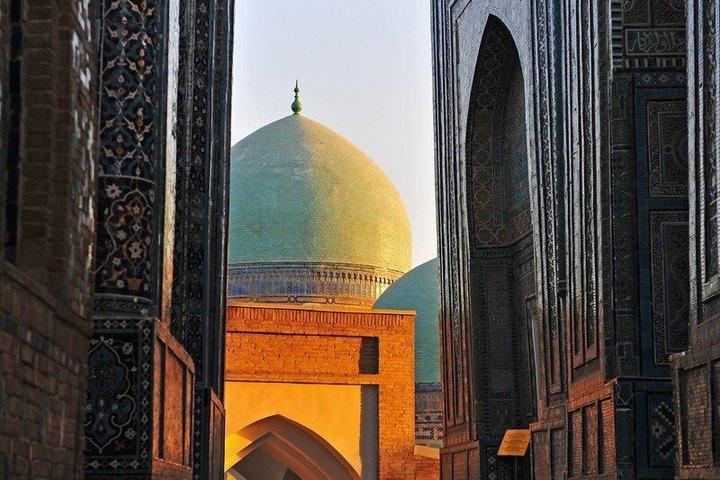
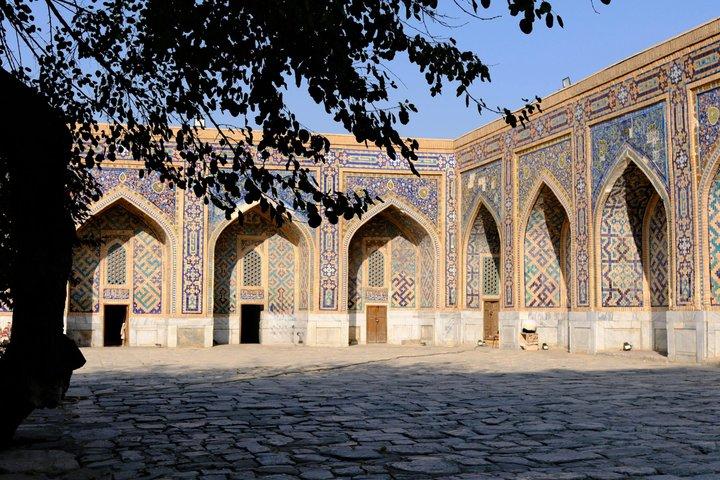
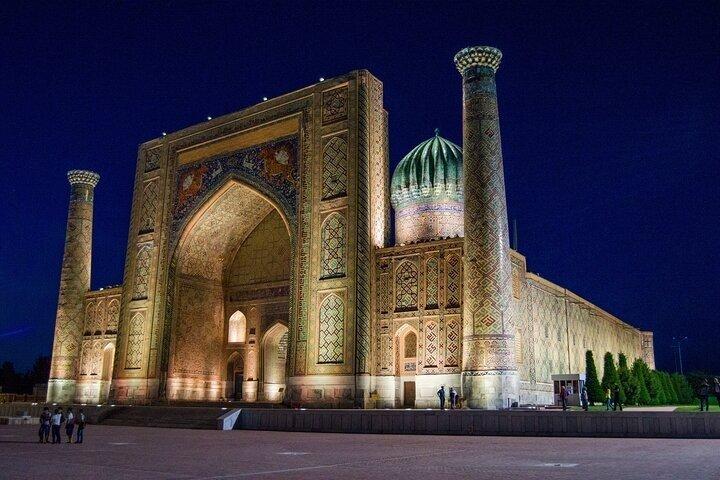
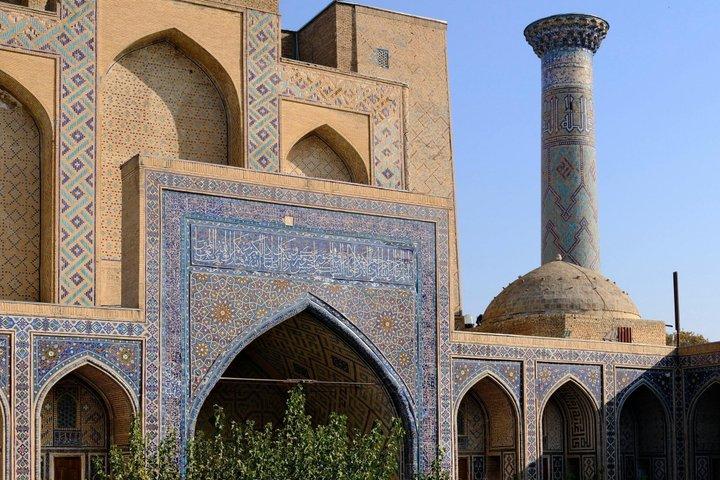
Registan Square, with its stunning architectural ensemble, stands as a symbol of Samarkand's rich history and cultural heritage. Once the heart of the ancient city of Afrosiab, the square became a focal point of Samarkand's urban life after the decline of Afrosiab. Over the centuries, Registan has been rebuilt and renovated several times, each iteration adding to its grandeur and significance. Today, visitors can marvel at the three magnificent medreses that surround the square: the Ulugbek, Sherdor, and Tillokori medreses, each showcasing exquisite tilework, intricate carvings, and stunning Islamic architecture. Registan Square truly captures the spirit and splendor of ancient Samarkand, offering a glimpse into the city's glorious past.
120 minutes
Admission Included
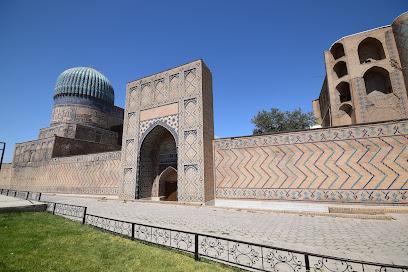
The Bibi-Khanym Mosque, named after Temur's wife, was constructed between 1399 and 1404 and stands as one of Central Asia's most renowned architectural marvels. Ordered by Timur himself after his conquest of Delhi, this mosque was intended to be a symbol of his victory. The mosque's minaret was planned to be the tallest in the region, showcasing Timur's ambition and grandeur. Today, the mosque's imposing facade, intricate tilework, and massive scale continue to awe visitors, offering a glimpse into the architectural prowess of the Timurid era.
60 minutes
Admission Included
Siab Bazaar
Siab Bazaar in Samarkand has retained its impressive charm over the years, offering a vibrant display of Uzbekistan's natural wealth and the talents of its people. The bazaar's bustling atmosphere, filled with the aromas of spices and the vibrant colors of fruits, vegetables, and handicrafts, is a testament to the country's rich cultural heritage. Visitors can wander through the maze of stalls, sampling local delicacies and admiring the craftsmanship of local artisans. Siab Bazaar truly captures the essence of Uzbekistan, showcasing the country's abundance and the industrious spirit of its people.
60 minutes
Admission Included
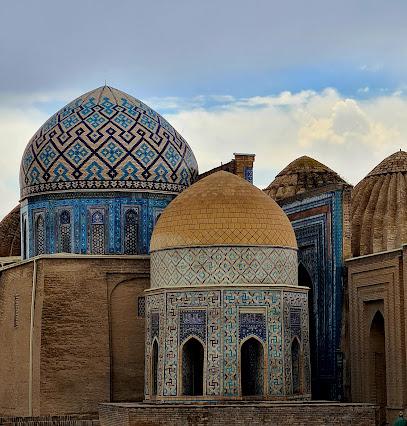
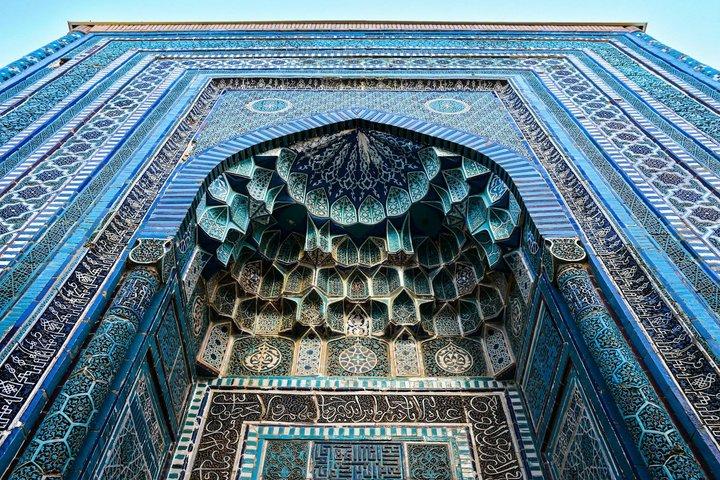
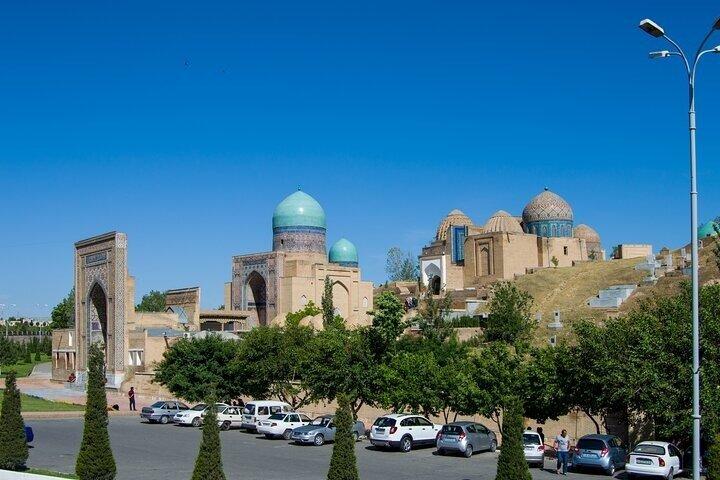
The Shakhi-Zinda Ensemble, dating back to the 9th century, is located on the southeastern mound of Afrosiab. This architectural complex comprises more than 20 mausoleums housing 44 tombs. One of the most significant aspects of Shakhi-Zinda is its association with Qusam ibn-Abbas, who was the first cousin of the Prophet Muhammad and is said to closely resemble him. The site holds immense cultural and historical importance, attracting visitors from around the world to marvel at its stunning architecture and rich history.
60 minutes
Admission Included
Samarkand
Optional tour to Shakhrisabz/Penjikent (Tajikistan)
480 minutes
Tashkent
Bullet train to Tashkent in afternoon
120 minutes
Tashkent
Taking a train to Kokand(Fergana Valley)
240 minutes
Kokand
Arrival in Kokand, meet with a guide and start excursion
15 minutes
Khudayar Khan Palace
The palace complex, built in 1871, occupied a total area of four acres with a foundation three meters thick. It was constructed with a high portal, a highly decorated large entrance arch, and four minarets. Surrounded by a carved stone wall, the palace consisted of seven courtyards and one hundred and nineteen rooms. The inscription above the main gate reads: "Great Seyed Mohammad Khudayar Khan".
60 minutes
Admission Included
Norbut-Biya Madrasah
The Bolsheviks closed the 1799 Narbutabey Medressa, but it opened after independence only to have Karimov shut it down again in 2008. Visitors can visit the mosque (with its original ceiling), which Stalin reopened to win wartime support from Muslim subjects, as well as the non-working madrassa (now named the Mir Medressa).
30 minutes
Admission Included
Rishtan
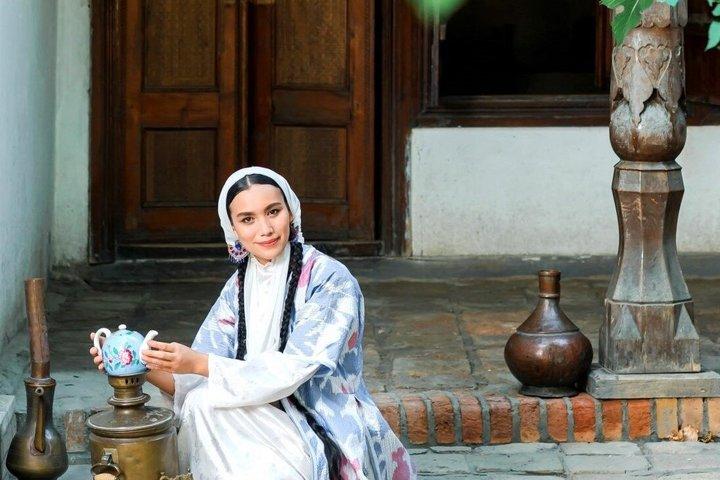
Drive to Rishtan (50 km/1 hr), Visit the famous Rishtan Blue Ceramic Artisan home workshop, and get acquainted with the ancient tradition process followed by the Uzbek Tea ceremony with the artisan.
180 minutes
Fergana
Drive to Fergana (1,5 hr/75 km), accommodation.
120 minutes
Margilan
Drive to Margilan (17 km/30 minutes)Visiting Famous Silk Factory in Margilan
120 minutes
Tashkent
Taking a train to Tashkent, END OF SERVICES
300 minutes
End Point
Our representative will meet you with a sign with your name
The experience can be subject to change due to bad weather or unforseen circumstances. We always endeavour to give you the best possible experience.
Additional Information
-
 Infants are required to sit on an adult’s lap
 -
Public transportation options are available nearby
-
Suitable for all physical fitness levels
What our experts say
-
 Try local dishes at Chorsu Bazaar.
 -
Explore the stunning architecture in Samarkand.
-
Visit the iconic Registan Square at sunset.
-
Don't miss the silk workshops in Margilan.
-
Bring a camera for breathtaking views.

More About this Experience
Introduction
Discover the enchanting allure of Uzbekistan with the Uzbekistan Silk Road Discovery tour, a meticulously crafted journey that spans 264 hours of cultural immersion and breathtaking landscapes. This all-inclusive adventure takes you through the heart of the Silk Road, revealing the hidden treasures of Uzbekistan’s most iconic cities. From the bustling bazaars of Tashkent to the historical splendor of Samarkand, every moment is designed to captivate the senses. Travelers will enjoy seamless transportation, expert-guided excursions, and comfortable accommodations in centrally located hotels, ensuring a smooth and memorable experience. The journey also includes mouthwatering Uzbek cuisine, which adds a delicious twist to every stop along the way. With various languages catered for, including English, German, and French, this tour is accessible to a diverse audience eager to explore the rich tapestry of history, culture, and art that Uzbekistan has to offer. Get ready for an unforgettable adventure that brings the Silk Road to life in vibrant hues of history and culture.What to expect?
Travelers embarking on the Uzbekistan Silk Road Discovery tour can expect an extraordinary blend of culture, history, and stunning landscapes. Each city, from Tashkent to the picturesque Fergana Valley, is a gateway to a past that is rich and multifaceted. Expect to delve into the spiritual essence of the Khast Imam Complex in Tashkent, where the air is thick with history and reverence. Experience the vibrant hustle of Chorsu Bazaar, where the colors and aromas of local produce are a feast for the senses. Marvel at the architectural wonders of Samarkand’s Registan Square and immerse yourself in the artistry of the Savitsky Museum in Nukus, often referred to as the “Louvre in the Sands.” Each destination assures a seamless transition between the ancient and the modern, allowing travelers to fully appreciate the unique heritage of Uzbekistan. This journey is not just about sightseeing; it’s an invitation to connect with the local culture, taste authentic dishes, and understand the stories behind each landmark, making it a truly enriching experience.Who is this for?
The Uzbekistan Silk Road Discovery tour is designed for a wide array of travelers, from culture enthusiasts and history buffs to adventure seekers and food lovers. Whether you are a solo traveler looking to immerse yourself in new experiences, a couple seeking a romantic getaway steeped in history, or a family wanting to explore new cultures together, this tour caters to all. The itinerary is suitable for every physical fitness level, ensuring that everyone can enjoy the sights at a comfortable pace. The tour also welcomes those who appreciate the arts, as it includes visits to significant museums and artisan workshops. With a focus on inclusivity, each experience allows participants to engage with local traditions and hospitality, making this journey a perfect fit for anyone curious about the rich tapestry of Uzbekistan’s heritage and culture.Why book this?
Booking the Uzbekistan Silk Road Discovery tour means stepping into a world of wonder and history that few get to experience. What sets this tour apart is its comprehensive approach to showcasing Uzbekistan's rich culture, from visiting ancient cities to savoring traditional cuisine. The expert guides bring the stories of each destination to life, providing insights that enrich your understanding of this fascinating region. With all logistics managed for you, including comfortable accommodations, transportation, and meals, travelers can focus solely on enjoying the adventure. The tour also includes unique experiences like exploring artisan workshops and interacting with locals, which deepen the connection to the culture. Plus, with the added convenience of visa support and 24-hour customer service, peace of mind is guaranteed every step of the way. This isn’t just a trip; it’s an opportunity to create lasting memories in one of the world’s most storied regions.Good to know
Before embarking on the Uzbekistan Silk Road Discovery adventure, it's important to know that the tour is designed for everyone, regardless of physical fitness levels, making it accessible to all types of travelers. Public transportation options are conveniently located nearby, allowing flexibility for those who wish to explore further during their free time. Families traveling with infants will find the tour accommodating as infants are required to sit on an adult's lap. Travelers should also be aware of additional costs, such as tips for guides and drivers, or specific entrance fees to certain sites. However, the majority of the experience is included in the package, ensuring a hassle-free journey. This tour is an excellent opportunity for those looking to immerse themselves in the cultural richness and historical depth of Uzbekistan while enjoying the comfort of a well-organized travel experience.Reviews
Travelers who have embarked on the Uzbekistan Silk Road Discovery tour rave about their experiences, often highlighting the seamless organization and depth of knowledge provided by the guides. Many have described the tour as a unique and eye-opening journey, allowing them to connect with Uzbekistan's vibrant culture and history in ways they never imagined. Guests have praised the comfortable accommodations and the exquisite local cuisine, noting how each meal offered a delicious taste of Uzbek culture. The enthusiastic feedback emphasizes the tour’s ability to cater to diverse interests, making it enjoyable for both history enthusiasts and casual travelers alike. Visitors leave with cherished memories and a newfound appreciation for Uzbekistan, often encouraging friends and family to experience this magical journey for themselves.
Your all‑in‑one travel companion app
Explore expert travel guides, compare and book tours, experiences, hotels, and more—all from the palm of your hand. Download now for seamless trip planning wherever your wanderlust takes you.


This is a popular product and the date you are looking for just sold out. Next available date is
