
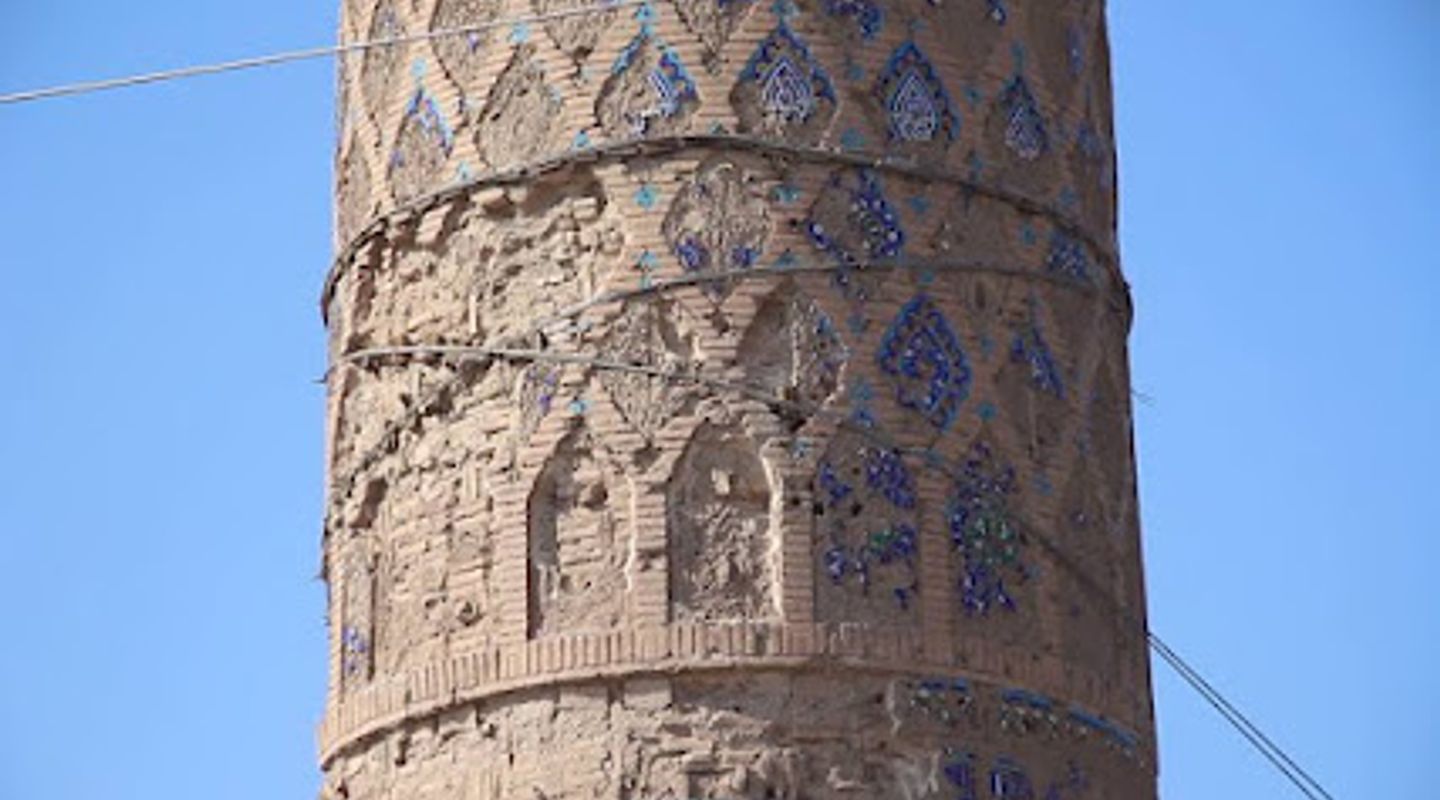
منارههای هرات (MANAR Ha), Paropamisadae Travel Guide
Discover the majestic Minarets of Herat, remnants of a glorious Timurid past, showcasing intricate Islamic architecture and Afghan heritage.
The Minarets of Herat, remnants of the Musalla Complex, stand as testaments to the Timurid dynasty's golden age in the 15th century [5, 6]. Once part of a grand religious and educational complex initiated by Queen Gawhar Shad, these minarets showcase intricate Islamic architecture and the enduring spirit of Afghan heritage [7, 8].
A brief summary to منارههای هرات (MANAR Ha)
- 955P+PG7, AH1, Herat, AF

Know before you go
Hi, I'm Eve. Here are a few practical things to know before exploring منارههای هرات (MANAR Ha).
- Visit during the day to fully appreciate the intricate tile work and geometric patterns adorning the minarets.
- Check with local authorities regarding any ongoing restoration work that may affect access to certain areas.
- Dress respectfully when visiting the minarets, as they are considered a historical and cultural site.
Do you manage this location?
Take control to get all the benefits, like improved information, better appearance, and stronger visibility across AI-powered discovery. Learn more about listing your business on Evendo
Activate your presenceOther nearby places you may find interesting
The closest places of the same kind, if this one is not quite what you had in mind.

Explore منارههای هرات (MANAR Ha) on the Map
A handpicked selection of must-see spots near منارههای هرات (MANAR Ha), mapped for you.
Getting There
-
Walking
The Minarets are located in Herat city and are easily accessible by walking from most central locations. From the Herat Citadel, head east towards the city center. The minarets will become visible as you approach the Musalla Complex. No costs are associated with walking.
-
Public Transport
Local buses and taxis are available throughout Herat. From any major point in the city, you can take a local bus or taxi towards the Musalla Complex. The driver will likely know the Minarets. Bus fare: 20 AFN. Taxi fare: 150-250 AFN depending on the distance [9, 12].
Discover more about منارههای هرات (MANAR Ha)
More to explore near منارههای هرات (MANAR Ha)













Your all‑in‑one travel companion app
Explore expert travel guides, compare and book tours, experiences, hotels, and more—all from the palm of your hand. Download now for seamless trip planning wherever your wanderlust takes you.


Explore More of Paropamisadae
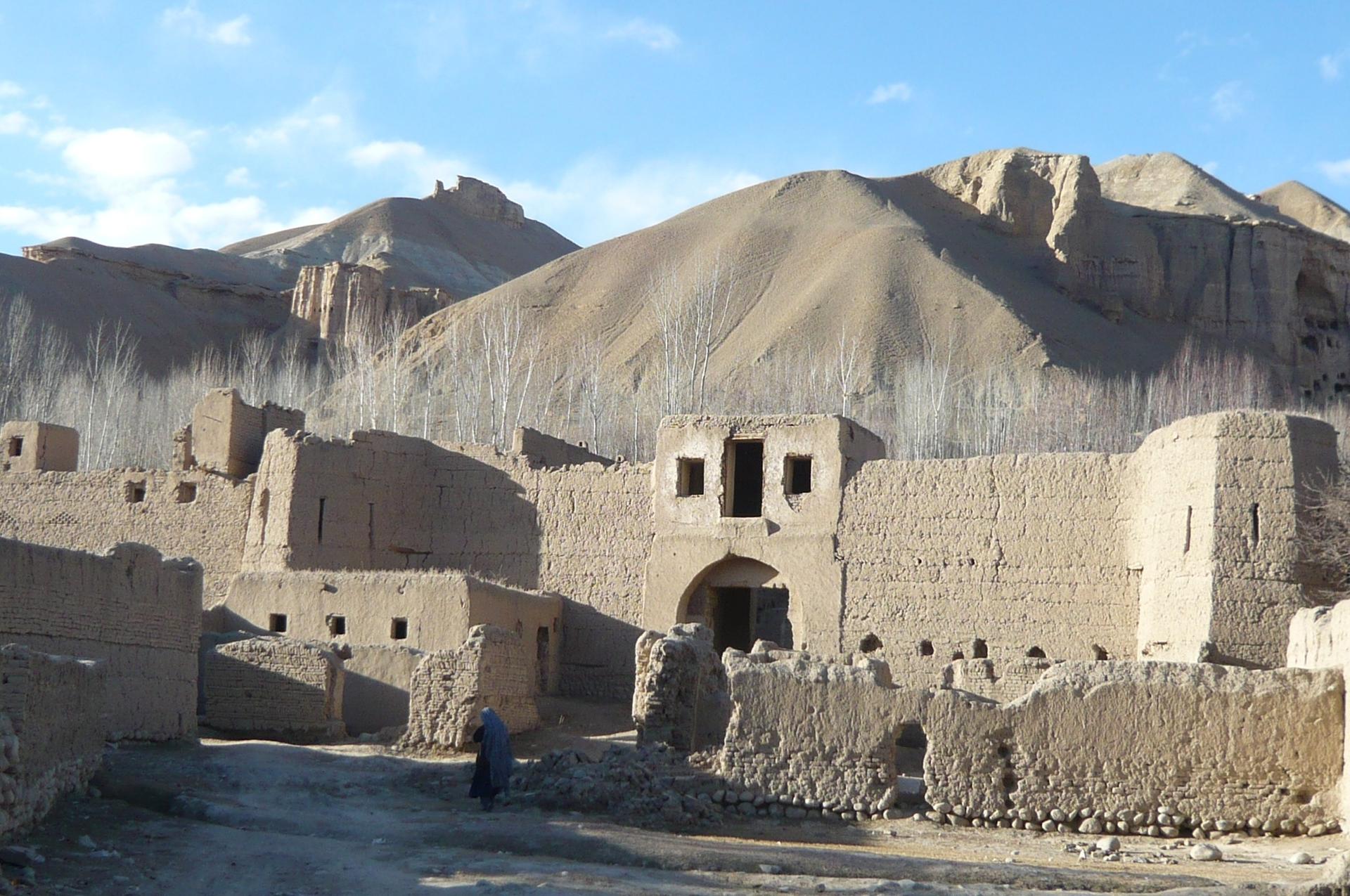
Looking beyond منارههای هرات (MANAR Ha)? Discover Paropamisadae for broader travel guides, local hot-spots, and regional highlights.
Explore Paropamisadae
Explore the historical حوض چهارسو in Herat, Afghanistan, a cultural landmark offering a glimpse into the region's rich heritage and history.
Explore the majestic Gowharshad Begum Mausoleum in Herat, a symbol of Timurid artistry, Queen Gowharshad's legacy, and Afghanistan's rich cultural heritage.
