

Free Kavajë Travel Guide & Mobile App
Plan your Kavajë trip with Evendo. Get free guides to top attractions, restaurants, hotels, and bars. Web access or download the mobile app.


Kavajë, Albania offers Ottoman heritage, local markets, Adriatic beaches and easy access to Durrës and Tirana for culture, history and coastal sightseeing.
A Market Town Between Coast and Capital
Kavajë lies in western Albania between Durrës and Tirana, on a fertile plain that opens towards the Adriatic coast. Its position has long linked inland villages, agricultural districts and the port of Durrës, giving the town a practical, unpretentious character. Central streets are shaped by everyday commerce, cafés and small shops rather than grand metropolitan landmarks, while the surrounding landscape combines fields, low hills and sandy beaches.Read more about Kavajë
Ottoman Heritage and Local Identity
Coastal Excursions and Contemporary Life
When is the best time to visit Kavajë?
Best: April–June · 24–36°C| Month | High (°C) | Rainfall (mm) |
|---|---|---|
| January | 14 | 122 |
| February | 15 | 115 |
| March | 18 | 113 |
| April (best) | 24 | 95 |
| May (best) | 30 | 65 |
| June (best) | 36 | 43 |
| July | 40 | 27 |
| August | 40 | 35 |
| September | 36 | 84 |
| October | 26 | 199 |
| November | 19 | 218 |
| December | 15 | 199 |
Getting to and around Kavajë
How to get there
Transportation
Best attractions in Kavajë
Kavajë's principal sights are concentrated in and around its compact centre, making the town suitable for a walk of cultural discovery rather than a long list of major monuments. The Clock Tower provides a recognisable point of orientation and reflects Kavajë's history as a regional market town, while the Kubelie Mosque introduces the Ottoman religious heritage that shaped the settlement. Local museum displays and traditional objects offer context for domestic life, clothing, farming and crafts in the surrounding area. Everyday streets, cafés and market activity are attractions in their own right, revealing the town's continuing commercial role. Beyond the centre, the municipality opens towards the Adriatic, with the beaches and seasonal resorts of Golem, Karpen and Spille offering a contrasting coastal setting. These places are separate settlements rather than central Kavajë attractions, but they make natural additions to a visit for travellers interested in swimming, seaside walks and the changing character of Albania's western plain.
-
Historical landmark
Durrës Amphitheatre
Discover the ancient Roman Amphitheatre of Durrës, the largest in the Balkans, featuring stunning mosaics and a rich history dating back to the 2nd century AD.
37 min drive · 17 km from city centre
-
Castle
Venetian Tower of Durrës
Explore the Venetian Tower of Durrës, a historic sentinel offering panoramic views and a glimpse into Albania's rich coastal past.
37 min drive · 17 km from city centre
-
Tourist attraction
Sfinksi
Discover Sfinksi in Durrës: Where modern architecture meets stunning Adriatic views on the vibrant Vollga promenade. A must-see coastal landmark!
37 min drive · 17 km from city centre
-
Archaeological museum
National Archaeological Museum
Discover Albania's ancient past at the National Archaeological Museum in Durrës, home to a vast collection of Greek, Hellenistic, and Roman artifacts.
37 min drive · 17 km from city centre


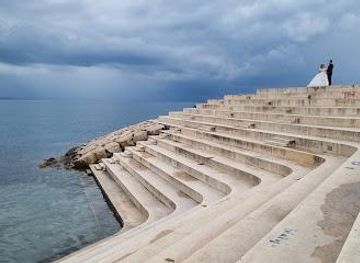

Best landmarks in Kavajë
Kavajë's most recognisable historic landmark is its Clock Tower, a civic structure associated with the town's Ottoman-era development and its role as a regional centre. The Kubelie Mosque is another important marker of the historic townscape, representing the religious and architectural traditions that shaped local urban life; visitors should remember that it remains a place of worship and may have access conventions. The surrounding market streets and older buildings provide a less monumental but meaningful architectural setting, showing how commerce, domestic life and religious institutions once fitted together. In the wider municipality, the Adriatic coastline is a defining geographical landmark, though beaches at Golem, Karpen and Spille belong to separate settlements rather than the central town. Together, these features illustrate Kavajë's identity as a historic market community connected to both the agricultural interior and the coastal plain.
-
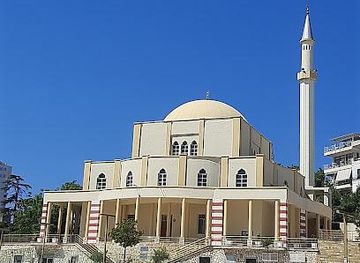
Mosque
Fatih Mosque
Explore the Fatih Mosque in Durrës, a historical gem showcasing Ottoman architecture and Albania's rich cultural heritage.
37 min drive · 17 km from city centre
-
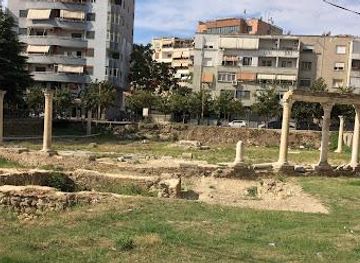
Historical landmark
Anastasius Forum
Explore the ruins of the Anastasius Forum in Durrës, a window into the city's Byzantine past and ancient marketplace.
37 min drive · 17 km from city centre
-
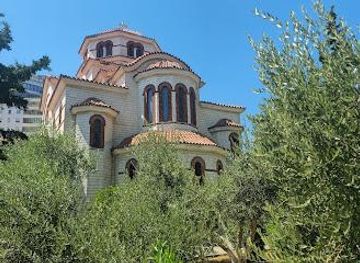
Orthodox church
Church of Apostle Paul and Saint Asti
Discover the serene beauty and rich heritage of this Orthodox church in Durrës, Albania, a beacon of faith and art.
37 min drive · 17 km from city centre
-
Historical landmark
Sahati Clock Tower
Explore the historical Sahati Clock Tower in Kavajë, Albania, a landmark that captures the town's heritage and architectural beauty.
6 min walk · 0.5 km from city centre

Explore Kavajë on the map
Plan your Kavajë trip on one map. See where the top attractions, landmarks, restaurants, bars and hotels are, find what's near where you're staying, and book hotels and experiences in a few clicks.
Best hotels in Kavajë
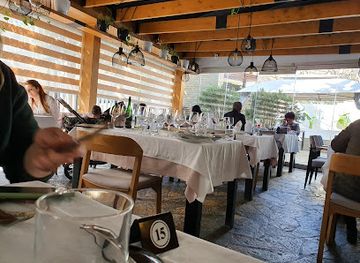
Best restaurants in Kavajë
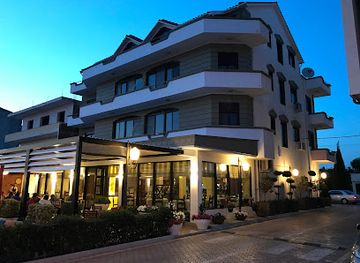
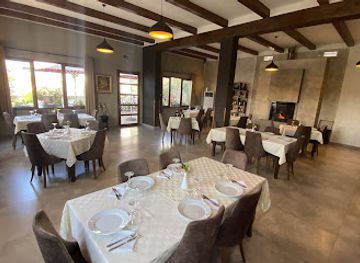
Kavajë's food culture reflects the cooking of central and coastal Albania, with home-style dishes based on vegetables, beans, meat, dairy products and locally sourced seasonal ingredients. Restaurants and modest family-run eateries commonly serve grilled meats, salads, soups, byrek and tavë dishes, while cafés are important places for coffee and unhurried conversation. The nearby Adriatic coast adds fish and seafood to the regional table, particularly in summer, although menus vary between the town and seaside settlements such as Golem, Karpen and Spille. Local bakeries provide practical breakfasts and snacks, and informal food shopping gives a glimpse of the agricultural plain surrounding the town. Visitors should expect a mixture of Albanian cooking and familiar Mediterranean influences rather than a sharply separate Kavajë cuisine. Portions and service can be relaxed, and asking what is fresh that day is often more useful than searching for a fixed tourist menu.
-
Restaurant
Gazi Kavajë
Discover authentic Albanian cuisine at Gazi Kavajë - where fresh ingredients meet traditional flavors in a welcoming atmosphere.
7 min walk · 0.6 km from city centre
-
Restaurant
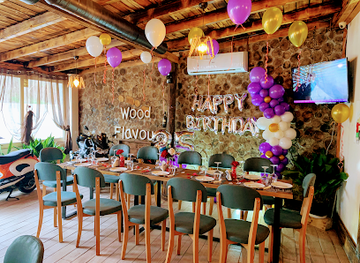
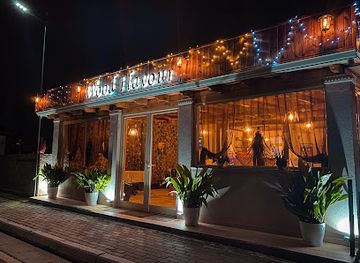
Wood Flavour
Experience the best of local and international cuisine at Wood Flavour in Kavajë - where every meal is a delightful journey for your taste buds.
11 min walk · 0.9 km from city centre
-
Seafood
Fiore Restorant
Experience exceptional seafood and Italian cuisine at Fiore Restaurant in Kavajë - where every meal is a celebration of flavor.
5 min drive · 1.6 km from city centre
-
Restaurant
Ristorante Enoteka Divino
Experience authentic Albanian cuisine at Ristorante Enoteka Divino in Kavajë - where tradition meets taste.
14 min walk · 1.2 km from city centre
Best bars in Kavajë
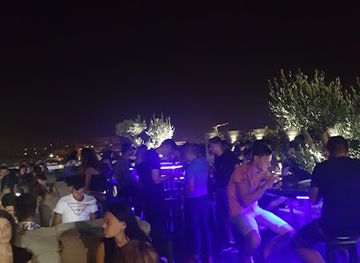
Kavajë's evening life is relatively modest and centred on cafés, restaurants and social streets rather than a large club scene. Residents commonly meet for coffee or conversation after work, and the central area has a more local, everyday atmosphere than the seasonal resorts along the coast. In summer, Golem and other nearby Adriatic settlements offer more seaside bars, hotel lounges and late-evening activity, although their character changes outside the holiday season. Durrës, within practical travelling distance, provides a broader choice of music venues, bars and clubs. In Kavajë itself, evenings are better suited to a relaxed meal, a café stop or a walk through the town centre than to an intensive nightlife itinerary. Visitors should arrange a reliable return journey when travelling between the town and coastal areas, particularly when local transport services are less frequent at night.
-
Grill
Jezerca - Bar & Grillhouse
Savor the flavors of authentic Albanian cuisine at Jezerca - Bar & Grillhouse, where every meal is a delightful experience in Kavaje.
3 min walk · 0.2 km from city centre
-
Cafe
Bar Kavaja
Discover the cozy ambiance and delightful flavors at Bar Kavaja, the perfect cafe escape in Kavajë, Albania.
3 min walk · 0.2 km from city centre
-
Lounge
Metropolitan Lounge
Discover the charm of Kavajë at Metropolitan Lounge, where exceptional cocktails meet a stylish atmosphere for a memorable experience.
6 min walk · 0.4 km from city centre
-
Bar
Bar 23
Experience the warm ambiance and local charm at Bar 23 in Kavajë, where friendly service meets a wide selection of drinks.
3 min walk · 0.2 km from city centre


Best nightclubs in Kavajë
Kavajë's evening life is relatively modest and centred on cafés, restaurants and social streets rather than a large club scene. Residents commonly meet for coffee or conversation after work, and the central area has a more local, everyday atmosphere than the seasonal resorts along the coast. In summer, Golem and other nearby Adriatic settlements offer more seaside bars, hotel lounges and late-evening activity, although their character changes outside the holiday season. Durrës, within practical travelling distance, provides a broader choice of music venues, bars and clubs. In Kavajë itself, evenings are better suited to a relaxed meal, a café stop or a walk through the town centre than to an intensive nightlife itinerary. Visitors should arrange a reliable return journey when travelling between the town and coastal areas, particularly when local transport services are less frequent at night.
-
Restaurant
Wood Flavour
Discover the culinary magic of Wood Flavour in Kavajë, where delightful dishes and a cozy atmosphere await every visitor.
11 min walk · 0.9 km from city centre
-
Lounge
Klajdi Bar
Discover the cozy charm of Klajdi Bar in Golem, Albania - a perfect spot for drinks and relaxation by the coast.
20 min drive · 6.7 km from city centre
-
Night club
W THE CLUB
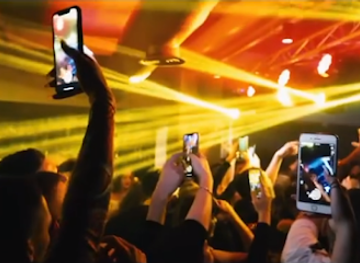
Dive into the electrifying nightlife at W THE CLUB, Durrës' premier destination for music, dancing, and unforgettable experiences.
37 min drive · 17 km from city centre
-
Lounge
Metropolitan Lounge
Discover the vibrant atmosphere of Metropolitan Lounge in Kavajë, Albania, where relaxation meets social excitement.
6 min walk · 0.4 km from city centre
Best shops in Kavajë
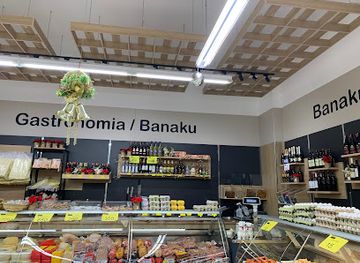
Shopping in Kavajë is primarily local and practical, centred on small retailers, bakeries, cafés, produce sellers and market-style commerce rather than a large specialist shopping district. The surrounding agricultural plain influences what appears in local stalls, with seasonal fruit, vegetables, dairy products and other Albanian foodstuffs offering a more direct sense of the region than standard souvenirs. Visitors may also find textiles, household goods, leather items and modest craft products in independent shops, although selection varies. For a broader retail experience, Durrës and Tirana have larger shopping centres, international brands and more established souvenir markets. In Kavajë, browsing is closely tied to daily life: the appeal lies in observing how residents shop, trade and meet, while small food purchases make useful gifts and provide a connection with the surrounding farming communities.
-
Supermarket
Big Market
Explore Big Market in Kavajë, Albania - your ultimate supermarket for fresh produce, local delicacies, and everyday essentials.
3 min walk · 0.2 km from city centre
-
Fish store
fish market “ Kavajë”
Explore Kavajë's lively fish market for the freshest seafood and a taste of local Albanian culture, where flavors and traditions come alive.
3 min walk · 0.3 km from city centre
-
Electronics store
Smartphone Service Shop
Experience top-notch smartphone services and products at the highly-rated Smartphone Service Shop in Kavajë, the perfect tech stop for tourists.
3 min walk · 0.2 km from city centre
-
Grocery store
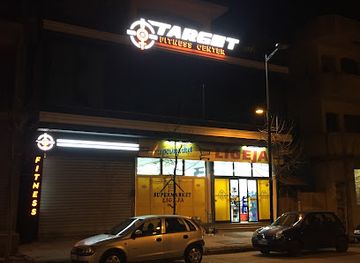
Supermarket Ligeja
Explore the essence of Albanian life at Supermarket Ligeja in Kavajë, where local flavors and fresh produce await.
4 min walk · 0.4 km from city centre


Get your free copy of our complete guide to Kavajë, delivered straight to you.
Everything on this page, from attractions and restaurants to essentials and local phrases, in one PDF you can read offline, print or share.
Already have an account? Sign in
Your Kavajë guide is ready.
We'll send it to · Not you? Sign out

Getting your guide ready…
We are putting together a fresh copy of the Kavajë guide. This can take up to a minute.
This can take a few moments. If your browser asks, choose Allow so the download can start. You'll find the guide in your Downloads folder.
Nothing happened? Download it again
Sorry, the guide is taking longer than usual. Please try again in a minute, or get it by email instead.
Kavajë essentials
Currency and Payment
Safety
Emergency Situations
Do's and Don'ts
Local Tips
From Eve
Local phrases worth knowing
You don't need to get them perfect. A few words go a long way, and locals appreciate the effort.
Basics
| English | Local | Say it |
|---|---|---|
| Hello | Përshëndetje | [PUHR-shuhn-DEHT-yeh] |
| Goodbye | Mirupafshim | [mee-roo-pahf-SHEEM] |
| Yes | Po | [poh] |
| No | Jo | [yoh] |
| Please/You're welcome | Ju lutem | [yoo loo-TEHM] |
| Thank you | Faleminderit | [fah-leh-meen-deh-REET] |
| Excuse me/Sorry | Më falni | [muh fahl-NEE] |
| How are you? | Si jeni? | [see YEH-nee] |
| Fine. And you? | Mirë. Dhe ju? | [mee-ruh. dhe yoo] |
| Do you speak English? | Flisni anglisht? | [flee-snee ahn-GLEESHT] |
| I don't understand | Nuk kuptoj | [nook koopt-OY] |
Eating & Drinking
| English | Local | Say it |
|---|---|---|
| I'd like to see the menu, please | Dua të shoh menunë, ju lutem | [doo-ah tuh shoh meh-NOO-nuh, yoo loo-TEHM] |
| I don't eat meat | Nuk ha mish | [nook hah meesh] |
| Cheers! | Gëzuar! | [guh-ZWAHR] |
| I would like to pay, please | Dua të paguaj, ju lutem | [doo-ah tuh pah-GWAHY, yoo loo-TEHM] |
Emergencies
| English | Local | Say it |
|---|---|---|
| Help! | Ndihmë! | [ndee-muh] |
| Go away! | Shko larg! | [shkoh lahr-g] |
| Call the Police! | Thirr policinë! | [thihr poh-lee-SEEN] |
| Call a doctor! | Thirr një doktor! | [thihr nyuh dohk-TOHR] |
| I'm lost | Jam humbur | [yahm hoom-BOOR] |
| I'm ill | Jam i sëmurë | [yahm ee suh-moor] |
Shopping
| English | Local | Say it |
|---|---|---|
| I'd like to buy... | Dua të blej... | [doo-ah tuh blye] |
| I'm just looking | Po shikoj vetëm | [poh shee-KOY veh-TEHM] |
| How much is it? | Sa kushton? | [sah koo-SHTOHN] |
| That's too expensive | Kjo është shumë e shtrenjtë | [koh eh-SHTUH shoo-muh eh shtrehn-TEH] |
| Can you lower the price? | Mund të ulni çmimin? | [moon-d tuh OOL-nee ch-mee-MEEN] |
Time & Numbers
| English | Local | Say it |
|---|---|---|
| What time is it? | Sa është ora? | [sah eh-SHTUH oh-RAH] |
| It's one o'clock | Është një e ora | [eh-SHTUH nyuh eh oh-RAH] |
| Half past (10) | Njëmbëdhjetë | [nyuhm-buh-DYEH-teh] |
| Morning | Mëngjes | [muhn-JESS] |
| Afternoon | Pasdite | [pahs-DEE-teh] |
| Evening | Mbrëmje | [mbruhm-yeh] |
| Yesterday | Dje | [djeh] |
| Today | Sot | [soht] |
| Tomorrow | Nesër | [neh-sahr] |
| 1 | Një | [nyuh] |
| 2 | Dy | [duh] |
| 3 | Tre | [treh] |
| 4 | Katër | [ka-tehr] |
| 5 | Pesë | [peh-suh] |
| 6 | Gjashtë | [gyahsht] |
| 7 | Shtatë | [shtah-tuh] |
| 8 | Tetë | [teh-tuh] |
| 9 | Nëntë | [nuhn-tuh] |
| 10 | Dhjetë | [dyeh-tuh] |
Transport & Directions
| English | Local | Say it |
|---|---|---|
| Where's a/the...? | Ku është një/të...? | [koo eh-SHTUH nyuh/teh] |
| What's the address? | Çfarë është adresa? | [ch-fah-ruh eh-SHTUH ah-DREH-sah] |
| Can you show me (on the map)? | Mund të më tregoni (në hartë)? | [moon-d tuh muh troh-GOH-nee (nuh hahr-tuh)] |
| When's the next (bus)? | Kur është autobusi i ardhshëm? | [koor eh-SHTUH ahw-toh-BOO-see ee ardh-shuhm] |
| A ticket (to ....) | Një biletë (për ....) | [nyuh bee-leh-tuh (puhr)] |
History of Kavajë
Early Routes Across the Coastal Plain
Kavajë stands within a region shaped by the movement of people between the Adriatic coast and the interior of central Albania. The ancient city of Dyrrachium, modern Durrës, was a major port and road centre, while routes across the surrounding plain connected coastal settlements with inland communities. The territory around present-day Kavajë was therefore part of a wider corridor of agriculture, trade and military travel, although the modern town developed later. Archaeological remains in the broader district reflect the long settlement history of western Albania, but the town's principal historic character comes from its medieval and Ottoman-era growth rather than from a surviving ancient urban centre.
Ottoman Settlement and Urban Growth
Kavajë developed as a settled market community during the Ottoman period, benefiting from its position between Durrës and the interior. Trade, farming and craft production supported the town, while mosques, shops and civic structures formed the core of local life. The Kubelie Mosque belongs to this historic phase and remains an important reference point in the town's urban identity. Ottoman administration also connected Kavajë to wider commercial and religious networks across the region. Its built heritage was shaped less by monumental imperial architecture than by the practical needs of a provincial centre serving nearby villages and routes across the fertile plain.
The Clock Tower and a Regional Market
The historic Clock Tower became one of Kavajë's defining civic structures during the nineteenth century, when the town functioned as a regional centre for trade and administration. Its presence, together with the mosque and market streets, reflects the way public life was organised around commerce, worship and communication. Agricultural goods from the surrounding plain moved through the town, and local crafts supported households and merchants. The period also brought the architectural layering visible in many Albanian towns: Ottoman religious structures stood alongside vernacular homes, market buildings and roads serving travellers between Durrës, Tirana and inland settlements.
Independence, Occupation and War
Kavajë became part of the modern Albanian state after the declaration of independence in 1912, during a period when national institutions were still being formed across the country. The interwar years brought gradual administrative and economic change, while the town remained closely tied to agriculture and regional trade. During the Second World War, Albania was occupied first by Italy and later by Germany, and resistance activity affected communities throughout the country. The war was followed by the communist takeover in 1944, which transformed property ownership, political life and the organisation of work in Kavajë as elsewhere in Albania.
Communist Industry and Post-1990 Change
Under communist rule, Kavajë became associated with state-directed industry as well as agriculture, and its urban fabric expanded beyond the older centre. Religious institutions were closed during Albania's officially atheist period, causing lasting damage to parts of the country's religious heritage. After the political and economic changes of the early 1990s, private enterprise, migration and new construction reshaped the town and its surroundings. Improved connections with Tirana, Durrës and the Adriatic coast strengthened commuting, trade and tourism. Contemporary Kavajë consequently combines an older market-town core with suburban growth and a municipality increasingly linked to nearby beach settlements.
Kavajë in Photos
Browse through our photo collection highlighting the charm and character of the destination.
Cities near Kavajë
The closest cities to Kavajë, if you have time for more than one stop.
-

-

-
-

-


Swipe for more cities

