

Free Tindouf Region Travel Guide & Mobile App
Explore Tindouf Region with free travel guides. Discover regional history, expert tips, proposed trips, and audio guides on web or mobile app.


Tindouf Region offers remote Sahara landscapes, caravan history, desert culture and a thoughtful view of Algeria’s south-western frontier.
Read more about Tindouf Region
When is the best time to visit Tindouf Region?
Best: March–April, November · 22–28°C| Month | High (°C) | Rainfall (mm) |
|---|---|---|
| January | 17 | 2 |
| February | 20 | 2 |
| March (best) | 24 | 3 |
| April (best) | 28 | 3 |
| May | 33 | 1 |
| June | 39 | 1 |
| July | 42 | 0 |
| August | 41 | 0 |
| September | 37 | 1 |
| October | 32 | 2 |
| November (best) | 22 | 2 |
| December | 17 | 2 |
Getting to and around Tindouf Region
How to get there
Transportation
Best attractions in Tindouf Region
Tindouf Region’s attractions are defined less by a concentration of built visitor sites than by desert geography, historical context and carefully organised encounters. Tindouf town provides the practical introduction, with its markets, mosques, broad Saharan streets and everyday activity linked to surrounding pastoral and administrative communities. Guided excursions beyond the town can reveal the stark forms of the hammada, isolated rocky ground, old water routes and the exceptional clarity of the desert sky. Archaeological evidence, including prehistoric engravings reported across parts of the wider region, offers insight into earlier pastoral societies, but sites may be remote, unmarked and vulnerable, making an authorised guide essential. The Rabouni area and Sahrawi refugee camps are historically important contemporary communities, not conventional attractions; visits require permission and respectful conduct. Gara Djebilet is significant for Algeria’s mineral history and future economic planning, but its remoteness and industrial character make it unsuitable as an informal sightseeing stop. The region is therefore best suited to travellers interested in Saharan landscapes, borderland history, archaeology and contemporary geopolitics rather than a conventional itinerary of museums and monuments.
-
Historical landmark
Roman Ruins of Timgad
Step back in time at Timgad, a remarkably preserved Roman city in Algeria, showcasing impressive urban planning and architectural grandeur.
-
National park
Theniet El Had National Park
Discover Algeria's natural beauty in Theniet El Had National Park: ancient cedar forests, diverse wildlife, and stunning mountain views.
-
Garden
-(المستثمرة الجماعية الفلاحية عيدوني بركان-( كفيف العياشي
Discover tranquility at -(المستثمرة الجماعية الفلاحية عيدوني بركان-( كفيف العياشي Garden in Telagh, Algeria. A serene escape into nature's beauty and calm.
-
Historical landmark
Tin Tiferiest
Explore Tin Tiferiest in Djanet, Algeria: A historical landmark with stunning rock formations, ancient Berber culture, and breathtaking Sahara Desert views.


Best landmarks in Tindouf Region
The defining landmark of Tindouf Region is its immense western Saharan setting: an austere horizon of gravel plains, rocky ground, sparse vegetation and intensely open skies. Tindouf town itself is the principal built reference point, with low-rise urban fabric, mosques and civic facilities reflecting its role as a remote Algerian administrative centre rather than a historic monumental city. The region’s archaeological engravings and traces of earlier pastoral settlement are important cultural landmarks, although many are difficult to reach and should not be located or visited without specialist local guidance. Rabouni and the surrounding refugee-camp landscape have major contemporary historical significance because they embody the long-term consequences of the Western Sahara conflict; they are inhabited communities and access is controlled. Gara Djebilet, associated with one of Algeria’s largest iron-ore deposits, represents the region’s strategic mineral geography. It is an industrial and economic reference point, not an open tourist site, and should be approached only through authorised arrangements.
-
 Rocky
Hamada de Tindouf
Explore the stark beauty and resilient culture of the Hamada de Tindouf, a unique Saharan experience in western Algeria.
Explore Tindouf Region on the map
Plan your trip on one map. See where the top cities, national parks and sights are, and book hotels and experiences in a few clicks.
Best hotels in Tindouf Region
Best restaurants in Tindouf Region
Dining in Tindouf is practical, local and shaped by the realities of a remote Saharan town. Restaurants and cafés generally serve Algerian staples such as couscous, rice and pasta dishes, soups, grilled meat, chicken, bread, salads and sweet mint tea, with menus varying according to supply. Dates and other preserved or shelf-stable foods remain useful in a dry environment, while hospitality often centres on tea served in several rounds. Visitors may find simple eateries, coffee shops and home-style cooking rather than a broad international restaurant scene. Saharan and Algerian influences meet in dishes prepared for families, workers and travellers, although recipes and terminology can differ between communities. Fresh produce may be more limited and more expensive than in northern Algeria, particularly outside supply periods, so visitors with dietary requirements should plan ahead and carry suitable provisions. Alcohol is not central to local dining culture, and many establishments are oriented towards families and daytime customers.
-
Restaurant
Chawarma ( Cinéma)
Discover Chawarma in Tindouf - where authentic local flavors meet warm hospitality for an unforgettable dining experience.
-
Restaurant
El Aaiun WS
Discover authentic local cuisine at El Aaiun WS in Tindouf - a culinary haven filled with rich flavors and warm hospitality.
-
Restaurant
Restaurant Al Sahel
Discover authentic Algerian flavors at Restaurant Al Sahel in Tindouf - a culinary journey filled with warmth and rich local traditions.
-
Restaurant
Kimo pizzeria
Experience authentic Italian flavors at Kimo Pizzeria in Tindouf, where every pizza is crafted with love and fresh ingredients.


Best bars in Tindouf Region
Tindouf does not have a major bar or nightclub scene. Evening life centres on cafés, tea rooms, casual restaurants and social visits, with activity concentrated in the town rather than dispersed across the desert. Mint tea, coffee, conversation and televised sport are more characteristic of an evening than late-night entertainment, while music and community gatherings may occur in social or cultural settings without forming a regular club circuit. Visitors should dress and behave discreetly, respect local religious and social customs and avoid assuming that alcohol-focused venues will be available. Desert camps or organised excursions may offer quiet stargazing and conversation after dark, but such experiences depend on authorised operators, weather and security arrangements rather than on permanent nightlife infrastructure.
-
Restaurant
Le Tonneau - Bar
Discover the vibrant nightlife at Le Tonneau - a bar in Sidi M'Hamed known for its inviting atmosphere and delightful drink selection.

Best nightclubs in Tindouf Region
Tindouf does not have a major bar or nightclub scene. Evening life centres on cafés, tea rooms, casual restaurants and social visits, with activity concentrated in the town rather than dispersed across the desert. Mint tea, coffee, conversation and televised sport are more characteristic of an evening than late-night entertainment, while music and community gatherings may occur in social or cultural settings without forming a regular club circuit. Visitors should dress and behave discreetly, respect local religious and social customs and avoid assuming that alcohol-focused venues will be available. Desert camps or organised excursions may offer quiet stargazing and conversation after dark, but such experiences depend on authorised operators, weather and security arrangements rather than on permanent nightlife infrastructure.
-
Night club
سوبيرات ذهيبي
Discover the thrilling nightlife at سوبيرات ذهيبي in Tindouf, where music, dancing, and excitement await you in a vibrant atmosphere.
Best shops in Tindouf Region
Shopping in Tindouf is centred on everyday markets, small independent shops and provisions for life in a remote desert town rather than on formal retail districts. Visitors may find practical clothing, household goods, dates, tea, spices, packaged foods and locally used desert equipment, alongside modest souvenirs reflecting Saharan styles. Textiles, leatherwork, jewellery and craft objects may be available through local sellers or organised cultural contacts, but quality, provenance and prices vary; buy respectfully and avoid archaeological objects or anything presented as an ancient artefact without clear legal provenance. The town’s markets are useful for observing daily commerce and obtaining supplies, while produce can be constrained by transport distances. There is little reason to expect large shopping centres, luxury retail or a specialised tourist market. Carry sufficient cash in Algerian dinars, and ask permission before photographing sellers, stalls or craft production.
-
Supermarket
Djezzy
Explore Djezzy Supermarket in Tindouf for a unique shopping experience filled with local Algerian flavors and products.
-
Shopping mall
Soufiane kedidir boutique
Explore Soufiane Kedidir Boutique – a captivating shopping mall in Mecheria where local culture meets modern retail.
-
Cell phone store
Accessoires Tindouf
Explore Accessoires Tindouf, your go-to destination for mobile devices and accessories in the vibrant heart of Tindouf, Algeria.
-
Clothing store
متجر ملابس limam
Explore the vibrant fashion scene at متجر ملابس limam, a premier clothing store in Tindouf offering unique local styles and exceptional service.


Get your free copy of our complete guide to Tindouf Region, delivered straight to you.
Everything on this page, from attractions and restaurants to essentials and local phrases, in one PDF you can read offline, print or share.
Already have an account? Sign in
Your Tindouf Region guide is ready.
We'll send it to · Not you? Sign out

Getting your guide ready…
We are putting together a fresh copy of the Tindouf Region guide. This can take up to a minute.
This can take a few moments. If your browser asks, choose Allow so the download can start. You'll find the guide in your Downloads folder.
Nothing happened? Download it again
Sorry, the guide is taking longer than usual. Please try again in a minute, or get it by email instead.
Tindouf Region essentials
Currency and Payment
Safety
Emergency Situations
Do's and Don'ts
Local Tips
From Eve
Local phrases worth knowing
You don't need to get them perfect. A few words go a long way, and locals appreciate the effort.
Basics
| English | Local | Say it |
|---|---|---|
| Hello | Salam | [sah-lam] |
| Goodbye | Ma'a salama | [ma'a sah-lah-mah] |
| Yes | Na'am | [nah-am] |
| No | La | [lah] |
| Please/You're welcome | Afwan | [ah-fwan] |
| Thank you | Shukran | [shoo-kraan] |
| Excuse me/Sorry | Aasif | [ah-see-f] |
| How are you? | Kayfa halak? | [kay-fah hah-lak] |
| Fine. And you? | Ana bikhair, wa anta? | [ah-nah bee-khair, wah an-tah] |
| Do you speak English? | Hal tatakallam al-ingliziya? | [hal tah-tah-kalam al-in-gliz-ee-yah] |
| I don't understand | Ana laa afham | [ah-nah lah ah-fahm] |
Eating & Drinking
| English | Local | Say it |
|---|---|---|
| I'd like to see the menu, please | Arju an ara al-menu, min fadlak | [ar-ju an ah-rah al-meh-noo, min fah-dlak] |
| I don't eat meat | Ana laa akul lahm | [ah-nah lah ah-kool lahm] |
| Cheers! | Sahha! | [sah-hah] |
| I would like to pay, please | Arju an adfa'a, min fadlak | [ar-ju an ad-fah-a, min fah-dlak] |
Emergencies
| English | Local | Say it |
|---|---|---|
| Help! | Alon! | [ah-lon] |
| Go away! | Izhab! | [izh-hab] |
| Call the Police! | Ittasil bil-shurta! | [it-ta-sil bil-shur-ta] |
| Call a doctor! | Ittasil bi-tabeeb! | [it-ta-sil bi-ta-beeb] |
| I'm lost | Ana tafahht | [ah-nah ta-fah-ht] |
| I'm ill | Ana marid | [ah-nah ma-reed] |
Shopping
| English | Local | Say it |
|---|---|---|
| I'd like to buy... | Arju an ashtari... | [ar-ju an ash-ta-ree] |
| I'm just looking | Ana faqat an nazur | [ah-nah fah-kat an nah-zur] |
| How much is it? | Kam thamanuh? | [kam tha-ma-nuh] |
| That's too expensive | Thalika ghalil | [tha-lee-kah ghah-leel] |
| Can you lower the price? | Hal yumkinuka khafdh al-thaman? | [hal yum-kee-nu-kah khafdh al-tha-man] |
Time & Numbers
| English | Local | Say it |
|---|---|---|
| What time is it? | Kam as-saa'a? | [kam as-saa-ah] |
| It's one o'clock | As-saa'a wahida | [as-saa-ah wa-hee-dah] |
| Half past (10) | Nisf al-‘ashra | [nisf al-‘ash-rah] |
| Morning | Sabah | [sah-bah] |
| Afternoon | Ba'ad al-zuhar | [ba-ad al-zoo-har] |
| Evening | Masa' | [mah-sah] |
| Yesterday | Ams | [ams] |
| Today | Al-yawm | [al-yawm] |
| Tomorrow | Ghadan | [ghah-dan] |
| 1 | Wahid | [wah-heed] |
| 2 | Ithnain | [ith-nain] |
| 3 | Thalatha | [tha-lah-thah] |
| 4 | Arba'a | [ar-ba-ah] |
| 5 | Khamsa | [kham-sah] |
| 6 | Sitta | [sit-tah] |
| 7 | Sab'a | [sab-ah] |
| 8 | Thamaniya | [tha-ma-nee-yah] |
| 9 | Tis'a | [tis-ah] |
| 10 | Ashara | [ah-sha-rah] |
Transport & Directions
| English | Local | Say it |
|---|---|---|
| Where's a/the...? | Ayna ...? | [ay-nah] |
| What's the address? | Ma huwa al-'unwan? | [ma hoo-wah al-‘un-wan] |
| Can you show me (on the map)? | Hal yumkinuka an turini (ala al-kharita)? | [hal yum-kee-nu-kah an too-ree-nee (ah-lah al-khah-ree-tah)] |
| When's the next (bus)? | Mata al-bus al-qadim? | [ma-tah al-boos al-qah-deem] |
| A ticket (to ....) | Tazkara (ila ...) | [taz-kah-rah (ee-lah)] |
History of Tindouf Region
Prehistoric Sahara and Pastoral Settlement
The wider Tindouf area preserves evidence of human occupation from periods when the western Sahara was wetter than it is today. Rock engravings and other archaeological traces in the region reflect changing patterns of hunting, herding and movement across landscapes that later became extremely arid. These remains belong to a broad Saharan heritage rather than to a single historic kingdom, and their interpretation requires specialist knowledge. Their importance lies in showing that the desert was not always an empty environment: climate change repeatedly altered where people, animals and water could be found.
Caravan Routes and Oasis Society
Before modern borders, western Saharan travel followed wells, seasonal pasture and established caravan routes linking communities across what are now Algeria, Morocco, Western Sahara and Mauritania. Tindouf grew within this world of exchange, where livestock, dates, salt, textiles and other goods circulated between desert settlements and northern markets. Religious scholars, merchants and pastoral groups helped connect the region culturally as well as economically. The legacy remains visible in the importance of kinship, hospitality, mobile pastoral traditions and knowledge of desert routes.
The Development of Tindouf as a Regional Settlement
Tindouf became an established oasis settlement and local centre within the western Sahara, drawing its importance from wells, agriculture on a limited scale, trade and its position along routes across the desert. Its historic society included Arab and Amazigh communities and reflected the fluid social and commercial relationships typical of Saharan borderlands. The town’s later administrative role grew from this earlier function. Although relatively small by Algerian standards, Tindouf’s position gave it influence far beyond the immediate settlement.
French Colonial Expansion, 1934
French forces occupied Tindouf in 1934 as France extended its control across the Saharan territories of its North African empire. The occupation brought military administration, new strategic boundaries and closer external control over caravan movement and local political relationships. It also helped fix borders that had previously been less significant for mobile communities. French rule in the area was closely connected with military geography and communications rather than large-scale urban development, and its legacy is inseparable from the twentieth-century political map of the western Sahara.
Algerian Independence and the Sand War, 1962–1963
After Algeria became independent in 1962, sovereignty over remote border territories remained disputed with neighbouring Morocco. Tensions led to the Sand War in 1963, with fighting in the western borderlands, including areas near Tindouf. The conflict was brief but significant: it reinforced the strategic importance of the region for independent Algeria and helped shape subsequent border politics. Tindouf’s military and administrative role increased in a landscape where national frontiers had acquired a new and highly consequential meaning.
Gara Djebilet and Mineral Development
The Gara Djebilet area, east of Tindouf, contains one of Algeria’s major iron-ore deposits. Geological exploration and later plans for exploitation gave the region importance beyond its traditional caravan and pastoral economy. Development has been constrained by the deposit’s remoteness, demanding desert conditions and the infrastructure required to transport ore to markets. The project illustrates a continuing transformation in which mineral resources, roads and logistics connect a sparsely populated frontier to national economic planning, even though the mining area is not a normal tourist destination.
Western Sahara Conflict and the Refugee Camps
From 1975, conflict over Western Sahara led many Sahrawis to seek refuge in camps around Tindouf, particularly in the Rabouni area and nearby camp settlements. The camps have endured for decades and are administered through Sahrawi institutions with humanitarian support. Their presence has made Tindouf an important centre in the politics and humanitarian history of the Western Sahara dispute. Visitors should understand that these are lived-in communities facing difficult conditions, and any visit requires permission, cultural sensitivity and respect for residents’ privacy.
Tindouf Region in Photos
Browse through our photo collection highlighting the charm and character of the destination.
Neighbouring regions of Tindouf Region
The closest regions to Tindouf Region, if you have time for more than one.
-
-

-
-

-


Swipe for more regions
Explore more
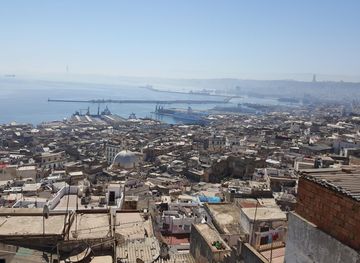
Explore more of Algeria
Discover Algeria: A captivating blend of ancient history, stunning landscapes, and vibrant culture. From the Sahara desert to Mediterranean coasts, adventure awaits.
Explore Algeria