

Free Cuando Cubango Travel Guide & Mobile App
Explore Cuando Cubango with free travel guides. Discover regional history, expert tips, proposed trips, and audio guides on web or mobile app.


Explore Cuando Cubango’s river landscapes, wildlife country, Menongue and Cuito Cuanavale’s deeply significant Angolan history.
Read more about Cuando Cubango
When is the best time to visit Cuando Cubango?
Best: June–August · 25–26°C| Month | High (°C) | Rainfall (mm) |
|---|---|---|
| January | 31 | 120 |
| February | 31 | 110 |
| March | 31 | 100 |
| April | 30 | 90 |
| May | 29 | 60 |
| June (best) | 25 | 30 |
| July (best) | 25 | 20 |
| August (best) | 26 | 25 |
| September | 29 | 50 |
| October | 31 | 90 |
| November | 32 | 100 |
| December | 31 | 110 |
Getting to and around Cuando Cubango
How to get there
Transportation
Best attractions in Cuando Cubango
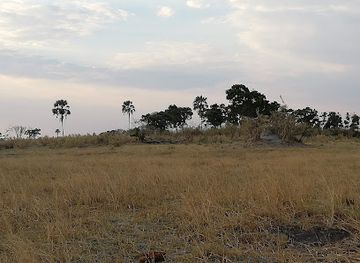
Cuando Cubango’s attractions are shaped by scale, wilderness and history rather than by a dense circuit of conventional visitor sites. Menongue provides the most practical base for understanding the region and arranging excursions, while Cuito Cuanavale offers access to places associated with the major 1987–1988 military campaign. Travellers should approach battle sites and memorial areas with local guidance, since surviving military landscapes may be sensitive or unsafe to explore independently. The region’s protected areas, particularly Mavinga and Luiana, contain extensive woodland, floodplain and river environments with potential for wildlife viewing, birdwatching and specialist photographic expeditions. These areas are remote and facilities are limited, so visits require advance planning, suitable vehicles and reliable local support. River corridors and seasonal wetlands provide a different experience from the drier open woodland, especially for visitors interested in southern African ecology. The attraction landscape is therefore best understood as a combination of wilderness travel, conservation and modern history, rather than a short list of easily accessible monuments. It is not comparable to Angola’s more established coastal or urban tourism centres, and responsible visitors should prioritise safety, local permissions and realistic expectations.
-
Memorial park
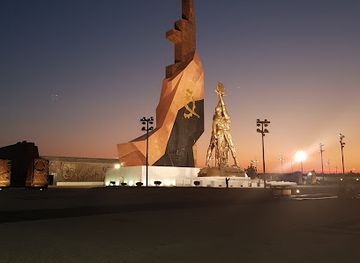
Memorial of the Battle of Cuito Cuanavale
A memorial commemorating the pivotal Battle of Cuito Cuanavale, a key event in Angola's civil war and Southern Africa's liberation history.
Best landmarks in Cuando Cubango
The most recognisable landmarks of Cuando Cubango are connected to its rivers, towns and twentieth-century military history. Cuito Cuanavale is the region’s defining historical place, associated with the major battle and wider Cold War confrontation that unfolded in the surrounding landscape between 1987 and 1988. Local memorials and military references should be visited with sensitivity and, where necessary, with official or specialist guidance. Menongue’s importance is less architectural than civic and geographic: as the former provincial capital and principal service centre, it represents the administrative structure built around a remote interior territory. The Cuando and Cubango river systems provide the region’s most important natural landmarks, linking seasonal wetlands, woodland and cross-border ecological corridors. In the wider conservation landscape, Mavinga and Luiana signify the scale of south-eastern Angola’s remaining wild country rather than a single monumental feature. Their value lies in habitat continuity, riverine geography and wildlife movement, and access may be restricted or require formal arrangements. Because infrastructure is limited, the region’s landmarks are often experienced as broad landscapes and historically charged locations rather than polished urban monuments.
-
River
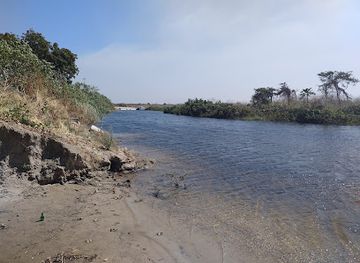
Cubango
Explore the Cubango River: A journey through the heart of Africa's untamed wilderness, rich biodiversity, and cultural heritage.
-
National park
Luiana National Park
Discover the hidden beauty of Luiana National Park, Angola’s serene national park with stunning landscapes and rich biodiversity for nature lovers and adventurers.
-
Memorial park
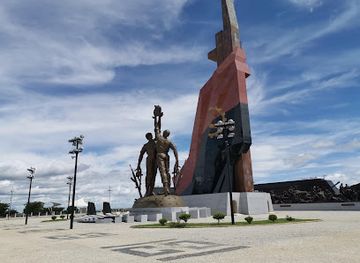
Memorial of the Battle of Cuito Cuanavale
Explore the Memorial of the Battle of Cuito Cuanavale, a poignant site honoring Angola's history and the sacrifices made for freedom and independence.
-
Art center
Casa da Juventude - Menongue - Cuando Cubango
Explore the vibrant art and culture at Casa da Juventude in Menongue, a key hub for local creativity and community engagement in Cuando Cubango.
Explore Cuando Cubango on the map
Plan your trip on one map. See where the top cities, national parks and sights are, and book hotels and experiences in a few clicks.
Best hotels in Cuando Cubango
Best restaurants in Cuando Cubango
Dining in Cuando Cubango is centred on practical local cooking rather than a developed restaurant scene. Menongue has the widest choice of cafés, hotel dining rooms and informal restaurants, while facilities become increasingly basic in smaller settlements and along rural routes. Meals commonly draw on Angola’s wider culinary traditions, including funge made from cassava or maize, rice, beans, grilled or stewed meat, chicken, fish where available, and vegetable dishes prepared with seasonal produce. Local markets are useful for fruit, vegetables, bread and travel provisions, although selection varies with transport links and the rainy season. Portuguese-influenced cooking is present alongside dishes and ingredients shared across southern and central Africa. Visitors travelling into conservation areas should carry supplies and confirm whether an expedition includes food, since there may be no dependable shop or restaurant nearby. Coffee, soft drinks and locally available beer are more realistic expectations than an extensive regional drinks culture. In Menongue, ask accommodation staff or trusted local contacts about current dining options rather than relying on old commercial listings.
-
Restaurant
Restaurante Os Sabores da Fanlícia
Experience authentic Angolan cuisine at Restaurante Os Sabores da Fanlícia in Menongue – where every meal tells a story.
-
 Grill
GrillR I V E R L O U N G E
Discover the flavors of Angola at River Lounge - where grilled specialties meet a warm ambiance in Menongue.
Best bars in Cuando Cubango
Evening life in Cuando Cubango is modest and concentrated in Menongue, where hotel bars, small local bars and informal venues provide places to meet, listen to music and socialise. Cuito Cuanavale also has a limited local evening scene, but it should not be approached as a major nightlife destination. Outside the principal towns, evenings are generally quiet and shaped by household, community or lodge-based life rather than nightclubs. Music and conversation are important parts of socialising, while beer and soft drinks are commonly available in established venues. Opening arrangements can change, electricity and connectivity may be inconsistent, and visitors should use trusted transport after dark. In remote conservation areas, night-time activity should follow the rules of the camp or guide, particularly where wildlife is present. The region’s evening culture is best experienced respectfully and locally, without assuming that entertainment follows the late-night patterns of Luanda or Angola’s larger coastal cities.
-
Bar
EPIC SANA Luanda Hotel
Discover the elegance and vibrant nightlife of Luanda at EPIC SANA Luanda Hotel, where luxury meets local charm in Angola's bustling capital.
-
Restaurant
Alvalade Hotel
Discover luxury and comfort at Alvalade Hotel in Luanda, where exquisite dining meets modern amenities in a vibrant setting.
-
Restaurant
Palmeiras Suite Hotel
Discover the elegance of Palmeiras Suite Hotel, a luxurious haven in Luanda with exceptional dining and recreational facilities.
-
Hotel
Hotel Presidente Luanda
Discover the elegance of Hotel Presidente Luanda, a luxurious haven in the heart of Angola's vibrant capital, perfect for discerning travelers.
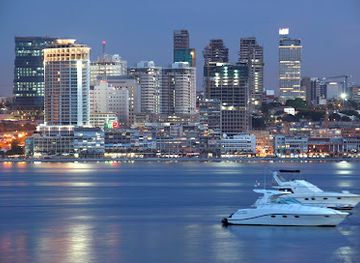
Best shops in Cuando Cubango
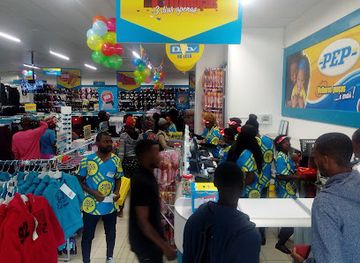
Shopping in Cuando Cubango is practical and local, with the broadest choice found in Menongue’s markets, small shops and food outlets. Visitors can look for fresh produce, bread, household goods, fabrics and everyday supplies, while rural markets offer insight into the exchange of agricultural products and necessities rather than a specialised souvenir industry. Availability changes with road access, season and deliveries, so essential items should be bought before travelling into remote districts. Locally made baskets, woven articles and small craft goods may appear in markets or through community contacts, but visitors should purchase responsibly and avoid anything presented as archaeological, military or wildlife material. Angola’s wider craft traditions may also be represented, although not every item sold in the region is locally produced. Cuito Cuanavale and other smaller towns have fewer retail options than Menongue. Carrying modest kwanza notes is useful, as card payments are not dependable outside established urban businesses, and bargaining should remain courteous rather than aggressive.
-
Shopping mall
Xyami Shopping Lubango
Experience the best of shopping, dining, and entertainment at Xyami Shopping Lubango, a vibrant destination in the heart of the city.
-
Shopping mall
Ginga Shopping
Explore a vibrant shopping mall in Luanda with diverse retail options, delicious dining, and rich cultural experiences at Ginga Shopping.
-
National park
Luiana National Park
Explore Luiana National Park, a hidden gem in Angola with breathtaking landscapes and diverse wildlife, perfect for nature lovers and adventure seekers.
-
Grocery store
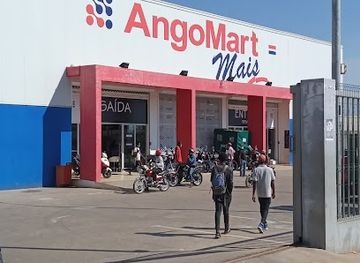
Shoprite Mini Menongue
Discover the heart of Menongue at Shoprite Mini Menongue, your go-to grocery store for fresh produce and local delicacies.
Get your free copy of our complete guide to Cuando Cubango, delivered straight to you.
Everything on this page, from attractions and restaurants to essentials and local phrases, in one PDF you can read offline, print or share.
Already have an account? Sign in
Your Cuando Cubango guide is ready.
We'll send it to · Not you? Sign out

Getting your guide ready…
We are putting together a fresh copy of the Cuando Cubango guide. This can take up to a minute.
This can take a few moments. If your browser asks, choose Allow so the download can start. You'll find the guide in your Downloads folder.
Nothing happened? Download it again
Sorry, the guide is taking longer than usual. Please try again in a minute, or get it by email instead.
Cuando Cubango essentials
Currency and Payment
Safety
Emergency Situations
Do's and Don'ts
Local Tips
From Eve
Local phrases worth knowing
You don't need to get them perfect. A few words go a long way, and locals appreciate the effort.
Basics
| English | Local | Say it |
|---|---|---|
| Hello | Olá | [oh-lah] |
| Goodbye | Adeus | [ah-deh-oos] |
| Yes | Sim | [seem] |
| No | Não | [now] |
| Please/You're welcome | Por favor | [pohr fah-vor] |
| Thank you | Obrigado | [oh-bree-gah-doo] |
| Excuse me/Sorry | Desculpe | [deh-skool-peh] |
| How are you? | Como você está? | [koh-moh voh-seh eh-stah] |
| Fine. And you? | Bem. E você? | [baym. eh voh-seh] |
| Do you speak English? | Você fala inglês? | [voh-seh fah-lah een-glays] |
| I don't understand | Eu não entendo | [eh-oo now en-ten-doo] |
Eating & Drinking
| English | Local | Say it |
|---|---|---|
| I'd like to see the menu, please | Gostaria de ver o menu, por favor | [goh-stah-ree-ah jeh vehr oo meh-noo, pohr fah-vor] |
| I don't eat meat | Eu não como carne | [eh-oo now koh-moh kar-nee] |
| Cheers! | Saúde! | [sah-oo-deh] |
| I would like to pay, please | Gostaria de pagar, por favor | [goh-stah-ree-ah jeh pah-gar, pohr fah-vor] |
Emergencies
| English | Local | Say it |
|---|---|---|
| Help! | Ajuda! | [ah-zhoo-dah] |
| Go away! | Vá embora! | [vah em-boh-rah] |
| Call the Police! | Chame a polícia! | [shah-meh ah poh-lee-syah] |
| Call a doctor! | Chame um médico! | [shah-meh oom meh-dee-koh] |
| I'm lost | Estou perdido | [es-toh pair-jee-doo] |
| I'm ill | Estou doente | [es-toh doh-en-chee] |
Shopping
| English | Local | Say it |
|---|---|---|
| I'd like to buy... | Gostaria de comprar... | [goh-stah-ree-ah jeh kom-prahr] |
| I'm just looking | Estou apenas olhando | [es-toh ah-peh-nahs oh-lyan-doo] |
| How much is it? | Quanto custa? | [kwahn-toh koos-tah] |
| That's too expensive | Isso é muito caro | [ee-soh eh moo-ee-toh kah-roh] |
| Can you lower the price? | Você pode baixar o preço? | [voh-seh poh-jee bye-shar oo preh-soh] |
Time & Numbers
| English | Local | Say it |
|---|---|---|
| What time is it? | Que horas são? | [keh oh-ras sow] |
| It's one o'clock | É uma hora | [eh oo-mah oh-rah] |
| Half past (10) | Meia hora (10) | [may-ah oh-rah (dez)] |
| Morning | Manhã | [mahn-yah] |
| Afternoon | Tarde | [tahr-jee] |
| Evening | Noite | [noy-chee] |
| Yesterday | Ontem | [on-tem] |
| Today | Hoje | [oh-zhee] |
| Tomorrow | Amanhã | [ah-mahn-yah] |
| 1 | Um | [oom] |
| 2 | Dois | [doyz] |
| 3 | Três | [trehz] |
| 4 | Quatro | [kwah-tro] |
| 5 | Cinco | [seen-koh] |
| 6 | Seis | [says] |
| 7 | Sete | [seh-chee] |
| 8 | Oito | [oy-toh] |
| 9 | Nove | [noh-veh] |
| 10 | Dez | [dehz] |
Transport & Directions
| English | Local | Say it |
|---|---|---|
| Where's a/the...? | Onde está um/a ...? | [on-deh eh-stah oom/ah ...?] |
| What's the address? | Qual é o endereço? | [kwahl eh oo in-deh-reh-soh] |
| Can you show me (on the map)? | Você pode me mostrar (no mapa)? | [voh-seh poh-jee meh mohs-trar (no mah-pah)?] |
| When's the next (bus)? | Quando é o próximo (ônibus)? | [kwahn-doo eh oo proh-see-mo (oh-nee-boos)?] |
| A ticket (to ....) | Um bilhete (para....) | [oom bee-lheh-teh (pah-rah....)] |
History of Cuando Cubango
Precolonial Mbunda and Ganguela societies
Before Portuguese colonial rule, the interior was occupied by several related but distinct communities, including Mbunda and peoples often grouped in older sources under the broad label Ganguela. Social, political and trading relationships extended across present-day Angola, Zambia and Namibia rather than stopping at modern borders. River valleys, woodland resources and seasonal movement shaped settlement patterns, while local authority rested in chiefly and community structures. The historical diversity of the region remains important, since Cuando Cubango was never a culturally uniform territory despite the broad provincial name applied during the colonial and post-independence periods.
Portuguese expansion and colonial administration
Portuguese authority expanded gradually into south-eastern Angola during the late nineteenth and twentieth centuries, relying on military posts, administrative stations, taxation and mission activity rather than dense urban settlement. Menongue, formerly Serpa Pinto, became the principal colonial administrative centre for the interior. Colonial rule reorganised local authority, redirected trade and imposed new boundaries across communities whose connections predated the Angola–Namibia–Zambia frontiers. The region remained comparatively remote from the coast and major commercial centres, and its economy was less industrialised than that of Luanda, Benguela or the central highlands.
Independence and the beginnings of civil war, 1974–1976
Portugal’s 1974 revolution accelerated the end of colonial rule, and Angola became independent in November 1975 after a violent struggle among rival nationalist movements. The conflict quickly drew in foreign powers and spread through the interior. South-eastern Angola became strategically important because of its distance from the coast, its borders with Namibia and Zambia, and the movement of forces through its broad rural territory. Independence brought hopes of a new national order, but the region soon experienced military occupation, displacement and disruption to transport, agriculture and public services.
The Cuito Cuanavale campaigns, 1987–1988
Cuito Cuanavale was the setting for one of the most consequential military campaigns of the Angolan civil war. Between late 1987 and 1988, forces aligned with the MPLA, Cuban troops and Angolan government forces confronted UNITA forces supported by South Africa in and around the town. The fighting formed part of the wider Cold War conflict in southern Africa and had consequences beyond the battlefield, contributing to negotiations that led to the withdrawal of Cuban and South African forces and to Namibian independence. Cuito Cuanavale remains central to competing national memories of the war.
The civil war’s human and environmental legacy
The Angolan civil war continued until 2002, leaving Cuando Cubango with damaged roads, abandoned settlements, disrupted schools and health services, and large areas affected by landmines and unexploded ordnance. Wildlife also suffered from hunting and the breakdown of conservation systems, although some remote areas retained significant habitat because conflict and poor access limited development. Post-war reconstruction improved links to provincial centres and enabled gradual resettlement, but the region’s sparse infrastructure and difficult geography continue to shape everyday life and tourism.
Protected landscapes and contemporary reconstruction
In the post-war period, the ecological importance of south-eastern Angola gained renewed attention. Mavinga and Luiana, together with neighbouring transfrontier conservation initiatives in southern Africa, are associated with large wildlife corridors and the protection of woodland and wetland ecosystems. Reconstruction has proceeded unevenly, with investment concentrated in towns and transport routes rather than widespread visitor infrastructure. The continuing challenge is to connect conservation and carefully managed tourism with local livelihoods while protecting communities, wildlife and sites that still require clearance and detailed assessment.
Cuando Cubango in Photos
Browse through our photo collection highlighting the charm and character of the destination.
Neighbouring regions of Cuando Cubango
The closest regions to Cuando Cubango, if you have time for more than one.
-

-

-

-

-


Swipe for more regions
Explore more

Explore more of Angola
Discover Angola's vibrant cities, stunning coastlines, and rich cultural heritage. An African destination that combines urban excitement with natural wonders.
Explore Angola