

Free Santa Cruz County Travel Guide & Mobile App
Explore Santa Cruz County with free travel guides. Discover regional history, expert tips, proposed trips, and audio guides on web or mobile app.


Explore Santa Cruz County for historic missions, borderland culture, bird-rich valleys, mountain scenery, vineyards and distinctive southern Arizona food.
Read more about Santa Cruz County
When is the best time to visit Santa Cruz County?
Best: April–May, October · 26–29°C| Month | High (°C) | Rainfall (mm) |
|---|---|---|
| January | 15 | 20 |
| February | 18 | 20 |
| March | 21 | 20 |
| April (best) | 26 | 15 |
| May (best) | 29 | 15 |
| June | 35 | 15 |
| July | 37 | 40 |
| August | 36 | 40 |
| September | 33 | 30 |
| October (best) | 27 | 15 |
| November | 21 | 20 |
| December | 15 | 20 |
Getting to and around Santa Cruz County
How to get there
Transportation
Best attractions in Santa Cruz County
Santa Cruz County’s attractions combine historic interpretation with outdoor landscapes rather than concentrating in a single urban district. Tumacácori National Historical Park protects the substantial remains of Mission San José de Tumacácori and explains the colonial mission system, Indigenous history and the Santa Cruz Valley setting. Tubac Presidio State Park presents the county’s Spanish military and territorial past, while Tubac’s galleries and craft studios add a contemporary arts dimension. Patagonia Lake State Park offers boating, fishing, picnicking, walking and wildlife observation in a high-desert setting, and nearby Sonoita Creek is noted for riparian habitat and birdlife. The Sonoita and San Rafael valleys provide open ranch scenery, vineyards and long views towards surrounding ranges. Nogales adds border commerce, Mexican-influenced food and urban history, while rural roads lead to quieter grasslands and mountain foothills. Activities are generally best suited to walking, birding, photography, scenic driving and low-key water recreation rather than large-scale amusement tourism.
-
Museum
Titan Missile Museum
Explore the Titan Missile Museum in Arizona, the last remaining Titan II missile site, and delve into America's Cold War history.
-
Restaurant
Colossal Cave Mountain Park
Discover the breathtaking beauty and adventure at Colossal Cave Mountain Park in Vail, Arizona, where nature and exploration unite.
-
Tourist attraction
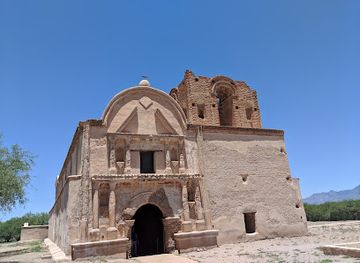
Tumacacori National Historical Park
Discover the historical treasures of Tumacacori National Historical Park, a serene blend of culture and nature in southern Arizona.
-
Winery
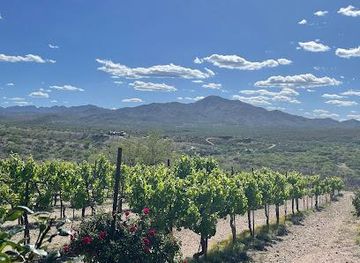
Charron Vineyards
Explore the enchanting Charron Vineyards in Arizona's Sonoita region, where exquisite wines meet breathtaking landscapes for an unforgettable experience.

Best landmarks in Santa Cruz County
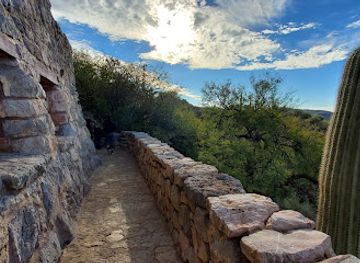
The most recognisable historic landmark in Santa Cruz County is Mission San José de Tumacácori, whose preserved church and associated ruins stand within Tumacácori National Historical Park as a visible record of Spanish colonial and Indigenous history. Tubac Presidio State Park marks the site of the presidio established in 1752 and anchors the historic identity of Tubac. In Nogales, the international boundary and the connected urban landscapes of the two Nogales give the county one of its most distinctive geographical symbols, although the border is also a working security zone rather than simply a viewpoint. The Santa Cruz River corridor provides the environmental framework for many of the county’s older settlements and mission sites. Patagonia Lake, set among dry hills and grasslands, is a notable natural landmark, while the Sonoita and San Rafael valleys are defined by broad horizons, ranch landscapes and surrounding mountain ranges. The county’s landmarks are therefore both constructed and ecological: presidio walls, mission architecture, border infrastructure, river corridors and open valleys together express its layered regional identity.
-
Ghost town
Goldfield Ghost Town and Mine Tours Inc.
Explore a historic Arizona gold mining town with mine tours, gunfights, a narrow-gauge railroad, and Wild West adventures for the whole family.
-
National reserve
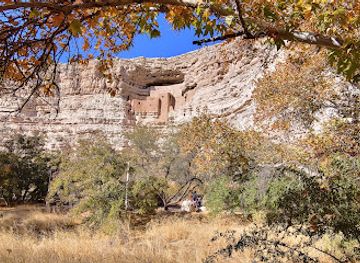
Montezuma Castle National Monument
Explore the ancient cliff dwellings of the Sinagua people at Montezuma Castle National Monument, a window into Arizona's pre-Columbian past.
-
Museum
Titan Missile Museum
Explore the Titan Missile Museum in Arizona for an unforgettable journey into Cold War history and military technology.
-
National reserve
Casa Grande Ruins National Monument
Explore the remarkable Casa Grande Ruins National Monument, a historical gem that reveals the secrets of the ancient Hohokam civilization in Arizona's stunning desert landscape.
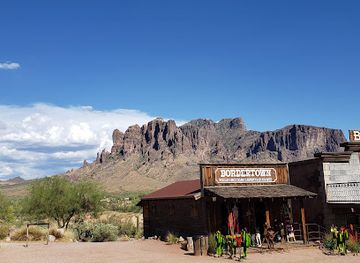

Explore Santa Cruz County on the map
Plan your trip on one map. See where the top cities, national parks and sights are, and book hotels and experiences in a few clicks.
Best hotels in Santa Cruz County
Best restaurants in Santa Cruz County
Dining in Santa Cruz County reflects its position in the Arizona–Sonora borderlands. Nogales is the main centre for Mexican restaurants, taquerias, bakeries and food shops, with regional flavours that sit within a broader northern Mexican culinary tradition rather than a narrowly defined county cuisine. Tubac and Patagonia offer cafés, informal restaurants, inns and places serving contemporary Southwestern food, while rural communities and the Sonoita Valley draw on ranch-country cooking, local produce and the area’s developing wine culture. Visitors may find carne asada, tamales, tortillas, salsa and other Mexican-influenced staples alongside burgers, salads and American comfort food. Wineries and tasting rooms in the Sonoita area provide opportunities to sample Arizona wines, although availability varies by season and producer. Farmers’ markets and specialist food shops can be useful for discovering local produce, but schedules should be checked before travelling. Tipping follows standard United States practice in full-service restaurants.
-
American
Black Bear Diner Gilbert
Discover delightful American comfort food at Black Bear Diner Gilbert—where every meal feels like home!
-
American
Black Bear Diner Tucson
Discover the heart of American comfort food at Black Bear Diner Tucson – where every meal feels like home.
-
Fast Food
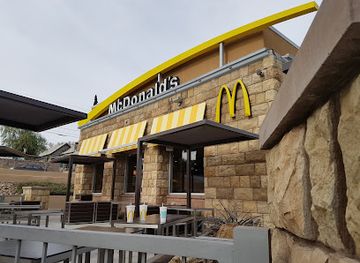
McDonald's
Experience familiar flavors at McDonald's in Nogales - your go-to fast-food destination for quick meals on the go.
-
Fast Food
Wendy's
Savor fresh fast food delights at Wendy's in Rio Rico—home of delicious burgers and refreshing frosties!



Best bars in Santa Cruz County
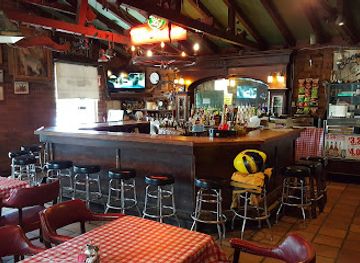
Nightlife in Santa Cruz County is modest and locally oriented rather than built around large clubs. Nogales has the widest choice of bars, restaurants and evening venues, with a social scene influenced by its cross-border location and commercial role. Tubac and Patagonia tend towards relaxed restaurants, wine tasting, historic inns and occasional live music rather than late-night entertainment. The Sonoita Valley’s wineries offer an evening alternative centred on tastings and conversation, subject to individual schedules and transport arrangements. In smaller communities, traditional bars and restaurants often provide the main after-dark gathering places, while outdoor areas become quiet once parks and trails close. Visitors should not rely on late public transport in rural districts, and designated driving is important when visiting wineries or drinking establishments. The county’s evening character is best understood through food, music, conversation and local hospitality rather than a dense nightclub circuit.
-
Brewpub
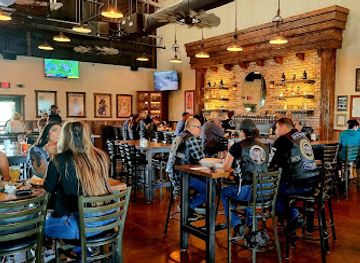
Copper Brothel Brewery
Discover the flavors of Sonoita at Copper Brothel Brewery, where craft beer meets delicious cuisine in a welcoming atmosphere.
-
Grill
The 19th Hole Bar and Grille
Discover the charm and flavors of The 19th Hole Bar and Grille in Green Valley, where delicious American cuisine meets a welcoming atmosphere.
-
Grill
Wagon Wheel Saloon
Experience the vibrant flavors of American and Mexican cuisine at the Wagon Wheel Saloon in Patagonia, Arizona, a true local gem.
-
Sushi
OKIROKI SUSHI WINGS
Discover the perfect blend of sushi and sports at OKIROKI SUSHI WINGS in Nogales, where culinary delights meet an energetic atmosphere.


Best shops in Santa Cruz County
Shopping is varied for a county of rural valleys and small communities. Tubac is the principal destination for galleries, artisan studios, jewellery, ceramics, textiles, paintings, home furnishings and Southwestern-inspired gifts, with much of its retail character tied to the historic settlement rather than a conventional shopping centre. Nogales provides practical commerce, supermarkets, specialist food shops and businesses serving the border community, with Mexican crafts and food products available in appropriate commercial settings. Patagonia and Sonoita offer smaller selections of independent shops, gallery-style retailers, wine-related products and locally made goods. Visitors can look for regional foods, Arizona wines, handmade pottery, woven items, artworks and books about borderlands or local history. Market schedules and individual shop hours can change, particularly in smaller towns, so shopping is best combined with a broader day’s exploration rather than treated as a guaranteed daily programme. When buying antiques or cultural objects, ask about provenance and any restrictions on transporting them across the international border.
-
Shopping mall
Mariposa Shopping Center
Explore the Mariposa Shopping Center in Nogales, Arizona, where shopping meets dining and community events in a vibrant atmosphere.
-
Shopping mall
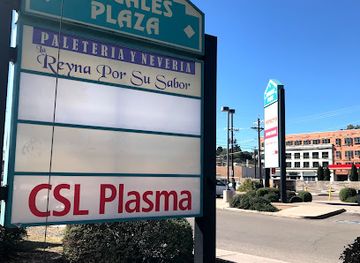
Nogales Plaza
Explore Nogales Plaza, a vibrant shopping mall in Arizona offering unique stores, delicious food, and a taste of local culture.
-
Gift shop
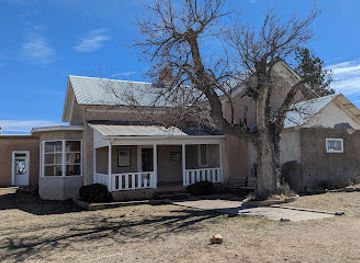
Empire Ranch Foundation
Explore the historic Empire Ranch Foundation: a perfect blend of history, nature, and unique shopping experiences in Sonoita, Arizona.
-
Spice store
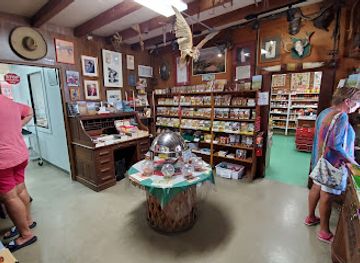
Santa Cruz Chili & Spice
Explore an array of spices and salsas at Santa Cruz Chili & Spice, where flavor meets culture in Tumacacori, Arizona.

Get your free copy of our complete guide to Santa Cruz County, delivered straight to you.
Everything on this page, from attractions and restaurants to essentials and local phrases, in one PDF you can read offline, print or share.
Already have an account? Sign in
Your Santa Cruz County guide is ready.
We'll send it to · Not you? Sign out

Getting your guide ready…
We are putting together a fresh copy of the Santa Cruz County guide. This can take up to a minute.
This can take a few moments. If your browser asks, choose Allow so the download can start. You'll find the guide in your Downloads folder.
Nothing happened? Download it again
Sorry, the guide is taking longer than usual. Please try again in a minute, or get it by email instead.
Santa Cruz County essentials
Currency and Payment
Safety
Emergency Situations
Do's and Don'ts
Local Tips
From Eve
Local phrases worth knowing
You don't need to get them perfect. A few words go a long way, and locals appreciate the effort.
Basics
| English | Local | Say it |
|---|---|---|
| Hello | Hola | [OH-lah] |
| Goodbye | Adiós | [ah-DYOS] |
| Yes | Sí | [SEE] |
| No | No | [NO] |
| Please/You're welcome | Por favor/De nada | [por fah-VOR/deh NAH-dah] |
| Thank you | Gracias | [GRAH-syas] |
| Excuse me/Sorry | Disculpe/Lo siento | [dees-KOOL-peh/lo SYEN-to] |
| How are you? | ¿Cómo estás? | [KOH-moh ehs-TAHS] |
| Fine. And you? | Bien. ¿Y tú? | [byen. ee TOO] |
| Do you speak English? | ¿Hablas inglés? | [AH-blas een-GLES] |
| I don't understand | No entiendo | [no en-TYEN-do] |
Eating & Drinking
| English | Local | Say it |
|---|---|---|
| I'd like to see the menu, please | Me gustaría ver el menú, por favor | [meh goos-tah-REE-ah behr el meh-NOO, por fah-VOR] |
| I don't eat meat | No como carne | [no KOH-mo KAR-neh] |
| Cheers! | ¡Salud! | [sah-LOOD] |
| I would like to pay, please | Me gustaría pagar, por favor | [meh goos-tah-REE-ah pah-GAR, por fah-VOR] |
Emergencies
| English | Local | Say it |
|---|---|---|
| Help! | ¡Ayuda! | [ah-YOO-dah] |
| Go away! | ¡Vete! | [VEH-teh] |
| Call the Police! | ¡Llama a la policía! | [YAH-mah ah lah poh-lee-SEE-ah] |
| Call a doctor! | ¡Llama a un doctor! | [YAH-mah ah oon dok-TOR] |
| I'm lost | Estoy perdido | [es-TOY per-DEE-do] |
| I'm ill | Estoy enfermo/a | [es-TOY en-FER-mo/a] |
Shopping
| English | Local | Say it |
|---|---|---|
| I'd like to buy... | Me gustaría comprar... | [meh goos-tah-REE-ah kom-PRAR] |
| I'm just looking | Solo estoy mirando | [SO-lo es-TOY mee-RAN-do] |
| How much is it? | ¿Cuánto cuesta? | [KWAN-to KWES-ta] |
| That's too expensive | Es demasiado caro | [es deh-ma-SYA-do KAH-ro] |
| Can you lower the price? | ¿Puedes bajar el precio? | [PWEH-des bah-HAR el PREH-syo] |
Time & Numbers
| English | Local | Say it |
|---|---|---|
| What time is it? | ¿Qué hora es? | [keh OR-ah es] |
| It's one o'clock | Es la una | [es lah OO-nah] |
| Half past (10) | Y diez y media | [ee DYAS ee MEH-dyah] |
| Morning | Mañana | [mah-NYAH-nah] |
| Afternoon | Tarde | [TAR-deh] |
| Evening | Noche | [NO-cheh] |
| Yesterday | Ayer | [ah-YER] |
| Today | Hoy | [OY] |
| Tomorrow | Mañana | [mah-NYAH-nah] |
| 1 | Uno | [OO-no] |
| 2 | Dos | [DOS] |
| 3 | Tres | [TRES] |
| 4 | Cuatro | [KWA-tro] |
| 5 | Cinco | [SEEN-ko] |
| 6 | Seis | [SAYS] |
| 7 | Siete | [SYE-teh] |
| 8 | Ocho | [OH-cho] |
| 9 | Nueve | [NWEH-beh] |
| 10 | Diez | [DYAS] |
Transport & Directions
| English | Local | Say it |
|---|---|---|
| Where's a/the...? | ¿Dónde está un/ la...? | [DON-deh es-TAH oon/ lah] |
| What's the address? | ¿Cuál es la dirección? | [KWAL es lah dee-rek-SYON] |
| Can you show me (on the map)? | ¿Puedes mostrarme (en el mapa)? | [PWEH-des mos-TRAR-me (en el MAH-pah)] |
| When's the next (bus)? | ¿Cuándo es el próximo (autobús)? | [KWAN-do es el PROK-seemo (ow-toh-BOOST)] |
| A ticket (to ....) | Un boleto (a ....) | [oon boh-LEH-to (ah ....)] |
History of Santa Cruz County
Indigenous Borderlands Before European Colonisation
Long before Spanish settlement, the Santa Cruz River corridor and surrounding valleys supported Indigenous communities, including O’odham peoples whose cultural connections cross the modern international boundary. Archaeological evidence across southern Arizona records farming, trade and settlement in a region where river environments were especially significant. Today’s county boundaries do not reflect those older patterns of movement or identity. Visitors should therefore understand the area not simply as a frontier created by later nations, but as part of an enduring Indigenous landscape with traditions and communities that predate the United States, Mexico and Spanish colonial rule.
Spanish Missions and Father Kino’s Frontier
Jesuit missionary Eusebio Francisco Kino established missions in the Pimería Alta during the late seventeenth and early eighteenth centuries, linking religious activity with agriculture, livestock and imperial expansion. Mission San José de Tumacácori, now preserved within Tumacácori National Historical Park, became one of the most important surviving reminders of this era. The mission story also includes the participation, adaptation and disruption of Indigenous communities; it should not be reduced to a purely architectural achievement. Irrigation, ranching and settlement patterns introduced or expanded during this period continued to influence the Santa Cruz Valley.
The Presidio at Tubac
Tubac’s presidio was established in 1752 after Indigenous resistance exposed the need for a permanent Spanish military presence in the region. It became one of the earliest European military settlements in what is now Arizona and helped protect mission communities and colonial routes. The presidio’s history reflects the competing pressures of imperial administration, Indigenous resistance, military defence and local agriculture. Tubac later developed through Mexican and American periods, but the original presidio remains central to the town’s identity and is interpreted at Tubac Presidio State Park.
Mexican Rule and the Gadsden Purchase
After Mexican independence from Spain in 1821, the Santa Cruz Valley became part of Mexico. The boundary changed again after the United States acquired the Gadsden Purchase in 1853, bringing the area that includes present-day Santa Cruz County under American control. The new boundary divided communities and routes that had previously operated within a larger regional network. Nogales eventually grew on both sides of that line, making the county’s border character a direct consequence of nineteenth-century diplomacy rather than an accidental modern association.
Territorial Settlement, Conflict and Ranching
During the nineteenth century, military posts, ranches, mines and transport routes expanded across southern Arizona. Tubac and the Santa Cruz Valley experienced periods of conflict connected with Apache resistance, American military campaigns and contested control of land and resources. Ranching became a major and lasting land use in the Sonoita and San Rafael valleys, while small-scale mining and agricultural settlement contributed to the region’s developing economy. Many of the county’s open grasslands, historic roads and town patterns retain traces of this territorial-era transformation.
Railways, Nogales and Cross-Border Commerce
The arrival of rail connections in the late nineteenth century strengthened Nogales as a commercial gateway between the United States and Mexico. The town’s growth was tied to customs, trade, transport and the movement of people and goods through the border corridor. Although later highways and international logistics changed the way the region functions, Nogales remains economically and culturally connected to its Mexican counterpart. The county’s modern identity continues to be shaped by this combination of border commerce, bilingual exchange, regional migration and long-established agricultural communities.
Santa Cruz County in Photos
Browse through our photo collection highlighting the charm and character of the destination.
Neighbouring regions of Santa Cruz County
The closest regions to Santa Cruz County, if you have time for more than one.
-

-

-
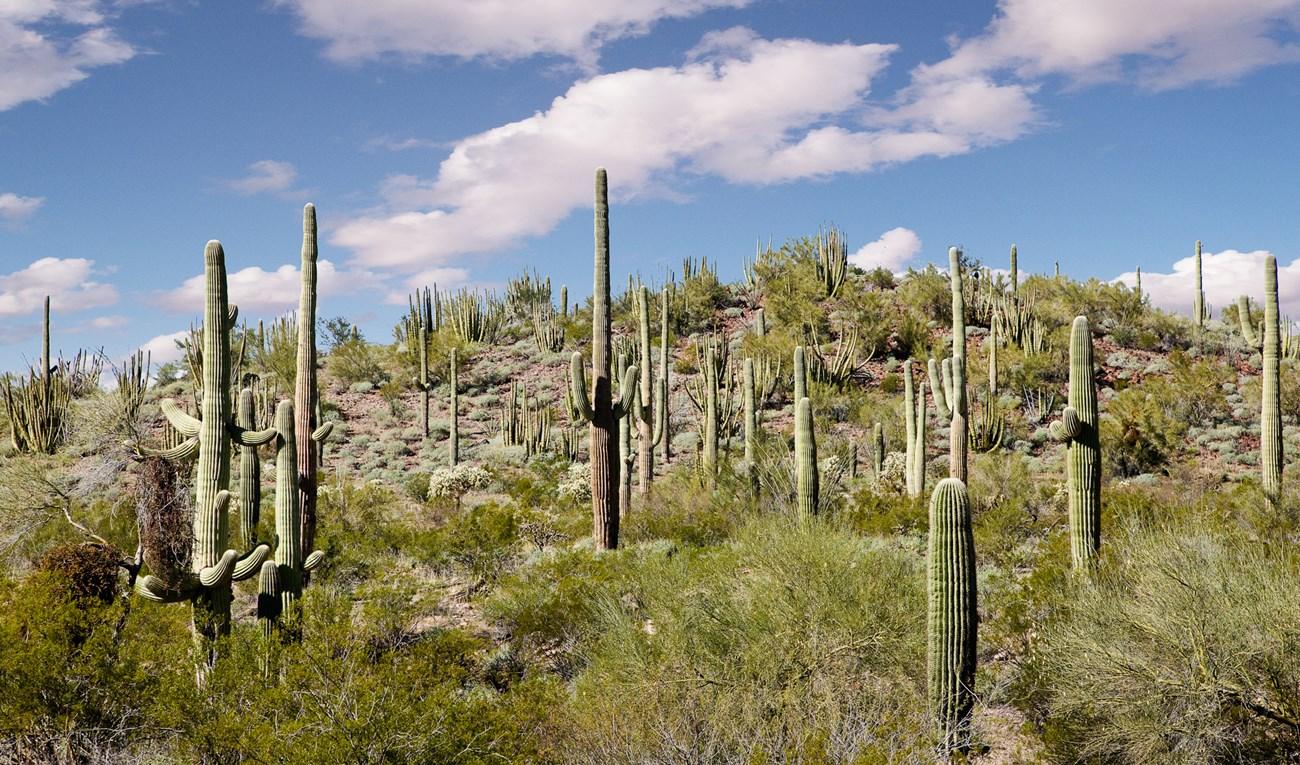 Saguaro National Park
 surrounds Tucson with giant cacti, desert wildlife, mountain trails, scenic drives and enduring Sonoran Desert heritage.
Saguaro National Park
Saguaro National Park surrounds Tucson with giant cacti, desert wildlife, mountain trails, scenic drives and enduring Sonoran Desert heritage.
-
-


Swipe for more regions
Explore more

Explore more of Arizona
Discover Arizona: From the majestic Grand Canyon and red rocks of Sedona to the vibrant cities of Phoenix and Scottsdale, explore the diverse beauty and culture of the Grand Canyon State.
Explore Arizona