

Free Gold Coast Travel Guide & Mobile App
Plan your Gold Coast trip with Evendo. Get free guides to top attractions, restaurants, hotels, and bars. Web access or download the mobile app.


Gold Coast combines surf beaches, theme parks, coastal dining, Indigenous heritage, lively neighbourhoods and rainforest escapes across Queensland's coast.
Coastal City and Surf Culture
Gold Coast stretches along Queensland’s south-eastern coast, where long beaches, subtropical waterways and high-rise coastal districts create a city unlike any other in Australia. Surfers Paradise is the best-known centre, with its broad ocean beach, lively Cavill Avenue and skyline of apartment towers, but the urban area extends through distinct precincts including Broadbeach, Main Beach, Burleigh Heads, Coolangatta and the quieter southern suburbs. Surfing, swimming, coastal walks and beachside dining are woven into everyday life, while the city’s numerous canals and broad Nerang River add another layer to its geography.Read more about Gold Coast
Neighbourhoods and Hinterland
When is the best time to visit Gold Coast?
Best: July–September · 22–25°C| Month | High (°C) | Rainfall (mm) |
|---|---|---|
| January | 30 | 166 |
| February | 29 | 185 |
| March | 29 | 183 |
| April | 28 | 135 |
| May | 25 | 97 |
| June | 23 | 72 |
| July (best) | 22 | 59 |
| August (best) | 23 | 62 |
| September (best) | 25 | 69 |
| October | 27 | 113 |
| November | 29 | 140 |
| December | 30 | 157 |
Getting to and around Gold Coast
How to get there
Transportation
Best attractions in Gold Coast
Gold Coast’s attractions range from expansive beaches to subtropical rainforest. Surfers Paradise Beach is the city’s defining stretch of sand, backed by a lively urban waterfront, while Burleigh Heads combines a popular swimming beach with Burleigh Head National Park and coastal walking tracks. Broadwater Parklands in Southport provides open lawns, playgrounds and water views, and the Currumbin Wildlife Sanctuary presents Australian animals within a landscaped setting. Families may also encounter the city’s long-established theme-park culture at Warner Bros. Movie World, Sea World and Dreamworld, all outside the central coastal strip and requiring separate travel planning. For a change of landscape, Springbrook National Park offers waterfalls, lookouts and forest walks in the hinterland, while Lamington National Park leads into ancient rainforest country. The Gallery at HOTA and the wider Home of the Arts precinct add contemporary culture, exhibitions and performance to the sightseeing mix.
-
Theme park
Sea World
Dive into a world of marine adventure at Sea World: thrilling rides, animal encounters, and conservation on the Gold Coast!
30 min drive · 10 km from city centre
-
Theme park
Dreamworld
Experience the thrill of Dreamworld, Australia's largest theme park, featuring exciting rides, attractions, and wildlife encounters in beautiful Queensland.
35 min drive · 15 km from city centre
-
Wildlife park
Currumbin Wildlife Sanctuary
Explore Currumbin Wildlife Sanctuary: A premier destination for wildlife encounters and conservation in Queensland's stunning natural setting.
41 min drive · 21 km from city centre
-
Observation deck
SkyPoint Observation Deck
Experience breathtaking 360° views of the Gold Coast from Australia's only beachside observation deck. Day or night, SkyPoint is a must-see!
28 min drive · 9.4 km from city centre


Best landmarks in Gold Coast
The Surfers Paradise sign and beachfront skyline have become modern symbols of the Gold Coast, but the city’s landmarks also reveal its civic and environmental history. Southport’s historic centre contains surviving early buildings and institutions associated with the former seaside township, while the Southport Pier projects into the Broadwater as a familiar waterfront structure. Q1, rising above Surfers Paradise, is a defining example of the city’s high-rise resort era and one of its most recognisable buildings. The Point at the end of Burleigh Head offers a natural landmark shaped by headland, ocean and coastal forest, and the nearby Aboriginal art and cultural interpretation at Jellurgal helps place the landscape within Yugambeh Country. Inland, Springbrook’s Natural Bridge and escarpment lookouts represent the geological and rainforest setting that distinguishes the Gold Coast from a conventional beach resort.
-
Theme park
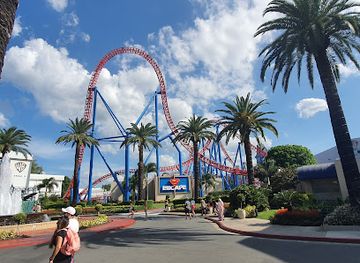
Warner Bros. Movie World
Experience the thrill of cinema at Warner Bros. Movie World, the ultimate theme park adventure on the Gold Coast with rides, characters, and entertainment.
30 min drive · 10 km from city centre
-
Theme park
Sea World
Experience the thrill of rides and the wonders of marine life at Sea World, Queensland’s premier theme park for family fun and adventure.
30 min drive · 10 km from city centre
-
Theme park
Dreamworld
Discover Dreamworld, Australia’s largest theme park, offering thrilling rides, interactive animal experiences, and a vibrant water park for family fun.
35 min drive · 15 km from city centre
-
Wildlife park
Currumbin Wildlife Sanctuary
Explore Currumbin Wildlife Sanctuary: A captivating wildlife park in Queensland, showcasing Australia's unique animals and natural beauty.
41 min drive · 21 km from city centre


Explore Gold Coast on the map
Plan your Gold Coast trip on one map. See where the top attractions, landmarks, restaurants, bars and hotels are, find what's near where you're staying, and book hotels and experiences in a few clicks.
Neighbourhoods in Gold Coast
-

-

-

-


Swipe for more neighbourhoods
Best hotels in Gold Coast
Best restaurants in Gold Coast
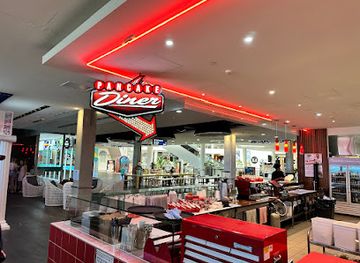
Gold Coast dining reflects Queensland’s coastal produce, multicultural population and strong café culture. Seafood is prominent, from prawns and oysters to locally sourced fish, while tropical fruit, macadamia nuts and seasonal vegetables appear in contemporary menus. Broadbeach and Burleigh Heads have dense concentrations of cafés, restaurants, bakeries and relaxed neighbourhood venues, whereas Southport’s Chinatown and surrounding precincts provide Chinese, Korean, Vietnamese and other Asian cuisines. The beachfront districts offer everything from casual takeaway to polished dining, though the most local-feeling meals are often found away from the main resort strip. Farmers’ markets and weekend food markets bring growers, bakers and small producers together, with offerings changing by location and season. Queensland’s sunny climate also supports outdoor dining, but visitors should check current venue arrangements and transport options when planning an evening meal.
-
Restaurant
Shiraz - Best Persian Restaurant + Bar
Discover Shiraz - A premier Persian restaurant in Surfers Paradise offering exquisite flavors and a vibrant atmosphere for all food lovers.
29 min drive · 9.5 km from city centre
-
Italian
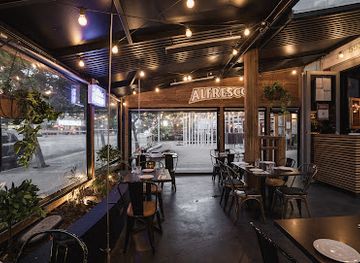
Alfresco Italian Restaurant
Experience authentic Italian flavors at Alfresco Italian Restaurant in Surfers Paradise – where exquisite dining meets vibrant ambiance.
28 min drive · 9.3 km from city centre
-
Restaurant
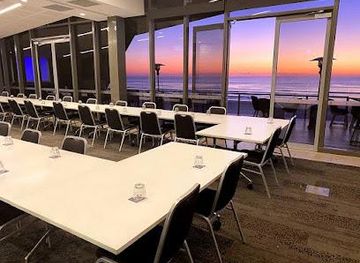
Kurrawa Surf Club
Beachfront dining with 230-degree ocean views supporting local surf lifesaving since 1958.
30 min drive · 10 km from city centre
-
Grill
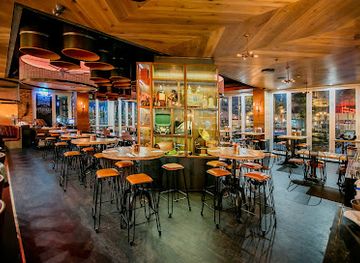
The Loose Moose
Experience authentic Canadian flavors at The Loose Moose – Broadbeach's premier grill and beer hall offering delicious steaks and local craft brews.
30 min drive · 10 km from city centre

Best bars in Gold Coast
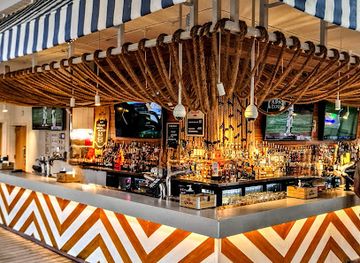
After dark, the Gold Coast divides into several distinct entertainment scenes. Surfers Paradise has the city’s most concentrated nightlife, with late-opening bars, dance venues and entertainment around Cavill Avenue and Orchid Avenue, while Broadbeach combines restaurants, cocktail bars, live music and casino entertainment in a more polished precinct. Burleigh Heads and nearby Miami are associated with smaller bars, breweries, live performances and a relaxed local crowd, although venues and trading patterns change over time. Southport offers evening dining and cultural programming around its central districts, while HOTA presents theatre, music, comedy, cinema and exhibitions alongside the nightlife economy. The city is not uniformly nocturnal: many beach and hinterland areas become quiet after dinner. Keep noise low in residential areas, use designated crossings and arrange a safe journey home after drinking.
-
Pub
Surfers Paradise Beergarden
Discover the vibrant atmosphere of Surfers Paradise Beergarden, where great food and drinks meet lively entertainment in the heart of Queensland’s beach culture.
28 min drive · 9.3 km from city centre
-
Bar
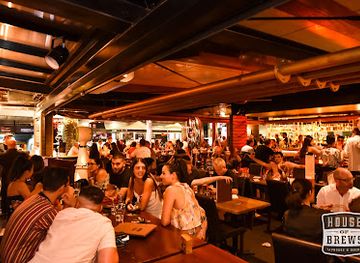
House of Brews
Discover the ultimate bar experience at House of Brews, featuring craft beers, delicious American cuisine, and live music in Surfers Paradise.
28 min drive · 9.4 km from city centre
-
Bar
Steampunk Surfers Paradise
Discover the enchanting Steampunk Surfers Paradise, where vibrant nightlife, live music, and unique dining converge in a whimsical atmosphere.
28 min drive · 9.2 km from city centre
-
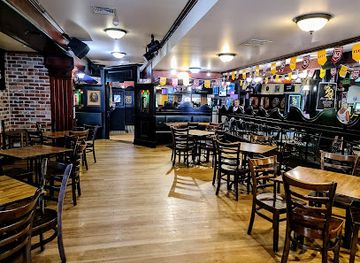
Irish pub
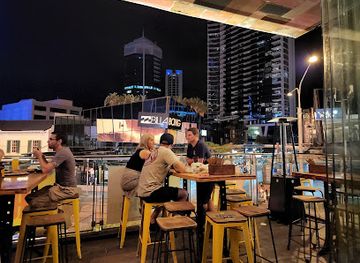
Waxy's Irish Pub and Skyline Roof Top Bar
Discover the charm of Ireland at Waxy's Irish Pub and Skyline Roof Top Bar in Surfers Paradise, where great food meets stunning views and vibrant nightlife.
28 min drive · 9.2 km from city centre
Best nightclubs in Gold Coast
After dark, the Gold Coast divides into several distinct entertainment scenes. Surfers Paradise has the city’s most concentrated nightlife, with late-opening bars, dance venues and entertainment around Cavill Avenue and Orchid Avenue, while Broadbeach combines restaurants, cocktail bars, live music and casino entertainment in a more polished precinct. Burleigh Heads and nearby Miami are associated with smaller bars, breweries, live performances and a relaxed local crowd, although venues and trading patterns change over time. Southport offers evening dining and cultural programming around its central districts, while HOTA presents theatre, music, comedy, cinema and exhibitions alongside the nightlife economy. The city is not uniformly nocturnal: many beach and hinterland areas become quiet after dinner. Keep noise low in residential areas, use designated crossings and arrange a safe journey home after drinking.
-
Night club
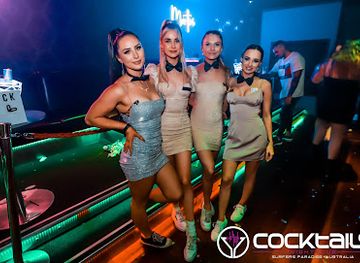
Cocktails Nightclub
Discover Cocktails Nightclub in Surfers Paradise - your go-to spot for nightlife excitement, extraordinary cocktails, and an unforgettable party atmosphere.
28 min drive · 9.4 km from city centre
-
Disco club
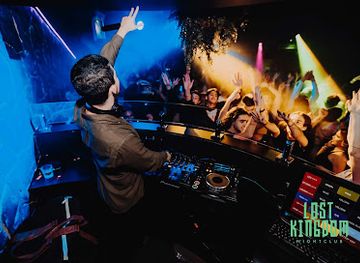
Lost Kingdom Nightclub
Immerse yourself in the electrifying nightlife at Lost Kingdom Nightclub, where unforgettable dance experiences and exquisite cocktails await in Surfers Paradise.
28 min drive · 9.4 km from city centre
-
Night club
elsewhere
Discover Elsewhere, the premier night club in Surfers Paradise, where live music and vibrant nightlife come together for an unforgettable experience.
28 min drive · 9.3 km from city centre
-
Night club
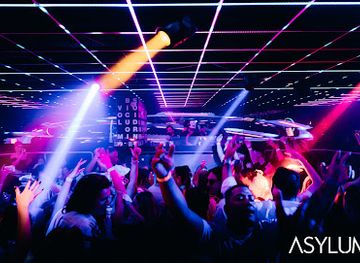
Asylum Nightclub
Asylum Nightclub in Surfers Paradise: The ultimate destination for vibrant nightlife, electrifying music, and unforgettable dance experiences.
28 min drive · 9.4 km from city centre
Best shops in Gold Coast
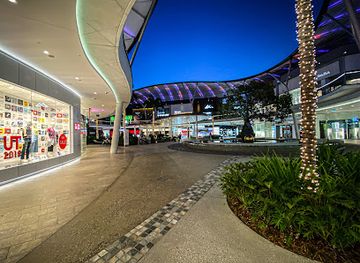
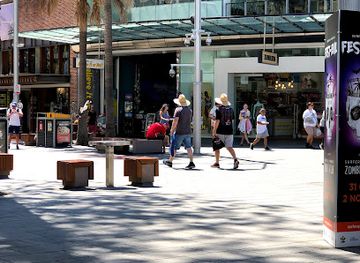
Shopping on the Gold Coast ranges from resort-oriented boutiques to large suburban centres and independent coastal retailers. Cavill Avenue and the surrounding Surfers Paradise streets cater to beachwear, souvenirs and casual fashion, while Pacific Fair in Broadbeach is one of the region’s major indoor shopping complexes. Harbour Town on the northern coast is known for outlet-style retail, although its location requires a separate journey from the central beachfront. Burleigh Heads, James Street in Burleigh Waters and the neighbouring coastal suburbs provide smaller boutiques, homewares, surf shops and design-led businesses, with stock and trading patterns varying between stores. Markets add a more local dimension, including weekend stalls selling prepared food, art, clothing, plants and handmade goods. Australian-made skincare, Aboriginal art bought through reputable galleries, macadamia products and Queensland foodstuffs can be meaningful purchases when provenance and cultural permissions are clear.
-
Shopping mall
Pacific Fair Shopping Centre
Discover a shopping paradise at Pacific Fair, where luxury boutiques meet popular chain stores and delightful dining for a perfect day out in Queensland.
30 min drive · 10 km from city centre
-
Shopping mall
Harbour Town Premium Outlets
Explore Harbour Town Premium Outlets in Queensland for unbeatable deals and a vibrant shopping experience amidst stunning coastal beauty.
27 min drive · 9.2 km from city centre
-
Shopping mall
Paradise Centre
Explore Paradise Centre in Surfers Paradise for a vibrant shopping and dining experience in the heart of the Gold Coast.
28 min drive · 9.4 km from city centre
-
Shopping mall
The Strand at Coolangatta
Experience the ultimate shopping and dining destination at The Strand at Coolangatta, where ocean views and vibrant atmosphere await.
47 min drive · 27 km from city centre

Get your free copy of our complete guide to Gold Coast, delivered straight to you.
Everything on this page, from attractions and restaurants to essentials and local phrases, in one PDF you can read offline, print or share.
Already have an account? Sign in
Your Gold Coast guide is ready.
We'll send it to · Not you? Sign out

Getting your guide ready…
We are putting together a fresh copy of the Gold Coast guide. This can take up to a minute.
This can take a few moments. If your browser asks, choose Allow so the download can start. You'll find the guide in your Downloads folder.
Nothing happened? Download it again
Sorry, the guide is taking longer than usual. Please try again in a minute, or get it by email instead.
Gold Coast essentials
Currency and Payment
Safety
Emergency Situations
Do's and Don'ts
Local Tips
From Eve
Local phrases worth knowing
You don't need to get them perfect. A few words go a long way, and locals appreciate the effort.
Basics
| English | Local | Say it |
|---|---|---|
| Hello | G'day | [G'day] |
| Goodbye | See ya | [See ya] |
| Yes | Yeah | [Yeah] |
| No | Nah | [Nah] |
| Please/You're welcome | Please/Ta | [Please/Ta] |
| Thank you | Cheers | [Cheers] |
| Excuse me/Sorry | Sorry | [Sorry] |
| How are you? | How ya goin'? | [How ya goin'?] |
| Fine. And you? | Not bad. You? | [Not bad. You?] |
| Do you speak English? | Ya speak English? | [Ya speak English?] |
| I don't understand | No idea mate | [No idea mate] |
Eating & Drinking
| English | Local | Say it |
|---|---|---|
| I'd like to see the menu, please | Can I check the menu, mate? | [Can I check the menu, mate?] |
| I don't eat meat | I'm vege, mate | [I'm vege, mate] |
| Cheers! | Cheers! | [Cheers!] |
| I would like to pay, please | Can I settle the bill, please? | [Can I settle the bill, please?] |
Emergencies
| English | Local | Say it |
|---|---|---|
| Help! | Help! | [Help!] |
| Go away! | Bugger off! | [Bugger off!] |
| Call the Police! | Ring the cops! | [Ring the cops!] |
| Call a doctor! | Get a doc! | [Get a doc!] |
| I'm lost | I'm lost, mate | [I'm lost, mate] |
| I'm ill | I'm crook | [I'm crook] |
Shopping
| English | Local | Say it |
|---|---|---|
| I'd like to buy... | I wanna grab... | [I wanna grab...] |
| I'm just looking | Just browsing, mate | [Just browsing, mate] |
| How much is it? | How much, mate? | [How much, mate?] |
| That's too expensive | That's a rip-off | [That's a rip-off] |
| Can you lower the price? | Can you do it cheaper? | [Can you do it cheaper?] |
Time & Numbers
| English | Local | Say it |
|---|---|---|
| What time is it? | What's the time? | [What's the time?] |
| It's one o'clock | It's one | [It's one] |
| Half past (10) | Half ten | [Half ten] |
| Morning | Mornin' | [Mornin'] |
| Afternoon | Arvo | [Arvo] |
| Evening | Evenin' | [Evenin'] |
| Yesterday | Yesty | [Yesty] |
| Today | Today | [Today] |
| Tomorrow | Tomorra | [Tomorra] |
| 1 | One | [One] |
| 2 | Two | [Two] |
| 3 | Three | [Three] |
| 4 | Four | [Four] |
| 5 | Five | [Five] |
| 6 | Six | [Six] |
| 7 | Seven | [Seven] |
| 8 | Eight | [Eight] |
| 9 | Nine | [Nine] |
| 10 | Ten | [Ten] |
Transport & Directions
| English | Local | Say it |
|---|---|---|
| Where's a/the...? | Where's the...? | [Where's the...?] |
| What's the address? | What's the addy? | [What's the addy?] |
| Can you show me (on the map)? | Can ya show me (on the map)? | [Can ya show me (on the map)?] |
| When's the next (bus)? | When's the next (bus)? | [When's the next (bus)?] |
| A ticket (to ....) | A ticket (to ....) | [A ticket (to ....)] |
History of Gold Coast
Yugambeh Country Before Colonisation
The Gold Coast lies largely within the traditional Country of the Yugambeh-speaking peoples, whose communities maintained deep cultural, spiritual and practical connections with the coast, rivers, wetlands, islands and hinterland. The region’s landscapes supported fishing, hunting, gathering and travel, while pathways connected coastal areas with the forests and uplands. Yugambeh languages and cultural traditions remain important to the identity of the region, despite the severe disruption caused by colonisation, dispossession and introduced disease. Contemporary Indigenous organisations, artists and cultural educators continue to strengthen the visibility of Yugambeh heritage across the Gold Coast, offering a fuller understanding of a place often presented primarily through its beaches and tourism development.
Surveyors, Timber and Early Settlement
European exploration and settlement expanded across south-eastern Queensland during the nineteenth century, bringing surveyors, pastoralists, timber workers and farmers into the coastal hinterland. Nerang developed as an inland settlement and transport point, while the coastal areas that later became prominent resorts remained comparatively dispersed. Timber from the hinterland, agricultural production and river transport contributed to the local economy. Southport was surveyed and established as a township in the 1870s, benefiting from its position on the Nerang River and its potential as a seaside retreat. These early settlements formed the administrative and commercial foundations for the much larger urban region that followed.
Southport as a Seaside Resort
Southport became the principal holiday resort on the coast during the late nineteenth and early twentieth centuries, attracting visitors from Brisbane by steamer, coach and later rail connections. Its waterfront, guesthouses and civic buildings helped establish a pattern of seasonal leisure that would shape the region’s future. Railways reached Southport in 1889, improving access and encouraging permanent settlement as well as tourism. Other coastal communities, including Coolangatta and Burleigh Heads, developed their own local identities, supported by transport links, agriculture, fishing and bathing culture. The district remained a collection of separate townships rather than a single city, but the foundations of a connected coastal urban area were taking shape.
Surfers Paradise and the Tourist Boom
The area now known as Surfers Paradise emerged from earlier development at Elston, a name used until the mid-twentieth century. Hotels, amusement facilities and improved roads helped turn the beachfront into a major holiday destination, particularly after the Second World War. High-rise construction accelerated from the 1950s, transforming the skyline and creating the vertical resort character associated with the modern Gold Coast. The name Gold Coast gained wider currency during this period, reflecting the region’s beaches, property expansion and increasingly sophisticated tourism economy. Canal estates, shopping centres, theme parks and new accommodation broadened the city’s appeal beyond traditional seaside holidays.
City Formation and Metropolitan Growth
A series of local-government amalgamations brought the separate coastal and hinterland communities into a more unified administration. The City of Gold Coast was formed in 1995 through the amalgamation of the City of Gold Coast, Albert Shire and parts of surrounding local-government areas. Rapid population growth continued through the late twentieth and early twenty-first centuries, driven by tourism, construction, migration and the expansion of services. Southport developed as the city’s central business and civic district, while Broadbeach, Robina and other centres gained major commercial and educational roles. The resulting municipality is geographically extensive, incorporating dense coastal suburbs, waterways, rural edges and protected hinterland.
Contemporary Gold Coast
The Gold Coast entered a new phase of international visibility in the twenty-first century, with expanded transport, cultural infrastructure and large-scale urban renewal supporting its position as a major Australian visitor destination. The city hosted the 2018 Commonwealth Games, an event that accelerated investment in sporting venues, roads and public spaces. Today its identity extends beyond resort tourism: film and television production, education, creative industries, professional sport and environmental conservation are significant parts of local life. The contrast between heavily developed beachfront districts and protected rainforest hinterland remains central to the city’s character, while recognition of Yugambeh Country continues to inform cultural interpretation and regional identity.
Gold Coast in Photos
Browse through our photo collection highlighting the charm and character of the destination.
Cities near Gold Coast
The closest cities to Gold Coast, if you have time for more than one stop.
-

-

-

-

-


Swipe for more cities

