

Krimml Waterfalls Travel Guide - Free Web & App
Your ultimate guide to Krimml Waterfalls. Discover top landmarks, proposed trips, and local tips. Free on the web or via the Evendo companion app.


Krimml Waterfalls in Austria: explore a 380-metre alpine cascade, Hohe Tauern trails, mountain scenery, village hospitality and glacier-fed landscapes.
The Waterfall and Its Setting
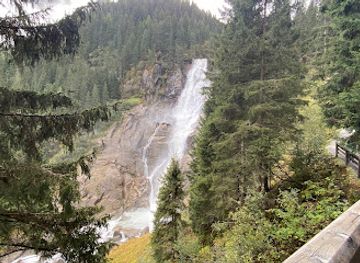
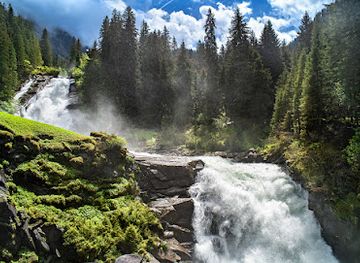
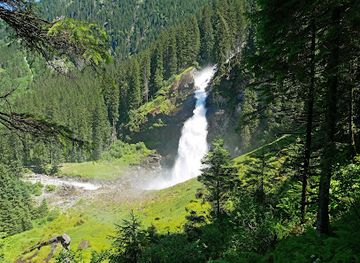
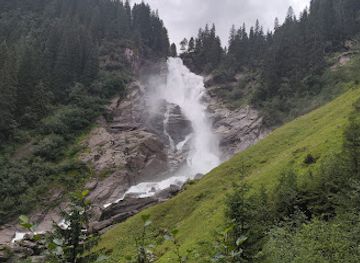
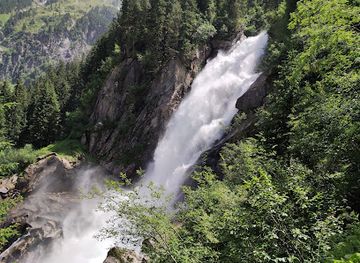
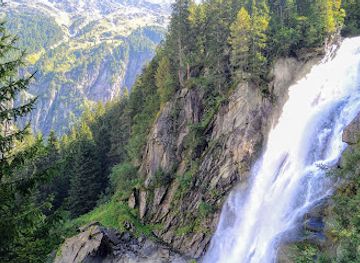
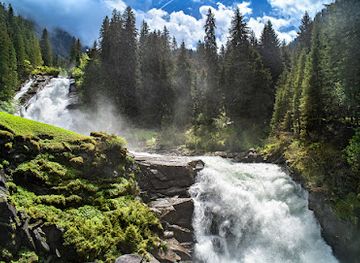
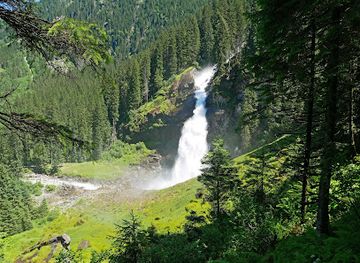
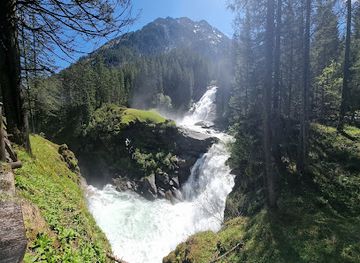
Krimml Waterfalls descend in three immense stages from the upper Krimmler Ache valley, dropping a total of 380 metres on the northern edge of the Hohe Tauern National Park in Salzburg province. The torrent begins in the high glacial landscape around the Krimmlerkees and gathers force before plunging through forested slopes towards the village of Krimml. Spray, changing light and the constant thunder of falling water give the lower valley a powerful atmosphere, while viewing paths climb through woodland to a succession of platforms above the valley floor.Read more about Krimml Waterfalls
Alpine Landscapes and Local Character
Visiting Krimml
When is the best time to visit Krimml Waterfalls?
Best: June–August · 17–18°C| Month | High (°C) | Rainfall (mm) |
|---|---|---|
| January | 0 | 45 |
| February | 1 | 41 |
| March | 3 | 43 |
| April | 7 | 58 |
| May | 13 | 79 |
| June (best) | 17 | 100 |
| July (best) | 18 | 110 |
| August (best) | 17 | 105 |
| September | 15 | 86 |
| October | 11 | 67 |
| November | 5 | 48 |
| December | 2 | 44 |
Getting to and around Krimml Waterfalls
How to get there
Transportation
Best attractions in Krimml Waterfalls
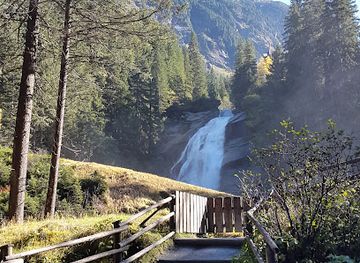
The principal attraction is the Krimml Waterfalls, where the Krimmler Ache descends through three stages and can be viewed from a series of established paths and platforms rising above the valley. The lower falls provide the strongest sense of scale, while higher viewpoints reveal the relationship between the cascade, forested slopes and the upper alpine basin. Krimml village forms the natural starting point, with the surrounding Hohe Tauern landscape extending into mountain pastures, glacial valleys and high peaks. The Krimmler Ache valley is particularly significant for understanding the waterfall’s seasonal character, as flow responds to snowmelt, rainfall and glacier conditions. Visitors interested in the broader region can use Krimml as a gateway to the Hohe Tauern National Park and to routes associated with the Krimmler Tauern, although many attractions lie beyond the immediate waterfall area and require separate transport or longer mountain excursions.
-
Scenic spot
Oberer Achenfall
Discover the awe-inspiring Oberer Achenfall in Krimml, a breathtaking waterfall surrounded by lush landscapes and stunning mountain views.
-
Tourist attraction
Mittlerer Achenfall
Immerse yourself in the stunning beauty of Mittlerer Achenfall, Austria's highest waterfall, offering breathtaking views and serene nature experiences.
-
Hiking area
Wasserfallweg
Explore the breathtaking Wasserfallweg, a stunning hiking area featuring Austria's highest waterfalls and captivating natural beauty.
-
Observation deck
Staubige Reib 1330m
Discover the stunning views of Krimml Waterfalls from Staubige Reib, an essential stop for every nature lover in Austria.
Best landmarks in Krimml Waterfalls
The 380-metre Krimml Waterfalls are the defining natural landmark, distinguished by their three-stage descent from the upper Krimmler Ache valley towards Krimml. Their significance lies in the meeting of glacial water, steep Alpine relief and a publicly accessible sequence of viewpoints. The Krimmler Ache itself is an important geographical feature, linking the high mountain catchment with the lower Salzach region. Around the village, the enclosing Hohe Tauern peaks, forested slopes and traditional pasture landscapes provide the wider setting rather than a collection of urban monuments. The Krimmler Tauern is also a significant historical landscape feature, representing an old high-level crossing of the main Alps towards South Tyrol. Together, these landmarks express the area’s identity as a place shaped by water, glaciation, mountain travel and long-established rural use.
-
Souvenir store
Almkiosk 2.Krimmler Wasserfall
Explore Almkiosk near Krimmler Wasserfälle for unique souvenirs and local delicacies in the heart of Austria's stunning natural beauty.
-
Scenic spot
Oberer Achenfall
Discover the breathtaking Oberer Achenfall in Krimml, Austria, a scenic waterfall surrounded by stunning nature and perfect for adventure seekers and nature lovers.
-
Tourist attraction
Mittlerer Achenfall
Explore the stunning Mittlerer Achenfall, Austria's highest waterfall, where nature's beauty meets adventure in the heart of the Alps.
-
Hiking area
Wasserfallweg
Explore the enchanting trails of Wasserfallweg, where stunning waterfalls and lush landscapes await every hiker in Krimmler Wasserfälle.
Explore Krimml Waterfalls on the map
Plan your trip on one map. See where the top attractions, landmarks, restaurants and hotels are, and book hotels and experiences in a few clicks.
Best hotels in Krimml Waterfalls
Best restaurants in Krimml Waterfalls
Dining around Krimml centres on village restaurants, traditional inns, cafés and accommodation businesses rather than a large independent restaurant scene. Menus in the Salzburg and Pinzgau region commonly draw on Alpine cooking, with dishes such as dumplings, soups, cheese-based specialities, pastries and meat prepared in styles associated with Austrian rural cuisine. Local dairy products, bread, mountain herbs and seasonal produce reflect the surrounding farming landscape, while Salzburg traditions may appear alongside broader Austrian favourites. Visitors walking in the mountains should not assume that food is available along every route, so provisions may be useful for longer excursions. Krimml provides the most convenient dining base beside the waterfalls; additional choice is available in larger Pinzgau settlements, but restaurants and cafés outside the village are dispersed and their opening patterns vary by season.
-
Restaurant
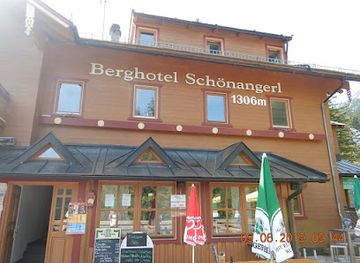
Gasthof Schönangerl
Experience authentic Austrian hospitality at Gasthof Schönangerl - your cozy retreat near Krimml Waterfalls and Hohe Tauern National Park.
-
Restaurant
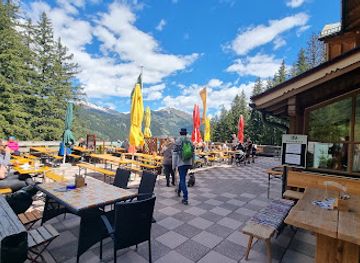
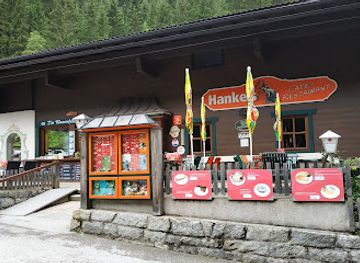
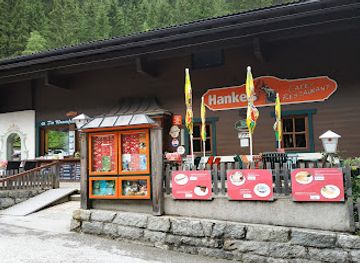
Hanke's Cafe Restaurant Souvernir Krimmler Wasserfallwirt
Experience delightful dining and unique souvenirs at Hanke's Cafe Restaurant near Krimmler Wasserfall, where nature meets local flavor.
Best bars in Krimml Waterfalls
Krimml is a quiet mountain village rather than a nightlife destination, and evening entertainment is centred on traditional inns, hotel restaurants and relaxed local hospitality. Visitors are more likely to find a drink after a day outdoors, conversation and views of the valley than a dedicated club scene or late-night entertainment district. Seasonal events and village celebrations may add a social dimension, but programmes vary and should not be assumed to be running. Larger Pinzgau towns offer a broader selection of pubs and evening venues, although they remain some distance from the waterfall and are best treated as separate excursions rather than part of Krimml’s immediate night-time offer. Mountain accommodation may provide the most convenient evening base, particularly for walkers planning an early start.
-
Restaurant
Gasthof Schönangerl
Experience traditional Austrian hospitality at Gasthof Schönangerl, blending cozy lodging with exquisite local cuisine in stunning Krimml.
-
Restaurant
Hanke's Cafe Restaurant Souvernir Krimmler Wasserfallwirt
Experience the essence of Austrian cuisine at Hanke's Cafe Restaurant, the perfect stop near Krimml Waterfalls.
Best shops in Krimml Waterfalls
Shopping in Krimml is limited and practical, with visitor-oriented purchases, everyday supplies and regional products concentrated around the village and accommodation businesses. Travellers may find Austrian food specialities, mountain-themed goods, local craft items and outdoor essentials, while farm shops and small producers in the wider Pinzgau region can offer dairy products, preserves, bread, spirits or other items linked to local agriculture when open to visitors. The area is not known for an extensive shopping district, and specialist equipment or a wider range of shops is more likely to be found in larger valley towns such as Zell am See or Mittersill. Buying locally produced food and crafts can support rural businesses, but product availability varies with season and individual opening arrangements.
-
Souvenir store
Almkiosk 2.Krimmler Wasserfall
Explore Almkiosk, your go-to souvenir store near Krimmler Wasserfälle, offering local crafts and delicious treats amidst stunning natural beauty.
-
Restaurant
Hanke's Cafe Restaurant Souvernir Krimmler Wasserfallwirt
Discover culinary delights and unique souvenirs at Hanke's Cafe Restaurant, your perfect stop near the stunning Krimml Waterfalls.
-
Souvenir store
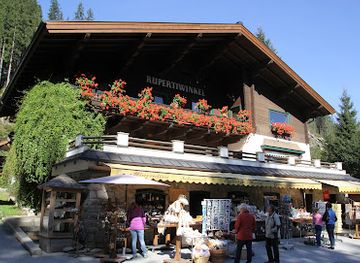
Souvenir Egarter - Hesse, Rupertiwinkel
Explore unique souvenirs and local crafts at Souvenir Egarter in the heart of Hesse, Rupertiwinkel, perfect for capturing your travel memories.
-
 Souvenir store
Souvenirmünzautomat
Discover unique souvenirs at Souvenirmünzautomat in Oberkrimml, where tradition meets modern convenience in an unforgettable shopping experience.
Get your free copy of our complete guide to Krimml Waterfalls, delivered straight to you.
Everything on this page, from attractions and restaurants to essentials and local phrases, in one PDF you can read offline, print or share.
Already have an account? Sign in
Your Krimml Waterfalls guide is ready.
We'll send it to · Not you? Sign out

Getting your guide ready…
We are putting together a fresh copy of the Krimml Waterfalls guide. This can take up to a minute.
This can take a few moments. If your browser asks, choose Allow so the download can start. You'll find the guide in your Downloads folder.
Nothing happened? Download it again
Sorry, the guide is taking longer than usual. Please try again in a minute, or get it by email instead.
Krimml Waterfalls essentials
Currency and Payment
Safety
Emergency Situations
Do's and Don'ts
Local Tips
From Eve
Local phrases worth knowing
You don't need to get them perfect. A few words go a long way, and locals appreciate the effort.
Basics
| English | Local | Say it |
|---|---|---|
| Hello | Servus | [Ser-voos] |
| Goodbye | Auf Wiedersehen | [Owf Vee-der-zayn] |
| Yes | Ja | [Ya] |
| No | Nein | [Nine] |
| Please/You're welcome | Bitte | [Bit-te] |
| Thank you | Danke | [Dahn-ke] |
| Excuse me/Sorry | Entschuldigung | [Ent-shool-dee-gung] |
| How are you? | Wie geht es dir? | [Vee gate ess deer?] |
| Fine. And you? | Gut. Und dir? | [Goot. Oond deer?] |
| Do you speak English? | Sprechen Sie Englisch? | [Sprekh-en Zee Eng-leesh?] |
| I don't understand | Ich verstehe nicht | [Ikh fer-shtay-eh nikt] |
Eating & Drinking
| English | Local | Say it |
|---|---|---|
| I'd like to see the menu, please | Ich hätte gerne die Speisekarte, bitte | [Ikh hat-eh gern-eh dee Spay-ze-kart-eh, bit-te] |
| I don't eat meat | Ich esse kein Fleisch | [Ikh ess-eh kine Fly-sh] |
| Cheers! | Prost! | [Prohst] |
| I would like to pay, please | Ich möchte bitte bezahlen | [Ikh merkh-te bit-te bez-ahl-en] |
Emergencies
| English | Local | Say it |
|---|---|---|
| Help! | Hilfe! | [Hill-fuh] |
| Go away! | Geh weg! | [Gay vehg] |
| Call the Police! | Rufen Sie die Polizei! | [Roo-fen Zee dee Po-lee-tsy] |
| Call a doctor! | Rufen Sie einen Arzt! | [Roo-fen Zee i-nen Ahrts] |
| I'm lost | Ich habe mich verlaufen | [Ikh ha-buh mikh fer-lou-fen] |
| I'm ill | Ich bin krank | [Ikh bin krunk] |
Shopping
| English | Local | Say it |
|---|---|---|
| I'd like to buy... | Ich möchte kaufen... | [Ikh merkh-te kow-fen...] |
| I'm just looking | Ich schaue nur | [Ikh shou-eh noor] |
| How much is it? | Wie viel kostet das? | [Vee feel kost-et dass] |
| That's too expensive | Das ist zu teuer | [Dass ist tso toy-er] |
| Can you lower the price? | Können Sie den Preis senken? | [Kern-en Zee den price zank-en] |
Time & Numbers
| English | Local | Say it |
|---|---|---|
| What time is it? | Wie spät ist es? | [Vee shpayt ist ess] |
| It's one o'clock | Es ist ein Uhr | [Ess ist iyn oor] |
| Half past (10) | Halb elf | [Halb elf] |
| Morning | Morgen | [Morg-en] |
| Afternoon | Nachmittag | [Nah-mit-tahg] |
| Evening | Abend | [Ah-bent] |
| Yesterday | Gestern | [Ges-tern] |
| Today | Heute | [Hoy-tuh] |
| Tomorrow | Morgen | [Morg-en] |
| 1 | Eins | [Ey-ns] |
| 2 | Zwei | [Tzvey] |
| 3 | Drei | [Drey] |
| 4 | Vier | [Feer] |
| 5 | Fünf | [Fuhnf] |
| 6 | Sechs | [Zeks] |
| 7 | Sieben | [Zee-ben] |
| 8 | Acht | [Akht] |
| 9 | Neun | [Noy-n] |
| 10 | Zehn | [Tzayn] |
Transport & Directions
| English | Local | Say it |
|---|---|---|
| Where's a/the...? | Wo ist ein/der...? | [Vo ist iyn/dehr...] |
| What's the address? | Was ist die Adresse? | [Vas ist dee Ah-dress-eh] |
| Can you show me (on the map)? | Können Sie mir das zeigen (auf der Karte)? | [Kern-en Zee meer dass tsee-gen (ouf dehr kart-eh)] |
| When's the next (bus)? | Wann kommt der nächste (Bus)? | [Vahn kommt dehr nek-steh (Boos)] |
| A ticket (to ....) | Eine Fahrkarte (nach ...) | [I-nuh Fahr-kart-eh (nahkh ...)] |
History of Krimml Waterfalls
Glacial Origins of the Valley
The Krimml Waterfalls are products of the glacial shaping of the Hohe Tauern. During successive ice ages, moving ice excavated and deepened alpine valleys, leaving the upper Krimmler Ache in a steeply stepped relationship with the lower valley. The present waterfall is fed by meltwater and precipitation from the high mountain catchment, including the Krimmlerkees. Its form is therefore part of a continuing natural process in which seasonal discharge, frost and erosion influence the channels and surrounding rock, rather than a monument created at a single historical moment.
The Krimmler Tauern Route
Krimml lies near an old trans-Alpine passage towards South Tyrol, the Krimmler Tauern, which crosses the main Alpine chain at high elevation. For centuries, local communities used mountain routes for travel, trade and seasonal movement, although these paths were demanding and weather-dependent. The waterfalls formed part of the wider landscape known to travellers moving through the upper Salzach region rather than an isolated attraction. Farming, livestock grazing and the use of high pastures also shaped the cultural landscape around the village and its surrounding valleys.
The Rise of Waterfall Tourism
Interest in the falls grew as Alpine travel expanded during the eighteenth and nineteenth centuries. Improved roads, mountain exploration and the development of viewing paths made the cascade more accessible to visitors who previously encountered it only as part of a difficult journey through the valley. The waterfall became associated with the emerging tourism of the Salzburg Alps, while Krimml developed services for travellers, walkers and mountaineers. The route’s viewpoints turned a powerful but remote natural phenomenon into a recognised destination without removing it from its mountain setting.
Research, Protection and the National Park
The falls have also attracted scientific and medical interest, particularly because of the fine aerosol produced by falling water; research has examined its potential relevance to respiratory health, though visitors should not treat the spray as medical therapy. In the modern era, conservation has become central to the area’s identity. Krimml lies beside the Hohe Tauern National Park, established in stages from the 1980s and now one of the Alpine region’s major protected landscapes. Management seeks to balance tourism, local livelihoods, access and the protection of mountain habitats and natural processes.
Krimml Waterfalls in Photos
Browse through our photo collection highlighting the charm and character of the destination.
Neighbouring destination travel guides
The closest destinations to Krimml Waterfalls, if you have time for more than one.
-

-

-

-

-


Swipe for more destinations
Explore more

Explore more of Kitzbühel Alps
Discover the Kitzbühel Alps: A year-round alpine paradise offering world-class skiing, hiking, and cultural experiences in Austria's scenic Tyrol region.
Explore Kitzbühel Alps
Explore more of Austria
Discover Austria's blend of alpine landscapes, rich cultural heritage, and culinary delights, from Vienna's historic charm to Tyrol's dramatic beauty.
Explore Austria