

Free Kranjska Gora Travel Guide & Mobile App
Plan your Kranjska Gora trip with Evendo. Get free guides to top attractions, restaurants, hotels, and bars. Web access or download the mobile app.


Kranjska Gora, Slovenia's Alpine village for mountain scenery, hiking, skiing and Julian Alps adventures, lakes and local heritage, all year
Mountain Setting and Village Life
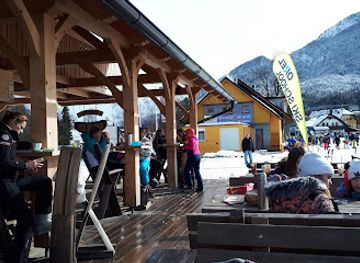
Kranjska Gora lies in Slovenia’s far north-west, close to the borders with Austria and Italy, where the Upper Sava Valley opens beneath the peaks of the Julian Alps and Karawanks. The settlement combines the facilities of a compact mountain resort with the visual character of an Alpine village: traditional farmhouses, flower-filled balconies and wooded slopes frame a centre shaped by tourism, outdoor recreation and local life. In winter, skiing and snow sports define the landscape; in warmer months, walking, cycling and climbing take visitors towards high valleys, forests and limestone summits.Read more about Kranjska Gora
Water, Forest and High Mountain Routes
Heritage in the Upper Sava Valley
When is the best time to visit Kranjska Gora?
Best: June–August · 19–22°C| Month | High (°C) | Rainfall (mm) |
|---|---|---|
| January | 3 | 81 |
| February | 4 | 70 |
| March | 6 | 65 |
| April | 11 | 56 |
| May | 16 | 65 |
| June (best) | 19 | 75 |
| July (best) | 22 | 75 |
| August (best) | 21 | 75 |
| September | 17 | 75 |
| October | 12 | 70 |
| November | 7 | 81 |
| December | 3 | 81 |
Getting to and around Kranjska Gora
How to get there
Transportation
Best attractions in Kranjska Gora
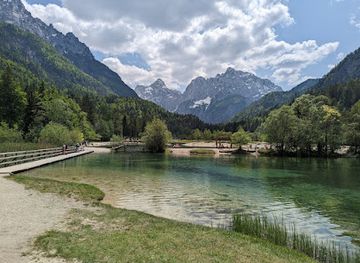
Kranjska Gora’s principal attractions are closely tied to its Alpine setting. Lake Jasna, just south of the centre, provides an accessible foreground to the Julian Alps, with walking paths and viewpoints around its clear water. At Zelenci, boardwalks lead through a protected wetland to the springs of the Sava Dolinka, where shallow pools contrast with dark forest and limestone peaks. Planica, a broad valley reached north-west of the resort, is known for its ski-jumping hills and Nordic Centre, as well as its dramatic mountain amphitheatre. The road to Vršič Pass offers a succession of hairpin bends, high-mountain views and historical stops, including the Russian Chapel. In the settlement itself, Liznjek House presents the domestic architecture and rural life of the Upper Sava Valley, while nearby Podkoren retains a quieter village atmosphere and links the resort with pastoral and cycling landscapes.
-
Nature preserve
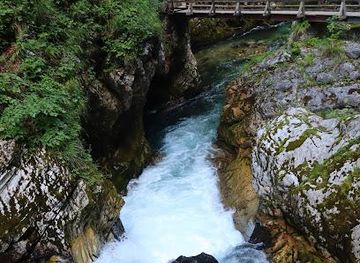
Soteska Vintgar
Experience the breathtaking beauty of Vintgar Gorge, Slovenia's natural wonder with stunning waterfalls and scenic paths.
45 min drive · 25 km from city centre
-
Sports complex
Planica Nordic Centre
Experience the breathtaking beauty and thrilling winter sports at Planica Nordic Centre, your ultimate destination in Slovenia's Julian Alps.
14 min drive · 4.7 km from city centre
-
Nature preserve
Waterfall Peričnik
Discover the breathtaking Peričnik Waterfall in Slovenia's Julian Alps, where nature's beauty meets adventure in a stunning landscape.
27 min drive · 9.1 km from city centre
-
Ski resort
Vogel ski center
Experience the thrill of winter sports and breathtaking alpine views at Vogel Ski Center, a top destination in Bohinjsko Jezero, Slovenia.
42 min drive · 22 km from city centre


Best landmarks in Kranjska Gora
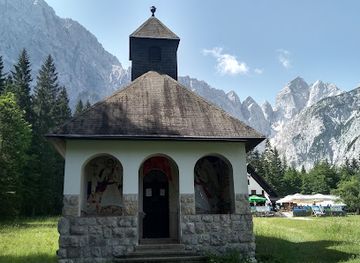
The Church of the Assumption of the Virgin Mary in Kranjska Gora is the settlement’s central historic landmark, with a medieval foundation and a later architectural appearance that reflects the region’s religious and village history. Liznjek House, a preserved nineteenth-century farmstead in the centre, illustrates the scale and construction of a prosperous Upper Sava Valley home and now serves as a local heritage museum. Beneath Vršič, the small Russian Chapel is both a religious structure and a First World War memorial, built by Russian prisoners of war in memory of those who died during road construction. The Vršič road itself is a landmark of military engineering, marked by sharp bends and high passes, while Planica’s ski-jumping hills represent the area’s modern sporting identity and its long association with Nordic competition.
-
Nature preserve
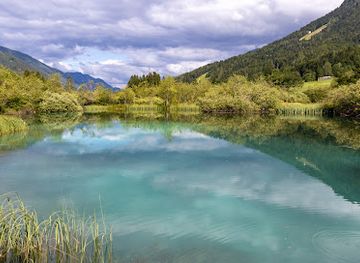
Zelenci Nature Reserve
Immerse yourself in the breathtaking beauty of Zelenci Nature Reserve, a vibrant wetland oasis in Kranjska Gora, Slovenia, perfect for nature lovers and adventurers.
15 min drive · 5.0 km from city centre
-
Inn
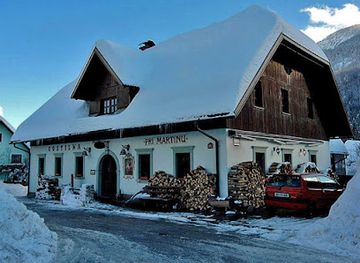
Pri Martinu
Experience the authentic charm of Slovenia at Pri Martinu, a cozy inn offering warm hospitality and stunning views in Kranjska Gora.
10 min drive · 3.3 km from city centre
-
Lodge
Mountain Home Tamar
Experience the serenity and adventure of Mountain Home Tamar, a cozy lodge nestled in the breathtaking Slovenian Alps, perfect for nature lovers.
15 min drive · 5.1 km from city centre
-
Lake
Lake Jasna
Discover the stunning beauty of Lake Jasna, a serene alpine lake in Kranjska Gora perfect for relaxation and outdoor adventure.
6 min drive · 2.0 km from city centre
Explore Kranjska Gora on the map
Plan your Kranjska Gora trip on one map. See where the top attractions, landmarks, restaurants, bars and hotels are, find what's near where you're staying, and book hotels and experiences in a few clicks.
Best hotels in Kranjska Gora
Best restaurants in Kranjska Gora
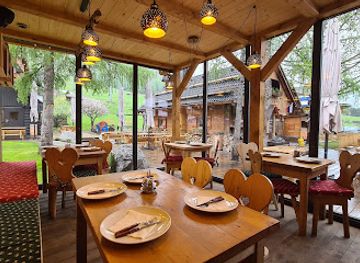
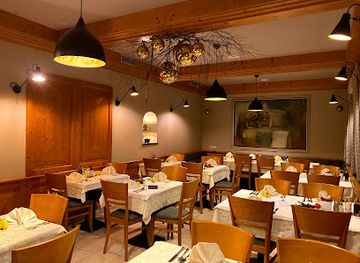
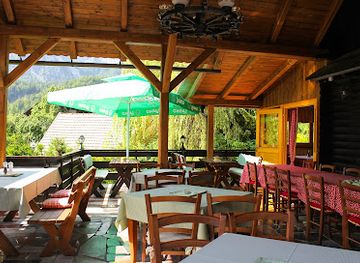
Dining in Kranjska Gora reflects the meeting of Slovenian Alpine cooking with influences from neighbouring Austria and Italy. Menus commonly feature hearty soups, stews, dumplings, buckwheat, potatoes, sausages and mountain cheeses, while štruklji, rolled or filled dumplings served in sweet or savoury forms, are a familiar Slovenian speciality. Trout and other freshwater dishes appear alongside game and seasonal forest ingredients, and local desserts often include apples, cream or pastry. Restaurants and cafés cluster around the resort centre, with additional choices in Podkoren and the surrounding villages; mountain huts provide simpler food on hiking routes rather than formal dining. Bakeries, cafés and casual pizzerias reflect the area’s cross-border Alpine character, while farm-based producers and regional food shops offer opportunities to sample cheeses, honey and other Slovenian products.
-
Grill
Okrepčevalnica Lačni Kekec
Discover Okrepčevalnica Lačni Kekec: A premier grill restaurant in Kranjska Gora offering authentic Slovenian cuisine amidst stunning alpine scenery.
9 min drive · 3.0 km from city centre
-
Restaurant
Restaurant, Pizzeria, Hotel Kotnik
Experience the best of Slovenian hospitality at Hotel Kotnik - where delicious food meets breathtaking mountain views.
9 min drive · 3.1 km from city centre
-
Restaurant
Gostilna in picerija Jožica
Experience authentic Slovenian flavors at Gostilna in Picerija Jožica - where every meal tells a story amidst stunning natural beauty.
15 min drive · 5.1 km from city centre
-
Restaurant
Hotel und Wirt Wallner
Discover authentic Austrian cuisine at Hotel und Wirt Wallner in Arnoldstein - where culinary tradition meets breathtaking scenery.
32 min drive · 12 km from city centre
Best bars in Kranjska Gora
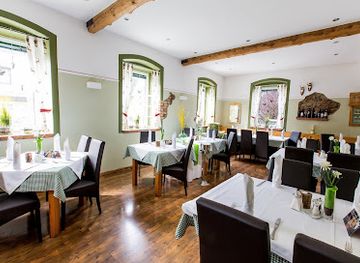
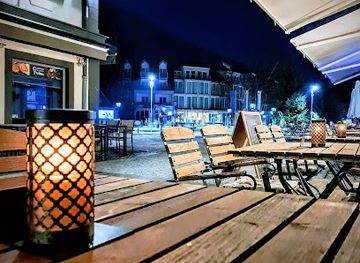
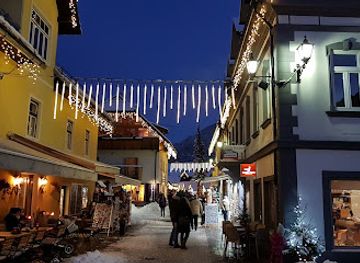
Kranjska Gora’s evening life is relaxed and seasonal rather than centred on a large club scene. Bars and cafés in the central resort area serve coffee, Slovenian wines, spirits and beer, with après-ski activity adding a livelier atmosphere during the winter season. Some hotel lounges and local venues host music or informal social events, while restaurants provide the main setting for longer evenings. After dark, the resort also suits quieter experiences: a walk through the illuminated village, an evening view towards the mountains or a cultural programme can be more characteristic than late-night entertainment. The surrounding villages are considerably quieter, and nightlife generally follows visitor numbers, weather and the ski calendar. Visitors should respect residential areas and avoid assuming that mountain establishments operate late outside peak periods.
-
Grill
Okrepčevalnica Lačni Kekec
Discover the flavors of Slovenia at Okrepčevalnica Lačni Kekec, a top grill restaurant in Kranjska Gora offering mouthwatering dishes and stunning mountain views.
9 min drive · 3.0 km from city centre
-
Restaurant
Restaurant, Pizzeria, Hotel Kotnik
Experience the best of food and hospitality at Hotel Kotnik in Kranjska Gora, where delicious cuisine meets the beauty of the Alps.
9 min drive · 3.1 km from city centre
-
Diner
Brunarica Kosobrin
Discover the flavors of Slovenia at Brunarica Kosobrin, a charming diner in Podkoren, known for its delightful soups and cozy atmosphere.
11 min drive · 3.7 km from city centre
-
Pizza
Gostilna & Pizzerija Bor
Discover delicious Italian cuisine at Gostilna & Pizzerija Bor in Kranjska Gora, where authentic flavors meet a cozy atmosphere.
10 min drive · 3.2 km from city centre
Best nightclubs in Kranjska Gora
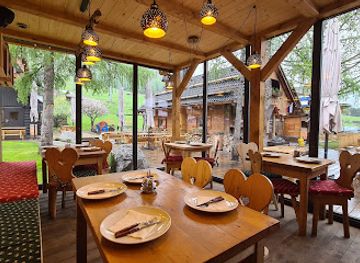
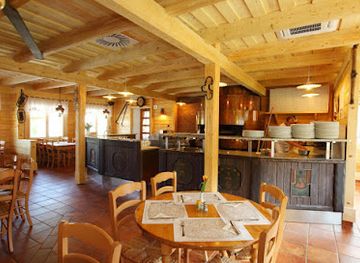
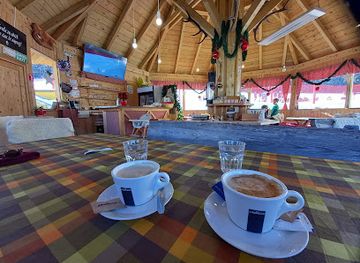
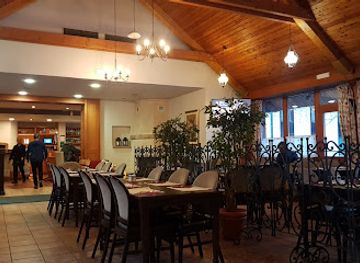
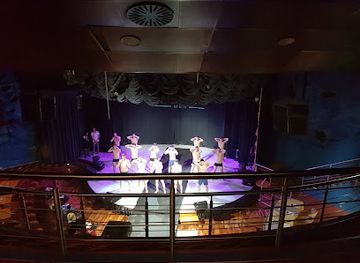
Kranjska Gora’s evening life is relaxed and seasonal rather than centred on a large club scene. Bars and cafés in the central resort area serve coffee, Slovenian wines, spirits and beer, with après-ski activity adding a livelier atmosphere during the winter season. Some hotel lounges and local venues host music or informal social events, while restaurants provide the main setting for longer evenings. After dark, the resort also suits quieter experiences: a walk through the illuminated village, an evening view towards the mountains or a cultural programme can be more characteristic than late-night entertainment. The surrounding villages are considerably quieter, and nightlife generally follows visitor numbers, weather and the ski calendar. Visitors should respect residential areas and avoid assuming that mountain establishments operate late outside peak periods.
-
Bar
Korona, Resort & Entertainment
Discover the perfect blend of relaxation and entertainment at Korona, the premier resort in Kranjska Gora, Slovenia.
9 min drive · 2.9 km from city centre
-
Pub
Vopa Pub
Experience the heart of Kranjska Gora at Vopa Pub, where great drinks meet local charm in a cozy alpine setting.
9 min drive · 3.1 km from city centre
-
Bar
Kasabrin Bar
Experience the perfect blend of cozy atmosphere and exquisite drinks at Kasabrin Bar in Kranjska Gora.
9 min drive · 3.1 km from city centre
-
Bar
Sporty bar
Experience the vibrant atmosphere of Sporty Bar in Kranjska Gora, where sports, drinks, and good company come together in a stunning alpine setting.
10 min drive · 3.2 km from city centre

Best shops in Kranjska Gora
Shopping in Kranjska Gora is concentrated around the central streets and is shaped more by mountain recreation and local production than by large-scale retail. Sports and outdoor shops supply clothing, equipment and practical items for skiing, hiking and cycling, while small boutiques and souvenir businesses offer postcards, woollens, wooden goods and Alpine-themed gifts. Slovenian food products make useful regional purchases, including honey, herbal preparations, cheeses, preserves and sweets, although visitors should distinguish local goods from broadly imported souvenirs. The surrounding villages have a quieter retail offer, with occasional farm shops and producers rather than extensive shopping streets. Markets and seasonal events may bring additional crafts and food to the resort, but their timing varies, so expectations are best kept focused on independent shops, outdoor gear and products associated with the Upper Sava Valley.
-
Supermarket
Mercator
Explore Mercator in Kranjska Gora for a unique shopping experience, featuring local delicacies and a wide variety of fresh produce.
9 min drive · 3.1 km from city centre
-
Gift shop
Kompas Shop Korensko Sedlo
Explore the charm of Kompas Shop Korensko Sedlo for unique Slovene gifts and souvenirs in Kranjska Gora, capturing the essence of your travels.
21 min drive · 7.1 km from city centre
-
Dessert shop
Confectionery Kala, B & B Kranjska Gora, Arif Čehajić SpA
Discover the sweet charm of Confectionery Kala in Kranjska Gora, where delightful desserts meet cozy café vibes, perfect for every traveler.
10 min drive · 3.4 km from city centre
-
Sporting goods store
Intersport Kranjska Gora
Explore Kranjska Gora with top-notch gear from Intersport Kranjska Gora, your one-stop shop for all outdoor adventures in Slovenia's stunning alpine paradise.
9 min drive · 3.1 km from city centre
Get your free copy of our complete guide to Kranjska Gora, delivered straight to you.
Everything on this page, from attractions and restaurants to essentials and local phrases, in one PDF you can read offline, print or share.
Already have an account? Sign in
Your Kranjska Gora guide is ready.
We'll send it to · Not you? Sign out

Getting your guide ready…
We are putting together a fresh copy of the Kranjska Gora guide. This can take up to a minute.
This can take a few moments. If your browser asks, choose Allow so the download can start. You'll find the guide in your Downloads folder.
Nothing happened? Download it again
Sorry, the guide is taking longer than usual. Please try again in a minute, or get it by email instead.
Kranjska Gora essentials
Currency and Payment
Safety
Emergency Situations
Do's and Don'ts
Local Tips
From Eve
Local phrases worth knowing
You don't need to get them perfect. A few words go a long way, and locals appreciate the effort.
Basics
| English | Local | Say it |
|---|---|---|
| Hello | Zdravo | [Zdrah-voh] |
| Goodbye | Nasvidenje | [Nahs-vee-deh-nyeh] |
| Yes | Da | [Dah] |
| No | Ne | [Neh] |
| Please/You're welcome | Prosim | [Proh-seem] |
| Thank you | Hvala | [Hvah-lah] |
| Excuse me/Sorry | Oprostite | [Oh-proh-stee-teh] |
| How are you? | Kako ste? | [Kah-koh steh] |
| Fine. And you? | V redu. In vi? | [V reh-doo. Een vee] |
| Do you speak English? | Govorite angleško? | [Goh-voh-ree-teh ahn-gleh-shkoh] |
| I don't understand | Ne razumem | [Neh rah-zoo-mehm] |
Eating & Drinking
| English | Local | Say it |
|---|---|---|
| I'd like to see the menu, please | Želel bi videti jedilnik, prosim | [Zheh-lehl bee vee-deh-tee yeh-deel-neek, proh-seem] |
| I don't eat meat | Ne jem mesa | [Neh yehm meh-sah] |
| Cheers! | Na zdravje! | [Nah zdrahv-yeh] |
| I would like to pay, please | Želim plačati, prosim | [Zheh-leem plah-chahtee, proh-seem] |
Emergencies
| English | Local | Say it |
|---|---|---|
| Help! | Pomoč! | [Poh-mohch] |
| Go away! | Pojdi stran! | [Poy-dee strahn] |
| Call the Police! | Pokličite policijo! | [Poh-klee-chee-teh poh-lee-tsee-yoh] |
| Call a doctor! | Pokličite zdravnika! | [Poh-klee-chee-teh zdrahv-nee-kah] |
| I'm lost | Izgubil sem se | [Eez-goo-beel sehm sehh] |
| I'm ill | Bolno mi je | [Bohl-noh mee yeh] |
Shopping
| English | Local | Say it |
|---|---|---|
| I'd like to buy... | Želim kupiti... | [Zheh-leem koo-pee-tee] |
| I'm just looking | Samo gledam | [Sah-moh gleh-dahm] |
| How much is it? | Koliko stane? | [Koh-lee-koh stah-neh] |
| That's too expensive | To je predrago | [Toh yeh preh-drah-goh] |
| Can you lower the price? | Lahko znižate ceno? | [Lah-koh znee-zah-teh tseh-noh] |
Time & Numbers
| English | Local | Say it |
|---|---|---|
| What time is it? | Koliko je ura? | [Koh-lee-koh yeh oo-rah] |
| It's one o'clock | Je ena ura | [Yeh eh-nah oo-rah] |
| Half past (10) | Pol desetih | [Pohl deh-seh-teeh] |
| Morning | Jutro | [Yoo-troh] |
| Afternoon | Popoldne | [Poh-pohl-dneh] |
| Evening | Večer | [Veh-chehr] |
| Yesterday | Včeraj | [Vcheh-rye] |
| Today | Danes | [Dah-nes] |
| Tomorrow | Jutri | [Yoo-tree] |
| 1 | Ena | [Eh-nah] |
| 2 | Dva | [Dvah] |
| 3 | Tri | [Tree] |
| 4 | Štiri | [Shtee-ree] |
| 5 | Pet | [Peh-t] |
| 6 | Šest | [Shehst] |
| 7 | Sedem | [Seh-dehm] |
| 8 | Osem | [Oh-sehm] |
| 9 | Devet | [Deh-veht] |
| 10 | Deset | [Deh-seht] |
Transport & Directions
| English | Local | Say it |
|---|---|---|
| Where's a/the...? | Kje je... | [Kyeh yeh] |
| What's the address? | Kateri je naslov? | [Kah-teh-ree yeh nahs-lohv] |
| Can you show me (on the map)? | Mi lahko pokažete (na zemljevidu)? | [Mee lah-koh poh-kah-zheh-teh (nah zehm-lyeh-vee-doo)] |
| When's the next (bus)? | Kdaj je naslednji (avtobus)? | [Kdyay yeh nah-slehd-nyee (ow-toh-boos)] |
| A ticket (to ....) | Vstopnica (za ....) | [Vstohp-nee-tsah (zah)] |
History of Kranjska Gora
Medieval Origins in the Upper Sava Valley
The settlement that became Kranjska Gora developed in the Upper Sava Valley, a strategically placed Alpine corridor between the lands of present-day Slovenia, Austria and Italy. It is recorded in medieval sources under the name Chrainow, while the wider region was connected with the historical land of Carniola. Farming, forestry and movement through the mountain passes shaped local life more strongly than urban commerce, and neighbouring villages grew around parish, agricultural and transport networks. The traditional Alpine houses preserved in the valley reflect this rural economy, with buildings designed for both family life and the storage of hay, tools and livestock. Kranjska Gora’s later identity as a resort was built upon this older landscape of village settlements and mountain pastures.
Carniola under the Habsburgs
For centuries, the Upper Sava Valley formed part of the Habsburg political world through the Duchy of Carniola and its successor administrative arrangements. Local communities remained predominantly rural, but the valley’s position gave roads and passes continuing strategic importance. Trade, seasonal work and the use of forests linked the settlements with larger Alpine markets, while parish churches and farmhouses provided the most visible institutions and architecture. The name Kranjska Gora, meaning ‘Carniolan mountain’, reflects the area’s connection with Carniola and its mountain geography. Although the settlement was never a major city, the political and cultural structures of the Habsburg period helped establish the cross-border character that remains evident in the region’s languages, routes and architectural traditions.
The Vršič Road and First World War
The First World War brought profound change to the high valleys above Kranjska Gora. The Austro-Hungarian army developed the road over the Vršič Pass as a military supply route to the Isonzo Front, using Russian prisoners of war for much of the arduous construction. The Russian Chapel, built in 1917 near the pass, commemorates prisoners who died in an avalanche and has become one of the area’s most solemn memorials. The road transformed access across the Julian Alps, although it was created under harsh wartime conditions rather than for leisure. Its hairpin bends, mountain engineering and memorial sites now form an important historical layer of the landscape.
From Borderland to Mountain Resort
After the collapse of Austria-Hungary in 1918, Kranjska Gora became part of the new Kingdom of Serbs, Croats and Slovenes, later Yugoslavia, and subsequently the Republic of Slovenia. Better roads and rail connections in the wider region encouraged tourism, while the valley’s scenery attracted mountaineers, walkers and winter visitors. Organised skiing expanded during the twentieth century, and nearby Planica became internationally known for ski jumping and Nordic sports. Hotels, guesthouses and recreational facilities gradually supplemented the older farming settlements. This transition did not erase the valley’s rural character, but it shifted the local economy towards hospitality, outdoor recreation and the seasonal rhythms of mountain tourism.
Modern Kranjska Gora and the Julian Alps
Since Slovenia’s independence in 1991, Kranjska Gora has developed as one of the country’s best-known Alpine destinations while retaining its role as a settlement in the Upper Sava Valley. Skiing, cycling, hiking and Nordic sports now share the local calendar with heritage visits and landscape-based tourism. The Planica Nordic Centre, renewed for contemporary sporting use, represents the area’s modern sporting identity, while Lake Jasna, Zelenci and the route to Vršič remain closely associated with its natural and historical appeal. Cross-border proximity to Austria and Italy continues to influence the region, and the destination’s current character depends on balancing visitor access with the protection of fragile Alpine habitats and mountain conditions.
Travel experiences inspired by this city
-
 9 Day Trip
Family Adventure in Bohinj: 9 Days by Lake and Triglav Trails
Eco-friendly family escape to Bohinj, Slovenia: Lake Bohinj swims, kid-ready alpine hikes, Savica Waterfall, and local flavors by Triglav National Park.
9 Day Trip
Family Adventure in Bohinj: 9 Days by Lake and Triglav Trails
Eco-friendly family escape to Bohinj, Slovenia: Lake Bohinj swims, kid-ready alpine hikes, Savica Waterfall, and local flavors by Triglav National Park.
 16 Aug 2026
By Ivan Zubčić -
 12 Day Trip
Eco-Family Adventure in Bohinj: Lake Days and Triglav Trails
Family-friendly, sustainable escape to Bohinj: Lake Bohinj swims, Triglav hikes, alpine culture, and relaxation at an eco hotel with a water park.
12 Day Trip
Eco-Family Adventure in Bohinj: Lake Days and Triglav Trails
Family-friendly, sustainable escape to Bohinj: Lake Bohinj swims, Triglav hikes, alpine culture, and relaxation at an eco hotel with a water park.
 10 Aug 2026
By Nuno Ferreira -
 9 Day Trip
Family Alpine Escape to Kranjska Gora: 9 Days in Slovenia's Julian Alps
Family-friendly alpine getaway in Kranjska Gora with Triglav National Park hikes, Lake Jasna swims, scenic cycling, and a cozy apartment base by the Julian Alps.
9 Day Trip
Family Alpine Escape to Kranjska Gora: 9 Days in Slovenia's Julian Alps
Family-friendly alpine getaway in Kranjska Gora with Triglav National Park hikes, Lake Jasna swims, scenic cycling, and a cozy apartment base by the Julian Alps.
 20 Jul 2026
By Matthew Brown -
 9 Day Trip
Eco Hiking Escape in Triglav National Park: 9 Days of Alpine Lakes and Mountain Huts
Join a sustainable 9-day journey through Slovenia's Triglav National Park with alpine lakes, wildflower hikes, and mountain huts, traveling by train from Berlin.
9 Day Trip
Eco Hiking Escape in Triglav National Park: 9 Days of Alpine Lakes and Mountain Huts
Join a sustainable 9-day journey through Slovenia's Triglav National Park with alpine lakes, wildflower hikes, and mountain huts, traveling by train from Berlin.
 15 Jul 2026
By Lucia Moreno -
 9 Day Trip
Family Adventure in Triglav National Park
Discover Slovenia's natural beauty with a family adventure in Triglav National Park, exploring trails, wildlife, and sustainable camping experiences.
9 Day Trip
Family Adventure in Triglav National Park
Discover Slovenia's natural beauty with a family adventure in Triglav National Park, exploring trails, wildlife, and sustainable camping experiences.
 5 Oct 2025
By Ivan Zubčić -
 8 Day Trip
Family Adventure in Triglav National Park
Explore Slovenia's Triglav National Park with your family for an unforgettable adventure in nature, enjoying hiking, wildlife, and camping under the stars.
10 May 2025
8 Day Trip
Family Adventure in Triglav National Park
Explore Slovenia's Triglav National Park with your family for an unforgettable adventure in nature, enjoying hiking, wildlife, and camping under the stars.
10 May 2025
By Ivan Zubčić
Swipe for more travel diaries
Kranjska Gora in Photos
Browse through our photo collection highlighting the charm and character of the destination.
Cities near Kranjska Gora
The closest cities to Kranjska Gora, if you have time for more than one stop.
-

-

-

-

-


Swipe for more cities
Explore more

Explore more of Slovenia
Discover Slovenia's stunning landscapes, rich cultural heritage, and delightful cuisine. A hidden gem in Europe, perfect for outdoor adventures, history, and culinary exploration.
Explore Slovenia