

Free Zell am See Travel Guide & Mobile App
Plan your Zell am See trip with Evendo. Get free guides to top attractions, restaurants, hotels, and bars. Web access or download the mobile app.


Zell am See pairs Lake Zell and the Schmittenhöhe with Alpine scenery, historic streets, Austrian cuisine and year-round outdoor adventures in Salzburg.
Lake, Mountains and Historic Streets
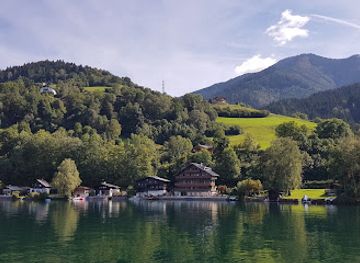
Set on the shore of Lake Zell in Salzburg state, Zell am See brings together a compact historic centre, a clear Alpine lake and the wooded slopes of the Schmittenhöhe. The town sits within the broad Pinzgau valley, with the Hohe Tauern rising to the south and the Kitzbühel Alps shaping the landscape to the north. Its setting gives the town a distinctly seasonal character: swimming, boating and lakeside walks define the warmer months, while skiing and snow sports draw visitors to the surrounding mountains in winter.Read more about Zell am See
A Town Shaped by Pilgrims and Tourism
Life around the Lake
When is the best time to visit Zell am See?
Best: June–August · 20–22°C| Month | High (°C) | Rainfall (mm) |
|---|---|---|
| January | 1 | 41 |
| February | 2 | 37 |
| March | 5 | 38 |
| April | 10 | 36 |
| May | 16 | 50 |
| June (best) | 20 | 71 |
| July (best) | 22 | 87 |
| August (best) | 22 | 76 |
| September | 18 | 54 |
| October | 12 | 42 |
| November | 6 | 36 |
| December | 3 | 37 |
Getting to and around Zell am See
How to get there
Transportation
Best attractions in Zell am See
Zell am See’s principal attractions are closely tied to its landscape and compact old centre. Lake Zell provides a setting for lakeside walks, seasonal bathing, boating and broad views towards the enclosing mountains, while the Schmittenhöhe offers elevated panoramas and access to hiking and winter recreation. In the historic centre, St Hippolyt’s Church and the Vogtturm introduce the town’s medieval and ecclesiastical past without requiring a long itinerary. The lake promenade leads towards parks and leisure facilities, and the district of Thumersbach offers a quieter shoreline perspective across the water. Visitors interested in regional history can use the local museum displays in the Vogtturm as a starting point before exploring the old streets. Zell am See also works as a base for organised excursions into the Hohe Tauern, although places such as Kaprun and the Grossglockner route belong to the surrounding region rather than the town itself.
-
Tourist attraction
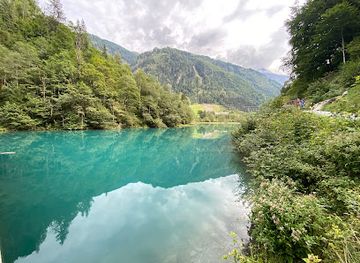
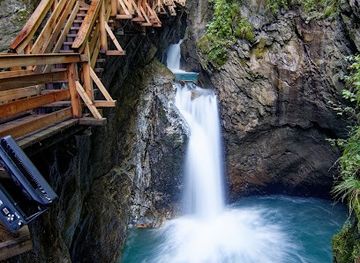
Sigmund Thun Klamm
Kaprun's 320m gorge thunders with glacial melt through sheer rock walls, via wooden paths to turquoise Klammsee amid Salzburg's alpine heart.
25 min drive · 8.4 km from city centre
-
Tourist attraction
Sigmund Thun Klamm
Kaprun's 320m-deep gorge channels glacial fury through rock via wooden paths to a turquoise lake, blending raw power with alpine serenity.
25 min drive · 8.4 km from city centre
-
Hotel
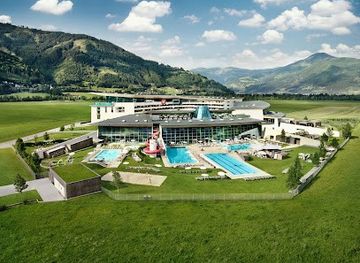
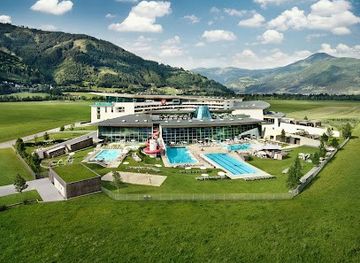
TAUERN SPA Zell am See - Kaprun
Thermal pools and glacier views collide at TAUERN SPA in Kaprun, where 20,000m² of saunas, waterslides, and alpine fitness deliver recharge amid Hohe Tauern peaks.
16 min drive · 5.3 km from city centre
-
Ski resort
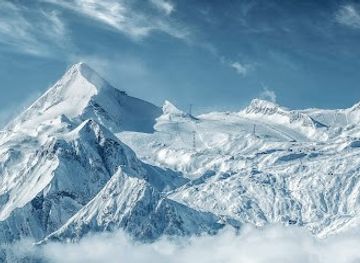
Kitzsteinhorn
Experience Austria's first glacier ski resort, Kitzsteinhorn, with year-round alpine adventures and breathtaking views from the 'Top of Salzburg'.
32 min drive · 12 km from city centre

Best landmarks in Zell am See
St Hippolyt’s Church is Zell am See’s principal historic religious landmark, with origins reaching back to the medieval settlement and a prominent position beside the old town’s narrow streets. Nearby, the Vogtturm is a surviving medieval tower and one of the clearest reminders of the town’s former defensive and administrative character; its museum displays connect the building with local history. The old centre itself, with painted façades, arcades and traditional civic buildings, represents the gradual transformation of an ecclesiastical settlement into a market and tourist town. Around Lake Zell, the Grand Hotel Zell am See and other historic lakeside buildings reflect the nineteenth-century development of Alpine tourism, while the railway station symbolises the transport connection that accelerated the town’s growth. Together these landmarks show how church, local government, transport and leisure shaped Zell am See.
-
Hiking area
Kitzsteinhorn
Ascend Kitzsteinhorn's cableways to 3,029m for glacier skiing, panoramic peaks, and Hohe Tauern vistas in Austria's original high-altitude ski landmark.
32 min drive · 12 km from city centre
-
Hotel
TAUERN SPA Zell am See - Kaprun
20,000m² of pools and saunas beneath Kitzsteinhorn Glacier, where Hohe Tauern's peaks frame year-round thermal waters and family aqua adventures in Kaprun.
16 min drive · 5.3 km from city centre
-
Mountain cable car
Schmittenhöhebahn
Ride to 1,955m where 30+ 3,000m peaks circle Zell am See, blending Porsche gondolas, historic chapels, and trails for every season's pursuit.
6 min drive · 2.0 km from city centre
-
Restaurant
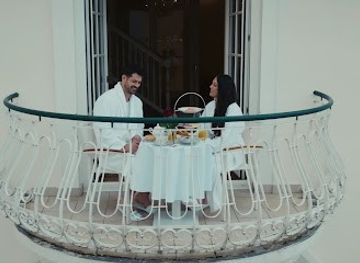
Grand Hotel Zell am See
Where Belle Époque grandeur meets Alpine majesty on Austria's most enchanting lakeside peninsula.
3 min walk · 0.3 km from city centre
Explore Zell am See on the map
Plan your Zell am See trip on one map. See where the top attractions, landmarks, restaurants, bars and hotels are, find what's near where you're staying, and book hotels and experiences in a few clicks.
Best hotels in Zell am See
Best restaurants in Zell am See
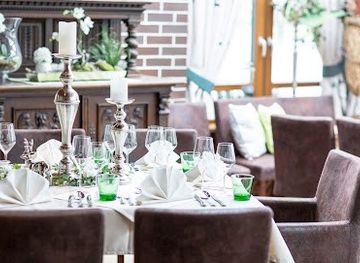
Dining in Zell am See reflects the cuisine of Salzburg and the wider Austrian Alps, with menus commonly centred on soups, dumplings, schnitzel, roast meats, freshwater fish, seasonal vegetables and pastries. Local specialities may include Pinzgauer dishes such as Kasnocken, a cheese-based dumpling preparation, while Kaiserschmarrn and other Austrian desserts appear in cafés and mountain restaurants. The old town contains traditional inns, cafés and restaurants in historic streets, whereas the lakeside and surrounding districts offer settings ranging from informal daytime meals to more polished dining. Alpine huts around the Schmittenhöhe provide regional fare suited to walkers and skiers, subject to seasonal opening. Bakeries and coffee houses are useful for breakfast and afternoon cake, and farm shops or regional producers can add Pinzgau cheese, bread and cured products to the food experience.
-
Restaurant
Restaurant Kupferkessel - Kreml GmbH
Family-run restaurant and pizzeria in Zell am See offering charcoal-grilled steaks, pizzas and garden seating since 1979.
4 min walk · 0.4 km from city centre
-
Restaurant
Grand Hotel Zell am See
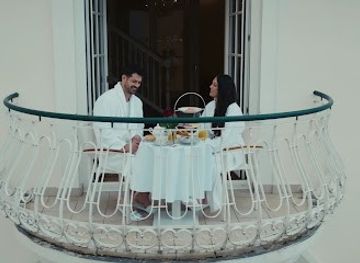
Lakeside Austrian dining in historic splendor at Grand Hotel Zell am See, featuring daily regional menus with lake panoramas and impeccable service.
3 min walk · 0.3 km from city centre
-
Restaurant
Baumbar
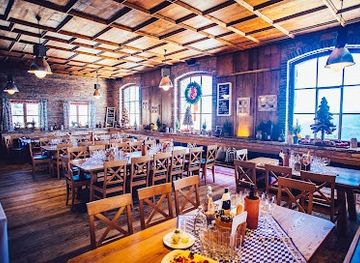
Alpine dining with real trees meets après-ski beats in Kaprun's most versatile mountain venue.
18 min drive · 6.1 km from city centre
-
Italian
Pizzeria Giuseppe Zell am See
Zell am See's 1978-founded pizzeria delivers wood-fired Italian pizzas, pasta and seafood by expert hands in the pedestrian zone's lively core.
1 min walk · 0.1 km from city centre
Best bars in Zell am See
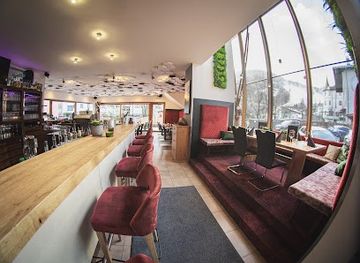
Evenings in Zell am See are generally sociable rather than centred on a large club scene. Traditional pubs, hotel bars and cafés around the old town provide places for Austrian beer, wine and conversation, while some venues adopt a livelier après-ski atmosphere during the winter season. Bars and lounges near the central streets and lakefront attract visitors after dinner, although activity varies considerably between summer, winter and quieter shoulder periods. Live music and occasional cultural performances may form part of the seasonal programme, alongside evening events connected with local festivals or hotels. The mood is more relaxed in residential districts such as Thumersbach, and late-night entertainment is less extensive than in Salzburg. Visitors should respect residents in the compact centre, use licensed transport when needed and check current venue information rather than assuming year-round opening patterns.
-
Restaurant
Asitzbräu
High-altitude brewery bar at 1760m pours exclusive Hausbier amid Leogang peaks, fueling après-ski crowds and summer concerts with terrace panoramas.
32 min drive · 12 km from city centre
-
Bar
Deins & Meins
Billiards clack and darts fly at Deins & Meins on Schlossplatz, fueling Zell am See nights with pizzas, burgers, cocktails and alpine camaraderie amid lake views.
1 min walk · 0.1 km from city centre
-
 Hotel
HotelHotel Latini
Cozy bar in Hotel Latini pours honest drinks with alpine views, drawing skiers and hikers to Schüttdorf's quiet corner for post-adventure toasts in Zell am See.
7 min drive · 2.4 km from city centre
-
Lounge bar
AreitLounge
Mountain lounge at 1,398m on Schmittenhöhe serving craft drinks, DJ vibes and glacier views from a sleek terrace beside Zell am See's areitXpress lift.
9 min drive · 3.0 km from city centre

Best nightclubs in Zell am See
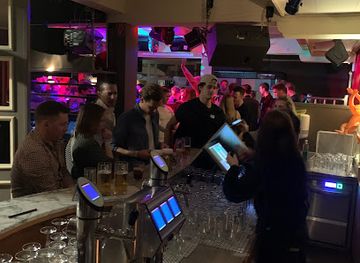
Evenings in Zell am See are generally sociable rather than centred on a large club scene. Traditional pubs, hotel bars and cafés around the old town provide places for Austrian beer, wine and conversation, while some venues adopt a livelier après-ski atmosphere during the winter season. Bars and lounges near the central streets and lakefront attract visitors after dinner, although activity varies considerably between summer, winter and quieter shoulder periods. Live music and occasional cultural performances may form part of the seasonal programme, alongside evening events connected with local festivals or hotels. The mood is more relaxed in residential districts such as Thumersbach, and late-night entertainment is less extensive than in Salzburg. Visitors should respect residents in the compact centre, use licensed transport when needed and check current venue information rather than assuming year-round opening patterns.
-
Hotel
Hotel & Brasserie Traube
Zell am See's brasserie-turned-basement club where alpine timber meets thumping bass, fueling late nights with Tyrolean cocktails and DJ drops amid stone walls and ski-season crowds.
1 min walk · 0.1 km from city centre
-
Disco club
Pinzgauer Diele - Pizzeria - Disco - Apres Ski
Zell am See's disco-pizzeria fusion where wood-oven pizzas power epic dance floors and après ski toasts ignite the night in Pinzgau style.
1 min walk · 0.1 km from city centre
-
Hotel
Hotel Stadt Wien
Hillside beats and glowing pools define Hotel Stadt Wien's electric nightlife in Zell am See, where alpine luxury fuels all-night dances with mountain panoramas and premium mixes.
8 min walk · 0.6 km from city centre
-
Hotel
Dahoam by Sarina - Hotel & Suites
Alpine beats echo through Bavarian beams at Dahoam by Sarina, Zell am See's intimate nightclub where ski crowds dance till dawn in Schüttdorf's electric glow.
7 min drive · 2.5 km from city centre
Best shops in Zell am See
Shopping in Zell am See is concentrated around the old town, pedestrian streets and the areas close to the railway station, where outdoor retailers, Austrian fashion shops, bakeries, delicatessens and souvenir stores serve both residents and visitors. Sporting equipment and clothing are particularly prominent because of the town’s role as a base for skiing, hiking and cycling. Traditional purchases may include regional foods, Pinzgau cheese, Austrian confectionery, loden or woollen goods, woodcraft and practical Alpine products, although authenticity and provenance vary between shops. Markets and seasonal events can bring local producers and craftspeople into the centre, while supermarkets and everyday services are more prominent in Schüttdorf and other outer districts. The old streets offer a more atmospheric browsing experience than the larger retail areas, with historic façades framing contemporary independent businesses.
-
Restaurant
Grand Hotel Zell am See
Prime lakeside shopping in Zell am See's historic Grand Hotel, stocking Tyrolean woolens, crystal heirlooms and alpine luxury gear for every season's adventurer.
3 min walk · 0.3 km from city centre
-
Supermarket
BILLA PLUS
Stock up on Pinzgau cheeses, fresh alpine breads and ski-ready essentials at Zell am See's reliable BILLA PLUS supermarket on Kitzsteinhornstraße.
8 min drive · 2.7 km from city centre
-
Furniture store
Möbelix Zell
Zell am See's largest furniture selection where budget-conscious shoppers find complete home solutions under one expansive roof.
10 min drive · 3.2 km from city centre
-
Supermarket
BILLA
Zell am See's central BILLA stocks alpine fresh produce, local cheeses and everyday needs right on Stadtplatz for hassle-free provisioning amid lakefront energy.
1 min walk · 0.1 km from city centre


Get your free copy of our complete guide to Zell am See, delivered straight to you.
Everything on this page, from attractions and restaurants to essentials and local phrases, in one PDF you can read offline, print or share.
Already have an account? Sign in
Your Zell am See guide is ready.
We'll send it to · Not you? Sign out

Getting your guide ready…
We are putting together a fresh copy of the Zell am See guide. This can take up to a minute.
This can take a few moments. If your browser asks, choose Allow so the download can start. You'll find the guide in your Downloads folder.
Nothing happened? Download it again
Sorry, the guide is taking longer than usual. Please try again in a minute, or get it by email instead.
Zell am See essentials
Currency and Payment
Safety
Emergency Situations
Do's and Don'ts
Local Tips
From Eve
Local phrases worth knowing
You don't need to get them perfect. A few words go a long way, and locals appreciate the effort.
Basics
| English | Local | Say it |
|---|---|---|
| Hello | Griaß di | [gree-as dee] |
| Goodbye | Pfiat di | [fee-at dee] |
| Yes | Ja | [yah] |
| No | Ned | [ned] |
| Please/You're welcome | Bitte | [bit-teh] |
| Thank you | Danke | [dahn-keh] |
| Excuse me/Sorry | Entschuldigung | [ent-shool-dee-goong] |
| How are you? | Wie geht's? | [vee gates] |
| Fine. And you? | Gut. Und dir? | [goot oond deer] |
| Do you speak English? | Sprechen Sie Englisch? | [shpre-khen zee eng-leesh] |
| I don't understand | I versteh des ned | [ee fair-shtay dess ned] |
Eating & Drinking
| English | Local | Say it |
|---|---|---|
| I'd like to see the menu, please | I hätt gern die Speisekarte | [ee hat gern dee shpy-ze-kar-teh] |
| I don't eat meat | I esse kein Fleisch | [ee ess-eh kine fly-sh] |
| Cheers! | Prost! | [prost] |
| I would like to pay, please | Zahlen, bitte | [tsahl-en, bit-teh] |
Emergencies
| English | Local | Say it |
|---|---|---|
| Help! | Hilfe! | [hil-feh] |
| Go away! | Geh weg! | [gay veg] |
| Call the Police! | Rufen Sie die Polizei! | [roo-fen zee dee poh-lee-tsy] |
| Call a doctor! | Rufen Sie einen Arzt! | [roo-fen zee ine-en arts-t] |
| I'm lost | Ich habe mich verirrt | [ikh hab-eh meekh fair-irrt] |
| I'm ill | Ich bin krank | [ikh been krunk] |
Shopping
| English | Local | Say it |
|---|---|---|
| I'd like to buy... | Ich möchte kaufen... | [ikh merk-teh cow-fen] |
| I'm just looking | Ich schau nur | [ikh shou noor] |
| How much is it? | Wie viel kostet das? | [vee feel koss-tet dass] |
| That's too expensive | Das ist zu teuer | [dass ist tsoo toy-er] |
| Can you lower the price? | Können Sie den Preis senken? | [kern-en zee den prees senk-en] |
Time & Numbers
| English | Local | Say it |
|---|---|---|
| What time is it? | Wie spät ist es? | [vee shpet ist ess] |
| It's one o'clock | Es ist ein Uhr | [ess ist iyn oor] |
| Half past (10) | Halb (10) | [halb (10)] |
| Morning | Morgen | [mohr-gen] |
| Afternoon | Nachmittag | [nah-kh-me-tahg] |
| Evening | Abend | [ah-bend] |
| Yesterday | Gestern | [ges-tern] |
| Today | Heute | [hoi-teh] |
| Tomorrow | Morgen | [mohr-gen] |
| 1 | Eins | [ines] |
| 2 | Zwei | [tsvai] |
| 3 | Drei | [dry] |
| 4 | Vier | [feer] |
| 5 | Fünf | [foonts] |
| 6 | Sechs | [zeks] |
| 7 | Sieben | [zee-ben] |
| 8 | Acht | [ahkt] |
| 9 | Neun | [noyn] |
| 10 | Zehn | [tsayn] |
Transport & Directions
| English | Local | Say it |
|---|---|---|
| Where's a/the...? | Wo ist ein/der...? | [vo ist iyn/dair] |
| What's the address? | Wie lautet die Adresse? | [vee lowt-et dee ah-dress-eh] |
| Can you show me (on the map)? | Können Sie mir das zeigen (auf der Karte)? | [kern-en zee meer dass tsee-gen (owf dair kar-teh)] |
| When's the next (bus)? | Wann kommt der nächste (Bus)? | [vahn kohmt dair nai-kh-steh (boos)] |
| A ticket (to ....) | Eine Fahrkarte (nach ....) | [i-ne fahr-kar-teh (nakh)] |
History of Zell am See
The Early Monastic Settlement
Zell am See developed from a monastic settlement traditionally associated with the Bavarian monks who established a cell in the area during the eighth century. Early references describe the place as Cella in Bisontio, reflecting both its religious foundation and its position in the Pinzgau region. The settlement belonged to the sphere of the archbishops of Salzburg, whose ecclesiastical and territorial authority shaped much of the surrounding valley. Its location beside a navigable lake and on routes through the Salzach region supported farming, local exchange and movement between Alpine communities. The church and settlement formed the nucleus from which the later town grew, although little of the earliest physical fabric survives in recognisable form.
Market Town under Salzburg
Throughout the medieval period, Zell served as a local centre for the surrounding farming settlements and mountain valleys. The parish church, later dedicated to St Hippolyt, became an important landmark, while defensive and administrative buildings reflected the authority of Salzburg’s rulers. The Vogtturm, one of the old centre’s most recognisable structures, is connected with this medieval civic landscape and now interprets local history. Trade was shaped by the movement of agricultural goods, livestock and materials through the Pinzgau, rather than by large-scale industry. Zell’s urban form remained relatively compact, with streets and buildings clustered close to the church, lake and routes leading through the valley.
From Salzburg Rule to Austria
The political setting changed at the beginning of the nineteenth century, when the secularisation of the Archbishopric of Salzburg brought the territory into a succession of new political arrangements during the Napoleonic period. Salzburg was incorporated into the Austrian Empire in 1816, and Zell am See subsequently became part of the Habsburg administrative world. These changes linked the town more closely to imperial institutions and wider commercial networks. The local economy still depended largely on agriculture, forestry and regional trade, but improved administration and transport gradually made the Pinzgau more accessible. The historic centre visible today reflects this long transition from ecclesiastical settlement to Austrian market town.
Railway Access and Alpine Tourism
The opening of the railway connection to Zell am See in 1875 was a decisive moment in the town’s development. Visitors could now reach the lake and surrounding mountains more easily from Salzburg and other parts of the Austro-Hungarian transport network, encouraging hotels, guesthouses and guiding services. Alpine tourism grew alongside mountaineering culture, summer promenades and excursions into the Hohe Tauern. The town’s position beside Lake Zell gave it an advantage over settlements that depended solely on mountain access, while the railway supported both visitors and regional commerce. Grand accommodation and lakeside leisure gradually became part of Zell am See’s public identity.
Cable Cars and Modern Mountain Travel
The twentieth century brought a more organised form of mountain tourism. The Schmittenhöhebahn opened in 1927, providing a direct ascent from Zell am See towards the Schmittenhöhe and helping establish the mountain as the town’s principal recreational backdrop. Cable-car access changed the experience of the Alps by allowing more visitors to reach high viewpoints without undertaking a full-day climb. Winter sports later became increasingly important, complementing established summer activities such as walking, climbing and boating. Tourism infrastructure expanded around the historic core and lake, while the railway continued to connect the town with the wider Salzburg region.
A Year-Round Alpine Destination
After the Second World War, Zell am See became part of the large-scale expansion of Austrian tourism, with accommodation, ski facilities and road connections developing to meet growing demand. The town’s appeal broadened beyond traditional summer visitors as skiing and organised winter recreation became central to the regional economy. At the same time, efforts to preserve the old centre, parish church and medieval tower maintained a visible link with the settlement’s earlier history. Contemporary Zell am See combines this heritage with a landscape-based tourism economy, using Lake Zell, the Schmittenhöhe and access to the Hohe Tauern as the foundations of its international profile.
Zell am See in Photos
Browse through our photo collection highlighting the charm and character of the destination.
Cities near Zell am See
The closest cities to Zell am See, if you have time for more than one stop.
-

-

-

-
-


Swipe for more cities
Explore more
Explore more of Austria
Discover Austria's blend of alpine landscapes, rich cultural heritage, and culinary delights, from Vienna's historic charm to Tyrol's dramatic beauty.
Explore Austria