

Free Pongau Travel Guide & Mobile App
Explore Pongau with free travel guides. Discover regional history, expert tips, proposed trips, and audio guides on web or mobile app.


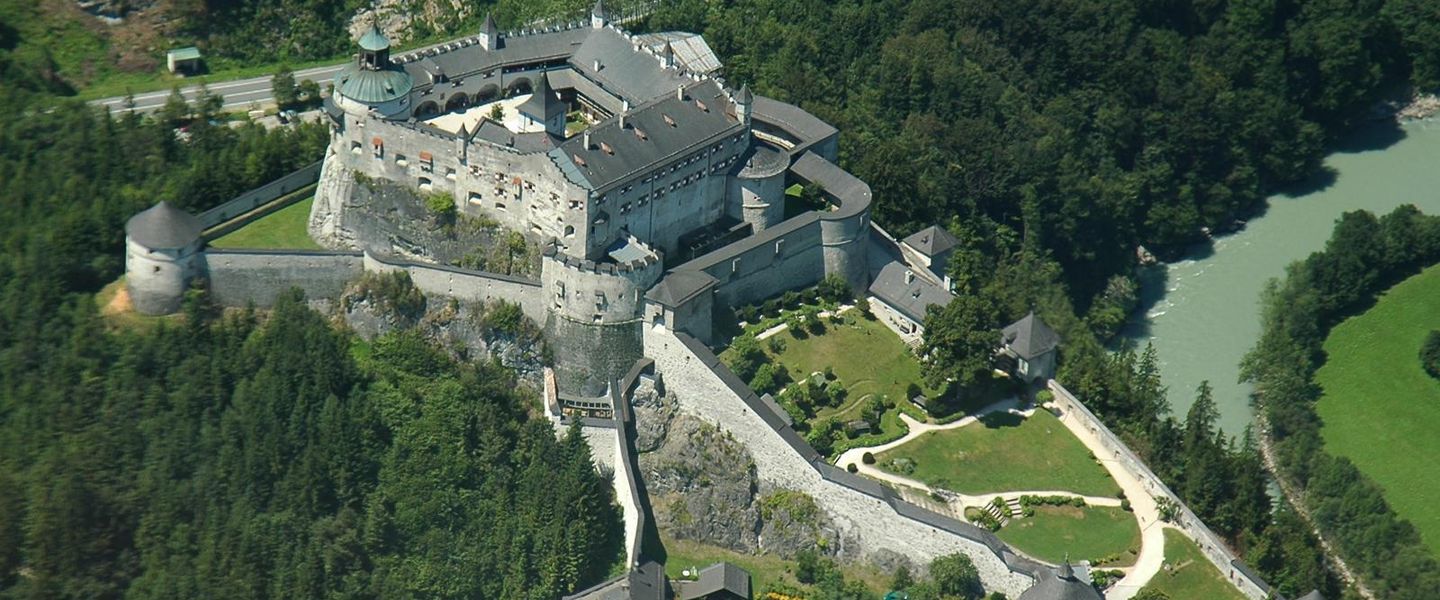


Explore Pongau in Salzburg: a landscape of Alpine valleys, ski resorts, thermal towns, waterfalls, historic castles and traditional mountain villages.
Read more about Pongau
When is the best time to visit Pongau?
Best: June–August · 22–24°C| Month | High (°C) | Rainfall (mm) |
|---|---|---|
| January | 1 | 70 |
| February | 4 | 60 |
| March | 8 | 70 |
| April | 13 | 80 |
| May | 18 | 90 |
| June (best) | 22 | 100 |
| July (best) | 24 | 110 |
| August (best) | 24 | 100 |
| September | 20 | 90 |
| October | 14 | 80 |
| November | 7 | 80 |
| December | 2 | 70 |
Getting to and around Pongau
How to get there
Transportation
Top city travel guides in Pongau
The cities of Pongau, and the easiest places to base yourself.
-
-

-


Swipe for more cities
Destinations in Pongau
Resorts, valleys and scenic spots worth a trip of their own.
-

-

-

-

-
-


Swipe for more destinations
Best attractions in Pongau
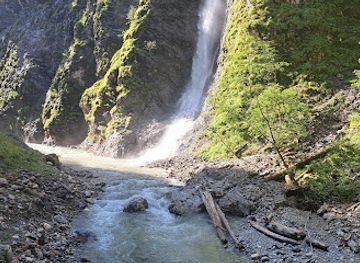
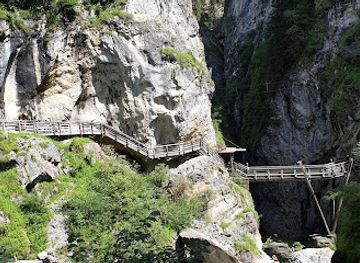
Pongau's attractions range from major alpine sports centres to historic settlements and dramatic natural scenery. The Liechtensteinklamm near St Johann im Pongau is a deep gorge with secured paths and galleries, while the Salzach valley around Werfen and Pfarrwerfen combines river landscapes with castles, churches and views towards the Tennengebirge. Bischofshofen attracts winter-sports followers for its ski-jumping tradition, and the surrounding resorts offer extensive skiing, snowboarding, cross-country trails and summer lift access. Flachau, Wagrain, Altenmarkt-Zauchensee and Radstadt are particularly associated with organised mountain recreation, while the Grossarl valley provides a quieter setting of farms, alpine pastures and walking routes. The Gastein valley adds thermal facilities, historic spa architecture and high mountain excursions around Bad Gastein, Bad Hofgastein and Dorfgastein. Visitors can also explore parish churches, local museums, farm estates and seasonal markets, although opening arrangements vary. In warmer months, walking, cycling, climbing and paragliding are prominent; in colder months, snow conditions determine which routes and activities are available.
-
Castle
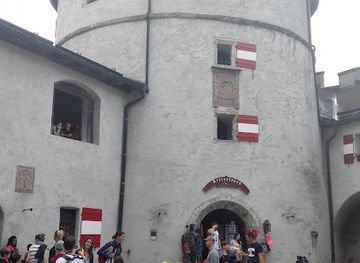
Burg Hohenwerfen
Explore the enchanting Burg Hohenwerfen, a medieval castle in the stunning Austrian Alps, rich in history and breathtaking views.
-
Tourist attraction
Eisriesenwelt
Discover Eisriesenwelt, the world’s largest ice cave, where stunning glacial formations and breathtaking landscapes await every adventurous traveler.
-
Tourist attraction
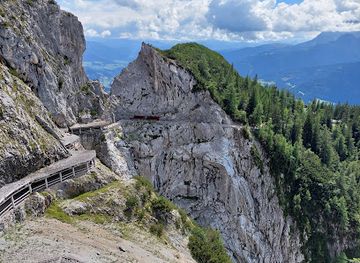
Liechtensteinklamm
Discover the breathtaking beauty of Liechtensteinklamm, a stunning gorge in Austria perfect for hiking and nature lovers seeking adventure.
-
Tourist attraction
Kitzlochklamm Gorge
Explore Kitzlochklamm Gorge: A breathtaking natural wonder in the Austrian Alps, perfect for hikers and nature enthusiasts.

Best landmarks in Pongau
The medieval Hohenwerfen Castle is one of Pongau's most recognisable landmarks, rising above the Salzach valley on a steep rocky outcrop and illustrating the defensive importance of the route through the Alps. Near St Johann, the Liechtensteinklamm is a natural landmark rather than a built monument: its narrow gorge, rushing water and engineered walkways reveal the force of the Salzach's mountain tributaries. Bischofshofen's Paul-Ausserleitner-Schanze is a modern sporting landmark and a prominent symbol of the town's place in international ski jumping. In the Gastein valley, Bad Gastein's historic centre is distinguished by steeply layered buildings and the waterfall that runs through the town, while Bad Hofgastein has a more spacious spa-town character. The broad mountain silhouettes of the Tennengebirge, Hochkönig and the Gastein Alps provide the region's visual framework, with valley churches, farmsteads and timber-supported alpine buildings adding human scale to the landscape.
-
 Fortress
Fortress Hohensalzburg
Explore a majestic medieval fortress with panoramic views, museums, and historical insights in the heart of Salzburg, Austria.
-
Castle
Mirabell Palace
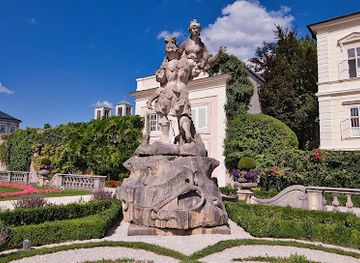
Discover Salzburg's Baroque masterpiece: Mirabell Palace and its enchanting gardens, a blend of history, art, and cinematic fame.
-
Tourist attraction
Schloss Hellbrunn
Discover the charm of Schloss Hellbrunn, a historic baroque palace with whimsical fountains and picturesque gardens in Salzburg.
-
Museum
Mozart's Birthplace
Explore the early life of a musical prodigy at Mozart's Birthplace, a meticulously preserved museum in the heart of Salzburg's Old Town.

Explore Pongau on the map
Plan your trip on one map. See where the top cities, national parks and sights are, and book hotels and experiences in a few clicks.
Best hotels in Pongau
Best restaurants in Pongau
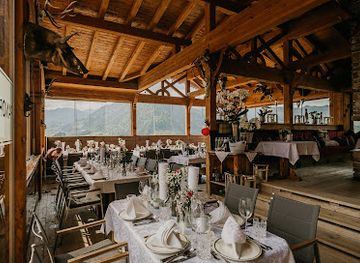
Pongau's food combines Salzburg traditions with the hearty cooking suited to an alpine farming region. Mountain huts and village inns commonly serve Kasnocken, dumplings, soups, rösti-style potato dishes, sausages and farmhouse cheese, while pastries such as Salzburger Nockerl and apple strudel reflect the wider regional repertoire rather than a single Pongau invention. Menus often draw on local dairy products, bread, game, trout and seasonal vegetables, with stronger international influences in the larger ski resorts. The Gastein valley and other spa towns offer everything from traditional Gasthäuser to contemporary restaurants, while resort centres provide a broader choice of cafés and hotel dining rooms. Farm shops, bakeries and weekly markets are useful for picnic supplies and regional specialities. In remote valleys, kitchens may close between meal periods, and mountain huts generally offer simpler food than restaurants in St Johann, Bischofshofen or the larger holiday resorts.
-
Restaurant
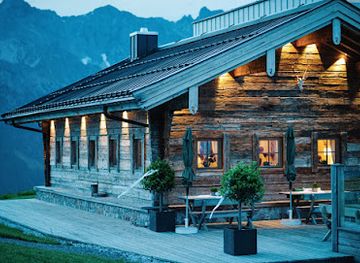
Oberforsthofalm Familie Mayr KG
Discover authentic Austrian cuisine at Oberforsthofalm in St. Johann – where breathtaking views meet unforgettable flavors.
-
Austrian
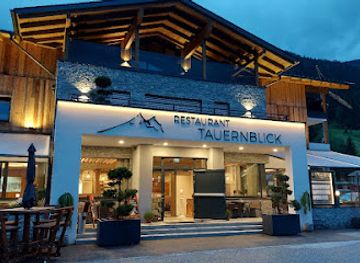
Restaurant Tauernblick
Experience authentic Austrian cuisine amidst breathtaking Alpine views at Restaurant Tauernblick in Radstadt.
-
Restaurant
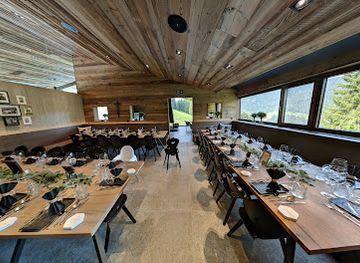
Steinbockalm
Discover culinary delights amidst breathtaking mountain views at Steinbockalm in Dienten am Hochkönig.
-
Austrian
Die Deantnerin
Experience authentic Austrian cuisine amidst stunning mountain views at Die Deantnerin in Dienten am Hochkönig.
Best bars in Pongau
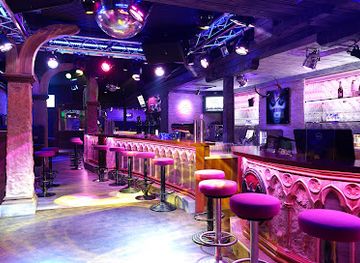
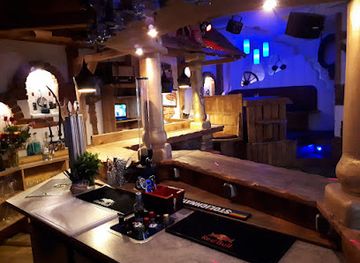
Evening life in Pongau is centred on traditional pubs, hotel bars, après-ski venues and restaurants rather than a continuous metropolitan club scene. Flachau, Wagrain, St Johann, Altenmarkt and other major ski areas become livelier during the winter season, with music-led après-ski venues and late-evening bars close to the pistes. Bischofshofen and St Johann provide the broadest choice of ordinary town pubs, cafés and occasional live-music events, while Bad Gastein and Bad Hofgastein combine historic hotel bars, spa-town restaurants and seasonal nightlife. In smaller villages, the evening usually centres on a Gasthaus, local event or quiet drink rather than a nightclub. Opening patterns vary substantially with the season, so visitors should check locally rather than assume that a venue operates year-round. Responsible drinking and consideration for residents are particularly important in compact mountain communities.
-
Restaurant
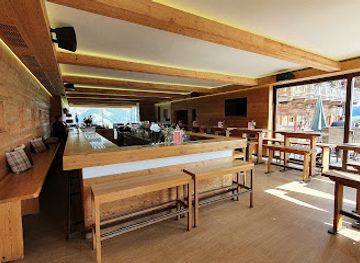
Steinbockalm
Discover the authentic flavors of Austria at Steinbockalm, a cozy restaurant in Dienten am Hochkönig, perfect for every mountain explorer.
-
Restaurant
Grünegg Alm & Hochkönig Edelbrennerei
Experience authentic alpine dining and artisanal spirits at Grünegg Alm & Hochkönig Edelbrennerei, a charming restaurant in the heart of the Alps.
-
Bar
Platzl im Pongau - Restaurant & Bar
Experience the authentic flavors of Austria at Platzl im Pongau, a charming restaurant and bar in St. Johann im Pongau, perfect for every traveler.
-
Restaurant
Bürglalm
Discover Bürglalm: A must-visit restaurant in Dienten am Hochkönig offering authentic alpine cuisine with stunning mountain views.
Best nightclubs in Pongau
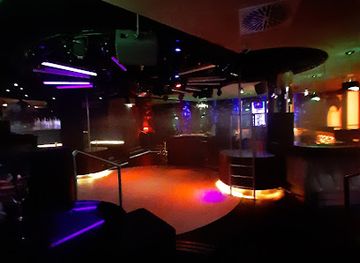
Evening life in Pongau is centred on traditional pubs, hotel bars, après-ski venues and restaurants rather than a continuous metropolitan club scene. Flachau, Wagrain, St Johann, Altenmarkt and other major ski areas become livelier during the winter season, with music-led après-ski venues and late-evening bars close to the pistes. Bischofshofen and St Johann provide the broadest choice of ordinary town pubs, cafés and occasional live-music events, while Bad Gastein and Bad Hofgastein combine historic hotel bars, spa-town restaurants and seasonal nightlife. In smaller villages, the evening usually centres on a Gasthaus, local event or quiet drink rather than a nightclub. Opening patterns vary substantially with the season, so visitors should check locally rather than assume that a venue operates year-round. Responsible drinking and consideration for residents are particularly important in compact mountain communities.
-
Hotel
Aldiana Club Hochkönig
Unwind in the heart of the Alps at Aldiana Club Hochkönig, where adventure and relaxation converge amidst stunning natural beauty.
-
Bar
Cult*Disco*Bar Fuggo Radstadt
Experience the vibrant nightlife of Radstadt at Cult*Disco*Bar Fuggo, where music, drinks, and dancing come together for an unforgettable evening.
-
Bar
Café Bar Tanz-Bar Rumpelstilzchen
Discover the vibrant nightlife and friendly atmosphere at Café Bar Tanz-Bar Rumpelstilzchen in St. Johann im Pongau, Austria.
-
Disco club
Cult Club
Discover the electrifying atmosphere of Cult Club, Schladming’s premier disco destination for unforgettable nights filled with music and dancing.
Best shops in Pongau
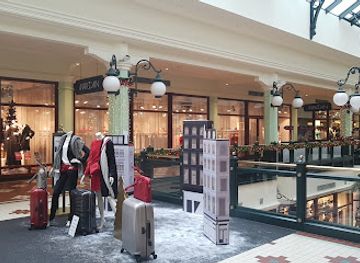
Shopping in Pongau is organised around market-town high streets, resort centres, village bakeries, supermarkets and independent specialist shops rather than large urban retail districts. St Johann im Pongau and Bischofshofen offer the broadest everyday choice, while resort settlements such as Flachau, Wagrain, Altenmarkt and Bad Gastein focus more on outdoor equipment, clothing, cafés and visitor-oriented stores. Useful regional purchases include farmhouse cheese, bread, cured products, honey, spirits, herbal goods and packaged alpine specialities, often found in farm shops or local food outlets. Craft shops and galleries may stock woodwork, woollen goods, ceramics and locally made gifts, although selection varies by town and season. Winter resorts have a strong practical retail focus, with ski hire and outdoor clothing prominent, while spa towns add wellness products and traditional souvenirs. Market days and temporary seasonal stalls should be checked locally, as their locations and schedules can change.
-
Outlet mall
Designer Outlet Salzburg
Discover incredible savings on designer brands at Designer Outlet Salzburg, your ultimate shopping destination in the heart of Austria.
-
Castle
Burg Hohenwerfen
Discover the enchanting Burg Hohenwerfen, a medieval castle in the Austrian Alps offering breathtaking views and a rich historical experience.
-
Outlet mall
Tauern Outlet Modeshopping
Explore Tauern Outlet Modeshopping: A shopping paradise with unbeatable deals on your favorite brands amidst stunning Alpine scenery.
-
Shopping mall
Stadtgalerie St. Johann
Explore Stadtgalerie St. Johann for an unparalleled shopping experience with a mix of local charm, diverse shops, and delightful dining options.
Get your free copy of our complete guide to Pongau, delivered straight to you.
Everything on this page, from attractions and restaurants to essentials and local phrases, in one PDF you can read offline, print or share.
Already have an account? Sign in
Your Pongau guide is ready.
We'll send it to · Not you? Sign out

Getting your guide ready…
We are putting together a fresh copy of the Pongau guide. This can take up to a minute.
This can take a few moments. If your browser asks, choose Allow so the download can start. You'll find the guide in your Downloads folder.
Nothing happened? Download it again
Sorry, the guide is taking longer than usual. Please try again in a minute, or get it by email instead.
Pongau essentials
Currency and Payment
Safety
Emergency Situations
Do's and Don'ts
Local Tips
From Eve
Local phrases worth knowing
You don't need to get them perfect. A few words go a long way, and locals appreciate the effort.
Basics
| English | Local | Say it |
|---|---|---|
| Hello | Grüß Gott | [Grueß Gott] |
| Goodbye | Auf Wiederschauen | [Auf Wieder-schaun] |
| Yes | Ja | [Ya] |
| No | Nein | [Nayn] |
| Please/You're welcome | Bitte | [Bitt-eh] |
| Thank you | Danke | [Dahn-keh] |
| Excuse me/Sorry | Entschuldigung | [Ent-shool-dee-goong] |
| How are you? | Wie geht's? | [Vee gate's?] |
| Fine. And you? | Gut. Und dir? | [Gooot. Oond deer?] |
| Do you speak English? | Sprechen Sie Englisch? | [Shpre-chen Zee Eng-lish?] |
| I don't understand | Ich verstehe nicht | [Ish fer-stay-eh nishht] |
Eating & Drinking
| English | Local | Say it |
|---|---|---|
| I'd like to see the menu, please | Ich hätte gerne die Speisekarte, bitte | [Ish het-teh ger-neh dee Shpie-ze-kar-teh, bitta] |
| I don't eat meat | Ich esse kein Fleisch | [Ish es-se kyan Fly-sh] |
| Cheers! | Prost! | [Prohst!] |
| I would like to pay, please | Ich möchte bezahlen, bitte | [Ish möch-te beh-tsah-len, bitta] |
Emergencies
| English | Local | Say it |
|---|---|---|
| Help! | Hilfe! | [Hil-fe!] |
| Go away! | Geh weg! | [Gay vek!] |
| Call the Police! | Rufen Sie die Polizei! | [Roo-fen Zee dee Poh-li-tsai!] |
| Call a doctor! | Rufen Sie einen Arzt! | [Roo-fen Zee eye-nen Artst!] |
| I'm lost | Ich habe mich verlaufen | [Ish hah-bee mikh fer-lau-fen] |
| I'm ill | Ich bin krank | [Ish bin krank] |
Shopping
| English | Local | Say it |
|---|---|---|
| I'd like to buy... | Ich möchte kaufen... | [Ish möch-te kau-fen...] |
| I'm just looking | Ich schaue nur | [Ish shau-e noor] |
| How much is it? | Wie viel kostet es? | [Vee feel kost-et es?] |
| That's too expensive | Das ist zu teuer | [Das ist tsu toy-er] |
| Can you lower the price? | Könnten Sie den Preis senken? | [Kern-ten Zee den Price senken?] |
Time & Numbers
| English | Local | Say it |
|---|---|---|
| What time is it? | Wie spät ist es? | [Vee shpayt ist es?] |
| It's one o'clock | Es ist ein Uhr | [Es ist ine Oor] |
| Half past (10) | Halb (10) | [Halb (10)] |
| Morning | Morgen | [Mor-gen] |
| Afternoon | Nachmittag | [Nahch-mit-tahg] |
| Evening | Abend | [Ah-bent] |
| Yesterday | Gestern | [Ges-terrn] |
| Today | Heute | [Hoy-teh] |
| Tomorrow | Morgen | [Mor-gen] |
| 1 | Eins | [Eyns] |
| 2 | Zwei | [Tsvy] |
| 3 | Drei | [Dry] |
| 4 | Vier | [Veer] |
| 5 | Fünf | [Fuenf] |
| 6 | Sechs | [Zex] |
| 7 | Sieben | [Zee-ben] |
| 8 | Acht | [Acht] |
| 9 | Neun | [Noyn] |
| 10 | Zehn | [Tsayn] |
Transport & Directions
| English | Local | Say it |
|---|---|---|
| Where's a/the...? | Wo ist ein/das ...? | [Vo ist ine/das ...?] |
| What's the address? | Was ist die Adresse? | [Vas ist dee Ad-res-se?] |
| Can you show me (on the map)? | Könnten Sie mir (auf der Karte) zeigen? | [Kern-ten Zee meer (auf der Kar-teh) tsai-gen?] |
| When's the next (bus)? | Wann kommt der nächste (Bus)? | [Vann komt der nächste (Bus)?] |
| A ticket (to ....) | Ein Ticket (nach ....) | [Ayn Tick-et (nahch ....)] |
History of Pongau
Prehistoric Settlement and Alpine Passes
Pongau's valleys have long provided routes through the central Alps, linking the Salzburg basin with mountain passes and neighbouring regions. Archaeological evidence from the wider Salzburg area shows prehistoric settlement, metalworking and trade, while the Salzach corridor offered a natural route for people and goods. The high valleys were gradually used for pasture and farming, although settlement patterns were shaped by steep terrain, avalanches and limited arable land. This early relationship between valley transport, seasonal grazing and mineral resources laid foundations for the dispersed communities visible across Pongau today.
Roman Roads and the Noricum Frontier
Under Roman rule, the region formed part of the province of Noricum, whose administrative and commercial network connected Alpine settlements with larger centres to the north and south. Roads followed the Salzach and important passes, supporting movement between the Roman town of Iuvavum, near present-day Salzburg, and settlements farther into the Alps. Roman influence did not erase local communities, but it introduced new systems of administration, trade, infrastructure and material culture. The importance of Pongau as a transit corridor continued after the western Roman Empire declined.
Christianisation and the Prince-Archbishops of Salzburg
From the early medieval period, Christian institutions helped organise settlement and landholding throughout the Salzach valleys. Pongau became part of the ecclesiastical sphere of the Archbishops of Salzburg, whose authority combined religious power with extensive political and economic control. Parish churches, monasteries, farms and transport routes developed within this structure. The medieval churches and historic town patterns of the region reflect centuries in which agriculture, pastoralism and ecclesiastical administration shaped everyday life. Salzburg's prince-archbishops remained influential until the secularisation of their temporal territories in the early nineteenth century.
Salt, Mining and Mountain Trade
Although the principal salt centres lay north of Pongau, the region benefited from the wider Salzburg salt economy and from trade moving along the Salzach corridor. Mining, forestry, livestock and seasonal alpine grazing were important local activities, with timber and agricultural products moving between valleys and markets. Mountain passes connected Pongau to neighbouring districts, while settlements such as Bischofshofen grew in importance because of their position on routes through the Alps. The resulting economy was mixed rather than dependent on one industry, combining farming with transport, craft production and resource extraction.
Railways and the Opening of the Valleys
The arrival of railway connections in the nineteenth century transformed Pongau's relationship with the rest of Austria. Lines through the Salzach valley and into the Gastein valley made travel faster, encouraged trade and supported the development of tourism. Rail access also strengthened towns such as Bischofshofen and St Johann as transport centres. In the Gastein valley, improved links reinforced an existing spa tradition, bringing visitors to Bad Gastein and Bad Hofgastein. The railway remains one of the clearest visible links between Pongau's historic role as a passage through the Alps and its modern tourism economy.
Tourism, Skiing and the Modern Alpine Economy
Tourism expanded considerably during the twentieth century as mountain resorts developed hotels, lifts, pistes and summer walking infrastructure. Winter sport became especially important in communities including Flachau, Wagrain, St Johann, Altenmarkt-Zauchensee and surrounding valleys, while thermal tourism remained central in Gastein. This transformation brought employment and investment but also increased seasonal pressure on housing, roads and landscapes. Contemporary Pongau therefore combines traditional farming and village architecture with an international visitor economy, and many communities now promote both winter sports and warmer-month hiking, cycling and cultural travel.
Pongau in Photos
Browse through our photo collection highlighting the charm and character of the destination.
Neighbouring regions of Pongau
The closest regions to Pongau, if you have time for more than one.
-

-

-

-

-


Swipe for more regions
Explore more
Explore more of Austria
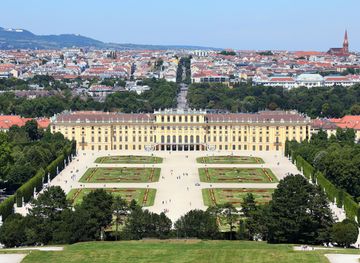
Discover Austria's blend of alpine landscapes, rich cultural heritage, and culinary delights, from Vienna's historic charm to Tyrol's dramatic beauty.
Explore Austria