

Glover's Reef Atoll Travel Guide - Free Web & App
Your ultimate guide to Glover's Reef Atoll. Discover top landmarks, proposed trips, and local tips. Free on the web or via the Evendo companion app.


Glover's Reef Atoll, Belize, offers coral gardens, clear lagoons, cayes, diving, snorkelling, marine wildlife and conservation in a remote Caribbean setting.
Ocean Geography and Reef Life
Glover's Reef Atoll lies in the Caribbean Sea, roughly 45 kilometres east of Belize's mainland coast and separated from the principal barrier reef by open water. It is the southernmost of Belize's three atolls, a broad ring of coral reef enclosing a lagoon scattered with shallow patch reefs, sandbanks and five principal cayes. The atoll's marine reserve protects a remarkable range of habitats, from seagrass beds and mangrove edges to coral walls that descend into deeper Caribbean water. Clear conditions can reveal parrotfish, rays, turtles, reef sharks and dense shoals of tropical fish, although visibility and wildlife encounters vary with weather, season and location.Read more about Glover's Reef Atoll
Cayes, Research and Conservation
Exploring the Atoll
When is the best time to visit Glover's Reef Atoll?
Best: July–September · 30–31°C| Month | High (°C) | Rainfall (mm) |
|---|---|---|
| January | 29 | 69 |
| February | 29 | 56 |
| March | 30 | 49 |
| April | 30 | 35 |
| May | 31 | 28 |
| June | 31 | 22 |
| July (best) | 31 | 18 |
| August (best) | 30 | 21 |
| September (best) | 30 | 21 |
| October | 30 | 31 |
| November | 30 | 44 |
| December | 29 | 61 |
Getting to and around Glover's Reef Atoll
How to get there
Transportation
Best attractions in Glover's Reef Atoll
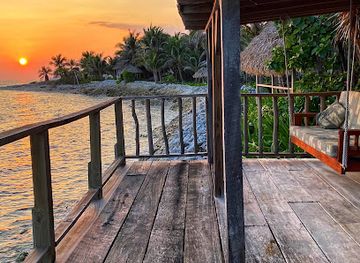
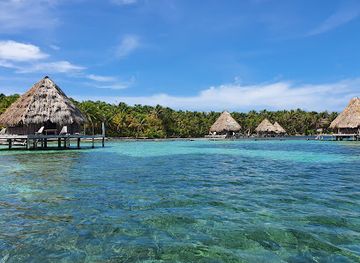
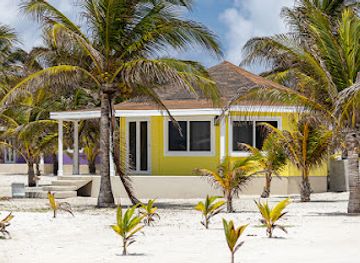
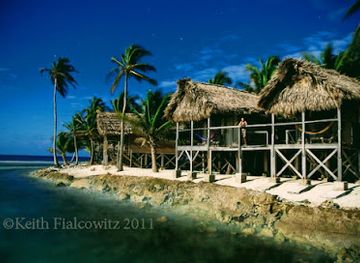
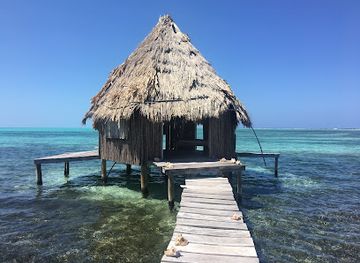
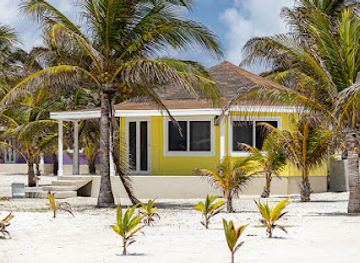
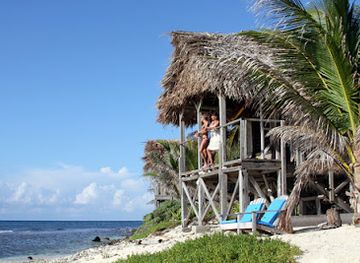
Glover's Reef's principal attractions are underwater and spread across a broad lagoon rather than concentrated in a single settlement. Shallow patch reefs and coral gardens offer accessible snorkelling in suitable conditions, while deeper outer-reef areas and walls attract experienced scuba divers with drop-offs, channels, sponges and large schools of fish. The lagoon's sand flats, seagrass areas and mangrove-fringed edges provide habitat for rays, juvenile fish and other marine life, and the five principal cayes offer quiet beaches and low tropical vegetation rather than built-up resort scenery. Southwest Caye is associated with visitor accommodation and organised excursions, while Middle Caye is recognised for the Glover's Reef Marine Research Station and its conservation focus. Kayaking and paddleboarding can reveal the lagoon's changing water colours and shallow formations, subject to local guidance. The absence of towns, roads and extensive development is itself part of the experience, with the atoll's value found in its reef habitats, open seascapes and scientific importance.
-
Resort hotel
Off The Wall Dive Center and Resort
Unwind and explore the underwater wonders of Belize at Off The Wall Dive Center and Resort, your gateway to adventure and relaxation in paradise.
-
Reef
Glover's Reef
Explore Glover's Reef in Belize, a breathtaking marine sanctuary known for vibrant coral reefs and exciting water adventures in a tranquil tropical setting.
Best landmarks in Glover's Reef Atoll
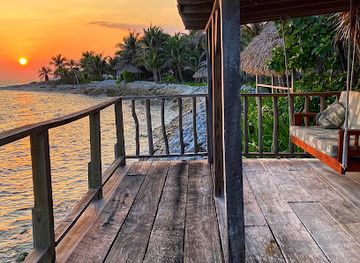
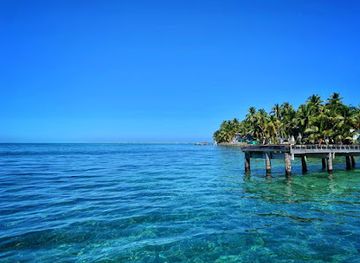
The defining landmark of Glover's Reef Atoll is its great ring of coral enclosing a shallow lagoon, a natural structure whose reef crest, channels and isolated patch reefs shape every journey across the destination. The outer reef edge gives way to deeper Caribbean water and is particularly significant for diving, while the lagoon contains seagrass, sand and mangrove-associated habitats that support fish and other marine life. The five principal cayes are low-lying natural landmarks rather than monumental islands, with beaches and vegetation exposed to storms, tides and sea-level change. Middle Caye is notable for the Glover's Reef Marine Research Station, which represents the atoll's importance as a site of scientific study and conservation. The wider reef is part of the Belize Barrier Reef Reserve System, a UNESCO World Heritage property, giving the landscape international significance as well as local ecological value.
-
Resort hotel
Off The Wall Dive Center and Resort
Discover Off The Wall Dive Center and Resort - Your ultimate tropical escape in Belize, combining adventure diving and serene relaxation amidst stunning coral reefs.
-
Public beach
Glover's Atoll Resort
Experience the breathtaking beauty and adventure of Glover's Atoll Resort, an idyllic paradise in Belize with stunning beaches and vibrant marine life.
-
Resort hotel
Manta Island Resort
Discover the beauty of Belize at Manta Island Resort, where luxury meets adventure in a tropical paradise.
-
Resort hotel
Slickrock Belize Adventures
Discover adventure and relaxation at Slickrock Belize Adventures in Glover's Reef Atoll, where thrill-seekers find their paradise.
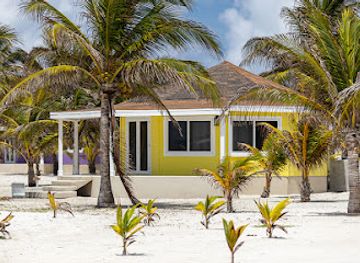
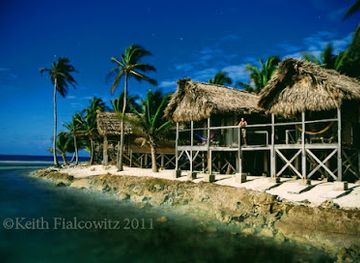
Explore Glover's Reef Atoll on the map
Plan your trip on one map. See where the top attractions, landmarks, restaurants and hotels are, and book hotels and experiences in a few clicks.
Best hotels in Glover's Reef Atoll
Best bars in Glover's Reef Atoll
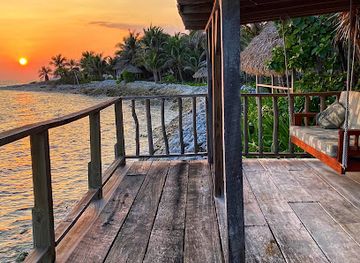
Glover's Reef has no town-centre nightlife, nightclub district or dependable programme of evening entertainment. Evenings are generally quiet and shaped by the sea, weather, stargazing, conversation and the routines of small accommodation or liveaboard operations. Some places to stay may serve drinks with meals or create an informal social setting, but availability, licensing and service arrangements vary and should be checked in advance. The destination's evening atmosphere is more expeditionary than recreational, with darkness, limited electricity and the need to respect other guests and marine surroundings. For a wider choice of bars, music and evening dining, visitors should spend time in a mainland gateway such as Dangriga, Hopkins or Placencia before or after travelling offshore; these are separate communities, not part of Glover's Reef Atoll.
-
Resort hotel
Off The Wall Dive Center and Resort
Experience the ultimate dive getaway at Off The Wall Dive Center and Resort, where adventure meets relaxation in Belize's stunning Glover's Reef Atoll.
-
Public beach
Glover's Atoll Resort
Discover the untouched beauty of Glover's Atoll Resort, a tropical paradise in Belize offering adventure and relaxation amidst stunning turquoise waters.
-
Resort hotel
Manta Island Resort
Experience the ultimate tropical escape at Manta Island Resort, where adventure meets tranquility in the stunning South Glovers Reef Atoll.
-
Resort hotel
Slickrock Belize Adventures
Discover adventure and relaxation at Slickrock Belize Adventures, a stunning resort in Glover's Reef Atoll offering unforgettable experiences in nature.
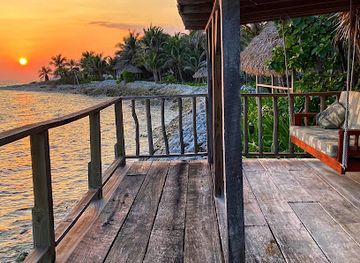
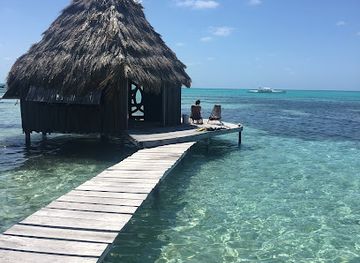
Best shops in Glover's Reef Atoll
Shopping opportunities on Glover's Reef are extremely limited and should not be treated as a feature of the destination. Small accommodation or expedition operations may provide basic items or branded souvenirs, but there is no conventional high street, permanent craft market or broad selection of shops on the atoll. Visitors should purchase prescription medicines, reef equipment, toiletries, snacks and other essentials on the mainland before departure. Dangriga, Hopkins and Placencia offer more practical shopping, with general stores, dive-related supplies, local produce and independent businesses, although the range differs between settlements. Regional Belizean products, including food items, crafts and artwork, may be available in mainland shops or markets, but specific stock and market dates vary. Buying responsibly from established businesses is preferable to removing shells, coral or other natural material from the reef.
-
Resort hotel
Off The Wall Dive Center and Resort
Experience the ultimate dive and relaxation getaway at Off The Wall Dive Center and Resort, nestled in the heart of Glover's Reef Atoll.
-
Public beach
Glover's Atoll Resort
Experience the serene beauty and vibrant marine life of Glover's Atoll Resort, a hidden paradise in Belize's Caribbean.
-
Resort hotel
Manta Island Resort
Experience the serene beauty of Manta Island Resort, a tropical haven in the South Glovers Reef Atoll, perfect for relaxation and adventure.
-
Resort hotel
Slickrock Belize Adventures
Experience the thrill of adventure sports and natural beauty at Slickrock Belize Adventures, your gateway to Glover's Reef Atoll.
Get your free copy of our complete guide to Glover's Reef Atoll, delivered straight to you.
Everything on this page, from attractions and restaurants to essentials and local phrases, in one PDF you can read offline, print or share.
Already have an account? Sign in
Your Glover's Reef Atoll guide is ready.
We'll send it to · Not you? Sign out

Getting your guide ready…
We are putting together a fresh copy of the Glover's Reef Atoll guide. This can take up to a minute.
This can take a few moments. If your browser asks, choose Allow so the download can start. You'll find the guide in your Downloads folder.
Nothing happened? Download it again
Sorry, the guide is taking longer than usual. Please try again in a minute, or get it by email instead.
Glover's Reef Atoll essentials
Currency and Payment
Safety
Emergency Situations
Do's and Don'ts
Local Tips
From Eve
Local phrases worth knowing
You don't need to get them perfect. A few words go a long way, and locals appreciate the effort.
Basics
| English | Local | Say it |
|---|---|---|
| Hello | Buenos días | [BWEH-nos DEE-as] |
| Goodbye | Adiós | [ah-DYOS] |
| Yes | Sí | [SEE] |
| No | No | [NO] |
| Please/You're welcome | Por favor/De nada | [por fa-VOR/de NA-da] |
| Thank you | Gracias | [GRAH-syas] |
| Excuse me/Sorry | Perdón/Lo siento | [pehr-DON/lo SYEN-to] |
| How are you? | ¿Cómo estás? | [KOH-moh eh-STAS] |
| Fine. And you? | Bien. ¿Y tú? | [BYEN. ee TOO] |
| Do you speak English? | ¿Hablas inglés? | [AH-blas een-GLES] |
| I don't understand | No entiendo | [NO en-TYEN-do] |
Eating & Drinking
| English | Local | Say it |
|---|---|---|
| I'd like to see the menu, please | Quisiera ver el menú, por favor | [kee-SYE-ra ver el MEH-noo, por fa-VOR] |
| I don't eat meat | No como carne | [NO KOH-mo KAR-ne] |
| Cheers! | ¡Salud! | [sah-LOOD] |
| I would like to pay, please | Me gustaría pagar, por favor | [may goos-tya-REE-a pa-GAR, por fa-VOR] |
Emergencies
| English | Local | Say it |
|---|---|---|
| Help! | ¡Ayuda! | [ah-YU-da] |
| Go away! | ¡Vete! | [VE-te] |
| Call the Police! | Llama a la Policía! | [YAH-ma a la po-lee-SEE-a] |
| Call a doctor! | Llama a un médico! | [YAH-ma a oon MEH-dee-ko] |
| I'm lost | Estoy perdido/a | [es-TOY pehr-DEE-do/a] |
| I'm ill | Estoy enfermo/a | [es-TOY en-FER-mo/a] |
Shopping
| English | Local | Say it |
|---|---|---|
| I'd like to buy... | Quisiera comprar... | [kee-SYE-ra kohm-PRAR] |
| I'm just looking | Solo estoy mirando | [SO-lo es-TOY mee-RAN-do] |
| How much is it? | ¿Cuánto cuesta? | [KWAHN-to KWE-sta] |
| That's too expensive | Esto es demasiado caro | [ES-to es deh-ma-SYA-do KA-ro] |
| Can you lower the price? | ¿Puede bajar el precio? | [PWE-deh ba-HAR el PREH-syo] |
Time & Numbers
| English | Local | Say it |
|---|---|---|
| What time is it? | ¿Qué hora es? | [keh OR-a es] |
| It's one o'clock | Es la una en punto | [es la OO-na en POON-to] |
| Half past (10) | Son las diez y media | [son las DYEZ ee ME-dya] |
| Morning | Mañana | [ma-NYA-na] |
| Afternoon | Tarde | [TAR-de] |
| Evening | Noche | [NO-che] |
| Yesterday | Ayer | [ah-YER] |
| Today | Hoy | [HOY] |
| Tomorrow | Mañana | [ma-NYA-na] |
| 1 | Uno | [OO-no] |
| 2 | Dos | [DOS] |
| 3 | Tres | [TRES] |
| 4 | Cuatro | [KWA-tro] |
| 5 | Cinco | [SEEN-ko] |
| 6 | Seis | [SAYS] |
| 7 | Siete | [SYE-te] |
| 8 | Ocho | [OH-cho] |
| 9 | Nueve | [NWE-ve] |
| 10 | Diez | [DYEZ] |
Transport & Directions
| English | Local | Say it |
|---|---|---|
| Where's a/the...? | ¿Dónde está...? | [DON-de es-TA] |
| What's the address? | ¿Cuál es la dirección? | [KWAHL es la dee-rek-SYON] |
| Can you show me (on the map)? | ¿Puedes mostrarme (en el mapa)? | [PWE-des moss-TRAR-me (en el MA-pa)] |
| When's the next (bus)? | ¿Cuándo es el próximo (autobús)? | [KWAHN-do es el pro-KSEE-mo (ow-to-BOOS)] |
| A ticket (to ....) | Un boleto (a ...) | [oon bo-LEH-to (a ...)] |
History of Glover's Reef Atoll
An Atoll Shaped by Coral Growth
Glover's Reef is a coral atoll rather than a volcanic island. Its reef ring and lagoon developed through the long interaction of coral growth, changing sea levels and the subsidence of the underlying geological foundation. The result is a low marine landscape rather than a mountainous island: shallow reef flats, channels, patch reefs and small cayes occupy a broad oval area in the Caribbean. Geological processes continue to influence the atoll, while storms, warming seas, disease and other pressures periodically alter its coral communities. Understanding this physical setting is central to its history because the reef, rather than permanent settlement, has always been the dominant presence.
Maya Maritime Connections
The waters of Belize supported extensive Maya coastal and maritime activity long before modern tourism. Coastal communities used boats to move people and goods between mainland settlements, lagoons, islands and offshore fishing grounds, and the wider Belizean coast formed part of regional exchange networks. Direct archaeological evidence for permanent occupation on the small cayes of Glover's Reef is limited, so the atoll should not be presented as a densely settled Maya centre. Its historical significance lies more securely in the maritime landscape around it: reefs, channels and fishing grounds formed part of the seascape known to coastal communities and later generations of fishers.
Fishing, Navigation and the Glover Name
The atoll's English name is generally associated with John Glover, an eighteenth-century English privateer and later pirate whose activities were linked with the western Caribbean. As with many Caribbean place names, the association reflects the era when European shipping, privateering and maritime rivalry affected the region; it does not indicate that the cayes developed as a settled colonial town. For centuries, the reef has also been more practically significant as a source of fish and a navigational hazard and aid. Local and visiting fishers have relied on knowledge of tides, channels, weather and reef passages to work in waters where charts alone cannot replace experience.
From Exploitation to Marine Protection
Modern conservation at Glover's Reef grew from recognition that its coral habitats and fish populations required management beyond individual fishing grounds. Glover's Reef Marine Reserve was established in 1993, creating a framework for zoning, research and protection while allowing regulated uses in appropriate areas. Scientific work, including long-term field research associated with the Glover's Reef Marine Research Station, has helped document reef ecology and the effects of fishing and climate-related stress. The atoll became part of the Belize Barrier Reef Reserve System inscribed on the UNESCO World Heritage List in 1996. Conservation remains an active process rather than a completed historical chapter, with monitoring and responsible tourism helping to protect a heavily visited but remote marine environment.
Glover's Reef Atoll in Photos
Browse through our photo collection highlighting the charm and character of the destination.
Neighbouring destination travel guides
The closest destinations to Glover's Reef Atoll, if you have time for more than one.
-

-

-

-

-


Swipe for more destinations
Explore more

Explore more of Belize Barrier Reef
Explore the Belize Barrier Reef, a UNESCO World Heritage site, renowned for its vibrant marine life, stunning underwater landscapes, and idyllic island getaways.
Explore Belize Barrier Reef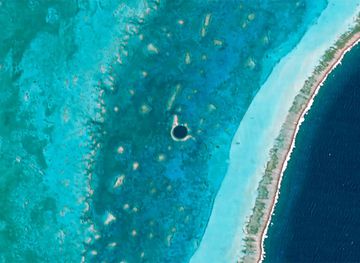
Explore more of Belize
Discover Belize: A Caribbean paradise known for its stunning barrier reef, rich cultural heritage, and eco-friendly adventures in lush rainforests and pristine waters.
Explore Belize