

Free Caye Caulker Travel Guide & Mobile App
Plan your Caye Caulker trip with Evendo. Get free guides to top attractions, restaurants, hotels, and bars. Web access or download the mobile app.


Caye Caulker, Belize, pairs Caribbean island life with reef excursions, sandy lanes, fresh seafood, sunset sails and a relaxed spirit shaped by sea and community.
An Island Shaped by the Sea
Caye Caulker is a small limestone island off Belize’s Caribbean coast, where sandy lanes, mangrove edges and turquoise water set the rhythm of daily life. There are no large urban streets or conventional city sights; instead, the settlement is a compact village of colourful wooden houses, guesthouses, seafood restaurants, beach bars and small shops. Golf carts and bicycles provide most local transport, while boats connect the island with the Belize mainland, nearby cayes and the coral reef.Read more about Caye Caulker
The Village and the Split
Reef, Lagoon and Local Culture
When is the best time to visit Caye Caulker?
Best: April–June · 31–32°C| Month | High (°C) | Rainfall (mm) |
|---|---|---|
| January | 30 | 70 |
| February | 30 | 60 |
| March | 30 | 50 |
| April (best) | 31 | 40 |
| May (best) | 31 | 30 |
| June (best) | 32 | 30 |
| July | 32 | 30 |
| August | 32 | 30 |
| September | 32 | 30 |
| October | 31 | 40 |
| November | 30 | 50 |
| December | 30 | 60 |
Getting to and around Caye Caulker
How to get there
Transportation
Best attractions in Caye Caulker
Caye Caulker’s attractions are closely tied to its marine setting and compact village life. The Belize Barrier Reef lies offshore, making the island a base for snorkelling and diving among coral, rays, turtles and tropical fish, subject to local conditions and conservation rules. The Caye Caulker Marine Reserve protects important surrounding waters and gives guided excursions a strong environmental dimension. On land, the Split offers one of the island’s most recognisable landscapes, with a narrow channel separating the settled south from the quieter northern section. The Caye Caulker Forest Reserve provides a glimpse of mangrove and island habitat, while the village’s sandy streets, jetties and colourful houses reward unhurried exploration. A sunset sail reveals the island from the water, and short boat trips may visit nearby reef sites rather than land-based attractions. Caye Caulker has few conventional museums or monumental sights; its appeal comes from the close relationship between a working Caribbean community, shallow lagoon waters and the reef beyond.
-
Tourist attraction
Ragga Sailing Adventures
Experience unforgettable sailing and snorkeling adventures in the crystal-clear waters of Caye Caulker, Belize with Ragga Sailing Adventures.
10 min walk · 0.8 km from city centre
-
SCUBA tour agency
Frenchie's Diving Services
Discover the underwater paradise of Caye Caulker with Frenchie's Diving Services, your gateway to unforgettable SCUBA adventures and marine wonder.
11 min walk · 0.9 km from city centre
-
Tourist attraction
Tarpon feeding dock
Discover the thrill of feeding majestic tarpon at the Tarpon Feeding Dock in Belize – an unforgettable adventure amidst stunning coastal views.
9 min walk · 0.7 km from city centre
-
SCUBA tour agency
Sunrise Scuba, Snorkeling and Tours
Explore the stunning underwater world of Caye Caulker with Sunrise Scuba's premier snorkeling and diving experiences, perfect for all adventurers.
10 min walk · 0.8 km from city centre


Best landmarks in Caye Caulker
Caye Caulker’s most significant landmarks are geographical and communal rather than monumental. The Split is the island’s defining physical feature, a narrow waterway that separates the southern village from the less developed northern section and illustrates how storms, tidal movement and human intervention have shaped the caye. Caye Caulker Airport, close to the settlement, is a practical landmark of the island’s connection with mainland Belize and regional tourism. The water-taxi landing and surrounding jetties represent the continuing importance of maritime travel, while the village’s wooden houses, small churches and low-rise waterfront buildings express the architectural character of a coastal community rather than a formal historic district. The Caye Caulker Marine Reserve is a landmark of environmental importance in the surrounding sea, linking the island to Belize’s wider reef-protection efforts. Together, these places provide a record of geography, transportation, community life and marine stewardship.
-
Grill
The Lazy Lizard
Discover the laid-back charm of The Lazy Lizard, a delightful bar and grill at Caye Caulker's Split, serving delicious food and drinks with stunning views.
13 min walk · 1.0 km from city centre
-
Cafe
Ice and Beans Cafe
Discover delicious cuisine and a warm beachside atmosphere at Ice and Beans Cafe in Caye Caulker, where every meal is a tropical experience.
9 min walk · 0.7 km from city centre
-
Tour operator
Caveman Snorkeling Tours
Explore the vibrant marine life of Belize with Caveman Snorkeling Tours, your gateway to unforgettable underwater adventures in Caye Caulker.
10 min walk · 0.8 km from city centre
-
Resort hotel
Iguana Reef Inn
Experience the tranquility of Iguana Reef Inn in Caye Caulker, Belize – a perfect resort hotel for nature lovers and adventure seekers alike.
7 min walk · 0.6 km from city centre


Explore Caye Caulker on the map
Plan your Caye Caulker trip on one map. See where the top attractions, landmarks, restaurants, bars and hotels are, find what's near where you're staying, and book hotels and experiences in a few clicks.
Best hotels in Caye Caulker
Best restaurants in Caye Caulker
Caye Caulker’s food culture reflects its fishing heritage, Belizean Creole influences and proximity to the Caribbean Sea. Menus commonly centre on grilled or fried fish, lobster and conch when seasonally and legally available, alongside rice and beans, plantain, ceviche, stewed dishes and fresh salads. Coconut, lime, chilli and local spices appear frequently, while casual stalls and small eateries may serve fry jacks, tacos, burgers or barbecue in an informal setting. Waterfront restaurants and open-air dining rooms provide the island’s characteristic atmosphere, though small kitchens can work with limited supplies and menus may change with the catch and deliveries. The village streets contain the greatest concentration of places to eat, with food stands and bakeries adding daytime options. Visitors should check current fishing seasons and conservation rules before ordering marine species, particularly lobster and conch.
-
Grill
The Lazy Lizard
Experience the best of Caribbean dining at The Lazy Lizard on Caye Caulker - where relaxation meets delicious grilled cuisine.
13 min walk · 1.0 km from city centre
-
Restaurant
Ice and Beans Cafe
Experience tropical flavors at Ice and Beans Cafe in Caye Caulker – your go-to spot for breakfast, desserts, and oceanfront relaxation.
9 min walk · 0.7 km from city centre
-
Grill
The Pelican Sunset Bar
Experience unforgettable sunsets at The Pelican Sunset Bar in Caye Caulker, where delicious grilled cuisine meets stunning Caribbean views.
3 min walk · 0.2 km from city centre
-
Restaurant
Chef Juan's Kitchen and Pastries
Experience authentic Belizean flavors at Chef Juan's Kitchen and Pastries in Caye Caulker—where every dish tells a story.
9 min walk · 0.7 km from city centre


Best bars in Caye Caulker
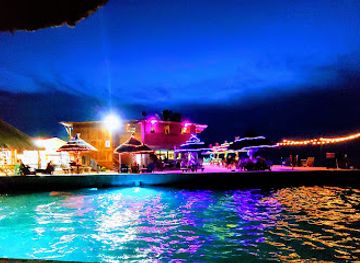
Evenings on Caye Caulker are generally relaxed rather than club-driven. Waterside bars around the village and the Split serve as social meeting points, with Caribbean music, rum-based drinks, local beer and views across the lagoon. Sunset is a major part of the island’s evening rhythm, followed by casual gatherings, small live-music performances and occasional dancing rather than a large late-night circuit. Some venues are lively, but the settlement remains residential and compact, so sound and movement quickly carry beyond the waterfront. The island’s nightlife also includes sunset sails, informal beach gatherings and conversations on jetties, offering alternatives to drinking-focused entertainment. Opening patterns and entertainment schedules can vary with the season, weather and local events, and visitors should arrange safe transport if moving between distant parts of the island after dark.
-
Grill
The Lazy Lizard
Experience the vibrant atmosphere and delicious cuisine at The Lazy Lizard, the ultimate bar and grill on Caye Caulker.
13 min walk · 1.0 km from city centre
-
Grill
The Pelican Sunset Bar
Experience the best of Caye Caulker at The Pelican Sunset Bar, where delicious grill dishes meet breathtaking sunset views over the Caribbean Sea.
3 min walk · 0.2 km from city centre
-
Lounge
Enjoy Lounge & Restaurant
Experience the vibrant flavors and inviting atmosphere at Enjoy Lounge & Restaurant in Caye Caulker, the perfect spot for relaxation and culinary delights.
9 min walk · 0.7 km from city centre
-
Bar
Saltys
Discover the vibrant atmosphere and refreshing drinks at Saltys, the ultimate bar experience in Caye Caulker, Belize.
7 min walk · 0.6 km from city centre


Best nightclubs in Caye Caulker
Evenings on Caye Caulker are generally relaxed rather than club-driven. Waterside bars around the village and the Split serve as social meeting points, with Caribbean music, rum-based drinks, local beer and views across the lagoon. Sunset is a major part of the island’s evening rhythm, followed by casual gatherings, small live-music performances and occasional dancing rather than a large late-night circuit. Some venues are lively, but the settlement remains residential and compact, so sound and movement quickly carry beyond the waterfront. The island’s nightlife also includes sunset sails, informal beach gatherings and conversations on jetties, offering alternatives to drinking-focused entertainment. Opening patterns and entertainment schedules can vary with the season, weather and local events, and visitors should arrange safe transport if moving between distant parts of the island after dark.
-
Grill
The Lazy Lizard
Experience the laid-back charm of Caye Caulker at The Lazy Lizard, where delicious grilled dishes meet stunning Caribbean views.
13 min walk · 1.0 km from city centre
-
Lounge
Enjoy Lounge & Restaurant
Experience the vibrant spirit of Caye Caulker at Enjoy Lounge & Restaurant, where delicious food meets lively entertainment.
9 min walk · 0.7 km from city centre
-
Bar
I and I Reggae Bar
Experience the vibrant rhythms of Caribbean culture at I and I Reggae Bar, where music and nightlife blend for an unforgettable evening.
5 min walk · 0.4 km from city centre
-
Bar
TipSea Beach Bar
Experience the vibrant atmosphere and breathtaking views at TipSea Beach Bar in Caye Caulker, your tropical getaway for relaxation and fun.
7 min walk · 0.6 km from city centre


Best shops in Caye Caulker
Shopping on Caye Caulker is small-scale and practical, centred on independent shops, market-style stalls and waterfront businesses rather than large retail centres. Visitors will find locally made jewellery, carved souvenirs, paintings, clothing, beachwear and crafts inspired by Belize’s marine environment, alongside basic provisions and equipment for island activities. Small food shops and bakeries supply everyday items, while vendors may offer hot sauces, spices, rum-based products or packaged Belizean foods suited to taking home. The main village streets contain the greatest selection, though stock and opening patterns can vary with deliveries and the season. Shopping is closely connected to the island’s tourism economy, so distinguishing locally made work from imported souvenirs may require asking the seller about materials and production. As Caye Caulker has limited land and freshwater, visitors should avoid buying shells, coral or marine specimens taken from the reef.
-
Cafe
Ice and Beans Cafe
Discover the flavors of Caye Caulker at Ice and Beans Cafe, where delicious food meets breathtaking beachfront views.
9 min walk · 0.7 km from city centre
-
Chocolate cafe
Belize Chocolate Company
Discover the Rich Flavors of Belize at the Belize Chocolate Company - A Chocolate Lover's Paradise in Caye Caulker.
8 min walk · 0.6 km from city centre
-
Art gallery
Red Flower Gallery & Boutique
Explore the vibrant art and unique handcrafted treasures at Red Flower Gallery & Boutique in Caye Caulker, Belize.
5 min walk · 0.4 km from city centre
-
Ice Cream
The Creamery Ice Cream Shop
Discover the sweet paradise of The Creamery Ice Cream Shop in Caye Caulker, where every scoop is a taste of tropical bliss.
10 min walk · 0.8 km from city centre


Get your free copy of our complete guide to Caye Caulker, delivered straight to you.
Everything on this page, from attractions and restaurants to essentials and local phrases, in one PDF you can read offline, print or share.
Already have an account? Sign in
Your Caye Caulker guide is ready.
We'll send it to · Not you? Sign out

Getting your guide ready…
We are putting together a fresh copy of the Caye Caulker guide. This can take up to a minute.
This can take a few moments. If your browser asks, choose Allow so the download can start. You'll find the guide in your Downloads folder.
Nothing happened? Download it again
Sorry, the guide is taking longer than usual. Please try again in a minute, or get it by email instead.
Caye Caulker essentials
Currency and Payment
Safety
Emergency Situations
Do's and Don'ts
Local Tips
From Eve
Local phrases worth knowing
You don't need to get them perfect. A few words go a long way, and locals appreciate the effort.
Basics
| English | Local | Say it |
|---|---|---|
| Hello | Wah gwan | [wah gwan] |
| Goodbye | Later | [lay-ter] |
| Yes | Ya man | [ya man] |
| No | Nah man | [nah man] |
| Please/You're welcome | Plis | [plees] |
| Thank you | Big up | [big up] |
| Excuse me/Sorry | Sarry | [sah-ree] |
| How are you? | How di body? | [hao dee bah-dee] |
| Fine. And you? | Mi deh yah | [mee deh yah] |
| Do you speak English? | Yuh speak English? | [yuh speak ing-glish] |
| I don't understand | Mi noh undastan | [mee noh un-duhs-tan] |
Eating & Drinking
| English | Local | Say it |
|---|---|---|
| I'd like to see the menu, please | Mi wah si di menu, plis | [mee wah see dee menu, plees] |
| I don't eat meat | Mi noh nyam meat | [mee noh nyam meet] |
| Cheers! | Chai! | [chai] |
| I would like to pay, please | Mi wah pay, plis | [mee wah pay, plees] |
Emergencies
| English | Local | Say it |
|---|---|---|
| Help! | Help! | [help] |
| Go away! | Go weh! | [go way] |
| Call the Police! | Call di Police! | [call dee police] |
| Call a doctor! | Call di doctor! | [call dee doctor] |
| I'm lost | Mi lost | [mee lost] |
| I'm ill | Mi feel bad | [mee feel bad] |
Shopping
| English | Local | Say it |
|---|---|---|
| I'd like to buy... | Mi wah buy... | [mee wah buy] |
| I'm just looking | Mi di look | [mee dee look] |
| How much is it? | Eena hao much? | [ee-nah hao much] |
| That's too expensive | Dat too much | [dat too much] |
| Can you lower the price? | Yuh cud drop di price? | [yuh kud drop dee price] |
Time & Numbers
| English | Local | Say it |
|---|---|---|
| What time is it? | Wah time it deh? | [wah time it deh] |
| It's one o'clock | It one o'clock | [it one o-clock] |
| Half past (10) | Haaf past ten | [haaf past ten] |
| Morning | Mawnin | [mawnin] |
| Afternoon | Eftanuun | [ef-ta-noon] |
| Evening | Iivnin | [eev-neen] |
| Yesterday | Yestadeh | [yes-tah-deh] |
| Today | Tideh | [tee-deh] |
| Tomorrow | Tamara | [ta-ma-ra] |
| 1 | One | [wahn] |
| 2 | Tu | [too] |
| 3 | Chrii | [chree] |
| 4 | Foh | [foh] |
| 5 | Faiv | [fayv] |
| 6 | Six | [siks] |
| 7 | Sevn | [sev-en] |
| 8 | Eit | [ate] |
| 9 | Nain | [nayn] |
| 10 | Ten | [ten] |
Transport & Directions
| English | Local | Say it |
|---|---|---|
| Where's a/the...? | Weh di...? | [weh dee] |
| What's the address? | Weh di address? | [weh dee address] |
| Can you show me (on the map)? | Yuh cud show me (pan di map)? | [yuh kud show mee (pan dee map)] |
| When's the next (bus)? | Wen di nex (bus)? | [wen dee nex (bus)] |
| A ticket (to ....) | A tiket (to ....) | [ah tik-et (to)] |
History of Caye Caulker
Maya Sea Routes and Early Settlement
The waters around Caye Caulker formed part of the maritime world used by Maya communities along the Belizean coast and offshore cayes. The island itself is low and exposed, with no large ceremonial centre comparable to mainland sites, but its position beside the barrier reef made it useful as a place associated with fishing, navigation and movement through the coastal zone. The name Caye Caulker has several proposed explanations, and its precise origin remains uncertain. Archaeological evidence and regional history nevertheless place the island within a much older network of coastal exchange than its modern tourism industry suggests.
Colonial Coast and Maritime Commerce
During the period of British influence in Belize, the cayes became linked to a coastal economy based on timber, marine resources and small-scale trade. Caye Caulker developed as a modest settlement rather than a fortified colonial town, and its residents relied heavily on the sea for food and income. British Honduras, as the territory was known until independence in 1981, drew workers and families from different parts of the Caribbean and Central America. The resulting mixture of English-speaking Belizean, Creole and other cultural influences helped shape the language, food and social customs still evident on the island.
Fishing, Coconut and Village Life
For much of the nineteenth and twentieth centuries, Caye Caulker’s economy centred on fishing, coconut cultivation and other forms of subsistence and small-scale commerce. Families lived close to the shoreline, using boats to reach fishing grounds and neighbouring settlements. Lobster and conch later became important commercial products, although changing regulations and conservation measures have shaped how these fisheries operate. The built environment remained low-rise and practical, with wooden houses, simple jetties and narrow sandy routes reflecting the island’s exposure to tropical weather and its dependence on maritime transport.
Hurricane Hattie and Reconstruction
Hurricane Hattie struck Belize in 1961 and caused severe destruction across the country, including on low-lying coastal islands such as Caye Caulker. The storm altered buildings, livelihoods and patterns of settlement, while reconstruction reinforced the importance of sturdier structures and preparedness in a hurricane-prone region. Belize’s wider national capital was subsequently relocated from Belize City to Belmopan, and the country’s coastal communities continued adapting to the risks of storm surge and flooding. On Caye Caulker, memories of the hurricane remain part of local historical consciousness and help explain the practical, weather-conscious character of island life.
Tourism and the Modern Island
Caye Caulker’s transition from a predominantly fishing community to a tourism destination gathered pace in the late twentieth century, as visitors came for access to the Belize Barrier Reef and the island’s informal atmosphere. Small guesthouses, restaurants, dive centres and boat operators gradually joined the older village economy. Tourism has brought new employment and investment while also increasing pressure on freshwater, waste management, land and fragile coastal habitats. Today, fishing, hospitality and marine recreation coexist, and the island’s identity continues to be shaped by the relationship between a close-knit settlement and the reef environment that supports it.
Caye Caulker in Photos
Browse through our photo collection highlighting the charm and character of the destination.
Cities near Caye Caulker
The closest cities to Caye Caulker, if you have time for more than one stop.
-

-

-
-

-


Swipe for more cities
Explore more
Explore more of Belize
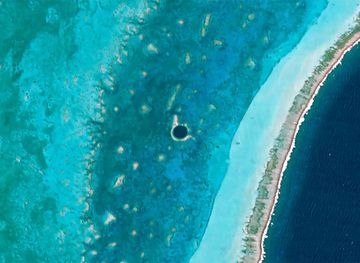
Discover Belize: A Caribbean paradise known for its stunning barrier reef, rich cultural heritage, and eco-friendly adventures in lush rainforests and pristine waters.
Explore Belize