

Lighthouse Reef Atoll Travel Guide - Free Web & App
Your ultimate guide to Lighthouse Reef Atoll. Discover top landmarks, proposed trips, and local tips. Free on the web or via the Evendo companion app.


Lighthouse Reef Atoll, Belize, combines the Great Blue Hole, Half Moon Caye, coral reefs, diving, snorkelling and wildlife in a remote Caribbean seascape.
Reef, Caye and Open Sea
Lighthouse Reef Atoll lies in the Caribbean Sea, east of mainland Belize, as one of the country’s most remote and celebrated marine destinations. Rather than a conventional resort area, it is a broad ring of coral reef, shallow banks and small, low-lying cayes surrounding a lagoon and open-water channels. There are no mainland-style streets, shops or settled town centre; visitors arrive by boat, liveaboard vessel or organised marine excursion, often travelling for several hours across exposed sea.Read more about Lighthouse Reef Atoll
The Great Blue Hole and Half Moon Caye
A Remote Marine Environment
When is the best time to visit Lighthouse Reef Atoll?
Best: April, June–July · 31–32°C| Month | High (°C) | Rainfall (mm) |
|---|---|---|
| January | 29 | 75 |
| February | 29 | 70 |
| March | 30 | 60 |
| April (best) | 31 | 50 |
| May | 32 | 45 |
| June (best) | 32 | 30 |
| July (best) | 32 | 30 |
| August | 32 | 40 |
| September | 31 | 50 |
| October | 31 | 60 |
| November | 30 | 70 |
| December | 29 | 75 |
Getting to and around Lighthouse Reef Atoll
How to get there
Transportation
Best attractions in Lighthouse Reef Atoll
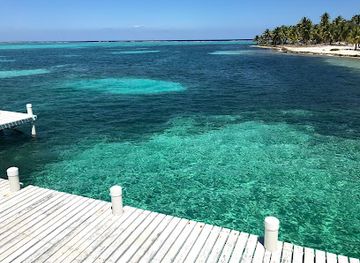
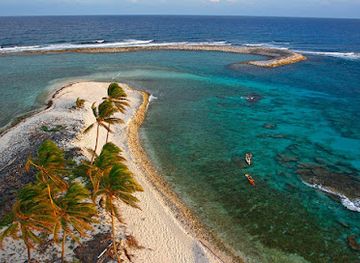
The Great Blue Hole is Lighthouse Reef Atoll’s defining attraction: a vast circular marine sinkhole with dramatic depth, flooded cave formations and a dark centre surrounded by clear reef water, visited chiefly by experienced divers. Half Moon Caye offers the atoll’s most substantial shore experience, combining a sandy beach, low coastal vegetation, walking areas and protected seabird habitat, with an elevated viewpoint where permitted. Around the lagoon and outer rim, dive and snorkel sites reveal coral gardens, drop-offs, channels and open-water habitats rather than a conventional sequence of land-based sights. Lighthouse Reef itself is the attraction at landscape scale, with changing colours across shoals, reef flats and deeper water. Excursions may also include additional unnamed or locally designated sites selected according to weather, sea state, visibility and conservation arrangements, so the precise itinerary varies between day boats and liveaboard vessels.
-
Reef
Lighthouse Reef
Explore Lighthouse Reef, a UNESCO World Heritage Site, renowned for its stunning marine life, vibrant coral reefs, and unforgettable diving experiences in Belize.
-
Tourist attraction
Huracan Diving Lodge
Experience the vibrant marine life and stunning waters of Lighthouse Reef at Huracan Diving Lodge, the ultimate destination for divers and nature lovers.
-
Tourist attraction
Sandbore Caye Light
Explore the captivating Sandbore Caye Light in Belize, a picturesque landmark that offers stunning views and a rich maritime heritage.

Best landmarks in Lighthouse Reef Atoll
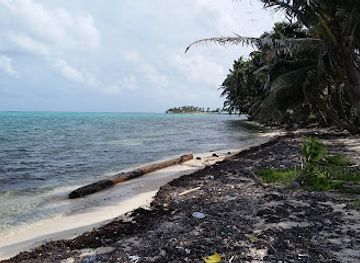
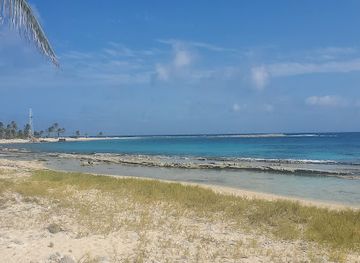
The Great Blue Hole is both a geological landmark and an emblem of Belizean marine tourism, its near-circular flooded limestone caverns descending through the reef platform. Half Moon Caye is the atoll’s principal terrestrial landmark, recognised for its curved beach, low woodland and important seabird habitat rather than for monumental architecture. The caye’s observation area provides a landward perspective across the reef and surrounding Caribbean, subject to local access arrangements. Beyond these named features, the atoll’s natural landmarks are its coral rim, shallow lagoon, steep outer walls and shifting channels, whose forms become most legible from the water or beneath it. There are no urban monuments, historic townscapes or extensive built attractions on Lighthouse Reef; its significance lies in the relationship between submerged geology, living reef and protected island habitat.
-
Landmark
Half Moon Caye
Discover the breathtaking beauty and rich biodiversity of Half Moon Caye, Belize's tropical paradise and UNESCO World Heritage Site.
-
Reef
Lighthouse Reef
Explore the breathtaking beauty of Lighthouse Reef, a top diving destination in Belize, renowned for its vibrant marine life and stunning coral formations.
-
 Resort hotel
Itza Resort
Discover the breathtaking beauty and adventure at Itza Resort, Belize's premier destination for diving and relaxation near Long Caye Lighthouse Reef.
-
Resort hotel
Huracan Diving Lodge
Explore the depths of Belize's underwater world at Huracan Diving Lodge, your gateway to adventure and relaxation in a tropical paradise.
Explore Lighthouse Reef Atoll on the map
Plan your trip on one map. See where the top attractions, landmarks, restaurants and hotels are, and book hotels and experiences in a few clicks.
Best hotels in Lighthouse Reef Atoll
Get your free copy of our complete guide to Lighthouse Reef Atoll, delivered straight to you.
Everything on this page, from attractions and restaurants to essentials and local phrases, in one PDF you can read offline, print or share.
Already have an account? Sign in
Your Lighthouse Reef Atoll guide is ready.
We'll send it to · Not you? Sign out

Getting your guide ready…
We are putting together a fresh copy of the Lighthouse Reef Atoll guide. This can take up to a minute.
This can take a few moments. If your browser asks, choose Allow so the download can start. You'll find the guide in your Downloads folder.
Nothing happened? Download it again
Sorry, the guide is taking longer than usual. Please try again in a minute, or get it by email instead.
Lighthouse Reef Atoll essentials
Currency and Payment
Safety
Emergency Situations
Do's and Don'ts
Local Tips
From Eve
Local phrases worth knowing
You don't need to get them perfect. A few words go a long way, and locals appreciate the effort.
Basics
| English | Local | Say it |
|---|---|---|
| Hello | Hola | [oh-lah] |
| Goodbye | Adiós | [ah-dee-ohs] |
| Yes | Sí | [see] |
| No | No | [noh] |
| Please/You're welcome | Por favor/De nada | [por fah-vor/deh nah-dah] |
| Thank you | Gracias | [grah-see-ahs] |
| Excuse me/Sorry | Disculpe/Lo siento | [dee-skool-peh/loh see-ehn-toh] |
| How are you? | ¿Cómo estás? | [koh-moh ehs-tahs] |
| Fine. And you? | Bien. ¿Y tú? | [byen. ee too] |
| Do you speak English? | ¿Hablas inglés? | [ah-blahs een-glehs] |
| I don't understand | No entiendo | [noh ehn-tee-ehn-doh] |
Eating & Drinking
| English | Local | Say it |
|---|---|---|
| I'd like to see the menu, please | Me gustaría ver el menú, por favor | [meh goos-tah-ree-ah behr ehl meh-noo, por fah-vor] |
| I don't eat meat | No como carne | [noh koh-moh kahr-neh] |
| Cheers! | ¡Salud! | [sah-loohd] |
| I would like to pay, please | Me gustaría pagar, por favor | [meh goos-tah-ree-ah pah-gahr, por fah-vor] |
Emergencies
| English | Local | Say it |
|---|---|---|
| Help! | ¡Ayuda! | [ah-yoo-dah] |
| Go away! | ¡Vete! | [veh-teh] |
| Call the Police! | ¡Llame a la policía! | [yah-meh ah lah poh-lee-see-ah] |
| Call a doctor! | ¡Llame a un doctor! | [yah-meh ah oon dohk-tohr] |
| I'm lost | Estoy perdido | [ehs-toy pehr-dee-doh] |
| I'm ill | Estoy enfermo | [ehs-toy ehn-fehr-moh] |
Shopping
| English | Local | Say it |
|---|---|---|
| I'd like to buy... | Me gustaría comprar... | [meh goos-tah-ree-ah kohm-prahr...] |
| I'm just looking | Sólo estoy mirando | [soh-loh ehs-toy meer-ahn-doh] |
| How much is it? | ¿Cuánto cuesta? | [kwan-toh kwehs-tah] |
| That's too expensive | Eso es demasiado caro | [eh-soh es deh-mah-syah-doh kah-roh] |
| Can you lower the price? | ¿Puede bajar el precio? | [pweh-deh bah-hahr ehl preh-syoh] |
Time & Numbers
| English | Local | Say it |
|---|---|---|
| What time is it? | ¿Qué hora es? | [keh oh-rah es] |
| It's one o'clock | Es la una en punto | [ehs lah oo-nah ehn poon-toh] |
| Half past (10) | Media (10) | [meh-dee-ah (dheez)] |
| Morning | Mañana | [mah-nyah-nah] |
| Afternoon | Tarde | [tahr-deh] |
| Evening | Noche | [noh-cheh] |
| Yesterday | Ayer | [ah-yehr] |
| Today | Hoy | [oy] |
| Tomorrow | Mañana | [mah-nyah-nah] |
| 1 | Uno | [oo-noh] |
| 2 | Dos | [dohs] |
| 3 | Tres | [trehs] |
| 4 | Cuatro | [kwah-troh] |
| 5 | Cinco | [seen-koh] |
| 6 | Seis | [says] |
| 7 | Siete | [syeh-teh] |
| 8 | Ocho | [oh-choh] |
| 9 | Nueve | [nweh-veh] |
| 10 | Diez | [dyehs] |
Transport & Directions
| English | Local | Say it |
|---|---|---|
| Where's a/the...? | ¿Dónde está...? | [dohn-deh ehs-tah] |
| What's the address? | ¿Cuál es la dirección? | [kwal ehs lah dee-rehk-syon] |
| Can you show me (on the map)? | ¿Puede mostrarme (en el mapa)? | [pweh-deh mohs-trar-meh (ehn ehl mah-pah)] |
| When's the next (bus)? | ¿Cuándo es el próximo (autobús)? | [kwan-doh ehs ehl proh-ksee-moh (ow-toh-boos)] |
| A ticket (to ....) | Un boleto (para ....) | [oon boh-leh-toh (pah-rah)] |
History of Lighthouse Reef Atoll
A Limestone Reef Landscape
Lighthouse Reef Atoll is a product of Caribbean limestone and coral growth shaped by changing sea levels over geological time. The Great Blue Hole began as a largely subaerial cave system during periods when sea level was lower; later flooding converted the caverns into the marine sinkhole seen today. Stalactites and other cave formations found by divers record phases when the chambers were above water, while the surrounding reef reflects continuing biological construction in warm tropical seas. This geological history explains the sharp contrast between the Hole’s deep blue centre and the shallow reef platform around it.
Maya Maritime Connections
The cayes and reefs of Belize were part of a wider maritime landscape used by Maya communities, whose settlements on the mainland and larger coastal islands were connected by canoe routes and exchange networks. Lighthouse Reef was not a major inland urban centre, but offshore reefs, shoals and cayes formed part of the resources and navigational environment known to coastal people. Fishing, shellfish gathering and movement through the barrier-reef zone linked the sea with communities on the mainland and nearby islands. Much of this history is best understood through the wider Maya coastal world rather than through substantial surviving settlement remains on the atoll itself.
Sailors, Fisheries and Offshore Use
After European contact and the growth of British influence in Belize, the offshore reef system became significant to mariners, fishers and vessels navigating the Caribbean approaches. Its shallow banks and submerged hazards demanded local knowledge, while the surrounding waters supported fisheries that remained important to coastal communities. Small cayes offered occasional shelter or working ground but did not develop into large permanent settlements. The atoll’s modern identity therefore grew from its marine setting: navigation, fishing and seaborne travel shaped human contact with Lighthouse Reef more strongly than agriculture or urban development.
Protection and Marine Tourism
During the twentieth century, improved boats, diving equipment and marine research brought Lighthouse Reef to international attention, particularly through exploration of the Great Blue Hole. Conservation became increasingly important as Belize developed a national network of marine protected areas and sought to manage pressure on reefs, seabirds and coastal habitats. Lighthouse Reef Atoll forms part of the Belize Barrier Reef Reserve System, inscribed on the UNESCO World Heritage List in 1996. Half Moon Caye and the Great Blue Hole are now recognised primarily as protected natural sites, while carefully managed diving and snorkelling tourism provides the principal visitor connection with the atoll.
Lighthouse Reef Atoll in Photos
Browse through our photo collection highlighting the charm and character of the destination.
Neighbouring destination travel guides
The closest destinations to Lighthouse Reef Atoll, if you have time for more than one.
-

-

-

-

-


Swipe for more destinations
Explore more

Explore more of Coastal Plains
Discover the Coastal Plains of Belize: A Serene Blend of Pristine Beaches, Rich Biodiversity, and Cultural Heritage.
Explore Coastal Plains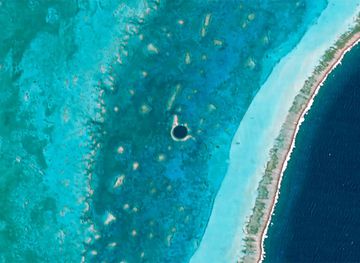
Explore more of Belize
Discover Belize: A Caribbean paradise known for its stunning barrier reef, rich cultural heritage, and eco-friendly adventures in lush rainforests and pristine waters.
Explore Belize