

Free Donga Travel Guide & Mobile App
Explore Donga with free travel guides. Discover regional history, expert tips, proposed trips, and audio guides on web or mobile app.


Explore Donga in northern Benin for Djougou’s markets, Bassila’s forests, Atakora foothills and living Bariba, Yom and Lokpa traditions.
Read more about Donga
When is the best time to visit Donga?
Best: December–February · 31–32°C| Month | High (°C) | Rainfall (mm) |
|---|---|---|
| January (best) | 31 | 2 |
| February (best) | 32 | 5 |
| March | 33 | 30 |
| April | 35 | 50 |
| May | 34 | 80 |
| June | 33 | 120 |
| July | 32 | 150 |
| August | 32 | 160 |
| September | 32 | 140 |
| October | 32 | 80 |
| November | 32 | 30 |
| December (best) | 31 | 5 |
Getting to and around Donga
How to get there
Transportation
Best attractions in Donga
Donga’s attractions are primarily landscape-based, cultural and experiential rather than concentrated in a single formal tourism circuit. Djougou offers the department’s clearest introduction through its markets, streets, religious buildings and role as a northern trading centre. Around Bassila, the countryside becomes greener and more heavily wooded, with the Wari-Maro classified forest providing an important setting for guided nature observation and discussion of forest conservation. The department’s cultivated landscapes are also worth seeing: yam fields, seasonal waterways and village compounds reveal how agriculture shapes the region. In the west and north-west, the terrain rises towards the Atakora foothills, where journeys around Ouaké can be combined with views towards Mount Sokbaro, widely regarded as Benin’s highest summit. Local guides can help visitors understand plants, farming practices, oral traditions and the boundaries between ordinary countryside and culturally significant sites. Donga is not a destination for a dense schedule of ticketed museums or major monuments; its appeal lies in moving through a living region, meeting its market towns and observing the ecological shift from open farmland to woodland and hill country.
-
Museum
Natitingou Regional Museum
Uncover the essence of Benin's culture at Natitingou Regional Museum, a must-visit destination for history and art enthusiasts.
-
Market
Grand Marché de Djougou
Experience the lively atmosphere of Grand Marché de Djougou, where culture, commerce, and community converge in a vibrant market setting.
-
Tourist attraction
Chutes de Kota
Explore the enchanting Chutes de Kota, a breathtaking waterfall in Benin, where nature's beauty meets tranquility for an unforgettable travel experience.
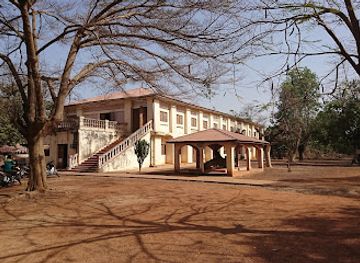
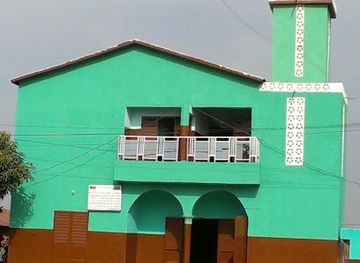

Best landmarks in Donga
Mount Sokbaro, near Donga’s western border with Togo, is the department’s most prominent natural landmark and is commonly identified as the highest point in Benin. Its significance is geographical as well as visual, marking the transition from the inland plains towards the Atakora highlands. The Donga River and seasonal waterways contribute a quieter landscape landmark, linking cultivated areas and woodland through a region whose appearance changes markedly between wet and dry seasons. Around Bassila, the Wari-Maro classified forest represents an important protected woodland landscape rather than a single architectural monument, and its value lies in biodiversity, forest history and the relationship between conservation and rural livelihoods. Djougou’s market areas and religious architecture are significant urban markers of the town’s long role in regional commerce and Islamic networks, although they should be visited as working places rather than staged monuments. In villages across the department, traditional compounds, shade trees and community spaces provide further evidence of local settlement patterns, but access and photography should always be guided by local permission.
-
Market
Dantokpa Market
Explore Dantokpa Market in Cotonou, a vibrant hub of culture, crafts, and culinary delights in West Africa's largest market.
-
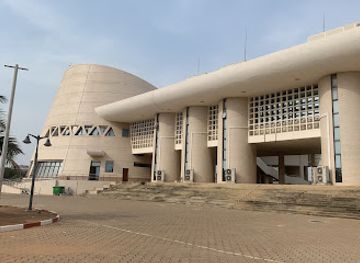
Conference center
Congress Palace
Explore the Congress Palace in Cotonou, a stunning conference center that showcases modern architecture and vibrant local culture.
-
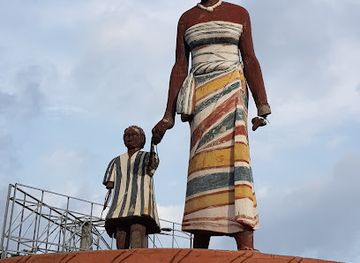
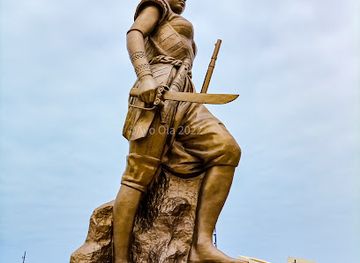
Sculpture
Amazon Statue
Discover the Amazon Statue in Cotonou: A magnificent sculpture celebrating nature’s beauty and biodiversity in a serene park setting.
-
 Hotel
HotelLa Casa Del Papa
Experience the perfect blend of comfort and culture at La Casa Del Papa, a serene hotel along Ouidah's stunning coastline.
Explore Donga on the map
Plan your trip on one map. See where the top cities, national parks and sights are, and book hotels and experiences in a few clicks.
Best hotels in Donga
Best restaurants in Donga
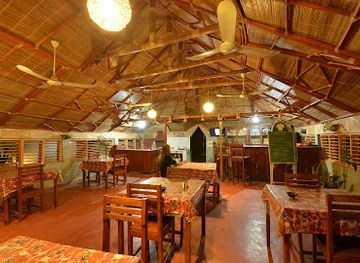
Eating in Donga is closely connected to the agricultural seasons and to the food traditions of northern Benin. Djougou’s informal restaurants, market stalls and small eateries commonly serve dishes based on yam, maize, sorghum, cassava and rice, accompanied by sauces containing vegetables, beans, meat or fish where available. Pounded yam and other yam preparations are particularly appropriate choices in a department where yam cultivation is economically and culturally important. Along the roads and in market towns, grilled meat, fried snacks and simple rice dishes provide practical meals for travellers, while cafés offer coffee, tea and cool drinks. Local millet beer, often called tchoukoutou, may be encountered in northern communities; taste it respectfully and ask about local customs before entering a brewing compound. Donga is better suited to straightforward regional cooking than to a formal fine-dining scene, and the freshest choices are often found early in the day when market produce is plentiful.
-
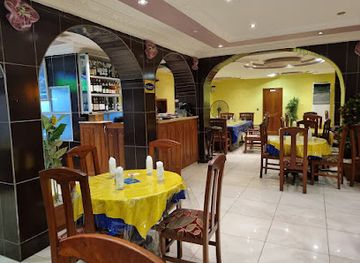
Restaurant
Restaurant Chez Maman Benin
Discover authentic Beninese flavors at Restaurant Chez Maman in Cotonou—where every meal tells a story of rich culinary heritage.
-
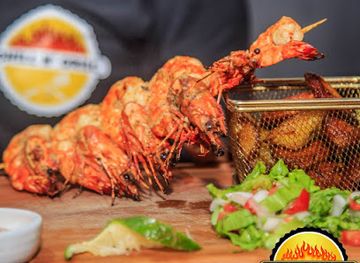
Restaurant
Restaurant Chill n' Grill cotonou
Experience the vibrant flavors and nightlife at Chill n' Grill in Cotonou - where delicious grilled dishes meet lively entertainment.
-
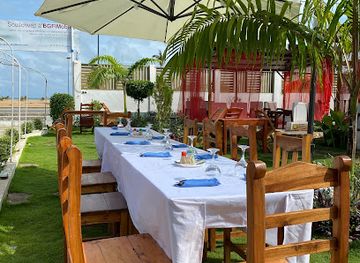
Restaurant
Face À La Mer
Experience exquisite local cuisine with stunning ocean views at Face À La Mer in Cotonou.
-
West African
Chez Guillaume
Experience authentic West African flavors at Chez Guillaume in Natitingou, where every dish tells a story of culture and tradition.
Best bars in Donga
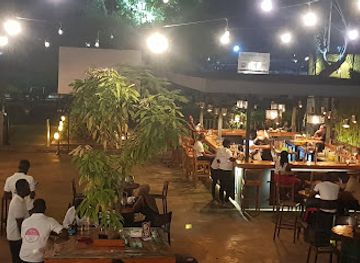
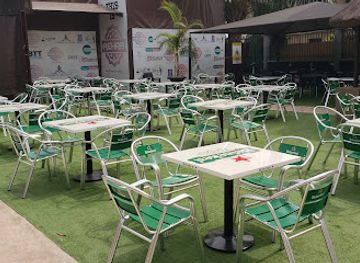
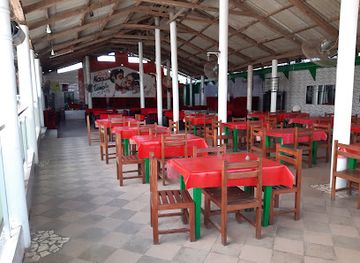
Evening life in Donga is centred on modest bars, beer gardens, roadside restaurants and neighbourhood gathering places rather than a large nightclub circuit. Djougou has the broadest choice of places to eat, drink and listen to music, while Bassila and smaller towns tend to become quiet earlier, with social life focused on cafés, local bars and family or community gatherings. Live music and dancing may accompany particular celebrations, but events and venues can be seasonal or informal rather than permanently advertised. Travellers should ask locally about suitable places and return to accommodation before roads and transport become difficult. Tchoukoutou and other locally brewed drinks are part of regional social life, but visitors need not drink alcohol to participate respectfully. In rural areas, evenings are often more about conversation, food and the rhythms of ordinary community life than late-night entertainment.
-
Bar
Code Bar
Discover Cotonou's vibrant nightlife at Code Bar – a lively spot for great drinks, music, and unforgettable memories.
-
Lounge
Rehab Lounge
Experience the vibrant nightlife at Rehab Lounge in Benin City, where laughter, music, and good food come together for an unforgettable evening.
-
Lounge
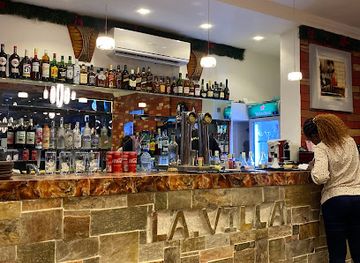
La Villa Classic Lounge Bar
Experience the vibrant nightlife of Cotonou at La Villa Classic Lounge Bar, a chic retreat for cocktails, entertainment, and local ambiance.
-
Bar
Bar Maquis TEMPLE DU SON
Experience the vibrant nightlife of Godomey at Bar Maquis TEMPLE DU SON, where music and camaraderie create the perfect atmosphere.
Best nightclubs in Donga
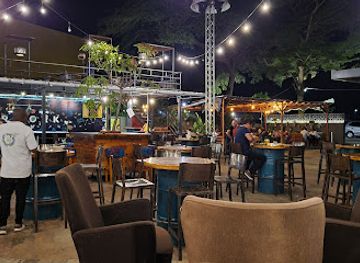
Evening life in Donga is centred on modest bars, beer gardens, roadside restaurants and neighbourhood gathering places rather than a large nightclub circuit. Djougou has the broadest choice of places to eat, drink and listen to music, while Bassila and smaller towns tend to become quiet earlier, with social life focused on cafés, local bars and family or community gatherings. Live music and dancing may accompany particular celebrations, but events and venues can be seasonal or informal rather than permanently advertised. Travellers should ask locally about suitable places and return to accommodation before roads and transport become difficult. Tchoukoutou and other locally brewed drinks are part of regional social life, but visitors need not drink alcohol to participate respectfully. In rural areas, evenings are often more about conversation, food and the rhythms of ordinary community life than late-night entertainment.
-
Bar
Code Bar
Explore the vibrant nightlife at Code Bar in Cotonou, where great drinks meet an electrifying atmosphere for unforgettable evenings.
-
Club
Joker Benin City - Club Joker | Joker Hotel | Joker Kitchen
Discover the electrifying nightlife of Benin City at Joker, a dynamic venue for clubbing, dining, and socializing in Edo, Nigeria.
-
Night club
LE BLACK
Dance the night away at LE BLACK, Cotonou's top nightclub, featuring electrifying music and a vibrant atmosphere perfect for an unforgettable night.
-
Lounge
SMART NIGHT CLUB
Discover the vibrant nightlife of Cotonou at Smart Night Club, where great music and lively atmosphere make for an unforgettable experience.



Best shops in Donga
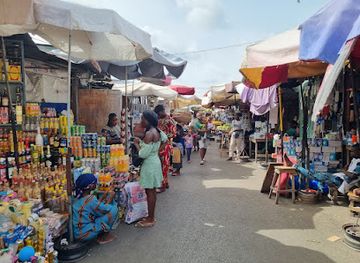
Shopping in Donga is primarily a market and provisions experience, with Djougou serving as the department’s main commercial centre. Visitors can look for yams, maize, sorghum, dried foods, spices, woven fabrics, clothing, leather goods and practical household items, although availability follows the agricultural season. Bassila and smaller market towns offer a more local scale, where stalls serve surrounding farming communities and trading activity is strongest in the morning. Regional food products make more useful souvenirs than generic imported goods: consider packaged spices, grains or non-perishable produce when they can be transported safely. Textiles and locally made garments may be available, but designs and quality vary, so ask before photographing artisans or market sellers. Bargaining is customary for some goods but not every transaction, particularly where prices are fixed or produce is sold by measure. Carry cash in small CFA-franc denominations, as card payments are uncommon in open markets and rural shops.
-
Market
Dantokpa Market
Experience the vibrant culture and bustling energy of Dantokpa Market, a must-visit destination for tourists in Cotonou, Benin.
-
Fresh food market
Marche Ganhi
Dive into the vibrant flavors of Marche Ganhi, Cotonou's premier fresh food market, where local culture and culinary delights come together.
-
Clothing wholesaler
Kantin kwari Cloth Market
Discover the vibrant Kantin Kwari Cloth Market in Kano, Nigeria - a textile paradise bursting with colors, culture, and creativity.
-
Hotel
Paradisia Hôtel
Experience comfort and local charm at Paradisia Hôtel, your perfect base for exploring the vibrant culture of Cotonou, Benin.
Get your free copy of our complete guide to Donga, delivered straight to you.
Everything on this page, from attractions and restaurants to essentials and local phrases, in one PDF you can read offline, print or share.
Already have an account? Sign in
Your Donga guide is ready.
We'll send it to · Not you? Sign out

Getting your guide ready…
We are putting together a fresh copy of the Donga guide. This can take up to a minute.
This can take a few moments. If your browser asks, choose Allow so the download can start. You'll find the guide in your Downloads folder.
Nothing happened? Download it again
Sorry, the guide is taking longer than usual. Please try again in a minute, or get it by email instead.
Donga essentials
Currency and Payment
Safety
Emergency Situations
Do's and Don'ts
Local Tips
From Eve
Local phrases worth knowing
You don't need to get them perfect. A few words go a long way, and locals appreciate the effort.
Basics
| English | Local | Say it |
|---|---|---|
| Hello | Bawé | [bah-way] |
| Goodbye | Fawé | [fah-way] |
| Yes | Wé | [weh] |
| No | Né | [neh] |
| Please/You're welcome | S'il vous plaît | [seel voo pleh] |
| Thank you | Mérci | [mehr-see] |
| Excuse me/Sorry | Pardon | [par-dohn] |
| How are you? | Kó n'kó? | [koh n'koh] |
| Fine. And you? | Mí fín. Kó n'kó? | [mee feen. koh n'koh] |
| Do you speak English? | Kó t'á n'óre Englé? | [koh tah n'oh-ray eng-lay] |
| I don't understand | Né b'á n'dá | [neh bah n-dah] |
Eating & Drinking
| English | Local | Say it |
|---|---|---|
| I'd like to see the menu, please | Mí wá b'á t'ó menu, s'il vous plaît | [mee wah bah toh meh-noo, seel voo pleh] |
| I don't eat meat | Né b'á t'á n'kó | [neh bah tah n-koh] |
| Cheers! | Àn bon appétit! | [ahn bon ah-peh-tee] |
| I would like to pay, please | Mí wá b'á t'ó pái, s'il vous plaît | [mee wah bah toh pie, seel voo pleh] |
Emergencies
| English | Local | Say it |
|---|---|---|
| Help! | Aidé! | [ay-day] |
| Go away! | Fawé! | [fah-way] |
| Call the Police! | Kó t'á Police! | [koh tah poh-lees] |
| Call a doctor! | Kó t'á d'okta! | [koh tah doh-kta] |
| I'm lost | Né b'á t'ó g'á | [neh bah toh gah] |
| I'm ill | Né b'á t'ó s'í | [neh bah toh see] |
Shopping
| English | Local | Say it |
|---|---|---|
| I'd like to buy... | Mí wá b'á t'ó kó... | [mee wah bah toh koh] |
| I'm just looking | Né t'á kó | [neh tah koh] |
| How much is it? | Kó n'kó t'ó? | [koh n'koh toh] |
| That's too expensive | T'á kó t'á té | [tah koh tah tay] |
| Can you lower the price? | Kó t'á g'ó t'á kó? | [koh tah go tah koh] |
Time & Numbers
| English | Local | Say it |
|---|---|---|
| What time is it? | Kó n'kó t'ó wá? | [koh n'koh toh wah] |
| It's one o'clock | T'á kó wá yé | [tah koh wah yay] |
| Half past (10) | Mí kó t'á t'á (10) | [mee koh tah tah ten] |
| Morning | Mí gun | [mee gun] |
| Afternoon | Mí g'á | [mee gah] |
| Evening | Mí s'í | [mee see] |
| Yesterday | Mí yé | [mee yay] |
| Today | Mí t'á | [mee tah] |
| Tomorrow | Mí g'á t'á | [mee gah tah] |
| 1 | Yé | [yay] |
| 2 | Dó | [doh] |
| 3 | T'ri | [tree] |
| 4 | Ká | [kah] |
| 5 | T'á | [tah] |
| 6 | S'á | [sah] |
| 7 | S'á n'kó | [sah n-koh] |
| 8 | T'ó | [toh] |
| 9 | Dó n'kó | [doh n-koh] |
| 10 | Ká n'kó | [kah n-koh] |
Transport & Directions
| English | Local | Say it |
|---|---|---|
| Where's a/the...? | Kó n'kó b'á...? | [koh n'koh bah] |
| What's the address? | Kó n'kó d'ádrès? | [koh n'koh dah-dress] |
| Can you show me (on the map)? | Kó t'á g'ó mí (n'kó máp)? | [koh tah go mee n-koh map] |
| When's the next (bus)? | Kó n'kó t'á g'á (bús)? | [koh n'koh tah gah bus] |
| A ticket (to ....) | Yé t'á (t'ó ....) | [yay tah toh] |
History of Donga
Early settlement and regional exchange
Donga’s archaeological and cultural history belongs to the wider transition zone between the forested south and the savannahs of northern Benin. Communities developed farming, ironworking and local exchange networks suited to seasonal rainfall and varied soils. The department’s position between the Atakora hills and the Borgou plain later helped connect settlements moving goods, livestock and ideas along north–south routes. Much early history survives through oral traditions, settlement patterns, craft knowledge and sacred landscapes rather than through a large concentration of monumental ruins.
Bariba and neighbouring political traditions
From the late medieval period onwards, northern Benin was shaped by organised kingdoms and chieftaincies, especially those associated with the Bariba world of Borgou and neighbouring communities. Donga was not a single uniform kingdom, but its settlements participated in political, religious and commercial networks extending across present-day Benin, Togo and Nigeria. Authority was expressed through royal courts, lineage structures, tribute, farming territories and control of trade routes. Bariba, Yom, Lokpa, Dendi and other traditions remain important to the department’s cultural identity.
Trade routes and the growth of Djougou
Djougou developed as a market and crossroads town linking agricultural districts with the larger commercial centres of northern Benin and neighbouring countries. Trade involved grain, yams, livestock, textiles, leather goods and household commodities, while itinerant merchants carried news, religious ideas and cultural influences between communities. Islam became influential in many northern trading towns, existing alongside older religious practices and Christian institutions. Djougou’s continuing importance is closely connected to this history of movement and exchange.
Colonial conquest and French administration
French forces incorporated the territories of present-day Donga into the colony of Dahomey during the late nineteenth and early twentieth centuries, meeting political resistance and reshaping existing systems of authority. Colonial administration introduced new taxation, labour demands, schools, roads and markets, while using local chiefs and intermediaries to govern rural populations. The region’s position on routes through northern Dahomey encouraged administrative and commercial connections with the rest of the colony, although development remained uneven and largely served colonial economic priorities.
Agriculture, cotton and post-independence change
After Benin gained independence in 1960, agriculture remained central to Donga’s economy and social life. Cotton became an important cash crop in the northern production belt, alongside food crops such as yams, maize, sorghum and cassava. Roads and administrative investment strengthened Djougou and Bassila as service centres, while migration and seasonal labour connected the department to other parts of Benin and neighbouring states. These changes brought new schools, commercial activity and public services without displacing the importance of family farming.
Forest protection and contemporary regional identity
The wooded areas around Bassila, including the Wari-Maro classified forest, reflect a long and sometimes difficult relationship between settlement, agriculture, timber use and conservation. Modern environmental policies have sought to protect forest resources while rural communities continue to depend on land, fuelwood and seasonal livelihoods. Today Donga’s identity is shaped by both its ecological transition and its cultural plurality: a department of busy markets, farming communities, cross-border connections and increasingly accessible hill and forest landscapes.
Donga in Photos
Browse through our photo collection highlighting the charm and character of the destination.
Neighbouring regions of Donga
The closest regions to Donga, if you have time for more than one.
-

-

-

-
-


Swipe for more regions
Explore more
Explore more of Benin
Discover Benin: A land of vibrant culture, historical treasures, and natural beauty, where every corner tells a story.
Explore Benin