

Free Cochabamba Valley Travel Guide & Mobile App
Explore Cochabamba Valley with free travel guides. Discover regional history, expert tips, proposed trips, and audio guides on web or mobile app.


Explore Cochabamba Valley in Bolivia for mild mountain weather, Andean cuisine, colonial streets, lively markets and Tunari foothill scenery.
Read more about Cochabamba Valley
When is the best time to visit Cochabamba Valley?
Best: August–October · 19–22°C| Month | High (°C) | Rainfall (mm) |
|---|---|---|
| January | 22 | 80 |
| February | 22 | 70 |
| March | 23 | 60 |
| April | 22 | 40 |
| May | 20 | 20 |
| June | 18 | 10 |
| July | 18 | 10 |
| August (best) | 19 | 10 |
| September (best) | 21 | 20 |
| October (best) | 22 | 40 |
| November | 22 | 60 |
| December | 22 | 70 |
Getting to and around Cochabamba Valley
How to get there
Transportation
Top city travel guides in Cochabamba Valley
The cities of Cochabamba Valley, and the easiest places to base yourself.

Swipe for more cities
Best attractions in Cochabamba Valley
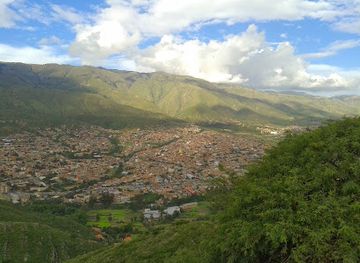
Cochabamba Valley’s attractions combine urban culture, religious heritage, food markets and accessible mountain scenery. In Cochabamba, the historic centre around Plaza 14 de Septiembre, the cathedral, colonial churches and museums provide an introduction to the valley’s layered past, while Palacio Portales illustrates the wealth and architectural ambitions of the early republican period. The Cristo de la Concordia complex on San Pedro Hill is both a major viewpoint and a familiar symbol of the city. Laguna Alalay and the city’s larger parks offer open space close to the urban core, although the lagoon environment is affected by changing water and ecological conditions. Quillacollo adds pilgrimage culture, local markets and the sanctuary associated with the Virgen de Urkupiña. Tiquipaya, Vinto and Sacaba reveal the productive, increasingly suburban character of the wider basin, with gardens, farms and foothill routes. The northern edge leads towards Tunari, where walking, birdwatching and highland landscapes become the focus; conditions and access vary, so local guidance is sensible. Food-focused visits, market exploration and seasonal religious celebrations are as important to the valley’s visitor experience as formal museums or monuments.
-
Park
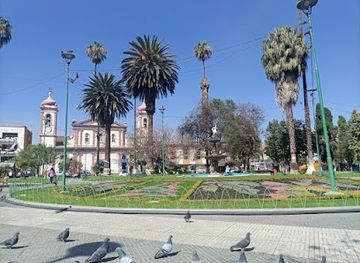
September 14 Square
Discover the lush greenery and cultural heart of Cochabamba at September 14 Square, a vibrant park and historical landmark worth exploring.
-
City park
Colon Square
Discover the vibrant heart of Cochabamba at Colon Square, a lush city park perfect for relaxation and cultural exploration.
-
Park
Familia Park
Discover the beauty and tranquility of Familia Park in Cochabamba, a perfect blend of nature, recreation, and local culture for every traveler.
-
Sculpture
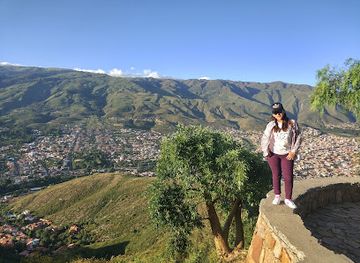
Cristo de la Concordia
Discover the breathtaking Cristo de la Concordia, an iconic Bolivian landmark offering stunning views and rich cultural significance in Cochabamba.

Best landmarks in Cochabamba Valley
The Cristo de la Concordia, a large statue of Christ on San Pedro Hill, is Cochabamba’s most recognisable landmark and commands broad views across the valley from the eastern side of the city. In the historic centre, Plaza 14 de Septiembre forms the civic heart of Cochabamba, bordered by the cathedral and republican-era buildings that express the city’s political importance. The church and convent of Santa Teresa add a substantial colonial presence, with religious architecture linked to the Spanish foundation and later development of the town. Palacio Portales, built for the industrialist Simón I. Patiño, is an imposing early twentieth-century residence whose gardens and interiors embody the wealth created by Bolivia’s mining economy. On San Sebastián Hill, the monument and memorial associated with the heroines of La Coronilla commemorate the 1812 independence struggle and occupy an important place in national memory. In Quillacollo, the sanctuary of the Virgen de Urkupiña is a major religious landmark for pilgrims from across Bolivia. Together these places show the valley’s principal historical themes: colonial Catholicism, republican construction, mining-era wealth, independence memory and enduring Andean religious practice.
-
Lake
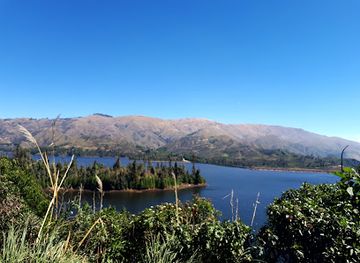
Corani Lake
Explore the serene beauty of Corani Lake, Bolivia, where nature meets adventure in a tranquil setting surrounded by majestic mountains.
Explore Cochabamba Valley on the map
Plan your trip on one map. See where the top cities, national parks and sights are, and book hotels and experiences in a few clicks.
Best hotels in Cochabamba Valley
Best restaurants in Cochabamba Valley
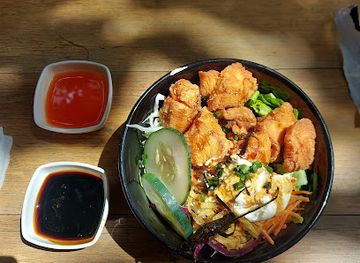
Cochabamba is widely regarded within Bolivia as one of the country’s strongest food destinations, with a culinary identity based on valley produce, maize, potatoes, meat and long-established market cooking. Silpancho, a thin breaded beef dish served with rice, potatoes, egg and salad, is closely associated with Cochabamba, while pique macho, chicharrón and regional soups are common choices in local eateries. The valley also has a strong tradition of tamales, stuffed peppers, pastries, fresh juices and fruit-based drinks. Markets and neighbourhood restaurants provide the most direct introduction to everyday cooking, while central Cochabamba has cafés and contemporary restaurants interpreting local ingredients in more modern ways. Chicha, fermented maize beer, remains part of the region’s culinary heritage and is traditionally encountered in specialised establishments or rural communities; its strength and preparation vary. Dining times, service styles and hygiene standards differ between venues, so choose busy places with good local custom and ask about ingredients when necessary.
-
South American
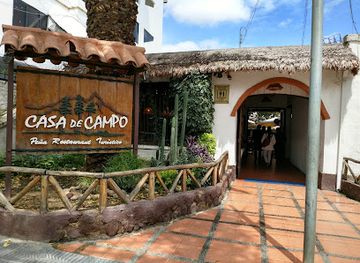
Casa de Campo
Discover the rich flavors of Bolivia at Casa de Campo in Cochabamba – a must-visit for authentic South American dining experiences.
-
Restaurant
Paprika
Experience the rich flavors of Bolivia at Paprika – a culinary haven in Cochabamba known for its inviting atmosphere and diverse menu.
-
Restaurant
Cayenna Restaurant
Experience the vibrant flavors of Bolivia at Cayenna Restaurant in Cochabamba – where tradition meets culinary innovation.
-
Grill
Muela del Diablo
Discover the flavors of Bolivia at Muela del Diablo in Cochabamba – where great food meets vibrant nightlife!
Best bars in Cochabamba Valley
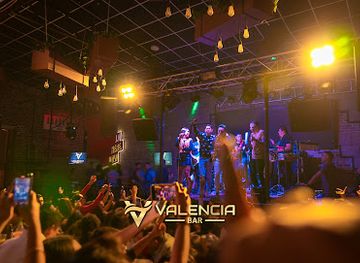
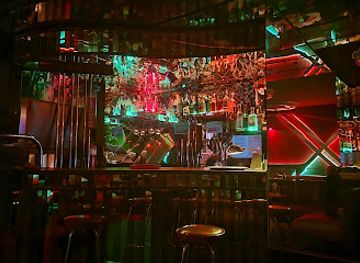
Evening life in the Cochabamba Valley is concentrated mainly in Cochabamba, where central streets and newer commercial areas offer cafés, bars, restaurants and venues with live music. Traditional chicherías and informal drinking places reflect the valley’s maize-based beverage culture, while contemporary bars serve cocktails, beer and international drinks. Quillacollo and the other municipalities have their own local nightlife, but their evening scenes are generally more neighbourhood-based and seasonal than the city’s. During major religious celebrations, especially the Virgen de Urkupiña festivities, music, dancing and public events can transform the atmosphere, although dates, routes and access arrangements change. Nightclubs exist in the urban centre, but Cochabamba is not primarily a clubbing destination; restaurants, small music venues and social gatherings are more characteristic. Use a trusted taxi after dark and check current local advice before walking between venues.
-
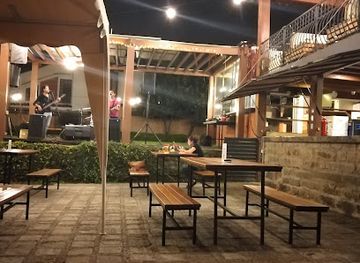
Grill
Muela del Diablo
Discover the vibrant culinary scene at Muela del Diablo in Cochabamba - a grill and bar that embodies local flavors and lively atmosphere.
-
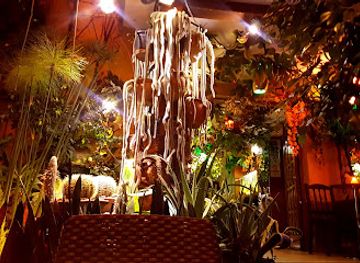
Restaurant
El Bosque de las Hadas
Discover El Bosque de las Hadas in Cochabamba: A magical restaurant blending nature and culinary delights for an unforgettable dining experience.
-
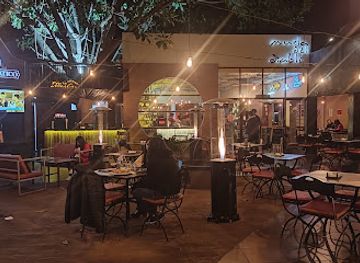
Bar
El Cortijo Pub
Discover the lively ambiance and extensive drink selection at El Cortijo Pub in Cochabamba, a perfect spot for relaxation and socializing.
-
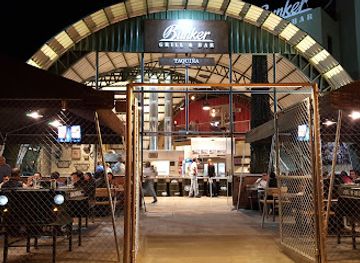
Restaurant
Bunker Grill & Bar
Experience the vibrant flavors of Bolivia at Bunker Grill & Bar, a top restaurant in Cochabamba known for its delicious cuisine and lively atmosphere.
Best nightclubs in Cochabamba Valley
Evening life in the Cochabamba Valley is concentrated mainly in Cochabamba, where central streets and newer commercial areas offer cafés, bars, restaurants and venues with live music. Traditional chicherías and informal drinking places reflect the valley’s maize-based beverage culture, while contemporary bars serve cocktails, beer and international drinks. Quillacollo and the other municipalities have their own local nightlife, but their evening scenes are generally more neighbourhood-based and seasonal than the city’s. During major religious celebrations, especially the Virgen de Urkupiña festivities, music, dancing and public events can transform the atmosphere, although dates, routes and access arrangements change. Nightclubs exist in the urban centre, but Cochabamba is not primarily a clubbing destination; restaurants, small music venues and social gatherings are more characteristic. Use a trusted taxi after dark and check current local advice before walking between venues.
-
Bar
Valencia Bar
Experience the vibrant nightlife at Valencia Bar in Cochabamba, where great drinks and dancing create unforgettable memories.
-
Disco club
LUJO’S Discoteca Karaoke
LUJO'S Discoteca Karaoke: A must-visit disco club in Cochabamba for lively music and unforgettable karaoke nights.
-
Disco club
Awra
Experience Cochabamba's vibrant nightlife at Awra, where electrifying music and a lively atmosphere create unforgettable nights.
-
Disco club
Disco Latitude 15.51
Discover the electrifying nightlife at Disco Latitude 15.51, Cochabamba's premier disco club, where music, dance, and fun collide.

Best shops in Cochabamba Valley
Shopping in the Cochabamba Valley is strongest in traditional markets, neighbourhood high streets and the commercial centre of Cochabamba rather than in a single specialised retail district. Markets offer fruit, vegetables, maize, spices, woven goods, household items and prepared food, with the city’s produce trade reflecting the agricultural productivity of the surrounding basin. Quillacollo is particularly useful for browsing everyday goods and local market life, while central Cochabamba has department stores, bookshops, cafés, fashion retailers and craft outlets. Visitors looking for regional products can consider dried maize, chilli, preserves, sweets, herbal preparations and packaged versions of local foods, provided customs rules allow their import. Small craft shops and galleries may carry Bolivian textiles, ceramics, jewellery and decorative items, though provenance and materials vary. Bargaining is more accepted in informal markets than in established shops; ask the price politely, keep cash secure and remember that market displays are working commercial spaces rather than staged attractions.
-
Park
September 14 Square
Experience the vibrant atmosphere of September 14 Square in Cochabamba, Bolivia, a must-visit park filled with history, culture, and local charm.
-
Shopping mall
Hupermall
Explore Hupermall, Cochabamba's ultimate shopping destination, offering a blend of local culture, dining, and entertainment for every visitor.
-
Sculpture
Cristo de la Concordia
Experience the awe-inspiring Cristo de la Concordia, a towering sculpture in Cochabamba, Bolivia, offering stunning views and rich cultural significance.
-
Beauty supply store
Tiendas best. Cuidamos tu Belleza
Explore Tiendas Best in Cochabamba for a diverse selection of quality beauty supplies that cater to all your grooming needs.
Get your free copy of our complete guide to Cochabamba Valley, delivered straight to you.
Everything on this page, from attractions and restaurants to essentials and local phrases, in one PDF you can read offline, print or share.
Already have an account? Sign in
Your Cochabamba Valley guide is ready.
We'll send it to · Not you? Sign out

Getting your guide ready…
We are putting together a fresh copy of the Cochabamba Valley guide. This can take up to a minute.
This can take a few moments. If your browser asks, choose Allow so the download can start. You'll find the guide in your Downloads folder.
Nothing happened? Download it again
Sorry, the guide is taking longer than usual. Please try again in a minute, or get it by email instead.
Cochabamba Valley essentials
Currency and Payment
Safety
Emergency Situations
Do's and Don'ts
Local Tips
From Eve
Local phrases worth knowing
You don't need to get them perfect. A few words go a long way, and locals appreciate the effort.
Basics
| English | Local | Say it |
|---|---|---|
| Hello | Hola | [Oh-lah] |
| Goodbye | Adiós | [Ah-dee-ohs] |
| Yes | Sí | [See] |
| No | No | [No] |
| Please/You're welcome | Por favor/De nada | [Por fah-vor/Deh nah-dah] |
| Thank you | Gracias | [Grah-see-as] |
| Excuse me/Sorry | Perdón | [Pehr-dohn] |
| How are you? | ¿Cómo estás? | [Koh-moh eh-stahs] |
| Fine. And you? | Bien. ¿Y tú? | [Byen. Ee too] |
| Do you speak English? | ¿Hablas inglés? | [Ah-blahs een-glays] |
| I don't understand | No entiendo | [No en-tee-en-doh] |
Eating & Drinking
| English | Local | Say it |
|---|---|---|
| I'd like to see the menu, please | Me gustaría ver el menú, por favor | [Meh goos-tah-ree-ah vehr el meh-noo, por fah-vor] |
| I don't eat meat | No como carne | [No koh-moh kar-neh] |
| Cheers! | ¡Salud! | [Sah-lood] |
| I would like to pay, please | Me gustaría pagar, por favor | [Meh goos-tah-ree-ah pah-gar, por fah-vor] |
Emergencies
| English | Local | Say it |
|---|---|---|
| Help! | ¡Ayuda! | [Ah-yoo-dah] |
| Go away! | ¡Vete! | [Veh-teh] |
| Call the Police! | ¡Llama a la policía! | [Yah-mah ah lah poh-lee-see-ah] |
| Call a doctor! | ¡Llama a un doctor! | [Yah-mah ah oon dok-tor] |
| I'm lost | Estoy perdido | [Es-toy pehr-dee-doh] |
| I'm ill | Estoy enfermo/enferma | [Es-toy en-fehr-mo/en-fehr-mah] |
Shopping
| English | Local | Say it |
|---|---|---|
| I'd like to buy... | Me gustaría comprar... | [Meh goos-tah-ree-ah kohm-prar] |
| I'm just looking | Solo estoy mirando | [Soh-loh es-toy mee-ran-doh] |
| How much is it? | ¿Cuánto cuesta? | [Kwan-toh kwes-tah] |
| That's too expensive | Eso es muy caro | [Eh-so es mooy kah-roh] |
| Can you lower the price? | ¿Puedes bajar el precio? | [Pweh-des bah-har el preh-syo] |
Time & Numbers
| English | Local | Say it |
|---|---|---|
| What time is it? | ¿Qué hora es? | [Keh oh-rah es] |
| It's one o'clock | Es la una | [Es lah oo-nah] |
| Half past (10) | Las diez y media | [Lahs dyess ee meh-dee-ah] |
| Morning | Mañana | [Mah-nyah-nah] |
| Afternoon | Tarde | [Tar-deh] |
| Evening | Noche | [Noh-cheh] |
| Yesterday | Ayer | [Ah-yer] |
| Today | Hoy | [Oy] |
| Tomorrow | Mañana | [Mah-nyah-nah] |
| 1 | Uno | [Oo-noh] |
| 2 | Dos | [Dohs] |
| 3 | Tres | [Tres] |
| 4 | Cuatro | [Kwah-troh] |
| 5 | Cinco | [Seen-koh] |
| 6 | Seis | [Says] |
| 7 | Siete | [Syay-teh] |
| 8 | Ocho | [Oh-choh] |
| 9 | Nueve | [Nweh-beh] |
| 10 | Diez | [Dyess] |
Transport & Directions
| English | Local | Say it |
|---|---|---|
| Where's a/the...? | ¿Dónde está un/una...? | [Dohn-deh es-tah oon/oo-nah] |
| What's the address? | ¿Cuál es la dirección? | [Kwahl es lah dee-rek-syon] |
| Can you show me (on the map)? | ¿Puedes mostrarme (en el mapa)? | [Pweh-des mos-trar-meh (en el mah-pah)] |
| When's the next (bus)? | ¿Cuándo es el próximo (bus)? | [Kwan-doh es el prohk-see-mo (boos)] |
| A ticket (to ....) | Un boleto (a ....) | [Oon bo-leh-toh (ah ....)] |
History of Cochabamba Valley
Pre-Hispanic farming and settlements
The Cochabamba basin has supported agriculture and settled communities for centuries because its moderate climate, fertile soils and water systems differ sharply from the colder high plateau. Before European conquest, the valley was inhabited by Indigenous farming communities and later became important to the Inca state, which incorporated central Bolivian territory into its wider political and economic networks. Terraces, irrigation practices and the continued cultivation of maize and other crops reflect the long agricultural history of the basin, although the modern urban landscape has covered many earlier settlements.
Spanish foundation and colonial agriculture
The Spanish founded Villa de Oropeza, the settlement that developed into Cochabamba, in 1571. Colonial authorities valued the valley as an agricultural region capable of supplying larger highland centres, particularly the mining economy centred on Potosí. Wheat, maize and other crops were cultivated on estates and in Indigenous communities, while churches, convents and administrative buildings established the town’s colonial framework. The valley’s role as a food-producing zone continued long after the first Spanish settlement and remains central to its identity.
Independence and the memory of 1812
Cochabamba became an important theatre of the independence struggle in Upper Peru. In 1812, women and other defenders associated with the city resisted royalist forces at the hill of San Sebastián, an event remembered in Bolivian national history through the figure of the heroines of La Coronilla. The episode is commemorated in monuments and civic ceremonies, and it contributes to Cochabamba’s strong place in narratives of resistance and independence. Bolivia achieved independence in 1825, after which the former colonial town became part of the new republic.
Republican expansion and the valley’s food economy
During the nineteenth and early twentieth centuries, Cochabamba grew as a provincial administrative centre and as one of Bolivia’s principal agricultural regions. Large properties, market gardening and grain production shaped the valley, while improved roads and rail connections strengthened links with the highlands and eastern lowlands. Republican mansions, civic buildings and commercial streets altered the appearance of the city centre. The period also saw continuing social divisions over land, labour and access to water, issues that have remained influential in the valley’s political and rural history.
The 1952 Revolution and agrarian change
Bolivia’s National Revolution of 1952 brought major changes to landholding, citizenship and political participation. Agrarian reform weakened the old hacienda system and redistributed land in many rural areas, including parts of the Cochabamba region. Peasant unions gained greater influence, and rural communities became more politically organised. The valley’s later development cannot be separated from these changes: smallholder agriculture, market production and migration helped transform the relationship between the city and its surrounding countryside.
Urban growth, migration and water politics
From the later twentieth century, Cochabamba expanded rapidly as people arrived from rural areas, mining districts and other parts of Bolivia. New neighbourhoods spread across the valley floor and up surrounding slopes, while agriculture came under pressure from construction and competing demands for water. The 2000 Cochabamba water conflict, triggered by opposition to the privatisation and proposed price increases of the municipal water system, became an internationally recognised episode in Bolivia’s social history. It highlighted questions of public ownership, inequality and water access that continue to shape regional debate.
Cochabamba Valley in Photos
Browse through our photo collection highlighting the charm and character of the destination.
Neighbouring regions of Cochabamba Valley
The closest regions to Cochabamba Valley, if you have time for more than one.
-

-

-

-

-


Swipe for more regions
Explore more

Explore more of Bolivia
Discover Bolivia: From the peaks of the Andes to the depths of the Amazon, a land of stunning landscapes and rich cultural heritage awaits.
Explore Bolivia