

Free Dead Chest Island Travel Guide & Mobile App
Explore Dead Chest Island with free travel guides. Discover regional history, expert tips, proposed trips, and audio guides on web or mobile app.


Dead Chest Island in the British Virgin Islands offers pirate legend, clear Caribbean waters and undeveloped sailing, snorkelling and coastal scenery.
Read more about Dead Chest Island
When is the best time to visit Dead Chest Island?
Best: January–March · 28–29°C| Month | High (°C) | Rainfall (mm) |
|---|---|---|
| January (best) | 28 | 60 |
| February (best) | 28 | 50 |
| March (best) | 29 | 50 |
| April | 29 | 60 |
| May | 30 | 80 |
| June | 30 | 90 |
| July | 31 | 100 |
| August | 31 | 110 |
| September | 30 | 120 |
| October | 30 | 100 |
| November | 29 | 80 |
| December | 29 | 70 |
Getting to and around Dead Chest Island
How to get there
Transportation
Best attractions in Dead Chest Island
Dead Chest Island's attractions are concentrated in its natural setting and its maritime folklore. The main experience is approaching the uninhabited islet by boat, viewing its dry rocky slopes from the water and, when conditions permit, swimming or snorkelling in the surrounding Caribbean sea. Reef fish and underwater life may be visible, although clarity, currents and marine conditions change with weather and season. The island's lack of development is itself significant: there are no roads, visitor buildings, commercial excursions ashore or permanent community to explore. The pirate story associated with Blackbeard adds a layer of historical imagination, while the Treasure Island connection gives the place wider literary resonance. Visitors interested in conservation can treat the island as an example of the British Virgin Islands' protected marine and coastal landscapes, provided they follow National Parks Trust rules and avoid damaging coral or disturbing wildlife. Dead Chest works best as one stop on a boat itinerary that also includes larger, service-equipped islands and nearby snorkelling grounds, rather than as a self-contained day attraction with extensive land-based activities.
-
Museum
Pirates Treasure Museum
Explore authentic shipwreck treasures and pirate legends at St. Thomas' captivating Pirates Treasure Museum. A must-see for history and adventure lovers!
-
Tourist attraction
Cruise Ship Excursions
Explore St. Thomas with convenient cruise excursions from Havensight Mall, offering snorkeling, island tours, and cultural experiences.
-
Beach
Hansen Bay Beach
Discover a serene escape at Hansen Bay Beach, St. John: soft sands, calm waters, and vibrant snorkeling await on the island's tranquil East End.
-
Beach
Lindbergh Bay Beach
A convenient and relaxing beach escape on St. Thomas, perfect for families and travelers seeking a quick Caribbean getaway.

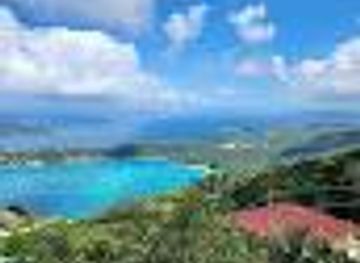
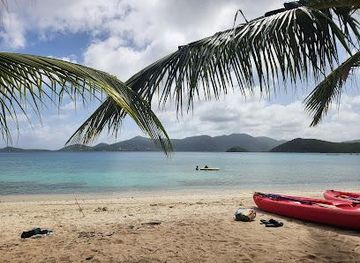
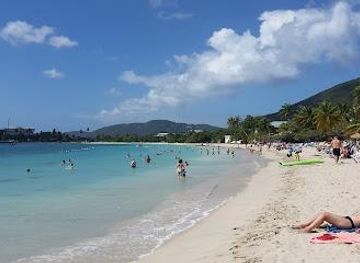
Best landmarks in Dead Chest Island
Dead Chest Island's principal landmark is the islet itself: a compact, rugged mass of scrub-covered rock rising from the sailing waters south-west of Tortola and close to Peter Island. Its undeveloped profile is more important than any building, since there are no historic houses, churches, fortifications or civic structures on the island. The name and the associated Blackbeard story give the shoreline a strong symbolic identity, although the tale should be understood as maritime legend rather than a conclusively documented event. From the water, the island's exposed slopes, rocky landing areas and surrounding reefs provide the most recognisable views. The surrounding Sir Francis Drake Channel is also an essential part of the landmark setting, placing Dead Chest within the navigational landscape of the British Virgin Islands. Nearby islands may be visited on the same boat journey, but they are separate destinations and should not be confused with Dead Chest Island's own landscape or heritage.
-
Local history museum
Old Government House Museum
Discover the rich history and cultural heritage of the British Virgin Islands at the beautifully restored Old Government House Museum in Road Town.
-
National park
Dead Chest National Park
Explore the legendary Dead Chest National Park in the British Virgin Islands: pirate history, vibrant marine life, and snorkeling adventures.
-
 Island
Dead Chest
Explore Dead Chest Island in the British Virgin Islands – a serene paradise with stunning beaches and rich pirate lore, perfect for adventure seekers and relaxation.
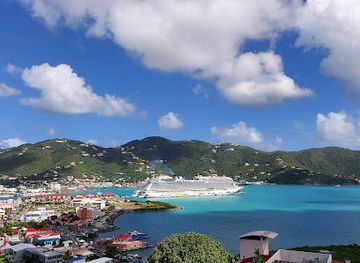

Explore Dead Chest Island on the map
Plan your trip on one map. See where the top cities, national parks and sights are, and book hotels and experiences in a few clicks.
Best hotels in Dead Chest Island
Best restaurants in Dead Chest Island
There are no restaurants, cafés, shops or food stalls on Dead Chest Island. Visitors must bring water and any picnic supplies through their boat operator, take all rubbish away and avoid leaving food scraps that could affect wildlife. Dining is therefore arranged before or after the excursion on inhabited islands, particularly Tortola or Peter Island, both outside Dead Chest itself. The wider British Virgin Islands offer Caribbean cooking, grilled fish, seafood, roti, hearty rice and pea dishes, barbecued meats, fresh fruit, rum-based drinks and international food shaped by the territory's sailing economy. Tortola provides the broadest range of restaurants, casual waterfront dining and provisions, while larger resorts and marinas elsewhere in the territory may offer scheduled meals for guests and boat crews. Charter passengers should confirm whether food, drinks and snorkelling equipment are included, rather than assuming that a remote-island outing supplies them.
-
Restaurant
The Smoking Rooster
Sizzling open-air BBQ joint near St. Thomas cruise docks, famed for tender ribs, generous trays, cold brews, and vibrant patio vibes that blend island ease with hearty American smokes.
-
Restaurant
Tap and Still Havensight
Build-your-own burgers, fresh fries, and island brews in breezy Havensight Mall—St. Thomas' go-to sports bar for casual bites and cold beers amid cruise crowds.
-
Restaurant
The Delly Deck
Havensight's go-to diner for all-day breakfast, juicy burgers, fresh salads, and local johnny cakes—perfect fuel for cruise-day shopping sprees in St. Thomas' bustling mall heart.
-
Restaurant
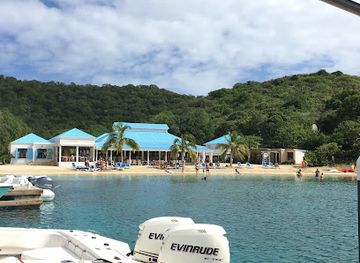
Pirates Bight
Experience authentic Caribbean dining at Pirates Bight on Norman Island - where fresh seafood meets breathtaking ocean views.
Best bars in Dead Chest Island
Dead Chest Island has no bars, nightlife or evening entertainment. Its uninhabited status and lack of electricity make it a daytime marine stop, and visitors should not plan to remain after dark without a properly equipped vessel and an experienced skipper. Evening activity is found on inhabited islands outside Dead Chest, especially around Tortola's marinas, waterfront areas and restaurant clusters, where the atmosphere generally centres on rum drinks, local beer, live music and relaxed dining rather than a concentrated nightclub district. Peter Island and other resort-based locations may offer guest-focused evening facilities, subject to current operating arrangements. Any drinking during a boat excursion should be moderate and compatible with swimming, snorkelling, boarding and maritime safety; the pirate legend is cultural folklore, not a reason to treat the island as an informal party venue.
-
Bar
Soggy Dollar Bar
Experience the ultimate Caribbean getaway at Soggy Dollar Bar, where delicious cocktails meet stunning ocean views on Jost Van Dyke.
-
Restaurant
Pirates Bight
Experience the flavors of the Caribbean at Pirates Bight, a charming restaurant on Norman Island, British Virgin Islands, known for its vibrant atmosphere and delicious dishes.
-
Bar
Foxy's, Jost Van Dyke, British Virgin Islands
Experience the vibrant spirit of Foxy's in Jost Van Dyke, where stunning views, delicious cocktails, and lively atmosphere await every traveler.
-
Restaurant
Cooper Island Beach Club
Discover Cooper Island Beach Club: A serene restaurant and hotel offering exquisite meals and breathtaking views in the British Virgin Islands.


Best nightclubs in Dead Chest Island
Dead Chest Island has no bars, nightlife or evening entertainment. Its uninhabited status and lack of electricity make it a daytime marine stop, and visitors should not plan to remain after dark without a properly equipped vessel and an experienced skipper. Evening activity is found on inhabited islands outside Dead Chest, especially around Tortola's marinas, waterfront areas and restaurant clusters, where the atmosphere generally centres on rum drinks, local beer, live music and relaxed dining rather than a concentrated nightclub district. Peter Island and other resort-based locations may offer guest-focused evening facilities, subject to current operating arrangements. Any drinking during a boat excursion should be moderate and compatible with swimming, snorkelling, boarding and maritime safety; the pirate legend is cultural folklore, not a reason to treat the island as an informal party venue.
-
Adult entertainment club
Crystal Night Club & Sports Lounge Crystal's kitchen
Discover vibrant nightlife at Crystal Night Club & Sports Lounge in Tortola for a memorable evening of music, dancing, and fun.
Best shops in Dead Chest Island
Dead Chest Island has no shops, market, gallery or craft outlet, so visitors should purchase provisions, reef-safe sun protection, waterproof bags and any souvenirs before boarding. Shopping connected with a visit takes place on inhabited islands outside Dead Chest, particularly Tortola, where high-street shops, marina businesses, galleries and craft sellers offer practical sailing supplies, clothing, jewellery, artwork and British Virgin Islands-themed keepsakes. Local food products, rum and other drinks are commonly bought as provisions, although travellers should check customs requirements when taking them onward to another country. Small vendors and independent businesses may accept cash even where larger establishments take cards, so carrying some United States dollars is sensible. The most appropriate souvenir of Dead Chest is often a book or locally sold account of the island's pirate legend, rather than anything collected from the shore; coral, shells, rocks, plants and other natural material should remain where they are.
-
Shopping mall
Havensight Mall
Discover a shopping paradise at Havensight Mall, where local crafts, unique finds, and delicious dining await in St. Thomas.
-
Supermarket
Bobby's Supermarket
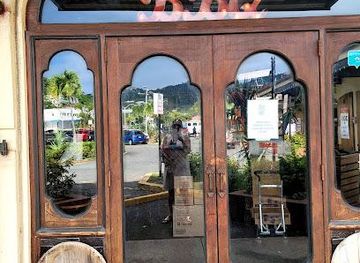
Discover the best local flavors and essentials at Bobby's Supermarket, your premier shopping destination in Road Town, British Virgin Islands.
-
Gourmet Grocery Shop
French Deli & Gourmet Shop
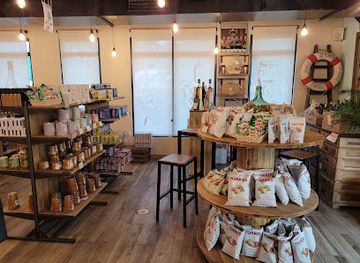
Discover the exquisite flavors of France in Road Town at the French Deli & Gourmet Shop, your go-to destination for gourmet groceries and delightful meals.
-
Supermarket
OneMart Superstore
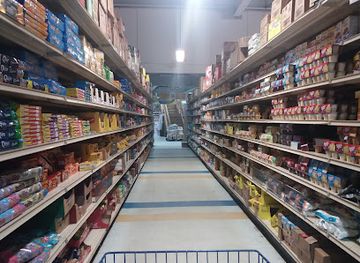
Explore OneMart Superstore in Road Town for a diverse shopping experience, offering fresh produce, local goods, and everything you need for your stay.

Get your free copy of our complete guide to Dead Chest Island, delivered straight to you.
Everything on this page, from attractions and restaurants to essentials and local phrases, in one PDF you can read offline, print or share.
Already have an account? Sign in
Your Dead Chest Island guide is ready.
We'll send it to · Not you? Sign out

Getting your guide ready…
We are putting together a fresh copy of the Dead Chest Island guide. This can take up to a minute.
This can take a few moments. If your browser asks, choose Allow so the download can start. You'll find the guide in your Downloads folder.
Nothing happened? Download it again
Sorry, the guide is taking longer than usual. Please try again in a minute, or get it by email instead.
Dead Chest Island essentials
Currency and Payment
Safety
Emergency Situations
Do's and Don'ts
Local Tips
From Eve
Local phrases worth knowing
You don't need to get them perfect. A few words go a long way, and locals appreciate the effort.
Basics
| English | Local | Say it |
|---|---|---|
| Hello | Ahoy | [Ahoy] |
| Goodbye | Later | [Ley-tah] |
| Yes | Yea | [Yea] |
| No | Naw | [Naw] |
| Please/You're welcome | No problem | [No prob-lum] |
| Thank you | Thanks | [Thanks] |
| Excuse me/Sorry | Sorry | [Sorry] |
| How are you? | How yuh doin’? | [How yuh doin’?] |
| Fine. And you? | I’m good. An’ yuh? | [I’m good. An’ yuh?] |
| Do you speak English? | Yuh speak English? | [Yuh speak English?] |
| I don't understand | I don’t get it | [I don’t get it] |
Eating & Drinking
| English | Local | Say it |
|---|---|---|
| I'd like to see the menu, please | Can I see the menu? | [Can I see de menu?] |
| I don't eat meat | I nah eat meat | [I nah eat meat] |
| Cheers! | Cheers! | [Cheers!] |
| I would like to pay, please | Can I pay, please? | [Can I pay, please?] |
Emergencies
| English | Local | Say it |
|---|---|---|
| Help! | Help! | [Help!] |
| Go away! | Get away! | [Get away!] |
| Call the Police! | Call di police! | [Call di police!] |
| Call a doctor! | Call a doctor! | [Call a doctor!] |
| I'm lost | I lost | [I lost] |
| I'm ill | I sick | [I sick] |
Shopping
| English | Local | Say it |
|---|---|---|
| I'd like to buy... | I wan’ buy... | [I wan’ buy...] |
| I'm just looking | I just lookin’ | [I just lookin’] |
| How much is it? | How much dat? | [How much dat?] |
| That's too expensive | Dat too pricey | [Dat too pricey] |
| Can you lower the price? | Can yuh drop di price? | [Can yuh drop di price?] |
Time & Numbers
| English | Local | Say it |
|---|---|---|
| What time is it? | Wha time it is? | [Wha time it is?] |
| It's one o'clock | It one o’clock | [It one o’clock] |
| Half past (10) | Half past ten | [Half past ten] |
| Morning | Mornin’ | [Mornin’] |
| Afternoon | Afternoon | [Afternoon] |
| Evening | Evenin’ | [Evenin’] |
| Yesterday | Yesterday | [Yesterday] |
| Today | Today | [Today] |
| Tomorrow | Tomorrow | [Tomorrow] |
| 1 | One | [One] |
| 2 | Two | [Two] |
| 3 | Three | [Three] |
| 4 | Four | [Four] |
| 5 | Five | [Five] |
| 6 | Six | [Six] |
| 7 | Seven | [Seven] |
| 8 | Eight | [Eight] |
| 9 | Nine | [Nine] |
| 10 | Ten | [Ten] |
Transport & Directions
| English | Local | Say it |
|---|---|---|
| Where's a/the...? | Wha di...? | [Wha di...?] |
| What's the address? | Wha di address? | [Wha di address?] |
| Can you show me (on the map)? | Can yuh show me (pon di map)? | [Can yuh show me (pon di map)?] |
| When's the next (bus)? | When di next (bus)? | [When di next (bus)?] |
| A ticket (to ....) | One ticket (to ....) | [One ticket (to ....)] |
History of Dead Chest Island
Indigenous Caribbean Seafaring
Dead Chest Island belongs to an archipelago that formed part of a wider Caribbean maritime world long before European colonisation. Indigenous peoples travelled between the Virgin Islands and neighbouring islands by canoe, using coastal waters for fishing, exchange and movement. The small islet itself has no well-known monumental archaeological remains, and its exposed, resource-poor character makes permanent settlement unlikely. Its significance is therefore best understood within the wider seascape: channels, reefs and islands were connected through practical knowledge of currents, weather and navigation.
European Colonisation and the Virgin Islands
From the seventeenth century, European powers contested and settled the Virgin Islands, bringing new systems of land ownership, plantation agriculture and maritime trade. The British Virgin Islands developed around larger islands such as Tortola, Virgin Gorda and Jost Van Dyke rather than isolated rocky islets like Dead Chest. Those wider colonial changes shaped the waters around the island, which became part of routes linking plantations, ports and neighbouring territories. Dead Chest has no substantial built colonial remains, but its position reflects the strategic importance of the channels around the British Virgin Islands.
Piracy and the Dead Chest Legend
Dead Chest Island is associated with a story that Blackbeard marooned fifteen men there with only a bottle of rum. The account is frequently repeated in guidebooks and popular culture, but the precise historical evidence for the incident is uncertain. The island's dramatic name and isolated position made it a natural setting for maritime folklore, especially in a region where privateering, piracy and contested shipping routes formed part of the broader historical background. Visitors should regard the tale as legend rather than as a fully verified episode.
Treasure Island and Literary Memory
The Dead Chest story became more widely recognisable through its connection with the phrase associated with Robert Louis Stevenson's Treasure Island: 'Fifteen men on the dead man's chest—Yo-ho-ho, and a bottle of rum!' The novel did not turn Dead Chest Island into a documented historical site, and the links between the literary line, the pirate tale and the island's exact history remain matters of interpretation. Nevertheless, the association helped place this small British Virgin Islands islet within an international landscape of pirate fiction and adventure literature.
Conservation of a Maritime Islet
In the modern British Virgin Islands, Dead Chest is valued primarily as an undeveloped natural and marine site rather than as a settlement or commercial destination. Its protection reflects a wider regional effort to conserve reefs, coastal habitats, uninhabited islands and scenic sailing grounds. Management by the British Virgin Islands National Parks Trust and related marine regulations helps limit damaging anchoring and careless visitor behaviour. The island's historical importance is now inseparable from its environmental setting, where the absence of permanent development remains part of its appeal.
Dead Chest Island in Photos
Browse through our photo collection highlighting the charm and character of the destination.
Neighbouring regions of Dead Chest Island
The closest regions to Dead Chest Island, if you have time for more than one.
-

-

-

-

-


Swipe for more regions
Explore more
Explore more of British Virgin Islands
Discover the British Virgin Islands: Pristine beaches, vibrant marine life, and a rich cultural heritage await in this Caribbean paradise.
Explore British Virgin Islands