

Free Little Camanoe Travel Guide & Mobile App
Explore Little Camanoe with free travel guides. Discover regional history, expert tips, proposed trips, and audio guides on web or mobile app.


Little Camanoe in the British Virgin Islands offers quiet offshore scenery, clear sailing waters and a remote day on the Caribbean sea.
Read more about Little Camanoe
When is the best time to visit Little Camanoe?
Best: January–March · 28–29°C| Month | High (°C) | Rainfall (mm) |
|---|---|---|
| January (best) | 28 | 50 |
| February (best) | 28 | 45 |
| March (best) | 29 | 55 |
| April | 29 | 60 |
| May | 30 | 70 |
| June | 30 | 80 |
| July | 30 | 85 |
| August | 30 | 90 |
| September | 30 | 95 |
| October | 30 | 100 |
| November | 29 | 80 |
| December | 28 | 70 |
Getting to and around Little Camanoe
How to get there
Transportation
Best attractions in Little Camanoe
Little Camanoe's attractions are primarily maritime and natural. The small island itself offers a quiet, undeveloped setting of dry tropical vegetation, rocky edges and open views across the channels of the Camanoe group. Visitors generally experience it from a sailing yacht, charter boat or dinghy rather than through a formal attraction, and activities may include looking for seabirds, observing coastal geology, swimming in suitable conditions or snorkelling where local advice identifies safe water and healthy reef habitat. There are no museums, historic houses, restaurants, organised trails or family attractions on the island. The wider excursion can take in the changing scenery between Tortola, Great Camanoe, Scrub Island and nearby cays, provided each stop is permitted and navigationally appropriate. Because Little Camanoe has little or no visitor infrastructure, its appeal depends on careful planning, weather awareness and low-impact boating. It suits travellers seeking a brief encounter with the quieter side of the British Virgin Islands rather than those looking for conventional sightseeing facilities.
-
Park and Garden
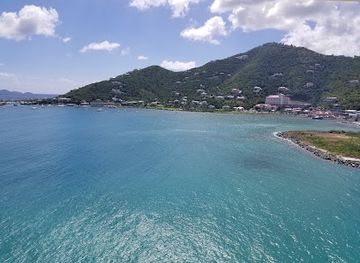
Cyril B. Romney Tortola Pier Park
Experience vibrant culture, shopping, and dining at Cyril B. Romney Tortola Pier Park, the heart of Road Town in the British Virgin Islands.
-
Museum
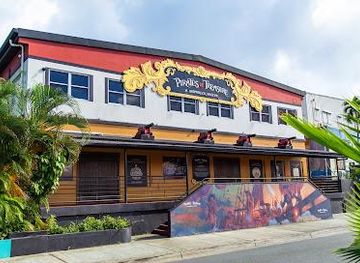
Pirates Treasure Museum
Unearth the mysteries of the deep at St. Thomas' Pirates Treasure Museum: Explore real shipwreck artifacts and tales of buccaneers!
-
Tourist attraction
Cruise Ship Excursions
Experience duty-free shopping, dining, and entertainment at St. Thomas' vibrant Havensight Mall, a premier destination for cruise visitors.
-
National park
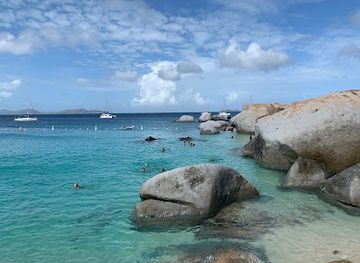
Devil's Bay National Park
Discover tranquil turquoise waters, stunning rock formations, and serene beaches at Virgin Gorda's idyllic Devil's Bay National Park.
Best landmarks in Little Camanoe
Little Camanoe's principal landmark is its position within the Camanoe island group rather than a constructed monument. Its low, undeveloped profile, rocky shoreline and relationship to the surrounding passages make it a recognisable element of the seascape viewed from Tortola, Beef Island or a vessel travelling through the north-eastern BVI. The nearby islands and channels create a layered maritime panorama, but individual cays should not be treated as part of Little Camanoe or visited without checking access and anchoring conditions. There are no documented castles, churches, historic town centres, civic buildings or industrial structures on the island. Its significance is geographical: Little Camanoe helps illustrate the fragmented coastline, reef navigation and open-water character that define the British Virgin Islands. The most responsible way to appreciate this landscape is from a suitable vessel or an authorised landing point, without disturbing vegetation, wildlife or privately controlled land.
-
Park and Garden
Cyril B. Romney Tortola Pier Park
Experience the heart of Tortola at Cyril B. Romney Pier Park: shopping, dining, and waterfront charm in a vibrant, colonial-inspired setting.
-
National park
J.R. O'Neal Botanical Gardens
Discover a serene escape in Road Town's botanical garden, showcasing the British Virgin Islands' lush plant life and conservation efforts.
-
National park
Sage Mountain National Park
Discover lush rainforest trails, panoramic island views, and rich biodiversity at Tortola's Sage Mountain National Park.
-
Tourist attraction
Copper Mine National Park, Virgin Gorda
Discover Virgin Gorda's historical Copper Mine National Park: Explore intriguing ruins and breathtaking coastal views on this Caribbean island.


Explore Little Camanoe on the map
Plan your trip on one map. See where the top cities, national parks and sights are, and book hotels and experiences in a few clicks.
Best hotels in Little Camanoe
Best restaurants in Little Camanoe
Little Camanoe has no restaurants, cafés, shops or established food outlets. Visitors must provision on Tortola, Beef Island or another serviced island before setting out, and a charter may arrange meals, drinks and snacks on board. The practical dining experience is therefore a picnic or boat meal with views across the BVI channels, subject to safe food storage and responsible disposal of waste. For a more substantial meal, return to a populated island, where the territory's wider culinary scene includes Caribbean cooking, fresh fish, grilled meats, casual cafés, rum-based drinks and international food shaped by the sailing community. Local produce and seafood availability can vary seasonally, and visitors should not assume that a remote anchorage can provide ice, water or provisions. Take only what is needed ashore, keep food secured from wildlife and leave no packaging behind.
-
Restaurant
The Smoking Rooster
Caribbean BBQ excellence with island warmth and generous portions in Charlotte Amalie's vibrant dining scene.
-
Restaurant
Tap and Still Havensight
Experience authentic Caribbean flavors at Tap and Still Havensight in St. Thomas - where every meal tells a story.
-
Restaurant
The Delly Deck
Classic diner comfort in St. Thomas cruise port: all-day breakfast, juicy burgers, and quick bites amid Havensight Mall's vibrant shopping scene.
-
Asian fusion
CocoMaya Restaurant
Discover exquisite Asian fusion cuisine at CocoMaya Restaurant in Virgin Gorda, where stunning views meet culinary artistry.


Best bars in Little Camanoe
Little Camanoe has no bars, nightclubs or evening entertainment. Its evening character is the quiet of an offshore anchorage, although anchoring overnight should be undertaken only where permitted and where the skipper considers conditions suitable. Visitors seeking nightlife will need to return to Tortola, Beef Island or another inhabited BVI island, where evening options are concentrated around marinas, hotel areas, restaurants and traditional bars rather than on remote cays. Depending on the location and season, the wider territory offers live music, casual waterfront drinking and yacht-oriented social spaces, but opening arrangements change and should be checked locally. Alcohol should never be combined with unsafe swimming, diving or navigation, and boat crews should follow the skipper's rules throughout the evening.
-
Bar
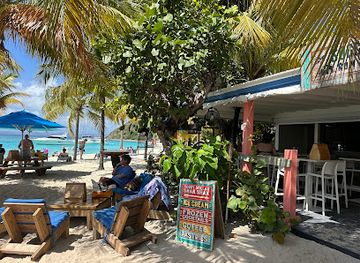
Soggy Dollar Bar
Experience Caribbean bliss at Soggy Dollar Bar, where tropical drinks and stunning views create the perfect island getaway.
-
Bar
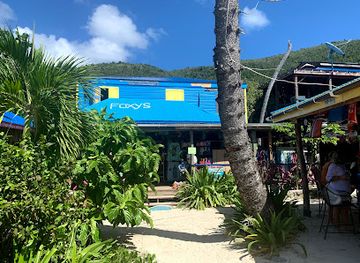
Foxy's, Jost Van Dyke, British Virgin Islands
Experience the vibrant spirit of the British Virgin Islands at Foxy's Bar on Jost Van Dyke, where every sip tells a story.
-
 Restaurant
Cooper Island Beach Club
Discover a tropical paradise at Cooper Island Beach Club, where exquisite dining meets breathtaking views in the heart of the British Virgin Islands.
-
Bar
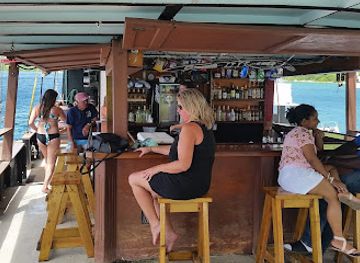
Willy T
Experience the lively atmosphere of Willy T, a floating bar in the British Virgin Islands, offering cocktails, delicious food, and stunning Caribbean views.
Best nightclubs in Little Camanoe
Little Camanoe has no bars, nightclubs or evening entertainment. Its evening character is the quiet of an offshore anchorage, although anchoring overnight should be undertaken only where permitted and where the skipper considers conditions suitable. Visitors seeking nightlife will need to return to Tortola, Beef Island or another inhabited BVI island, where evening options are concentrated around marinas, hotel areas, restaurants and traditional bars rather than on remote cays. Depending on the location and season, the wider territory offers live music, casual waterfront drinking and yacht-oriented social spaces, but opening arrangements change and should be checked locally. Alcohol should never be combined with unsafe swimming, diving or navigation, and boat crews should follow the skipper's rules throughout the evening.
-
Bar
Soggy Dollar Bar
Discover the laid-back charm of Soggy Dollar Bar on Jost Van Dyke, where sun-soaked relaxation meets delicious cocktails and stunning Caribbean views.
-
Bar
Foxy's, Jost Van Dyke, British Virgin Islands
Discover the vibrant spirit of the Caribbean at Foxy's, Jost Van Dyke – a bar where great food, drinks, and live music come together in paradise.
-
Hotel
Cooper Island Beach Club
Experience the tranquility and beauty of Cooper Island Beach Club, a tropical paradise in the British Virgin Islands with pristine beaches and delicious cuisine.
-
Bar
Paradise Club Lounge, Bar, & Restaurant
Discover the vibrant atmosphere and delicious offerings at Paradise Club Lounge, Bar, & Restaurant in the heart of Cane Garden Bay, British Virgin Islands.


Best shops in Little Camanoe
There is no shopping on Little Camanoe. Visitors should buy water, food, sun protection, snorkelling supplies and any marine essentials before leaving Tortola, Beef Island or another island with established services. The most relevant shopping for a Little Camanoe excursion is therefore practical provisioning rather than souvenirs. In the wider British Virgin Islands, visitors can find local food products, rum, crafts, artwork, beachwear, sailing equipment and small gifts in towns, marinas and resort areas, with the greatest selection on Tortola. Stocking up in advance is especially important because a remote anchorage cannot provide replacements or last-minute supplies. Carry purchases in reusable bags where possible, avoid single-use packaging for the boat and take all rubbish back to an appropriate disposal point.
-
Shopping mall
Havensight Mall
Discover a vibrant shopping experience at Havensight Mall in St. Thomas, blending local charm with global brands and delightful dining options.
-
Supermarket
Bobby's Supermarket
Explore the vibrant flavors of the British Virgin Islands at Bobby's Supermarket, your one-stop shop for local and international goods.
-
Supermarket
OneMart Superstore
Explore the vibrant OneMart Superstore in Road Town for a wide selection of local and international products in a friendly shopping environment.
-
Souvenir Shop
Crafts Alive Village
Explore Crafts Alive Village for unique souvenirs, local artistry, and a taste of the British Virgin Islands' vibrant culture.


Get your free copy of our complete guide to Little Camanoe, delivered straight to you.
Everything on this page, from attractions and restaurants to essentials and local phrases, in one PDF you can read offline, print or share.
Already have an account? Sign in
Your Little Camanoe guide is ready.
We'll send it to · Not you? Sign out

Getting your guide ready…
We are putting together a fresh copy of the Little Camanoe guide. This can take up to a minute.
This can take a few moments. If your browser asks, choose Allow so the download can start. You'll find the guide in your Downloads folder.
Nothing happened? Download it again
Sorry, the guide is taking longer than usual. Please try again in a minute, or get it by email instead.
Little Camanoe essentials
Currency and Payment
Safety
Emergency Situations
Do's and Don'ts
Local Tips
From Eve
Local phrases worth knowing
You don't need to get them perfect. A few words go a long way, and locals appreciate the effort.
Basics
| English | Local | Say it |
|---|---|---|
| Hello | Hello | [Hello] |
| Goodbye | Goodbye | [Goodbye] |
| Yes | Yes | [Yes] |
| No | No | [No] |
| Please/You're welcome | Please/Welcome | [Pleez/Welcum] |
| Thank you | Thank you | [Thank you] |
| Excuse me/Sorry | Excuse me/Sorry | [Exkyooz me/Soree] |
| How are you? | How you doin'? | [How yuh doin'?] |
| Fine. And you? | Fine. And you? | [Fine. An' yuh?] |
| Do you speak English? | Yuh speak English? | [Yuh speek English?] |
| I don't understand | I no understand | [I no undersand] |
Eating & Drinking
| English | Local | Say it |
|---|---|---|
| I'd like to see the menu, please | Can I see di menu, please? | [Can I see dee menu, pleez?] |
| I don't eat meat | I no eat meat | [I no eet meat] |
| Cheers! | Cheers! | [Cheers!] |
| I would like to pay, please | I would like to pay, please | [I wud laik to pay, pleez] |
Emergencies
| English | Local | Say it |
|---|---|---|
| Help! | Help! | [Help!] |
| Go away! | Go way! | [Go way!] |
| Call the Police! | Call di Police! | [Call dee Police!] |
| Call a doctor! | Call a doctor! | [Call a doctor!] |
| I'm lost | I lost | [I lost] |
| I'm ill | I sick | [I sick] |
Shopping
| English | Local | Say it |
|---|---|---|
| I'd like to buy... | I wan buy... | [I wan buy...] |
| I'm just looking | I jus' looking | [I jus' luking] |
| How much is it? | How much it cost? | [How much it cost?] |
| That's too expensive | Dat too expensive | [Dat too expensiv] |
| Can you lower the price? | Can yuh lower di price? | [Can yuh lower dee price?] |
Time & Numbers
| English | Local | Say it |
|---|---|---|
| What time is it? | Wha time it is? | [Wha time it is?] |
| It's one o'clock | It one o'clock | [It one o'clock] |
| Half past (10) | Half past ten | [Half past ten] |
| Morning | Morning | [Morning] |
| Afternoon | Afternoon | [Afternoon] |
| Evening | Evening | [Evening] |
| Yesterday | Yesterday | [Yesterday] |
| Today | Today | [Today] |
| Tomorrow | Tomorrow | [Tomorrow] |
| 1 | 1 | [1] |
| 2 | 2 | [2] |
| 3 | 3 | [3] |
| 4 | 4 | [4] |
| 5 | 5 | [5] |
| 6 | 6 | [6] |
| 7 | 7 | [7] |
| 8 | 8 | [8] |
| 9 | 9 | [9] |
| 10 | 10 | [10] |
Transport & Directions
| English | Local | Say it |
|---|---|---|
| Where's a/the...? | Wha di...? | [Wha dee...?] |
| What's the address? | Wha di address? | [Wha dee address?] |
| Can you show me (on the map)? | Can yuh show me (pon di map)? | [Can yuh show me (pon dee map)?] |
| When's the next (bus)? | When di next (bus)? | [When dee next (bus)?] |
| A ticket (to ....) | A ticket (to ....) | [A ticket (to ....)] |
History of Little Camanoe
Indigenous Caribbean Seaways Before European Rule
The islands of the modern British Virgin Islands formed part of a wider Caribbean network used by Indigenous peoples long before European colonisation. Small offshore islands such as Little Camanoe would have been encountered within a maritime environment of channels, reefs and seasonal resources, but there is no reliable basis for attributing a permanent settlement to Little Camanoe itself. Archaeological evidence and historical interpretation for the territory are stronger on larger, more accessible islands. The island's position is nevertheless inseparable from the seafaring geography that connected the Virgin Islands with Puerto Rico and the eastern Caribbean.
European Exploration and Colonial Competition
European voyages in the late fifteenth and sixteenth centuries brought the Virgin Islands into imperial maps and rivalries. Spanish interest was followed by Dutch, English and other European activity across the Lesser and Greater Antilles, while the islands' reefs and passages acquired importance for navigation. Little Camanoe was not a major colonial settlement, but its surrounding waters formed part of the routes linking larger islands, anchorages and plantation communities. The fragmented geography made control difficult and allowed maritime movement, privateering and informal trade to shape the region's early colonial history.
British Administration and the Plantation Era
The English established lasting control over the islands that became the British Virgin Islands during the seventeenth century. Tortola and a number of more productive islands developed estates based on crops including sugar, cotton and provisions, supported by enslaved African labour. The small, dry cays around Tortola generally lacked the water and arable land required for comparable plantation development. Little Camanoe is therefore better regarded as part of the surrounding maritime landscape than as a documented plantation centre. The period's wider legacy remains visible in the territory's place names, land patterns and surviving historic structures elsewhere.
Emancipation and Economic Change
Emancipation in the British Virgin Islands took effect in 1834, with the apprenticeship system ending in 1838. Plantation agriculture declined over the following decades as the territory faced limited rainfall, difficult transport and changing markets. Communities increasingly combined small-scale farming, fishing, boatbuilding, seafaring and overseas work. Uninhabited or lightly used islands such as Little Camanoe remained peripheral to these economic changes, but their sheltered waters continued to matter locally for navigation and maritime activity. This period helped shape the dispersed settlement pattern that remains characteristic of the territory.
The Rise of Modern Yachting and Tourism
During the twentieth century, improvements in transport and communications gradually connected the British Virgin Islands to a growing international tourism economy. From the latter half of the century, sailing, charter boating and marine recreation became especially important, drawing visitors to the territory's protected channels and island anchorages. Little Camanoe has not developed into a resort or settlement; its contemporary relevance comes from its location within this cruising environment. The contrast between serviced harbours on Tortola and quiet offshore islands illustrates how modern BVI tourism depends on both infrastructure and undeveloped seascapes.
Modern British Virgin Islands
The British Virgin Islands remain a British Overseas Territory with its own elected government and a population concentrated mainly on Tortola and several other inhabited islands. Tourism, financial services, marine industries and small businesses are central to the contemporary economy, while the territory continues to manage questions of development, conservation and disaster resilience. Little Camanoe represents the less urbanised side of the archipelago. Its value is connected to the wider BVI's coastal environment and sailing heritage, rather than to a separate administrative, cultural or historic identity.
Little Camanoe in Photos
Browse through our photo collection highlighting the charm and character of the destination.
Neighbouring regions of Little Camanoe
The closest regions to Little Camanoe, if you have time for more than one.
-

-

-
-

-


Swipe for more regions
Explore more
Explore more of British Virgin Islands
Discover the British Virgin Islands: Pristine beaches, vibrant marine life, and a rich cultural heritage await in this Caribbean paradise.
Explore British Virgin Islands