

Free Mukim Bangar Travel Guide & Mobile App
Explore Mukim Bangar with free travel guides. Discover regional history, expert tips, proposed trips, and audio guides on web or mobile app.


Discover Mukim Bangar in Brunei for riverside town life, Temburong culture and access to rainforest adventures across the wider district.
Read more about Mukim Bangar
When is the best time to visit Mukim Bangar?
Best: January–March · 29–30°C| Month | High (°C) | Rainfall (mm) |
|---|---|---|
| January (best) | 29 | 200 |
| February (best) | 30 | 180 |
| March (best) | 30 | 190 |
| April | 31 | 220 |
| May | 31 | 240 |
| June | 31 | 260 |
| July | 31 | 270 |
| August | 31 | 260 |
| September | 30 | 250 |
| October | 30 | 240 |
| November | 30 | 230 |
| December | 29 | 220 |
Getting to and around Mukim Bangar
How to get there
Transportation
Top city travel guides in Mukim Bangar
The cities of Mukim Bangar, and the easiest places to base yourself.

Swipe for more cities
Best attractions in Mukim Bangar
Mukim Bangar’s attractions are modest in scale but closely connected with the wider Temburong landscape. Bangar town provides an accessible introduction through its market, shops, civic centre, mosque and riverfront setting, where visitors can observe daily life rather than tour a dense collection of formal museums. The Temburong River is central to the experience, offering opportunities for riverside walks, photography and locally arranged boat journeys when conditions permit. Beyond the town, roads lead through kampong landscapes and forested countryside, although facilities become increasingly limited. The celebrated Ulu Temburong National Park is in the wider Temburong District rather than Mukim Bangar; it is a realistic excursion for visitors using Bangar as a base or arranging transfers through the town, but it should not be treated as a local town attraction. Its rainforest trails, river crossings and canopy walkway require planning and usually guided access. Visitors interested in nature should also consider the weather, river levels and the physical demands of forest travel. The distinctive attraction of Mukim Bangar is therefore its role as a small administrative town set within a substantial tropical district, linking everyday Bruneian life with more remote conservation landscapes.
-
Tourist attraction
Church of Our Lady of Assumption Catholic Church
Discover a serene spiritual landmark in Brunei's capital, known for its welcoming atmosphere and architectural beauty.
-
National forest
Labi Forest Reserve
Discover Brunei's hidden gem: Labi Forest Reserve, a serene rainforest escape with hiking, wildlife, and breathtaking canopy views.
-
Tourist attraction
Silver Jubilee Park
A serene coastal park in Kuala Belait offering green spaces, walking paths, and ocean views for relaxation and recreation.
-
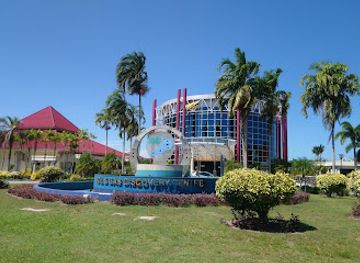
Science museum
Seria Energy Lab
Explore interactive exhibits on energy and technology at Seria Energy Lab, Brunei's hub for science education and discovery. A fun and educational experience for all ages!


Best landmarks in Mukim Bangar
The defining landmark of Mukim Bangar is the Temburong River, whose broad course and branching waterways explain the location and historical importance of the town. Riverside views provide a strong sense of the district’s geography, particularly where Bangar’s built area gives way to forest and kampong landscapes. Bangar’s mosques are important community landmarks and express the Islamic character of Brunei through their role in daily worship, although visitors should observe local rules about dress, prayer times and access. The town’s civic buildings and public spaces are less monumental than the grand architecture of Bandar Seri Begawan, but they mark Bangar’s position as the administrative centre of Temburong. The Temburong Bridge is a major national engineering landmark serving access to the district, but it lies outside Mukim Bangar on the route connecting Temburong with Brunei’s western territory. Likewise, the rainforest canopy structures associated with Ulu Temburong National Park belong to the wider district, not to the mukim itself. This distinction helps visitors appreciate Bangar as a river town and gateway rather than misidentifying it with Temburong’s deeper forest.
-
Hotel
The Empire Brunei
Experience opulence and natural beauty at The Empire Brunei, a five-star hotel with world-class amenities and breathtaking coastal views.
-
 Mosque
Omar Ali Saifuddien Mosque
Discover Brunei's iconic mosque: a stunning fusion of Mughal and Italian design, shimmering golden dome, and serene lagoon setting.
-
Night market
Gadong Night Market
Experience Brunei's vibrant culinary scene at Gadong Night Market, a feast for the senses with local delicacies and cultural experiences.
-
Mosque
Jame' Asr Hassanil Bolkiah Mosque
Discover Brunei's largest mosque, a symbol of Islamic architecture with 29 golden domes, serene gardens, and exquisite craftsmanship.


Explore Mukim Bangar on the map
Plan your trip on one map. See where the top cities, national parks and sights are, and book hotels and experiences in a few clicks.
Best hotels in Mukim Bangar
Best restaurants in Mukim Bangar
Dining in Mukim Bangar is centred on straightforward Bruneian and Malay food rather than a large formal restaurant scene. Town cafés, food stalls and market vendors commonly serve rice dishes, noodles, grilled foods, soups, kuih and sweet or savoury snacks, with halal preparation reflecting Brunei’s Muslim majority. Local meals may include familiar Bruneian specialities such as nasi katok, ambuyat or nasi lemak, although the availability of individual dishes varies by establishment and time of day. Freshwater fish and other river-associated ingredients may appear in local cooking, while packaged snacks and drinks are easy to find in town before a rural excursion. Visitors heading into the wider district should not assume that remote rainforest or river sites have extensive dining facilities; many organised trips include meals, but this should be confirmed in advance. Markets are useful for inexpensive food and a glimpse of everyday commerce, while larger cafés offer air-conditioned spaces and a broader choice of drinks. Alcohol is not part of ordinary public dining culture, and visitors should respect Brunei’s laws and Islamic customs.
-
Restaurant
Chop Jing Chew
Experience the best breakfast and bakery delights at Chop Jing Chew in Bandar Seri Begawan, where every bite tells a story.
-
Authentic Japanese
Excapade Japanese Restaurant Bunut
Savor exquisite authentic Japanese dishes at Excapade Japanese Restaurant Bunut in Bandar Seri Begawan - a must-visit for food lovers.
-
Restaurant
Tarindak D'Seni
Discover the authentic taste of Brunei at Tarindak D'Seni - a restaurant where tradition meets flavor in every dish.
-
Barbecue
braai
Experience exquisite barbecue delights at Braai in Bandar Seri Begawan – where every bite tells a delicious story.


Best bars in Mukim Bangar
Mukim Bangar does not have a conventional bar or nightclub district. Brunei’s restrictions on alcohol mean that evening social life is more likely to centre on halal cafés, restaurants, tea and coffee outlets, family gatherings and quiet walks through the town. Bangar becomes subdued after the main daytime activity, with limited late-night entertainment compared with Bandar Seri Begawan or larger international destinations. The most characteristic evening experience is a relaxed meal or drink in a local establishment, followed by views of the river or a return to accommodation before travelling into the rural district the next day. Visitors should not bring alcohol into public settings or assume that nightlife customs from other countries apply in Brunei. Organised cultural programmes, community events or hotel-based activities may occasionally provide evening interest, but availability is variable and should be checked locally rather than assumed.
-
Hotel
StoneVille Hotel
Discover comfort and convenience at StoneVille Hotel in Bangar, your ideal base for exploring Brunei's hidden gems.
-
Bistro
HUNGRY BAR & BISTRO
Experience the vibrant flavors of local and international cuisine at Hungry Bar & Bistro in Bandar Seri Begawan.
-
Bar
Meetpoint Cafe&Bistro
Experience the vibrant local nightlife at Meetpoint Cafe & Bistro in Limbang, where cozy ambiance meets a diverse selection of drinks.
-
Restaurant
Abu Martas Kitchen
Discover the authentic taste of Brunei at Abu Martas Kitchen, where tradition meets flavor in every dish.


Best nightclubs in Mukim Bangar
Mukim Bangar does not have a conventional bar or nightclub district. Brunei’s restrictions on alcohol mean that evening social life is more likely to centre on halal cafés, restaurants, tea and coffee outlets, family gatherings and quiet walks through the town. Bangar becomes subdued after the main daytime activity, with limited late-night entertainment compared with Bandar Seri Begawan or larger international destinations. The most characteristic evening experience is a relaxed meal or drink in a local establishment, followed by views of the river or a return to accommodation before travelling into the rural district the next day. Visitors should not bring alcohol into public settings or assume that nightlife customs from other countries apply in Brunei. Organised cultural programmes, community events or hotel-based activities may occasionally provide evening interest, but availability is variable and should be checked locally rather than assumed.
-
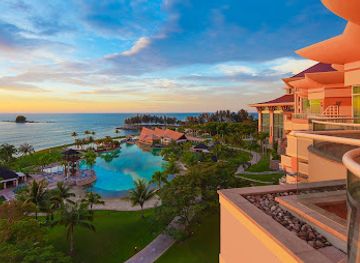
Hotel
The Empire Brunei
Experience ultimate luxury and tranquility at The Empire Brunei, a premier destination for relaxation and indulgence in Southeast Asia.
-
Country club
Panaga Club
Experience tranquility and leisure at Panaga Club, a premier destination for relaxation and recreation in Brunei's lush landscapes.
-
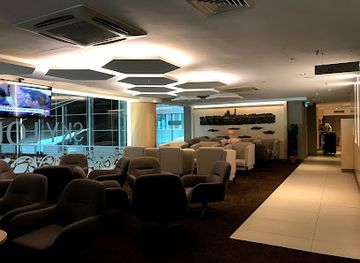
Lounge
Royal Brunei Business Class Lounge
Indulge in luxury and comfort at the Royal Brunei Business Class Lounge, a perfect retreat for discerning travelers in Bandar Seri Begawan.
-
Resort hotel
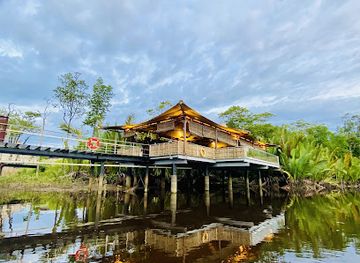
The Abode Resort & Spa, Temburong
Discover tranquility and adventure at The Abode Resort & Spa, Temburong, where luxury meets the lush beauty of Brunei's rainforest.
Best shops in Mukim Bangar
Shopping in Mukim Bangar is practical and local in character. The town market and surrounding shops are the main places to look for fresh produce, cooked snacks, drinks, household goods and everyday supplies, while small food outlets provide useful provisions before travelling into rural Temburong. Visitors may find packaged Bruneian foods, traditional kuih, woven items or other locally made products, but availability varies and the town should not be treated as a specialist craft-shopping centre. Independent shops are more useful for essentials than for international brands or extensive fashion retail. For distinctive souvenirs, look for halal food products, woven crafts and small handmade items connected with Bruneian Malay culture, checking that natural materials and wildlife products are legally sourced. Travellers heading to the wider district should purchase specialist supplies in Bangar, since retail choice becomes narrower away from the administrative centre. Larger-scale shopping and a broader range of branded goods are found in Brunei’s western urban areas rather than within Mukim Bangar.
-
Shopping mall
Times Square Shopping Centre
Experience the vibrant atmosphere of Times Square Shopping Centre, where shopping, dining, and entertainment come together in Bandar Seri Begawan.
-
Shopping mall
Rimba Point
Discover Rimba Point, Brunei's vibrant shopping mall offering diverse shops, delicious dining, and fun entertainment for all ages.
-
Shopping mall
Mabohai Shopping Complex
Explore the Mabohai Shopping Complex, where local culture meets modern shopping in Bandar Seri Begawan, offering a unique blend of retail, dining, and entertainment.
-
Shopping mall
The Airport Mall
Explore The Airport Mall in Bandar Seri Begawan for a unique shopping experience with diverse retail and dining options.


Get your free copy of our complete guide to Mukim Bangar, delivered straight to you.
Everything on this page, from attractions and restaurants to essentials and local phrases, in one PDF you can read offline, print or share.
Already have an account? Sign in
Your Mukim Bangar guide is ready.
We'll send it to · Not you? Sign out

Getting your guide ready…
We are putting together a fresh copy of the Mukim Bangar guide. This can take up to a minute.
This can take a few moments. If your browser asks, choose Allow so the download can start. You'll find the guide in your Downloads folder.
Nothing happened? Download it again
Sorry, the guide is taking longer than usual. Please try again in a minute, or get it by email instead.
Mukim Bangar essentials
Currency and Payment
Safety
Emergency Situations
Do's and Don'ts
Local Tips
From Eve
Local phrases worth knowing
You don't need to get them perfect. A few words go a long way, and locals appreciate the effort.
Basics
| English | Local | Say it |
|---|---|---|
| Hello | Halo | [ha-lo] |
| Goodbye | Selamat tinggal | [sə-la-mat tin-gal] |
| Yes | Ya | [ya] |
| No | Tidak | [ti-dak] |
| Please/You're welcome | Sama-sama | [sa-ma sa-ma] |
| Thank you | Terima kasih | [te-ri-ma ka-sih] |
| Excuse me/Sorry | Maaf | [ma-af] |
| How are you? | Apa khabar? | [a-pa ka-bar] |
| Fine. And you? | Baik. Dan kamu? | [ba-ik. dan ka-mu] |
| Do you speak English? | Adakah kamu bercakap Inggeris? | [a-da-kah ka-mu ber-cha-kap in-ge-ris] |
| I don't understand | Saya tidak faham | [sa-ya ti-dak fa-ham] |
Eating & Drinking
| English | Local | Say it |
|---|---|---|
| I'd like to see the menu, please | Saya ingin melihat menu, boleh? | [sa-ya in-gin me-li-hat me-nu, bo-leh?] |
| I don't eat meat | Saya tidak makan daging | [sa-ya ti-dak ma-kan da-ging] |
| Cheers! | Selamat! | [se-la-mat] |
| I would like to pay, please | Saya ingin membayar, boleh? | [sa-ya in-gin mem-ba-yar, bo-leh?] |
Emergencies
| English | Local | Say it |
|---|---|---|
| Help! | Tolong! | [to-long] |
| Go away! | Pergi jauh! | [per-gi ja-uh] |
| Call the Police! | Panggil polis! | [pan-gil po-lis] |
| Call a doctor! | Panggil doktor! | [pan-gil dok-tor] |
| I'm lost | Saya tersesat | [sa-ya ter-se-sat] |
| I'm ill | Saya sakit | [sa-ya sa-kit] |
Shopping
| English | Local | Say it |
|---|---|---|
| I'd like to buy... | Saya ingin beli... | [sa-ya in-gin be-li...] |
| I'm just looking | Saya hanya melihat | [sa-ya han-ya me-li-hat] |
| How much is it? | Berapa harganya? | [be-ra-pa har-ga-nya] |
| That's too expensive | Itu terlalu mahal | [i-tu ter-la-lu ma-hal] |
| Can you lower the price? | Boleh turunkan harga? | [bo-leh tu-run-kan har-ga?] |
Time & Numbers
| English | Local | Say it |
|---|---|---|
| What time is it? | Pukul berapa? | [pu-kul be-ra-pa] |
| It's one o'clock | Ia pukul satu | [i-a pu-kul sa-tu] |
| Half past (10) | Setengah (10) | [se-te-ngah (10)] |
| Morning | Pagi | [pa-gi] |
| Afternoon | Petang | [pe-tang] |
| Evening | Malam | [ma-lam] |
| Yesterday | Semalam | [se-ma-lam] |
| Today | Hari ini | [ha-ri i-ni] |
| Tomorrow | Esok | [e-sok] |
| 1 | Satu | [sa-tu] |
| 2 | Dua | [du-a] |
| 3 | Tiga | [ti-ga] |
| 4 | Empat | [em-pat] |
| 5 | Lima | [li-ma] |
| 6 | Enam | [e-nam] |
| 7 | Tujuh | [tu-juh] |
| 8 | Lapan | [la-pan] |
| 9 | Sembilan | [sem-bi-lan] |
| 10 | Sepuluh | [se-pu-luh] |
Transport & Directions
| English | Local | Say it |
|---|---|---|
| Where's a/the...? | Di mana ...? | [di ma-na ...?] |
| What's the address? | Apa alamatnya? | [a-pa a-la-mat-nya] |
| Can you show me (on the map)? | Boleh tunjukkan saya (pada peta)? | [bo-leh tun-juk-kan sa-ya (pa-da pe-ta)?] |
| When's the next (bus)? | Bila bas seterusnya? | [bi-la bas se-te-ruhnya?] |
| A ticket (to ....) | Tiket (ke ....) | [ti-ket (ke ....)] |
History of Mukim Bangar
Early riverine settlement and forest resources
The Temburong area developed around rivers, tributaries and forest resources rather than large urban centres. Communities used waterways for movement, fishing and exchange, while forest products supported local livelihoods and regional trade. The river system encouraged settlement in kampongs along accessible banks, and this pattern remains visible in the relationship between Bangar and the Temburong River. Much of the district’s early history survives through geography, oral traditions and the continued importance of river and forest environments.
Brunei’s changing territorial position
Temburong was historically part of the wider Brunei sultanate, whose influence once extended across substantial parts of northern Borneo. During the nineteenth century, Brunei’s territory contracted through a combination of political pressure, local disputes and cessions to neighbouring powers. The loss of surrounding areas eventually left Temburong geographically separated from Brunei’s western districts, a defining circumstance that still shapes travel to Mukim Bangar.
The Limbang separation and the modern enclave
The transfer of Limbang to Sarawak in 1890 placed Temburong on the eastern side of a Malaysian corridor. This created the unusual territorial arrangement in which Temburong belongs to Brunei but is separated from the country’s main landmass. Bangar consequently became the district’s administrative centre and principal service town. The enclave’s geography is not merely a cartographic curiosity: it has influenced transport routes, public administration and the practical organisation of daily life.
British protection and administrative change
Brunei became a British-protected state in 1888, and British influence later deepened through the residency system introduced in the early twentieth century. Administration, communications and public services gradually became more formalised, including in outlying districts such as Temburong. Bangar’s contemporary role as a district centre reflects this longer process of centralised administration, although local communities and river-based geography continued to shape how the area functioned.
Japanese occupation during the Second World War
Brunei, including Temburong, was occupied by Japan from 1941 until 1945. The occupation disrupted administration, supplies and communications across the territory, with rural communities experiencing the pressures of wartime rule and scarcity. Although Bangar does not present the monumental wartime landscape found in some parts of Southeast Asia, the period forms part of the district’s twentieth-century experience and of Brunei’s broader path towards post-war reconstruction.
Oil wealth, independence and improved access
Brunei’s oil and gas economy transformed public administration, infrastructure and living standards after the Second World War. Temburong remained more lightly urbanised than the western districts, but roads, civic facilities and public services strengthened Bangar’s role as a regional centre. Brunei regained full independence in 1984, and later investment in transport infrastructure, including the Temburong Bridge, made access to the district more direct while preserving its distinctive enclave geography.
Rainforest conservation and sustainable tourism
As Brunei recognised the ecological importance of its remaining forests, Temburong became associated with conservation, research and carefully managed nature tourism. The wider district’s protected rainforest, rivers and canopy environments now attract visitors seeking guided outdoor experiences. This has added a new economic and cultural layer to Bangar’s traditional administrative role, while also making responsible access, local guiding and respect for forest ecosystems important parts of the region’s contemporary identity.
Mukim Bangar in Photos
Browse through our photo collection highlighting the charm and character of the destination.
Neighbouring regions of Mukim Bangar
The closest regions to Mukim Bangar, if you have time for more than one.
-

-

-

-

-


Swipe for more regions
Explore more

Explore more of Brunei
Explore Brunei, a hidden gem in Southeast Asia, where modern opulence meets untouched natural beauty and rich cultural heritage.
Explore Brunei