

Free Brunei-Muara District Travel Guide & Mobile App
Explore Brunei-Muara District with free travel guides. Discover regional history, expert tips, proposed trips, and audio guides on web or mobile app.


Explore Brunei-Muara for Bandar Seri Begawan's royal mosques, Kampong Ayer, tropical parks, coastal beaches and distinctive Bruneian cuisine.
Read more about Brunei-Muara District
When is the best time to visit Brunei-Muara District?
Best: February–March, November · 30–31°C| Month | High (°C) | Rainfall (mm) |
|---|---|---|
| January | 30 | 200 |
| February (best) | 30 | 170 |
| March (best) | 31 | 180 |
| April | 31 | 190 |
| May | 31 | 200 |
| June | 30 | 210 |
| July | 30 | 220 |
| August | 30 | 210 |
| September | 30 | 200 |
| October | 30 | 190 |
| November (best) | 30 | 180 |
| December | 30 | 190 |
Getting to and around Brunei-Muara District
How to get there
Transportation
Top city travel guides in Brunei-Muara District
The cities of Brunei-Muara District, and the easiest places to base yourself.
-

-
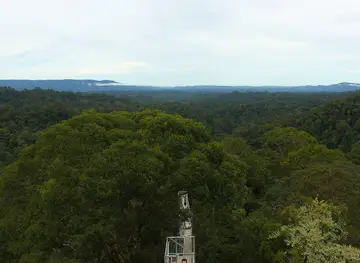
-


Swipe for more cities
Destinations in Brunei-Muara District
Resorts, valleys and scenic spots worth a trip of their own.
-
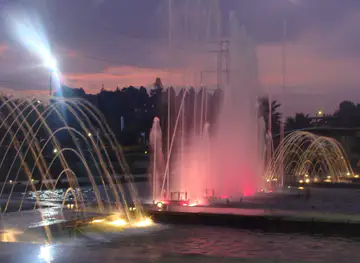
-
 Bukit Shahbandar Recreational Park
 in Brunei offers rainforest trails, hill climbs, viewpoints and an accessible outdoor escape near Bandar Seri Begawan.
-
 Pulau Selirong Forest Reserve
, Brunei, offers mangrove waterways, proboscis monkeys, birdlife and quiet boat excursions through protected coastal forest.

Swipe for more destinations
Best attractions in Brunei-Muara District
Brunei-Muara's attractions combine royal and Islamic architecture, river heritage, tropical recreation and accessible coastline. In Bandar Seri Begawan, the Omar Ali Saifuddien Mosque, Royal Regalia Museum and Kampong Ayer Cultural and Tourism Gallery provide different perspectives on the monarchy, national history and the water settlement. A boat ride through Kampong Ayer and along the Brunei River adds a geographical dimension that cannot be gained from the streets alone. Tasek Lama Recreational Park offers forested paths close to the city, while Bukit Shahbandar Recreational Park provides longer, hillier walks. Families may include Jerudong Park, one of the district's best-known leisure attractions, in a wider itinerary. Towards the east, Muara Beach and Serasa Beach provide open shores and opportunities for a slower coastal day, while the Muara area retains links with Brunei's maritime infrastructure. Visitors interested in nature can look for mangrove and wetland environments on suitable guided excursions, although wild-animal sightings are never guaranteed. The attractions are not arranged as a single tourist circuit, so combining central sights with one outdoor or coastal area works better than trying to cover the entire district on foot.
-
Amusement park
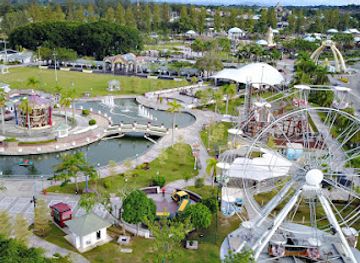
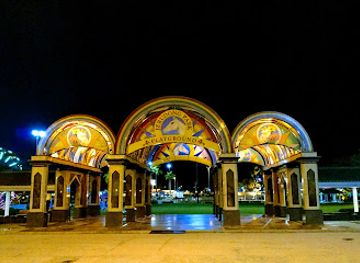
Jerudong Park Playground
Experience thrilling rides and enchanting attractions at Jerudong Park Playground, Brunei's ultimate destination for family fun and adventure.
-
Tourist attraction
Ash Shaliheen Mosque
Discover Brunei's Moroccan-style mosque: A serene sanctuary blending Islamic art and modern design in Bandar Seri Begawan.
-
Stadium
Hassanal Bolkiah National Stadium
Experience Brunei's sporting spirit at the Hassanal Bolkiah National Stadium, a hub for football, athletics, and cultural celebrations in Bandar Seri Begawan.
-
Water park
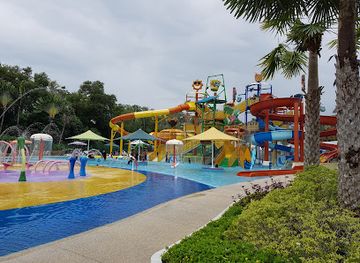
Jerudong Park Waterpark
Cool off and have a blast at Jerudong Park Waterpark, featuring thrilling slides and fun water activities for the whole family!

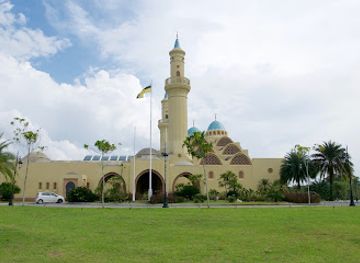
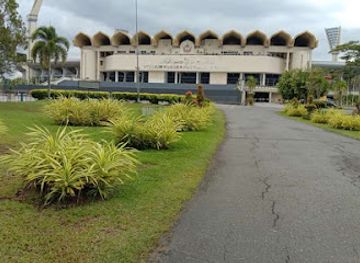
Best landmarks in Brunei-Muara District
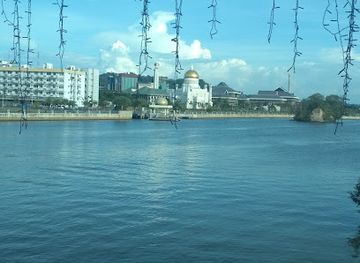
The golden dome of Omar Ali Saifuddien Mosque is Brunei-Muara's most recognisable urban landmark, reflected in the lagoon and framed by the ceremonial centre of Bandar Seri Begawan. Its design incorporates Islamic architectural forms and a symbolic royal barge, creating a strongly composed view from the surrounding streets. Jame' 'Asr Hassanil Bolkiah Mosque, with its numerous golden domes and minarets, represents the scale and confidence of modern Brunei's national religious architecture. Across the river, Kampong Ayer is a landmark landscape rather than one isolated building: houses, mosques, schools and timber or concrete walkways form a long-established settlement on the water. The Royal Regalia Museum is an important civic and architectural marker of the modern sultanate, particularly for its ceremonial collections. Istana Nurul Iman, the Sultan's official residence on the outskirts of the capital, is visible from selected viewpoints but is not generally a standard interior visitor attraction. The Brunei River itself remains a defining geographical landmark, linking the historic water settlement, the capital and the estuarine environments leading towards Muara.
-
Hotel
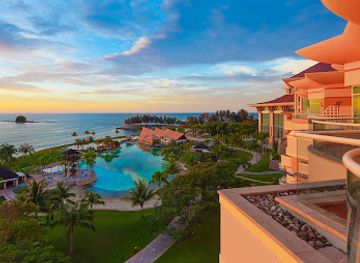
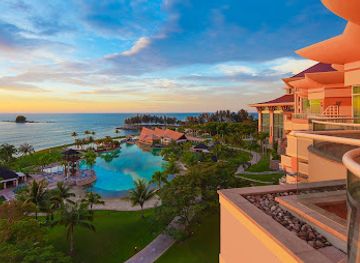
The Empire Brunei
Experience opulent luxury and world-class recreation at The Empire Brunei, a stunning coastal resort with a championship golf course.
-
 Mosque
Omar Ali Saifuddien Mosque
Explore the Omar Ali Saifuddien Mosque, a stunning symbol of Brunei's rich Islamic heritage and architectural brilliance, set amidst tranquil landscapes.
-
Night market
Gadong Night Market
Experience the flavors and culture of Brunei at Gadong Night Market, a lively culinary hotspot in Bandar Seri Begawan.
-
Mosque
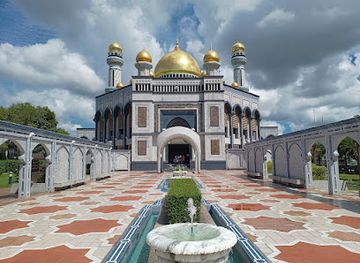
Jame' Asr Hassanil Bolkiah Mosque
Discover Brunei's largest mosque, a stunning architectural masterpiece with golden domes and serene gardens, reflecting the nation's Islamic heritage.
Explore Brunei-Muara District on the map
Plan your trip on one map. See where the top cities, national parks and sights are, and book hotels and experiences in a few clicks.
Best hotels in Brunei-Muara District
Best restaurants in Brunei-Muara District
Dining in Brunei-Muara reflects Brunei's Malay and Islamic food culture alongside Chinese, Indian, Malaysian and wider Southeast Asian influences. Ambuyat, a mildly flavoured sago-based staple eaten with a bamboo fork and dipping sauces, is a distinctive dish to seek in traditional restaurants, while nasi katok, satay, grilled chicken, noodles and rice plates are widely available in inexpensive eateries. Seafood is especially relevant around river and coastal communities, and cafés in Bandar Seri Begawan, Gadong and Kiulap cater to a strong culture of sweet drinks, desserts, pastries and late meals. Night markets and food courts are useful for trying small portions of local dishes, kuih and grilled snacks, though stalls and schedules can vary. Brunei is a dry country, so restaurants do not operate as conventional bars and alcohol is not part of ordinary dining. Halal food is the norm, while vegetarian and international choices are increasingly easy to find in the capital; visitors with specific dietary needs should still ask about ingredients and preparation.
-
Hotel
The Empire Brunei
Experience unparalleled luxury at The Empire Brunei—where elegance meets adventure along the stunning coastline.
-
Amusement park
Jerudong Park Playground
Experience exhilarating rides and family-friendly fun at Jerudong Park Playground - Brunei's ultimate amusement destination!
-
Japanese
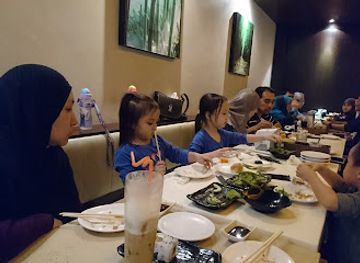
Excapade Japanese Restaurant Jaya Setia
Experience authentic Japanese cuisine at Excapade Restaurant in Jaya Setia - where tradition meets flavor.
-
Restaurant
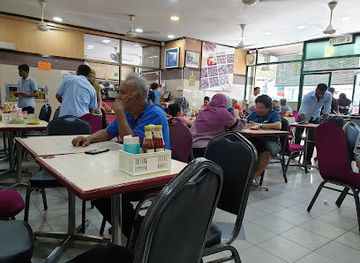
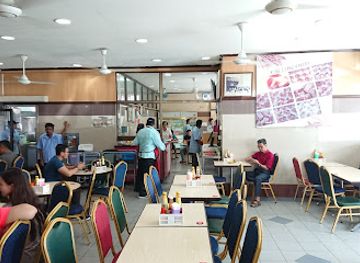
Chop Jing Chew
Discover the flavors of Brunei at Chop Jing Chew – your go-to spot for delicious pastries and hearty breakfasts in Bandar Seri Begawan.
Best bars in Brunei-Muara District
Brunei-Muara has no conventional bar and nightclub culture because Brunei is a dry country and alcohol is not sold in restaurants or entertainment venues. Evening life instead centres on family restaurants, cafés, dessert shops, food courts and late-opening eateries in Bandar Seri Begawan, Gadong and Kiulap. The capital can also offer occasional cultural performances, private events or live music, but these are not a permanent nightlife circuit and should be checked locally. After dark, visitors often combine an evening meal with a walk around the central waterfront or a drive through the illuminated capital, while larger hotels provide some of the district's more polished dining settings without functioning as alcohol-led nightlife venues. Non-Muslim visitors should understand and observe Brunei's rules on bringing in and consuming alcohol; it should never be assumed that a hotel or restaurant can serve it. The district suits travellers seeking quiet social evenings and food-focused exploration rather than clubbing.
-
Amusement park
Jerudong Park Playground
Discover the excitement of Jerudong Park Playground, a premier amusement park in Brunei offering thrilling rides and family-friendly attractions.
-
Restaurant
Chop Jing Chew
Discover the taste of Brunei at Chop Jing Chew, where delicious breakfasts and freshly baked goods await in a cozy setting.
-
Hotel
The Centrepoint Hotel
Experience comfort and luxury at The Centrepoint Hotel, the perfect base to explore the vibrant culture and beauty of Bandar Seri Begawan.
-
Restaurant
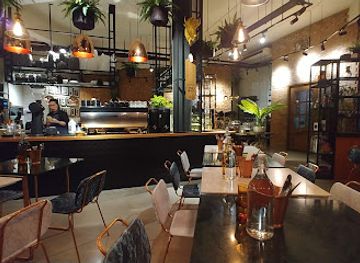
Alter Ego Fusion Cafe
Discover a unique fusion of local and international flavors at Alter Ego Fusion Cafe, the culinary gem of Bandar Seri Begawan.
Best nightclubs in Brunei-Muara District
Brunei-Muara has no conventional bar and nightclub culture because Brunei is a dry country and alcohol is not sold in restaurants or entertainment venues. Evening life instead centres on family restaurants, cafés, dessert shops, food courts and late-opening eateries in Bandar Seri Begawan, Gadong and Kiulap. The capital can also offer occasional cultural performances, private events or live music, but these are not a permanent nightlife circuit and should be checked locally. After dark, visitors often combine an evening meal with a walk around the central waterfront or a drive through the illuminated capital, while larger hotels provide some of the district's more polished dining settings without functioning as alcohol-led nightlife venues. Non-Muslim visitors should understand and observe Brunei's rules on bringing in and consuming alcohol; it should never be assumed that a hotel or restaurant can serve it. The district suits travellers seeking quiet social evenings and food-focused exploration rather than clubbing.
-
Hotel
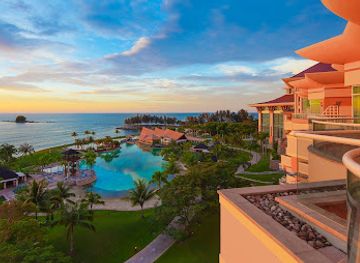
The Empire Brunei
Discover unparalleled luxury and breathtaking views at The Empire Brunei, where opulence meets serene coastal beauty.
-
Private golf course
The Empire Country Club
Discover luxury golfing at The Empire Country Club, a premier destination for golf enthusiasts in Brunei's breathtaking landscapes.
-
Park
Bukit Shahbandar Forest Recreation Park
Discover the natural beauty of Bukit Shahbandar Forest Recreation Park, a serene retreat in Jerudong perfect for hiking, picnicking, and wildlife spotting.
-
Western
Jazz Bar And Grill
Discover the vibrant fusion of live jazz and exquisite Western cuisine at the Jazz Bar And Grill in Kiulap.
Best shops in Brunei-Muara District
Shopping in Brunei-Muara ranges from modern air-conditioned complexes to informal markets and small specialist shops. Yayasan Sultan Haji Hassanal Bolkiah Complex, beside the central capital, is convenient for combining retail with views towards the mosque and waterfront, while The Mall in Gadong and surrounding commercial areas provide a broader selection of fashion, electronics, beauty products, cafés and everyday goods. Kiulap has a dense concentration of shops and restaurants, with a more local commercial feel than the ceremonial centre. For regional products, look for shops and markets selling packaged snacks, dried foods, kuih, woven items, modest clothing and Brunei-themed gifts; availability varies by season and outlet. The Tamu Kianggeh market is associated with fresh produce and traditional market trading near central Bandar Seri Begawan, while food markets are useful places to buy small edible souvenirs. Do not expect the district to be primarily a luxury-shopping destination: its appeal lies more in practical retail, local food products and the contrast between the capital's modern malls and its older market and river communities.
-
Night market
Gadong Night Market
Discover the vibrant flavors and rich culture at Gadong Night Market, a must-visit night market in Bandar Seri Begawan.
-
Shopping mall
The Mall Gadong
Discover the ultimate shopping experience at The Mall Gadong, where local charm meets international brands in Bandar Seri Begawan.
-
Shopping mall
Times Square Shopping Centre
Explore the bustling Times Square Shopping Centre in Bandar Seri Begawan - your ultimate destination for shopping, dining, and entertainment.
-
Market
Kianggeh Market
Discover the heart of Brunei's culture at Kianggeh Market, where local flavors, crafts, and vibrant community life come together.


Get your free copy of our complete guide to Brunei-Muara District, delivered straight to you.
Everything on this page, from attractions and restaurants to essentials and local phrases, in one PDF you can read offline, print or share.
Already have an account? Sign in
Your Brunei-Muara District guide is ready.
We'll send it to · Not you? Sign out

Getting your guide ready…
We are putting together a fresh copy of the Brunei-Muara District guide. This can take up to a minute.
This can take a few moments. If your browser asks, choose Allow so the download can start. You'll find the guide in your Downloads folder.
Nothing happened? Download it again
Sorry, the guide is taking longer than usual. Please try again in a minute, or get it by email instead.
Brunei-Muara District essentials
Currency and Payment
Safety
Emergency Situations
Do's and Don'ts
Local Tips
From Eve
Local phrases worth knowing
You don't need to get them perfect. A few words go a long way, and locals appreciate the effort.
Basics
| English | Local | Say it |
|---|---|---|
| Hello | Salam | [sah-lahm] |
| Goodbye | Selamat tinggal | [seh-lah-mat teen-gahl] |
| Yes | Ya | [yah] |
| No | Tidak | [tee-dahk] |
| Please/You're welcome | Sila | [see-lah] |
| Thank you | Terima kasih | [teh-ree-mah kah-see] |
| Excuse me/Sorry | Maaf | [mah-ahf] |
| How are you? | Apa khabar? | [ah-pah kah-bar] |
| Fine. And you? | Baik. Dan kamu? | [bye-k. dahn kah-moo] |
| Do you speak English? | Adakah kamu bercakap dalam Bahasa Inggeris? | [ah-dah-kah kah-moo ber-chah-kahp dah-lahm bah-hah-sah in-guh-ris] |
| I don't understand | Saya tidak faham | [sah-yah tee-dahk fah-hahm] |
Eating & Drinking
| English | Local | Say it |
|---|---|---|
| I'd like to see the menu, please | Saya ingin melihat menu, sila | [sah-yah in-gin meh-lih-hat meh-nu, see-lah] |
| I don't eat meat | Saya tidak makan daging | [sah-yah tee-dahk mah-kahn dah-gihng] |
| Cheers! | Ting! (for toasting) | [ting] |
| I would like to pay, please | Saya ingin membayar, sila | [sah-yah in-gin mem-bah-yar, see-lah] |
Emergencies
| English | Local | Say it |
|---|---|---|
| Help! | Tolong! | [toh-long] |
| Go away! | Pergi jauh! | [per-gee jah-oo] |
| Call the Police! | Panggil polis! | [pang-gil poh-lis] |
| Call a doctor! | Panggil doktor! | [pang-gil dok-tor] |
| I'm lost | Saya tersesat | [sah-yah ter-seh-saht] |
| I'm ill | Saya sakit | [sah-yah sah-kit] |
Shopping
| English | Local | Say it |
|---|---|---|
| I'd like to buy... | Saya ingin membeli... | [sah-yah in-gin mem-buh-lee] |
| I'm just looking | Saya hanya melihat | [sah-yah han-yah meh-lih-hat] |
| How much is it? | Berapa harganya? | [beh-rah-pah har-gah-nya] |
| That's too expensive | Itu terlalu mahal | [ee-too ter-lah-loo mah-hahl] |
| Can you lower the price? | Bolehkah kamu turunkan harga? | [boh-leh-kah kah-moo too-roon-kahn har-gah] |
Time & Numbers
| English | Local | Say it |
|---|---|---|
| What time is it? | Jam berapa? | [jahm beh-rah-pah] |
| It's one o'clock | Jam satu | [jahm sah-too] |
| Half past (10) | Setengah (10) | [seh-teng-ah (10)] |
| Morning | Pagi | [pah-gee] |
| Afternoon | Petang | [peh-tang] |
| Evening | Malam | [mah-lahm] |
| Yesterday | Semalam | [seh-mah-lahm] |
| Today | Hari ini | [hah-ree ee-nee] |
| Tomorrow | Esok | [eh-sok] |
| 1 | Satu | [sah-too] |
| 2 | Dua | [doo-ah] |
| 3 | Tiga | [tee-gah] |
| 4 | Empat | [em-paht] |
| 5 | Lima | [lee-mah] |
| 6 | Enam | [eh-nahm] |
| 7 | Tujuh | [too-joo] |
| 8 | Lapan | [lah-pahn] |
| 9 | Sembilan | [sem-bee-lahn] |
| 10 | Sepuluh | [seh-poo-looh] |
Transport & Directions
| English | Local | Say it |
|---|---|---|
| Where's a/the...? | Di mana ...? | [dee mah-nah] |
| What's the address? | Apa alamatnya? | [ah-pah ah-lah-maht-nya] |
| Can you show me (on the map)? | Bolehkah kamu tunjukkan (di peta)? | [boh-leh-kah kah-moo toon-jook-kahn (dee peh-tah)] |
| When's the next (bus)? | Bila bas seterusnya? | [bee-lah bahs seh-teh-roos-nya] |
| A ticket (to ....) | Satu tiket (ke ....) | [sah-too tee-ket (keh ....)] |
History of Brunei-Muara District
Early Brunei River Settlements
The Brunei River and its estuary supported settlement, fishing and regional exchange long before the modern capital developed. Archaeological evidence from Kota Batu, east of present-day Bandar Seri Begawan, points to an important early urban and trading centre associated with Brunei's formative state. The river offered access to inland resources and maritime routes across Borneo and the wider South China Sea. Waterborne settlement remained practical in a tidal, flood-prone environment, helping establish the long continuity between early river communities and the later development of Kampong Ayer.
The Brunei Sultanate and Maritime Influence
From the medieval period, the Brunei Sultanate became a major Islamic polity whose influence extended across parts of northern Borneo and nearby islands. The capital area around the Brunei River was central to administration, commerce and court life. Contacts with China, the Malay world and other maritime powers brought goods, religious ideas and political connections. Although the sultanate's territorial influence later contracted, the royal and Islamic institutions centred on the capital remain fundamental to Brunei's national identity.
Kampong Ayer as a Royal and Commercial Centre
Kampong Ayer developed over generations as a densely settled water community beside the capital. Its inhabitants supported the sultanate through fishing, boatbuilding, trade, administration and other occupations, while palaces and public buildings occupied the river environment. The settlement was historically the principal urban focus of Brunei, even as land-based Bandar Seri Begawan expanded around it during the twentieth century. Modern concrete walkways, utilities and public services have changed daily life, but Kampong Ayer's waterways and stilted houses still express the capital's older geography.
British Influence and Administrative Change
Brunei became a British protected state in 1888, retaining its sultan while accepting British advice in external affairs and later administrative matters. The arrangement shaped the development of government institutions, education, communications and the land-based capital. British influence did not replace Brunei's monarchy or Islamic character, but it altered the relationship between the royal centre, commercial activity and the wider international economy. Many modern state structures in Bandar Seri Begawan developed during this period and its aftermath.
Oil, Modernisation and the Capital District
The discovery of oil in Brunei in the early twentieth century transformed the sultanate's economy, although the major producing fields lie outside Brunei-Muara, particularly around Seria and Kuala Belait in Belait District. Oil revenue funded roads, public services, education and modern construction throughout the country. In Brunei-Muara, this transformation is visible in the expansion of Bandar Seri Begawan, the growth of suburban commercial areas and the construction of monumental mosques and civic institutions. The district became the administrative and ceremonial heart of a prosperous modern state.
Independence and Contemporary Brunei
Brunei regained full independence on 1 January 1984, with Bandar Seri Begawan serving as the national capital. Independence strengthened the visibility of royal, Islamic and national institutions in Brunei-Muara, while planned development extended the city towards Gadong, Kiarong, Jerudong and Muara. Contemporary landmarks such as the Royal Regalia Museum and Jame' 'Asr Hassanil Bolkiah Mosque reflect the state under Sultan Hassanal Bolkiah. At the same time, conservation and tourism initiatives have sought to present Kampong Ayer, historic river sites and the district's natural environments as parts of a continuing heritage.
Brunei-Muara District in Photos
Browse through our photo collection highlighting the charm and character of the destination.
Neighbouring regions of Brunei-Muara District
The closest regions to Brunei-Muara District, if you have time for more than one.
-

-

-

-

-


Swipe for more regions
Explore more

Explore more of Brunei
Explore Brunei, a hidden gem in Southeast Asia, where modern opulence meets untouched natural beauty and rich cultural heritage.
Explore Brunei