

Free Cascades Travel Guide & Mobile App
Explore Cascades with free travel guides. Discover regional history, expert tips, proposed trips, and audio guides on web or mobile app.


Explore Burkina Faso’s Cascades region for Banfora, seasonal waterfalls, sandstone formations, wetlands and western borderland cultures.
Read more about Cascades
When is the best time to visit Cascades?
Best: April–May, September · 23–29°C| Month | High (°C) | Rainfall (mm) |
|---|---|---|
| January | 13 | 70 |
| February | 16 | 60 |
| March | 19 | 80 |
| April (best) | 23 | 100 |
| May (best) | 27 | 110 |
| June | 30 | 90 |
| July | 33 | 70 |
| August | 33 | 60 |
| September (best) | 29 | 80 |
| October | 23 | 100 |
| November | 15 | 90 |
| December | 11 | 70 |
Getting to and around Cascades
How to get there
Transportation
Top city travel guides in Cascades
The cities of Cascades, and the easiest places to base yourself.

Swipe for more cities
Destinations in Cascades
Resorts, valleys and scenic spots worth a trip of their own.
-
-

-


Swipe for more destinations
Best attractions in Cascades
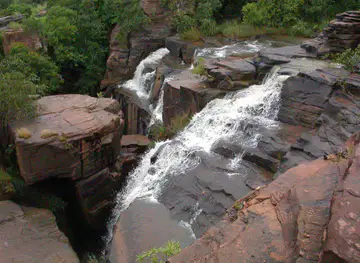
Cascades’ attractions are concentrated around Banfora and the greener landscapes of the Comoé and Léraba basins. The Karfiguéla Waterfalls are the region’s best-known natural feature, with cascades over rocky ledges whose flow depends strongly on seasonal rainfall. Lake Tengrela offers a wetland setting associated with hippopotamus sightings, although wildlife viewing is never guaranteed and should follow local safety rules. The Dômes de Fabédougou and Sindou Peaks provide contrasting geological experiences: the former are rounded sandstone domes, while the latter form taller, more dramatic ridges and pinnacles. The Comoé-Léraba protected area adds wooded savannah, riverine habitats and opportunities for carefully managed nature observation. Around Banfora, agricultural landscapes, sugar-growing areas and village markets reveal the region’s economic life. Access to many attractions can be restricted by security conditions, weather, conservation rules or the absence of reliable public transport, so local arrangements and current confirmation are essential.
-
Park
Parc Bangr Weogo
Discover the beauty and tranquility of Parc Bangr Weogo, a lush green oasis in Ouagadougou offering nature, culture, and relaxation.
-
Tourist attraction
Ouagadougou Cathedral
Experience the spiritual and architectural grandeur of Ouagadougou Cathedral, a must-visit landmark in the heart of Burkina Faso's capital city.
-
Tourist attraction
Monument of National Heroes
Discover the Monument of National Heroes in Ouagadougou, a tribute to Burkina Faso's heritage, resilience, and fight for independence.
-
Amusement park
BIBI PARC
Discover the thrill of BIBI PARC, Ouagadougou's premier amusement park, where family fun and adventure meet in a beautiful park setting.


Best landmarks in Cascades
The Sindou Peaks are Cascades’ most recognisable geological landmark, a line of weathered sandstone towers and ridges near Sindou that rises sharply above the surrounding agricultural plain. Their forms are visually distinctive and carry local cultural associations, making a guided visit more appropriate than an unaccompanied climb. Near Banfora, the Karfiguéla Waterfalls mark a rocky stream corridor where seasonal water cuts through wooded terrain. The Dômes de Fabédougou offer a different sandstone landscape of rounded, sculpted masses shaped by erosion. Lake Tengrela is a natural landmark as well as a wetland habitat, while the Comoé and Léraba waterways help define the region’s geography and ecological character. These places are not interchangeable: the peaks and domes are geological formations, the falls are seasonal water features, and the lake and protected landscapes depend on changing hydrology and conservation conditions. Access should always be checked before travel.
-
Entertainment
Ciné Neerwaya
Experience the heart of African cinema at Ciné Neerwaya, Ouagadougou's premier destination for immersive storytelling and cultural engagement.
-
Tourist attraction
Monument of National Heroes
A tribute to Burkina Faso's heroes, the Monument of National Heroes in Ouagadougou stands as a symbol of resilience and national pride.
-
Amusement park
BIBI PARC
Experience thrilling rides and family fun at BIBI PARC, Ouagadougou's top amusement park with attractions for all ages.
-
Tourist attraction
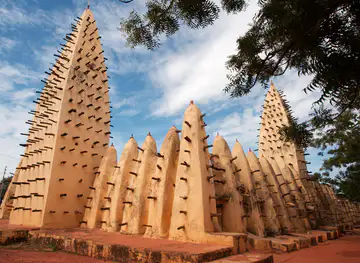
Grande Mosquée de Bobo-Dioulasso
Discover the Grande Mosquée de Bobo-Dioulasso, a breathtaking example of Sudano-Sahelian architecture and a cultural landmark in Burkina Faso.


Explore Cascades on the map
Plan your trip on one map. See where the top cities, national parks and sights are, and book hotels and experiences in a few clicks.
Best hotels in Cascades
Best restaurants in Cascades
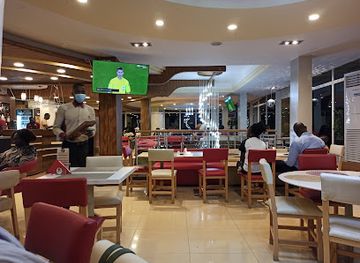
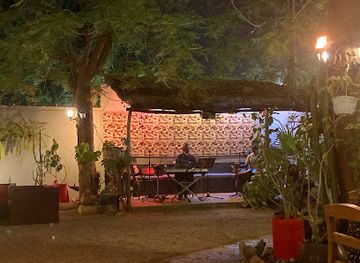
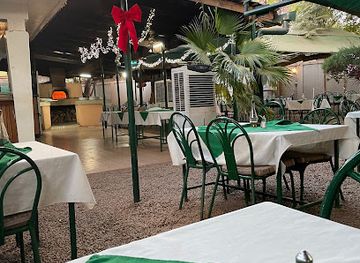
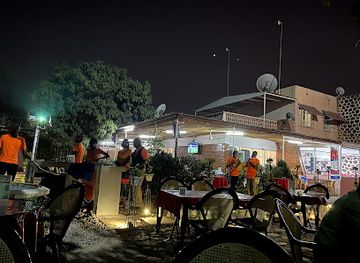
Dining in Cascades is primarily local and informal, with Banfora providing the widest choice of modest restaurants, cafés and street-food stalls. Meals commonly draw on the wider cuisines of Burkina Faso and western West Africa: tô with sauces, rice dishes, grilled meat, beans, seasonal vegetables and fried snacks are more dependable regional experiences than a narrowly defined Cascades cuisine. The wetter environment supports mangoes and other fruit, while shea products, cereals and locally grown crops appear in household and market cooking. Around rural settlements, food may be available through small eateries or market vendors rather than formal restaurants, and choices can be limited outside Banfora. Visitors should drink treated or bottled water, eat food that is thoroughly cooked and carry provisions for excursions. Menus, prices and opening arrangements can change with supply, season and local security conditions.
-
Restaurant
P'tit Paris Gounghin
Experience authentic Burkinabe hospitality at P'tit Paris Gounghin - a culinary gem in Ouagadougou offering diverse flavors and delightful ambiance.
-
Restaurant
SIKA LOUNGE
Discover SIKA LOUNGE: A culinary gem in Ouagadougou blending local flavors with international cuisine in a vibrant atmosphere.
-
Restaurant
Le Verdoyant
Discover the rich flavors of Burkina Faso at Le Verdoyant – where local meets international cuisine in a charming setting.
-
Lebanese
Chez Simon
Discover the vibrant flavors of Lebanese cuisine at Chez Simon in Ouagadougou - perfect for breakfast lovers and pastry enthusiasts.
Best bars in Cascades
Evening life in Cascades is modest and centred mainly on Banfora’s cafés, beer gardens, informal bars and restaurants rather than a substantial nightclub scene. In smaller towns and rural communities, social activity generally takes place around local eateries, markets, music and neighbourhood gathering places, with the pace shaped by daylight, transport availability and security considerations. Visitors should avoid assuming that venues remain open late or that nightlife is appropriate outside established urban areas. Alcohol is available in some settings, but it is not necessary to experience the region’s culture, and drinking can impair judgement in an area where transport and security arrangements may be limited. Ask trusted local contacts about current conditions and return to accommodation before dark when advised.
-
Bar
SIKA LOUNGE
Experience the vibrant ambiance and delicious culinary delights at SIKA LOUNGE in Ouagadougou, the perfect blend of bar and restaurant.
-
Bar
Le Titis
Discover the lively spirit of Ouagadougou at Le Titis, a vibrant bar where locals and travelers come together to enjoy drinks and music.
-
Bar
The Taxi Brousse
Discover the lively ambiance of The Taxi Brousse, the perfect bar in Ouagadougou for budget-friendly drinks and authentic local experiences.
-
Bar
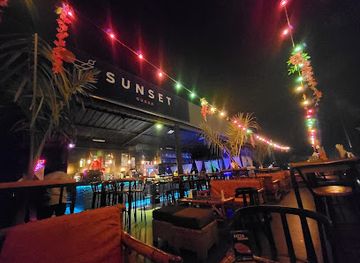
SUNSET OUAGA
Experience the vibrant nightlife of Ouagadougou at Sunset Ouaga, where refreshing drinks and a lively atmosphere create unforgettable moments.


Best nightclubs in Cascades
Evening life in Cascades is modest and centred mainly on Banfora’s cafés, beer gardens, informal bars and restaurants rather than a substantial nightclub scene. In smaller towns and rural communities, social activity generally takes place around local eateries, markets, music and neighbourhood gathering places, with the pace shaped by daylight, transport availability and security considerations. Visitors should avoid assuming that venues remain open late or that nightlife is appropriate outside established urban areas. Alcohol is available in some settings, but it is not necessary to experience the region’s culture, and drinking can impair judgement in an area where transport and security arrangements may be limited. Ask trusted local contacts about current conditions and return to accommodation before dark when advised.
-
Disco club
The Mask
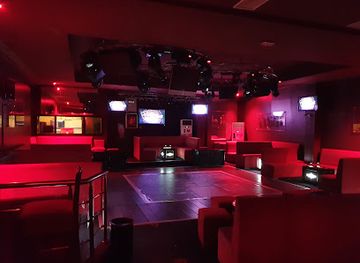
Discover the vibrant nightlife at The Mask, Ouagadougou's premier disco club, where music, dance, and culture come together for an unforgettable experience.
-
Disco club
Level Night Club
Dance the night away at Level Night Club, Ouagadougou's vibrant disco hub, where music and energy collide for an unforgettable experience.
-
Bar
Diam's lounge
Experience the vibrant nightlife of Ouagadougou at Diam's Lounge, where refreshing drinks and a lively atmosphere await you.
-
 Disco club
Night club le Benbao
Discover the vibrant atmosphere of Night Club le Benbao, a disco club in Ouagadougou where music, dance, and local culture come together for an unforgettable night.

Best shops in Cascades
Shopping in Cascades is most useful for locally produced food, everyday goods and small-scale crafts rather than specialist luxury retail. Banfora’s markets and commercial streets are the main places to look for mangoes and other seasonal produce, cereals, shea-based products, woven items, household goods and clothing. Smaller market centres around the region offer a more agricultural character, but opening days, supplies and transport can vary. Visitors may find carved wooden objects, baskets, fabrics or jewellery, although quality and provenance differ, so buy respectfully and avoid items made from protected wildlife or archaeological material. Packaged local produce can be a practical souvenir when properly labelled and permitted for export. Carry cash in small denominations, agree prices politely before purchasing where necessary, and remember that rural vendors may have limited change or no electronic payment facilities.
-
Amusement park
BIBI PARC
Experience the thrill of BIBI PARC, Ouagadougou's top amusement park, featuring exciting rides and attractions for all ages in a vibrant setting.
-
Bakery
Boulangerie Wend-Konta Secteur 22
Experience the authentic tastes of Burkina Faso at Boulangerie Wend-Konta, where every bite is a journey into local flavor.
-
Shopping mall
Gare Rakieta
Gare Rakieta: Discover the heart of shopping and culture in Bobo-Dioulasso's vibrant marketplace.
-
Supermarket
Liza mall
Experience the energy of Liza Mall, a shopping haven in Ouagadougou offering local goods, international brands, and delightful dining options.


Get your free copy of our complete guide to Cascades, delivered straight to you.
Everything on this page, from attractions and restaurants to essentials and local phrases, in one PDF you can read offline, print or share.
Already have an account? Sign in
Your Cascades guide is ready.
We'll send it to · Not you? Sign out

Getting your guide ready…
We are putting together a fresh copy of the Cascades guide. This can take up to a minute.
This can take a few moments. If your browser asks, choose Allow so the download can start. You'll find the guide in your Downloads folder.
Nothing happened? Download it again
Sorry, the guide is taking longer than usual. Please try again in a minute, or get it by email instead.
Cascades essentials
Currency and Payment
Safety
Emergency Situations
Do's and Don'ts
Local Tips
From Eve
Local phrases worth knowing
You don't need to get them perfect. A few words go a long way, and locals appreciate the effort.
Basics
| English | Local | Say it |
|---|---|---|
| Hello | Bonjour | [bawn-zhoor] |
| Goodbye | Au revoir | [oh ruh-vwahr] |
| Yes | Oui | [wee] |
| No | Non | [noh] |
| Please/You're welcome | S'il vous plaît | [seel voo pleh] |
| Thank you | Merci | [mehr-see] |
| Excuse me/Sorry | Excusez-moi | [ehk-skew-zay mwah] |
| How are you? | Comment ça va? | [koh-mohn sah vah] |
| Fine. And you? | Bien. Et vous? | [byan. eh voo] |
| Do you speak English? | Parlez-vous anglais? | [par-lay voo ahn-glay] |
| I don't understand | Je ne comprends pas | [zhuh nuh kom-prahn pah] |
Eating & Drinking
| English | Local | Say it |
|---|---|---|
| I'd like to see the menu, please | Je voudrais voir le menu, s'il vous plaît | [zhuh voo-dray vwar luh meh-nu, seel voo pleh] |
| I don't eat meat | Je ne mange pas de viande | [zhuh nuh mahnzh pah duh vyahnd] |
| Cheers! | Santé! | [sahn-tay] |
| I would like to pay, please | Je voudrais payer, s'il vous plaît | [zhuh voo-dray pay-ay, seel voo pleh] |
Emergencies
| English | Local | Say it |
|---|---|---|
| Help! | Au secours! | [oh suh-koor] |
| Go away! | Allez-vous en! | [ah-lay voo zahn] |
| Call the Police! | Appelez la police! | [ah-peh-lay lah poh-lees] |
| Call a doctor! | Appelez un docteur! | [ah-peh-lay uhn doh-kter] |
| I'm lost | Je suis perdu | [zhuh swee pair-doo] |
| I'm ill | Je suis malade | [zhuh swee mah-lahd] |
Shopping
| English | Local | Say it |
|---|---|---|
| I'd like to buy... | Je voudrais acheter... | [zhuh voo-dray ah-sheh-tay] |
| I'm just looking | Je regarde seulement | [zhuh reh-gard suh-leh-mohn] |
| How much is it? | C'est combien? | [seh kohm-byen] |
| That's too expensive | C'est trop cher | [seh troh shair] |
| Can you lower the price? | Pouvez-vous baisser le prix? | [poo-vay voo beh-say luh pree] |
Time & Numbers
| English | Local | Say it |
|---|---|---|
| What time is it? | Quelle heure est-il? | [kel uhr eh-teel] |
| It's one o'clock | Il est une heure | [eel eh toone uhr] |
| Half past (10) | Dix et demi | [deez eh duh-mee] |
| Morning | Matin | [mah-tan] |
| Afternoon | Après-midi | [ah-pray mee-dee] |
| Evening | Soir | [swahr] |
| Yesterday | Hier | [ee-air] |
| Today | Aujourd'hui | [oh-zhoor dwee] |
| Tomorrow | Demain | [duh-mahn] |
| 1 | Un | [uhn] |
| 2 | Deux | [duh] |
| 3 | Trois | [trwah] |
| 4 | Quatre | [katr] |
| 5 | Cinq | [sank] |
| 6 | Six | [sees] |
| 7 | Sept | [set] |
| 8 | Huit | [weet] |
| 9 | Neuf | [nurf] |
| 10 | Dix | [deez] |
Transport & Directions
| English | Local | Say it |
|---|---|---|
| Where's a/the...? | Où est un/une...? | [oo eh uhn/oon] |
| What's the address? | Quelle est l'adresse? | [kel eh luh-dress] |
| Can you show me (on the map)? | Pouvez-vous me montrer (sur la carte)? | [poo-vay voo muh mohn-tray (sur lah kart)] |
| When's the next (bus)? | Quand est le prochain (bus)? | [kahn eh luh pro-shen (boos)] |
| A ticket (to ....) | Un billet (pour ....) | [uhn bee-yay (poor ....)] |
History of Cascades
Early settlement and western savannah cultures
The Cascades landscape has long supported farming, hunting and movement along the waterways and wooded savannah of western Burkina Faso. Archaeological and oral histories point to longstanding settlement by related but distinct communities, including Sénoufo, Karaboro and Toussian groups. Their societies developed agricultural knowledge suited to seasonal rainfall and maintained networks of exchange across what is now the Burkina Faso–Côte d’Ivoire border. The sandstone formations around Sindou and Fabédougou are also embedded in local cultural landscapes, rather than being merely geological curiosities.
Trade routes and regional kingdoms
Before colonial borders, western Burkina Faso formed part of a connected zone linking the Upper Volta interior with markets farther south. Goods, livestock and agricultural products moved through networks associated with Dyula traders and neighbouring political communities. The region’s location between the Upper Comoé basin and the routes towards present-day Côte d’Ivoire gave settlements such as Banfora and the surrounding market centres a commercial role. Political authority was varied rather than controlled by a single Cascades-wide kingdom, and local histories retain different accounts of migration, settlement and allegiance.
French colonial rule and the creation of Upper Volta
French expansion in the late nineteenth and early twentieth centuries brought the area into the colonial administration of French West Africa. Boundaries were imposed across older cultural and trading networks, while taxation, labour obligations and new administrative structures altered local economies. The territory became part of the colony of Upper Volta, established in 1919, although Upper Volta was later dismantled and its lands administered through neighbouring colonies before being reconstituted in 1947. Banfora’s growth was connected to this changing administrative and commercial geography.
Railways, agriculture and Banfora’s growth
The railway linking the inland Upper Volta territory with the ports of Côte d’Ivoire strengthened Banfora’s importance during the colonial period and supported the movement of agricultural goods and people. Later investment in irrigation and commercial farming, particularly sugar production around Banfora, helped make the Cascades one of Burkina Faso’s principal agricultural areas. These developments brought employment and infrastructure but also tied the region more closely to national and cross-border markets. The resulting landscape of cultivated plains, canals and processing facilities remains part of Cascades’ modern identity.
Independence and the western borderlands
Upper Volta became independent as the Republic of Upper Volta in 1960 and was renamed Burkina Faso in 1984. Cascades has since remained a predominantly agricultural region whose towns connect the national economy with Côte d’Ivoire. Cross-border mobility, trade and family links continue to matter, although national borders and periodic political instability have made movement less predictable. Banfora expanded as a regional centre, while smaller communities retained strong agricultural and cultural ties to their surrounding landscapes.
Protected landscapes and contemporary conservation
Recognition of the region’s forests, wetlands and wildlife led to the establishment of protected areas, including the Comoé-Léraba protected area in the south-west. Conservation has sought to safeguard habitats and animal populations while accommodating the needs of nearby communities. Managing these aims is complex where farming, grazing, fishing and woodland use support local livelihoods. Today, the region’s natural attractions are inseparable from questions of security, conservation governance and community access, particularly close to the borders and in remote reserves.
Cascades in Photos
Browse through our photo collection highlighting the charm and character of the destination.
Neighbouring regions of Cascades
The closest regions to Cascades, if you have time for more than one.
-

-

-

-

-


Swipe for more regions
Explore more

Explore more of Burkina Faso
Discover Burkina Faso: An authentic African destination with rich culture, stunning landscapes, and warm hospitality, offering a memorable and enriching travel experience.
Explore Burkina Faso