

Free Centre-North Travel Guide & Mobile App
Explore Centre-North with free travel guides. Discover regional history, expert tips, proposed trips, and audio guides on web or mobile app.


Centre-North Burkina Faso combines Kaya's craft heritage, Lake Dem's seasonal wetlands and Sahelian landscapes, subject to strict security planning.
Read more about Centre-North
When is the best time to visit Centre-North?
Best: November–January · 30–32°C| Month | High (°C) | Rainfall (mm) |
|---|---|---|
| January (best) | 32 | 1 |
| February | 34 | 2 |
| March | 37 | 5 |
| April | 38 | 10 |
| May | 39 | 20 |
| June | 38 | 50 |
| July | 35 | 80 |
| August | 33 | 100 |
| September | 34 | 60 |
| October | 34 | 30 |
| November (best) | 32 | 10 |
| December (best) | 30 | 2 |
Getting to and around Centre-North
How to get there
Transportation
Top city travel guides in Centre-North
The cities of Centre-North, and the easiest places to base yourself.
-

-

-


Swipe for more cities
Destinations in Centre-North
Resorts, valleys and scenic spots worth a trip of their own.
-

-

-


Swipe for more destinations
Best attractions in Centre-North
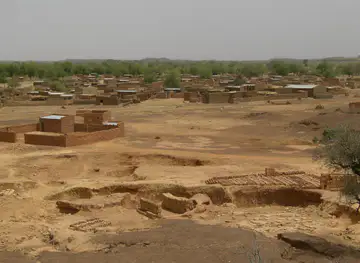
Centre-North's attractions are primarily cultural landscapes, markets, craft traditions and natural environments rather than a dense circuit of developed visitor sites. Kaya is associated with leatherworking, local commerce and the everyday life of a regional Sahelian town; visits to workshops should be arranged respectfully and in advance. Kongoussi and Boulsa provide further perspectives on market exchange, farming and local administration, although services for international visitors are limited. Lake Dem, near Kaya, is the region's best-known natural feature, with open water, seasonal wetlands and birdlife that vary with rainfall. The wider countryside offers views of lateritic plains, cultivated fields, village compounds and grazing land, but it is a working environment rather than an organised safari destination. Cultural experiences may include markets, music, oral history and community-based introductions to local food or crafts, subject to consent and security. Because armed violence and displacement have affected the region, many rural attractions may be inaccessible, and no itinerary should be planned without current local and governmental clearance.
-
Tourist attraction
Rond Point du Lion
Discover the cultural heart of Kaya at Rond Point du Lion, a stunning tourist attraction that embodies the spirit of Burkina Faso.
-
Tourist attraction
Rond Point
Explore Rond Point in Kaya, a vibrant tourist attraction blending local culture, crafts, and culinary delights in the heart of Burkina Faso.
-
Garden
ALLONS AU PÉAGE CHEZ AVION DE GUERRE
Experience the serene beauty of Allons au Péage chez Avion de Guerre, a hidden garden gem in Kaya, perfect for relaxation and nature lovers.
-
Tourist attraction
Rond Point Naaba Oubri
Explore the vibrant culture and lively atmosphere of Rond Point Naaba Oubri in Kaya, Burkina Faso, a must-visit tourist attraction.


Best landmarks in Centre-North
Lake Dem is Centre-North's most recognisable natural landmark, a water body and wetland near Kaya whose extent and appearance alter markedly between the dry and rainy seasons. Its ecological value is closely tied to local livelihoods, so access and photography should be handled with local guidance. Kaya itself is the region's principal urban landmark in a broader sense: its markets, craft workshops, roads and public buildings express the town's role as an administrative and commercial centre rather than presenting a single monumental structure. Traditional chiefly and religious institutions also form part of the region's cultural landscape, although they should not be approached as tourist spectacles without permission. Across Bam, Namentenga and Sanmatenga, village compounds, granaries, lateritic tracks, seasonal watercourses and cultivated fields provide visual evidence of adaptation to the Sahelian environment. The most significant historic landmarks are often embedded in living communities and may lack formal interpretation or visitor facilities. Insecurity currently limits access to many rural places, making current clearance more important than a fixed sightseeing list.
-
Park
Parc Bangr Weogo
Explore the natural beauty of Parc Bangr Weogo in Ouagadougou – a tranquil park with lush greenery, diverse wildlife, and a peaceful atmosphere.
-
Entertainment
Ciné Neerwaya
Experience the vibrant culture of Burkina Faso through the lens of African cinema at Ciné Neerwaya in Ouagadougou.
-
Catholic cathedral
Ouagadougou Cathedral
Discover the stunning Ouagadougou Cathedral, a blend of history and faith located in the heart of Burkina Faso's capital, offering breathtaking architecture and spiritual tranquility.
-
Monument
Monument of National Heroes
Discover the Monument of National Heroes in Ouagadougou, a stunning tribute to Burkina Faso's courageous past and a must-visit for every traveler.


Explore Centre-North on the map
Plan your trip on one map. See where the top cities, national parks and sights are, and book hotels and experiences in a few clicks.
Best hotels in Centre-North
Best restaurants in Centre-North
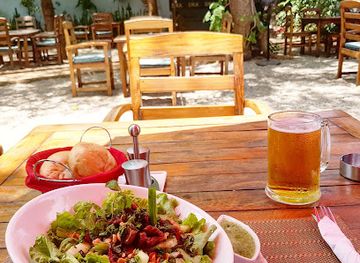
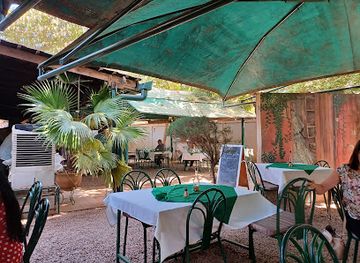
Dining in Centre-North is generally informal and local, centred on small eateries, market food, cafés and family-run establishments rather than a developed international restaurant scene. Common Burkinabè cooking includes tô, a firm staple made from millet, sorghum or maize flour, served with sauces; rice and beans are also widely eaten, while grilled meat may appear in larger towns. Seasonal produce, shea products and locally grown grains reflect the semi-arid agricultural economy. In Kaya and other urban centres, visitors may find brochettes, omelettes, bread, tea and simple rice dishes, but menus and hygiene standards vary. Restaurants and lodging facilities may have reduced operations because of insecurity and supply difficulties. Drink bottled or treated water, eat food that is thoroughly cooked and hot, and carry suitable snacks when travelling. The region's food culture is best approached through trusted local hosts, with respect for Muslim and other dietary practices and without assuming that a rural household meal is a commercial experience.
-
Restaurant
P'tit Paris Gounghin
Discover culinary delights at P'tit Paris Gounghin - where local flavors meet warm hospitality in Ouagadougou.
-
Restaurant
Koffi GOMBO
Discover Koffi GOMBO: Where exquisite coffee meets delightful Burkinabé cuisine in the heart of Ouagadougou.
-
Restaurant
SIKA LOUNGE
Discover the vibrant culinary scene at SIKA LOUNGE in Ouagadougou - where delicious food meets great company in a lively atmosphere.
-
Restaurant
Le Verdoyant
Discover Le Verdoyant in Ouagadougou - where exquisite pizza meets authentic Burkinabé flavors amidst a vibrant atmosphere.


Best bars in Centre-North
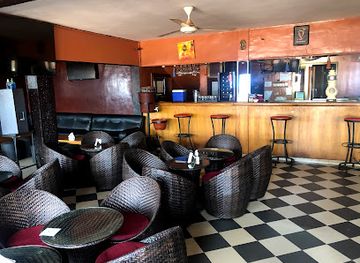
Centre-North does not have a major international nightlife scene. In Kaya and other towns, evening social life traditionally centres on modest cafés, tea stalls, restaurants, neighbourhood drinking places, music and conversation rather than large clubs. Some venues may serve local beer and soft drinks, but opening arrangements, crowd levels and operating status can change quickly because of the security situation. Rural evenings are usually quieter and shaped by household, religious and community life. Visitors should avoid walking after dark, drinking heavily, displaying valuables or treating nightlife as a reason to ignore local security advice. Any evening outing should be arranged through a trusted host, remain close to secure accommodation and end according to the current movement restrictions. In the present climate, cultural contact, food and daytime markets are more realistic visitor experiences than clubbing.
-
Bar
SIKA LOUNGE
Discover the vibrant nightlife and local flavors at SIKA LOUNGE, a must-visit bar and restaurant in Ouagadougou, Burkina Faso.
-
Bar
Le Titis
Discover the vibrant nightlife and local flavors at Le Titis, a premier bar in Ouagadougou perfect for socializing and relaxation.
-
Bar
The Taxi Brousse
Discover the heart of Ouagadougou's nightlife at The Taxi Brousse, where vibrant energy and local culture come alive.
-
Bar
SUNSET OUAGA
Experience the vibrant nightlife of Ouagadougou at SUNSET OUAGA, where local flavors and music create unforgettable memories.



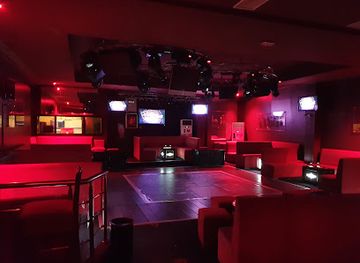
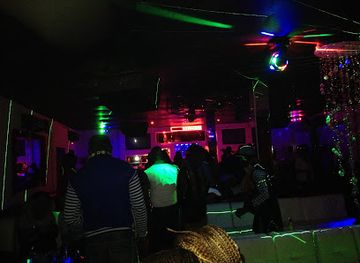
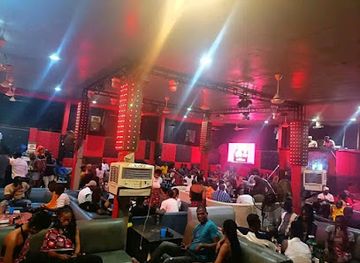
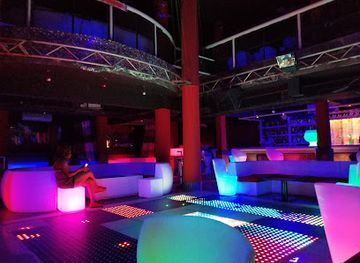
Best nightclubs in Centre-North
Centre-North does not have a major international nightlife scene. In Kaya and other towns, evening social life traditionally centres on modest cafés, tea stalls, restaurants, neighbourhood drinking places, music and conversation rather than large clubs. Some venues may serve local beer and soft drinks, but opening arrangements, crowd levels and operating status can change quickly because of the security situation. Rural evenings are usually quieter and shaped by household, religious and community life. Visitors should avoid walking after dark, drinking heavily, displaying valuables or treating nightlife as a reason to ignore local security advice. Any evening outing should be arranged through a trusted host, remain close to secure accommodation and end according to the current movement restrictions. In the present climate, cultural contact, food and daytime markets are more realistic visitor experiences than clubbing.
-
Disco club
The Mask
Experience the vibrant nightlife of Ouagadougou at The Mask, the ultimate disco club for unforgettable nights filled with music and dance.
-
Disco club
Level Night Club
Dive into the energetic nightlife at Level Night Club in Ouagadougou, where vibrant music and local flavors unite for an unforgettable experience.
-
Bar
Waguess Night-Club
Discover the lively atmosphere at Waguess Night-Club, a premier bar in Ouagadougou offering great music, delicious drinks, and a vibrant nightlife experience.
-
Night club
CARTEL LIGHT Night Club
Dive into the pulsating nightlife of Ouagadougou at CARTEL LIGHT Night Club, where music and energy collide for an unforgettable night out.
Best shops in Centre-North
Shopping in Centre-North is concentrated in markets and small independent businesses rather than formal retail complexes. Kaya is especially associated with leatherwork, and visitors may encounter belts, bags, sandals and other practical goods, although quality, provenance and availability vary. Markets in Kaya, Kongoussi and other towns trade in grain, livestock, household goods, clothing, tools and seasonal produce, reflecting the region's role as an agricultural and pastoral exchange area. Woven items, beads, baskets and locally made utensils may also be available, but buyers should ask whether products are locally made and negotiate politely without turning ordinary market activity into a performance. Food purchases can include millet, sorghum, shea products and dried ingredients, subject to customs and transport restrictions. There is limited choice for international shopping, and card payments are not dependable. Because of current insecurity, market visits should take place only with trusted local guidance and during approved movement periods.
-
Shopping mall
Centre commercial de Ouaga 2000
Experience the vibrant culture and shopping delights at Centre Commercial de Ouaga 2000 in Ouagadougou - a must-visit for every traveler!
-
Gift shop
Burkina Pas Chèr
Explore Burkina Pas Chèr in Ouagadougou for unique gifts and local treasures at unbeatable prices, perfect for souvenirs or gifts.
-
Shopping mall
Jardin du NORD
Discover the lively shopping culture at Jardin du NORD, where local treasures and international brands come together in Ouagadougou's vibrant market scene.
-
Gift shop
PETIT MOINS CHERS PMC
Explore the vibrant culture of Burkina Faso through unique gifts at PETIT MOINS CHERS PMC, a must-visit shop in Ouagadougou.


Get your free copy of our complete guide to Centre-North, delivered straight to you.
Everything on this page, from attractions and restaurants to essentials and local phrases, in one PDF you can read offline, print or share.
Already have an account? Sign in
Your Centre-North guide is ready.
We'll send it to · Not you? Sign out

Getting your guide ready…
We are putting together a fresh copy of the Centre-North guide. This can take up to a minute.
This can take a few moments. If your browser asks, choose Allow so the download can start. You'll find the guide in your Downloads folder.
Nothing happened? Download it again
Sorry, the guide is taking longer than usual. Please try again in a minute, or get it by email instead.
Centre-North essentials
Currency and Payment
Safety
Emergency Situations
Do's and Don'ts
Local Tips
From Eve
Local phrases worth knowing
You don't need to get them perfect. A few words go a long way, and locals appreciate the effort.
Basics
| English | Local | Say it |
|---|---|---|
| Hello | Naaw | [nah-w] |
| Goodbye | N'a b'a se | [nah bah seh] |
| Yes | Ee | [eh] |
| No | Ayi | [ah-yee] |
| Please/You're welcome | S'il vous plaît | [seel voo pleh] |
| Thank you | Meda w'ase | [meh-dah wah-seh] |
| Excuse me/Sorry | Barka | [bar-kah] |
| How are you? | N'ya t'ugna? | [nee-yah too-gna] |
| Fine. And you? | N'ya b'li, na? | [nee-yah blee, nah] |
| Do you speak English? | W'ana p'le y'anglais? | [wah-nah pleh ee-ahn-glay] |
| I don't understand | N'ka m'kan | [nee-kah em-kahn] |
Eating & Drinking
| English | Local | Say it |
|---|---|---|
| I'd like to see the menu, please | N'ya m'in d'na t'ij, s'il vous plaît | [nee-yah meen dah-na tee-ij, seel voo pleh] |
| I don't eat meat | N'ka d'na soya | [nee-kah dah-na so-yah] |
| Cheers! | Sankara! | [sahn-kah-rah] |
| I would like to pay, please | N'ya m'in d'na ya, s'il vous plaît | [nee-yah meen dah-na yah, seel voo pleh] |
Emergencies
| English | Local | Say it |
|---|---|---|
| Help! | Y'na! | [ee-nah] |
| Go away! | F'ra t'na! | [frah tah-nah] |
| Call the Police! | T'na y'police! | [tah-nah ee-police] |
| Call a doctor! | T'na y'doktor! | [tah-nah ee-dok-tor] |
| I'm lost | N'ka d'na t'na | [nee-kah dah-na tah-nah] |
| I'm ill | N'ka t'ga | [nee-kah tah-gah] |
Shopping
| English | Local | Say it |
|---|---|---|
| I'd like to buy... | N'ya m'in d'na t'bu, ... | [nee-yah meen dah-na t-bu, ...] |
| I'm just looking | N'ka d'na f'ra | [nee-kah dah-na frah] |
| How much is it? | N'ya m'k'i? | [nee-yah em-kee] |
| That's too expensive | A y'k'pe | [ah ee-keh-peh] |
| Can you lower the price? | W'ana r'k'n d'ka y'k'i? | [wah-nah r-kah-n dah-kah ee-kee] |
Time & Numbers
| English | Local | Say it |
|---|---|---|
| What time is it? | N'ya k'na? | [nee-yah kah-nah] |
| It's one o'clock | N'ya t'k'na j'k | [nee-yah tah-kah-nah j-kah] |
| Half past (10) | D'mi s'k'na (10) | [dah-mee sah-kah-nah (10)] |
| Morning | N'ya b'la | [nee-yah beh-lah] |
| Afternoon | N'ya b'zo | [nee-yah beh-zoh] |
| Evening | N'ya b'so | [nee-yah beh-so] |
| Yesterday | N'ya y'k'na | [nee-yah ee-kah-nah] |
| Today | N'ya t'k'na | [nee-yah tah-kah-nah] |
| Tomorrow | N'ya y'k'na | [nee-yah ee-kah-nah] |
| 1 | K'one | [kah-one] |
| 2 | K'two | [kah-two] |
| 3 | K'three | [kah-three] |
| 4 | K'four | [kah-four] |
| 5 | K'five | [kah-five] |
| 6 | K'six | [kah-six] |
| 7 | K'seven | [kah-seven] |
| 8 | K'eight | [kah-eight] |
| 9 | K'nine | [kah-nine] |
| 10 | K'ten | [kah-ten] |
Transport & Directions
| English | Local | Say it |
|---|---|---|
| Where's a/the...? | B'la w'na? | [beh-lah wah-nah] |
| What's the address? | N'ya k'na y'adr'ss? | [nee-yah kah-nah ee-dree-s] |
| Can you show me (on the map)? | W'ana f'ra m'na (n'ka)? | [wah-nah frah meh-nah (n-kah)] |
| When's the next (bus)? | K'na y'di t'na (bus)? | [kah-nah ee-dee tah-nah (bus)] |
| A ticket (to ....) | Y'ticket (y'...)? | [ee-ticket (ee-...)] |
History of Centre-North
Early settlement and Sahelian exchange
The Centre-North has long been shaped by the movement of farmers, pastoralists and traders across the transition between the Sudanian savannah and the Sahel. Archaeological evidence from the wider region points to an old history of settled cultivation, ironworking and interaction between communities, although many local sites are not developed for tourism. Seasonal water, grazing and access to trade routes influenced where settlements grew. These older patterns help explain the region's continuing mixture of agricultural villages, livestock markets and mobile pastoral activity.
The rise of the Mossi states
From the late first millennium and through the medieval period, Mossi political formations developed across much of central Burkina Faso. The territories corresponding broadly to modern Sanmatenga and neighbouring provinces became connected to chiefly institutions, tribute systems and networks of allegiance associated with the Mossi world. Authority was neither uniform nor static, and local communities retained their own identities and leadership structures. The legacy survives in chiefly traditions, social institutions, oral histories and the cultural importance of towns such as Kaya, rather than in a single preserved royal monument.
Islamic and regional commercial networks
Trade between the southern savannah and the Sahel brought salt, livestock, grain, leather, textiles and other goods through the wider area. Muslim merchants and scholars participated in these networks, while Islam developed alongside older religious practices and later Christian communities. Market towns such as Kaya and Kongoussi benefited from exchange, though their histories were connected to far wider routes than the limits of today's administrative region. The result is a cultural landscape in which religion, commerce, craft production and seasonal movement have long overlapped.
French colonial rule and Upper Volta
French expansion into the region at the end of the nineteenth century brought military campaigns, taxation, labour demands and new systems of administration. The area became part of French West Africa and later of the colony of Upper Volta, established in 1919, abolished in 1932 and reconstituted in 1947. Colonial rule altered chiefly authority, transport, agricultural production and access to markets, while leaving many local institutions in place. Roads and administrative stations strengthened connections with Ouagadougou and other centres, but development remained uneven.
Independence and regional administration
Upper Volta became independent as Burkina Faso in 1960. Successive governments sought to expand education, health provision, roads, agricultural services and decentralised administration across the central and northern parts of the country. The modern Centre-North region, created in the administrative restructuring of the early twenty-first century, brought the provinces of Bam, Namentenga and Sanmatenga into one regional framework. Kaya consequently became an important administrative and commercial centre, although many communities remained dependent on seasonal agriculture and livestock.
Drought, mobility and changing livelihoods
Repeated droughts and environmental pressure across the Sahel, especially during the late twentieth century, affected harvests, grazing patterns and rural livelihoods. Communities adapted through migration, altered cropping practices, livestock keeping, market exchange and expanded use of drought-resistant grains such as millet and sorghum. Such pressures also intensified competition over land and water in some places. The history of Centre-North is therefore not only political: it is also a history of adaptation to variable rainfall, demographic change and the movement of people and animals.
Insecurity and displacement in the twenty-first century
Since the mid-2010s, armed groups and intercommunal violence have severely affected northern and central Burkina Faso. Centre-North has experienced attacks, disruption of transport and public services, and the arrival of displaced people from affected rural areas. The consequences are visible in pressure on host communities, markets, schools and health facilities. This recent history is essential to understanding present-day travel conditions: several places with cultural or environmental interest may be inaccessible, and security considerations take precedence over sightseeing.
Centre-North in Photos
Browse through our photo collection highlighting the charm and character of the destination.
Neighbouring regions of Centre-North
The closest regions to Centre-North, if you have time for more than one.
-

-

-

-

-


Swipe for more regions
Explore more

Explore more of Burkina Faso
Discover Burkina Faso: An authentic African destination with rich culture, stunning landscapes, and warm hospitality, offering a memorable and enriching travel experience.
Explore Burkina Faso