

Hoover Tower, Menlo Park Travel Guide
Ascend to Stanford's iconic Hoover Tower for panoramic views and a glimpse into history at the Hoover Institution Library & Archives, a center for the study of war, revolution, and peace.
Dominating the Stanford University skyline, Hoover Tower is more than just a building; it's a repository of history and a symbol of academic pursuit. Completed in 1941 to mark Stanford's 50th anniversary, the 285-foot tower houses the Hoover Institution Library and Archives, a world-renowned collection dedicated to the study of war, revolution, and peace. Visitors can ascend to the observation deck for panoramic views of the campus, the Bay Area, and beyond. The tower's carillon, a gift from Belgium, adds a touch of European elegance to the California landscape. Whether you're drawn by the historical significance, the architectural grandeur, or the stunning vistas, Hoover Tower offers a unique and enriching experience.
A brief summary to Hoover Tower
- 550 Jane Stanford Way, Stanford, California, 94305, US
- Click to display
- Monday 10 am-4 pm
- Tuesday 10 am-4 pm
- Wednesday 10 am-4 pm
- Thursday 10 am-4 pm
- Friday 10 am-4 pm
- Saturday 10 am-4 pm
- Sunday 10 am-4 pm

Know before you go
Hi, I'm Eve. Here are a few practical things to know before exploring Hoover Tower.
- Check the Hoover Institution website for carillon concert schedules; the observation deck is closed during performances.
- Purchase tickets for the observation deck at the door; credit card or contactless payment only (no cash accepted).
- The closest visitor parking lots are a 15-20 minute walk from Hoover Tower; plan accordingly.
- The last elevator goes up 30 minutes prior to closing; arrive early to maximize your visit.
- Take advantage of the free exhibition galleries on the ground floor to learn more about Herbert Hoover and the Hoover Institution.
Do you manage this location?
Take control to get all the benefits, like improved information, better appearance, and stronger visibility across AI-powered discovery. Learn more about listing your business on Evendo
Activate your presenceOther nearby places you may find interesting
The closest places of the same kind, if this one is not quite what you had in mind.


Explore Hoover Tower on the Map
A handpicked selection of must-see spots near Hoover Tower, mapped for you.
Unlock the Best of Hoover Tower
Buy tickets
-
No tickets available
Book tours with entry
-
No tours available


Getting There
-
Walking
From the Stanford Oval, head west towards the Main Quad. Pass through the quad, keeping Memorial Church on your left. Continue straight ahead, and you'll see Hoover Tower rising in the distance. The walk is approximately 10-15 minutes, offering a pleasant stroll through the heart of Stanford's campus.
-
Public Transport
Take the free Stanford Marguerite Shuttle to the Serra Mall stop, which is the closest stop to Hoover Tower. From there, it's a short walk towards the tower. Check the Marguerite schedule for specific routes and times. The Marguerite is free.
-
Driving
Visitor parking is enforced Monday-Friday, 8:00 a.m.-4:00 p.m. The closest visitor parking lots are a 15-20 minute walk from the Hoover Tower. Use the ParkMobile app, website, or phone to pay for parking. Hourly parking rates typically range from $1.50 per hour. Weekends are free.
-
Taxi/Ride-Share
Request a ride to Hoover Tower, 550 Jane Stanford Way, Stanford, CA 94305. Be aware that traffic on campus can be heavy during peak hours. A ride from downtown Palo Alto will typically cost $10-$15.
Discover more about Hoover Tower













Your all‑in‑one travel companion app
Explore expert travel guides, compare and book tours, experiences, hotels, and more—all from the palm of your hand. Download now for seamless trip planning wherever your wanderlust takes you.


Explore More of Menlo Park

Looking beyond Hoover Tower? Discover Menlo Park for broader travel guides, local hot-spots, and regional highlights.
Explore Menlo Park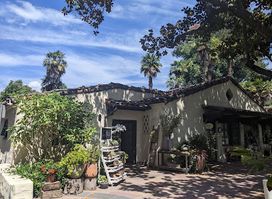
Discover a historic Spanish Colonial oasis in Menlo Park, where art, gardens, unique shops, and a charming cafe blend seamlessly to support Lucile Packard Children's Hospital.
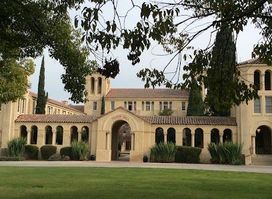
Explore Stanford University: A world-renowned center for innovation, education, and Silicon Valley history on a beautiful California campus.
