

Cannery Row (Monterey) Travel Guide - Free
Explore Cannery Row in Monterey with Evendo's free guide. Find the best shops, historic streets, restaurants, and gems on web or mobile.


Cannery Row in Monterey, California, pairs Steinbeck history, the Monterey Bay Aquarium, coastal walks, galleries, seafood dining and ocean views.
From Canneries to Coastal Culture
Cannery Row runs along Monterey’s waterfront as a compact, heavily visited corridor where industrial history, marine science and Pacific scenery overlap. The name recalls the sardine-packing district that developed here in the early twentieth century, while John Steinbeck’s 1945 novel Cannery Row fixed the area’s working waterfront, brightly eccentric characters and rough-edged charm in the literary imagination. Most of the canneries have disappeared or been converted, but their long, low buildings and surviving industrial details still shape the streetscape.Read more about Cannery Row
Marine Life and the Bay
Streets, Shops and Everyday Atmosphere
Best attractions in Cannery Row
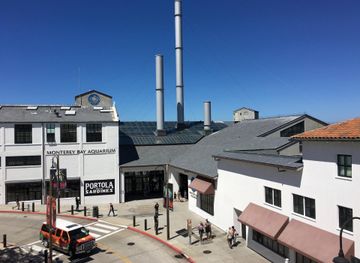
The Monterey Bay Aquarium is Cannery Row’s principal attraction, occupying the former Hovden Cannery and presenting the ecosystems of Monterey Bay through large exhibits, research-led interpretation and views towards the water. Along the street, converted cannery buildings hold galleries, shops and restaurants, while Steinbeck Plaza offers a central public space marked by sculptures connected with the district’s history. The Monterey Bay Coastal Recreation Trail provides the neighbourhood’s most accessible open-air experience, passing rocky shoreline, beaches, viewpoints and occasional wildlife-watching opportunities. San Carlos Beach and McAbee Beach offer places to pause beside the bay, although shoreline conditions vary and the beaches are not equivalent to sheltered swimming areas. Visitors interested in local history can look for the Cannery Row Monument and surviving industrial details, then continue towards the aquarium to understand how a former processing district became a centre for marine education.
-
Historical landmark
Cannery Row Monument
A bronze tribute to John Steinbeck and the colorful characters of Monterey's Cannery Row, celebrating its transformation from sardine hub to vibrant tourist destination.
6 min walk · 0.5 km from neighbourhood centre
-
Park
Plaza de Monterey
A tranquil park offering bay views in the heart of Monterey's historic Cannery Row, providing a peaceful escape amidst the bustling attractions and vibrant waterfront.
4 min walk · 0.3 km from neighbourhood centre
-
Tourist attraction
Sanctuary
Discover the soul of Monterey at Sanctuary on Cannery Row, where history, marine life, and vibrant attractions converge for an unforgettable Central Coast experience.
6 min walk · 0.5 km from neighbourhood centre
-
Historical landmark
Watching Over Me
Discover Monterey's maritime past at 'Watching Over Me' on Cannery Row, a historical landmark offering stunning coastal views and a glimpse into the area's sardine-canning legacy.
4 min walk · 0.3 km from neighbourhood centre


Best landmarks in Cannery Row
The Monterey Bay Aquarium is both a major visitor institution and Cannery Row’s most significant adaptive-reuse landmark, retaining the connection between the waterfront’s former packing industry and its present marine-science identity. The long industrial buildings along Cannery Row preserve the scale and working character of the old sardine district even where their interiors now contain shops, restaurants and hotels. Steinbeck Plaza functions as the neighbourhood’s principal public landmark and includes sculpture recalling the people and literary associations of Cannery Row. The Cannery Row Monument adds a more explicit historical marker, while the shoreline beaches and Coastal Recreation Trail reveal the physical setting that made fishing and packing possible. Ed Ricketts’ former Pacific Biological Laboratories site is another important literary and scientific reference, though the building is best understood as a historic exterior landmark rather than a conventional museum open for unrestricted visits.
-
Tourist attraction
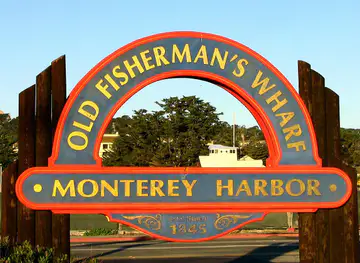
Old Fisherman's Wharf
Experience Monterey's rich maritime history and vibrant culinary scene at Old Fisherman's Wharf, a historical landmark that delights every visitor.
15 min walk · 1.2 km from neighbourhood centre
-
Tourist attraction
Cannery Row
Discover the historic charm of Cannery Row in Monterey, California, with its vibrant shops, exquisite dining, and breathtaking ocean views.
6 min walk · 0.5 km from neighbourhood centre
-
Historical landmark
Cannery Row Monument
Discover the maritime heritage of Monterey at the Cannery Row Monument, a historical landmark celebrating the vibrant past of this coastal community.
6 min walk · 0.5 km from neighbourhood centre
-
Statuary
John Steinbeck Statuary
Discover the John Steinbeck Statuary in Monterey, California—a tribute to the legendary author set against the backdrop of beautiful Cannery Row.
6 min walk · 0.5 km from neighbourhood centre


Explore Cannery Row on the map
A handpicked selection of must-see spots in Cannery Row, mapped for you.
Best hotels in Cannery Row
Best restaurants in Cannery Row
Dining on Cannery Row is shaped by the waterfront setting and the district’s conversion from sardine factories into visitor-oriented commercial spaces. Restaurants line the main street and occupy adapted cannery buildings, with menus commonly emphasising seafood, Californian ingredients, American grill cooking and views across Monterey Bay. Cafés, bakeries and casual counters provide easier options around a day at the aquarium, while hotel dining rooms and waterfront terraces offer more formal settings. The area’s culinary scene is broad rather than a single traditional cuisine, and it reflects Monterey’s continuing relationship with fishing, marine conservation and tourism. Visitors should distinguish Cannery Row’s restaurant concentration from the separate dining areas around Fisherman’s Wharf and downtown Monterey, which are nearby but outside the neighbourhood. Independent galleries, shops and food businesses add variety to the main corridor, although commercial activity is generally busiest close to the aquarium and shoreline viewpoints.
-
Restaurant
Old Fishermen's Grotto
Experience exquisite seafood and steak dishes with breathtaking bay views at Old Fishermen's Grotto in Monterey.
14 min walk · 1.2 km from neighbourhood centre
-
Restaurant
Fish Hopper
Experience coastal dining at its finest at Fish Hopper - where fresh seafood meets stunning ocean views in Monterey.
7 min walk · 0.5 km from neighbourhood centre
-
Restaurant
Hula's Island Grill
Experience tropical flavors at Hula's Island Grill - where local meets exotic in Monterey's culinary scene.
3 min walk · 0.2 km from neighbourhood centre
-
New American
Lalla Grill Oceanside
Discover Lalla Grill Oceanside: A delightful fusion of New American cuisine and fresh seafood in Monterey's scenic Cannery Row.
5 min walk · 0.4 km from neighbourhood centre


Best bars in Cannery Row
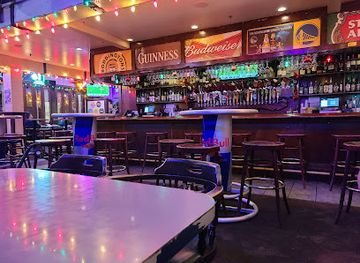
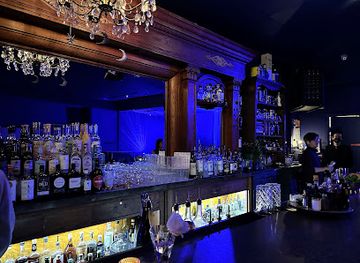
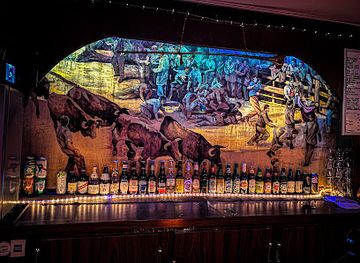
Cannery Row is primarily an evening dining and waterfront-strolling district rather than Monterey’s main clubbing area. Hotel bars, restaurant lounges and casual drinking venues provide places for cocktails, wine, beer and conversation, with the bay and converted industrial buildings supplying much of the atmosphere. Steinbeck Plaza and the Coastal Recreation Trail may remain pleasant for an after-dinner walk, but visitors should not expect a dense late-night entertainment strip extending along the whole waterfront. Live music and special evening programming can occur at individual venues or cultural institutions, subject to changing schedules. Those seeking a broader choice of bars and more sustained nightlife can continue towards central Monterey, while Pacific Grove offers a different, generally quieter evening character. Checking current venue information is sensible because opening patterns and entertainment programmes can change seasonally.
-
New American
Lalla Grill Oceanside
Experience the best of New American cuisine at Lalla Grill Oceanside, where fresh seafood meets vibrant flavors in a stunning coastal setting.
5 min walk · 0.4 km from neighbourhood centre
-
Seafood
Schooners Monterey
Discover the finest seafood dining in Monterey at Schooners, where fresh flavors and stunning ocean views create an unforgettable experience.
4 min walk · 0.4 km from neighbourhood centre
-
Seafood
Chart House
Experience the exquisite fusion of fine dining and breathtaking views at Chart House in Monterey, California.
5 min walk · 0.4 km from neighbourhood centre
-
Seafood
Louie Linguini's
Experience the best of Monterey's seafood and Italian cuisine at Louie Linguini's, where flavor meets stunning ocean views.
6 min walk · 0.5 km from neighbourhood centre


Best nightclubs in Cannery Row
Cannery Row is primarily an evening dining and waterfront-strolling district rather than Monterey’s main clubbing area. Hotel bars, restaurant lounges and casual drinking venues provide places for cocktails, wine, beer and conversation, with the bay and converted industrial buildings supplying much of the atmosphere. Steinbeck Plaza and the Coastal Recreation Trail may remain pleasant for an after-dinner walk, but visitors should not expect a dense late-night entertainment strip extending along the whole waterfront. Live music and special evening programming can occur at individual venues or cultural institutions, subject to changing schedules. Those seeking a broader choice of bars and more sustained nightlife can continue towards central Monterey, while Pacific Grove offers a different, generally quieter evening character. Checking current venue information is sensible because opening patterns and entertainment programmes can change seasonally.
-
Night club
Sly McFly's
Experience the vibrant nightlife at Sly McFly's on Cannery Row, where live music, delicious food, and great cocktails await you.
6 min walk · 0.5 km from neighbourhood centre
-
Pub
Britannia Arms
Discover the vibrant atmosphere of Britannia Arms in Monterey, California, where delicious food meets lively entertainment in a welcoming pub setting.
5 min drive · 1.6 km from neighbourhood centre
-
Bar
Pearl Hour
Discover the essence of Monterey's nightlife at Pearl Hour, where innovative cocktails and a lively atmosphere await every visitor.
5 min walk · 0.4 km from neighbourhood centre
-
Cocktail bar
Segovia's Cocktail Bar & Lounge
Discover the vibrant nightlife at Segovia's Cocktail Bar & Lounge in Monterey, offering top-notch cocktails and a lively atmosphere for an unforgettable evening.
3 min walk · 0.3 km from neighbourhood centre

Best shops in Cannery Row
Shopping in Cannery Row is concentrated in converted cannery buildings along the main street and nearby waterfront passages. Visitors find galleries, jewellery and craft shops, clothing and gift retailers, books, souvenirs and marine-themed merchandise, alongside businesses aimed at aquarium visitors and holidaymakers. The retail character is therefore a mixture of independent galleries and specialist shops with strongly visitor-oriented outlets, rather than a traditional produce market or a neighbourhood shopping street used mainly for everyday needs. Art connected with the coast, photography, local imagery and maritime themes appears frequently, while smaller boutiques provide alternatives to large commercial centres elsewhere in Monterey. Cannery Row is also a useful place to browse historic industrial architecture between purchases, since many shops occupy structures inherited from the packing era. For broader everyday retail and a different independent-shopping atmosphere, visitors need to travel beyond the neighbourhood towards downtown Monterey or Pacific Grove.
-
Shopping mall
Monterey Canning Company
Explore the unique blend of history and modern shopping at Monterey Canning Company on Cannery Row, a must-visit for tourists in Monterey.
6 min walk · 0.5 km from neighbourhood centre
-
Antique store
Cannery Row Antiques Mall
Explore the charm of Cannery Row Antiques Mall, where history and art intertwine in Monterey's vibrant antique hub.
3 min walk · 0.2 km from neighbourhood centre
-
Clothing store
Sockshop Cannery Row Monterey
Explore Sockshop Cannery Row for a delightful selection of unique socks and stylish clothing in the heart of Monterey's historic district.
5 min walk · 0.4 km from neighbourhood centre
-
Gift shop
Mackerel Jack's Trading Co
Explore Mackerel Jack's Trading Co on Cannery Row for unique Monterey souvenirs and local artisan crafts that embody coastal California charm.
7 min walk · 0.6 km from neighbourhood centre


Cannery Row essentials
Getting There
Getting Around
Safety
Emergency Situations
Do's and Don'ts
Local Tips

From Eve
Local phrases worth knowing
You don't need to get them perfect. A few words go a long way, and locals appreciate the effort.
Basics
| English | Local | Say it |
|---|---|---|
| Hello | Howdy | [haw-dee] |
| Goodbye | So long | [soh lawng] |
| Yes | Yep | [yep] |
| No | Nah | [nah] |
| Please/You're welcome | Please/No problem | [pleez/no prob-lem] |
| Thank you | Thanks | [thanks] |
| Excuse me/Sorry | Pardon me | [par-dun mee] |
| How are you? | How ya doin'? | [how yah doo-in] |
| Fine. And you? | Not too bad. And you? | [naht too bad. And yah?] |
| Do you speak English? | Ya speak English? | [yah speak ing-glish] |
| I don't understand | I ain't catchin' ya | [ai t ain't ka-chin yah] |
Eating & Drinking
| English | Local | Say it |
|---|---|---|
| I'd like to see the menu, please | Can I check the menu, please | [kan ah chek thee menu, pleez] |
| I don't eat meat | I don't do meat | [ai dohn doh meet] |
| Cheers! | Bottoms up! | [bot-ums up] |
| I would like to pay, please | I'll settle up, please | [ai'll set-l up, pleez] |
Emergencies
| English | Local | Say it |
|---|---|---|
| Help! | SOS! | [ess-oh-ess] |
| Go away! | Scram! | [skram] |
| Call the Police! | Get the fuzz! | [get thee fuzz] |
| Call a doctor! | Fetch a sawbones! | [fetch uh saw-bonz] |
| I'm lost | I'm turned around | [ai'm turnd uh-round] |
| I'm ill | I'm under the weather | [ai'm un-der thee we-thur] |
Shopping
| English | Local | Say it |
|---|---|---|
| I'd like to buy... | I'm fixin' to get... | [ai'm fik-sin tuh get] |
| I'm just looking | Just browsin' | [just brah-sin] |
| How much is it? | What's the damage? | [wuts the dam-ij] |
| That's too expensive | That's a steep price | [thats uh steep prahs] |
| Can you lower the price? | Can ya cut me a deal? | [kan yah kut mee uh deel] |
Time & Numbers
| English | Local | Say it |
|---|---|---|
| What time is it? | What's the hour? | [wuts thee ow-er] |
| It's one o'clock | It's one bell | [its wun bell] |
| Half past (10) | Half past ten | [haf past ten] |
| Morning | Mornin' | [morn-in] |
| Afternoon | Afternoon | [aft-er-noon] |
| Evening | Evenin' | [ee-ven-in] |
| Yesterday | Yest'day | [yest-dee] |
| Today | Today | [tuh-day] |
| Tomorrow | Tomorrah | [tu-mor-rah] |
| 1 | One | [wun] |
| 2 | Two | [too] |
| 3 | Three | [three] |
| 4 | Four | [for] |
| 5 | Five | [fahv] |
| 6 | Six | [siks] |
| 7 | Seven | [sev-en] |
| 8 | Eight | [ate] |
| 9 | Nine | [nahn] |
| 10 | Ten | [ten] |
Transport & Directions
| English | Local | Say it |
|---|---|---|
| Where's a/the...? | Where's the... | [wheres thee] |
| What's the address? | Where's the place? | [wheres thee place] |
| Can you show me (on the map)? | Can ya point it out (on the map)? | [kan yah point it out (on thee map)] |
| When's the next (bus)? | When's the next ride? | [whens thee next rahd] |
| A ticket (to ....) | A pass (to ....) | [uh pass (tuh)] |
History of Cannery Row
A Waterfront Before the Canneries
The shoreline around present-day Cannery Row was part of the wider Monterey waterfront long before the district acquired its industrial name. Indigenous Ohlone people used the coast’s marine resources, and Spanish settlement at Monterey established the town as an important colonial and later Mexican centre. Fishing, whaling and other maritime activities shaped the bay, but the later industrial character of Cannery Row emerged only when commercial fishing and preservation technology made large-scale packing practical.
The Sardine-Packing District
During the early twentieth century, canneries multiplied along the waterfront as entrepreneurs processed sardines landed in Monterey Bay. Plants such as the Hovden Cannery employed local and migrant labour, while rail connections and harbour facilities helped move fish and finished products. The district’s long factory buildings, storage spaces and industrial waterfront reflected a demanding seasonal economy. Cannery Row was never simply a tourist quarter: it was a working area whose fortunes depended on the abundance of sardines and the labour of the people who processed them.
Steinbeck and the Working Waterfront
John Steinbeck lived and worked in Monterey during the 1930s and drew on the waterfront’s residents, businesses and social tensions for Cannery Row, published in 1945. His friendship with marine biologist Ed Ricketts, whose Pacific Biological Laboratories stood on the street, also connected the area’s literary identity with its scientific life. Steinbeck’s novel transformed a utilitarian industrial district into a widely recognised cultural landscape, although its fictional characters should not be treated as a literal record of every local person or event.
Collapse, Preservation and Reinvention
The sardine industry declined sharply after the fishery collapsed in the 1940s, and the remaining canneries gradually closed; the last major operations ended in the 1970s. Derelict industrial buildings were subsequently adapted for shops, restaurants, hotels and cultural uses rather than erased entirely. The Monterey Bay Aquarium opened in 1984 in the former Hovden Cannery, giving the waterfront a new marine-science focus. Today, Cannery Row’s identity combines preserved industrial traces, literary associations, visitor commerce and the continuing ecological presence of Monterey Bay.
Cannery Row in Photos
Browse through our photo collection highlighting the charm and character of the destination.
Neighbourhoods near Cannery Row
The closest neighbourhoods to Cannery Row, if you have time for more than one stop.
-

-
-


Swipe for more neighbourhoods
Explore more
Explore more of Monterey
Monterey, California pairs Pacific views with the Monterey Bay Aquarium, Cannery Row, historic adobes, coastal wildlife and maritime heritage.
Explore Monterey