

Free Avalon Peninsula Travel Guide & Mobile App
Explore Avalon Peninsula with free travel guides. Discover regional history, expert tips, proposed trips, and audio guides on web or mobile app.


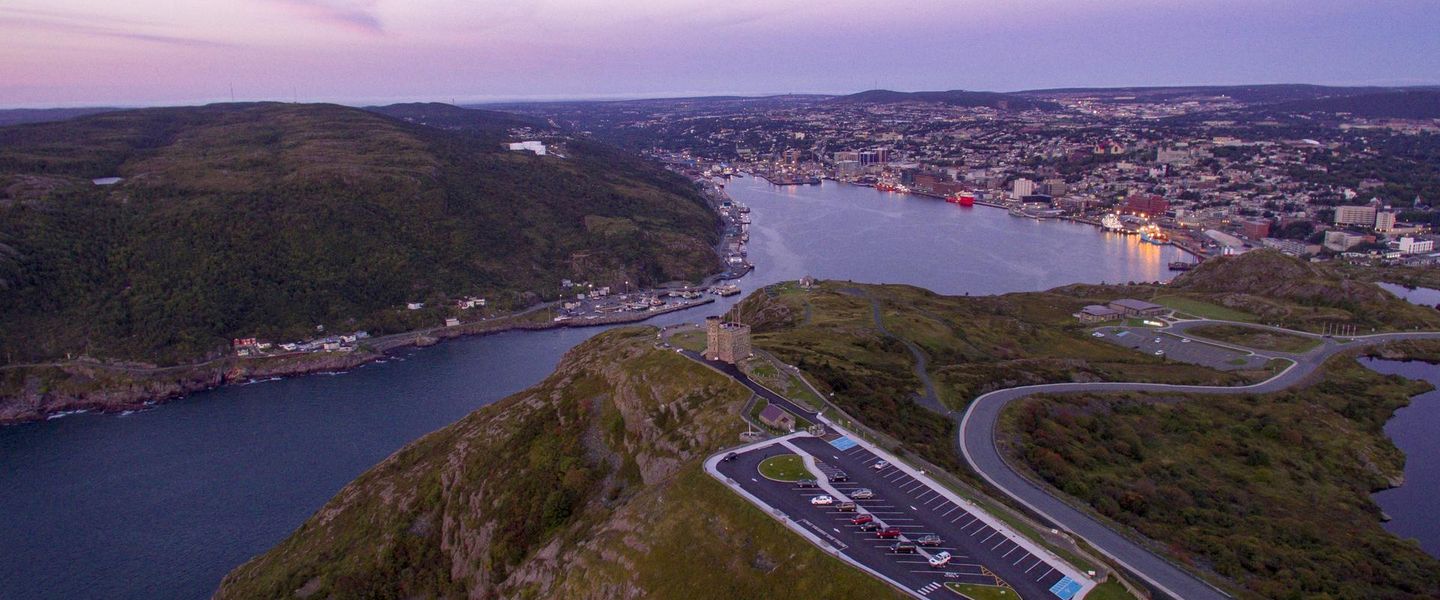


Explore the Avalon Peninsula for St. John’s heritage, Atlantic cliffs, whale-rich waters, seabird reserves and historic coastal communities.
Read more about Avalon Peninsula
When is the best time to visit Avalon Peninsula?
Best: June–August · 16–20°C| Month | High (°C) | Rainfall (mm) |
|---|---|---|
| January | -2 | 110 |
| February | -1 | 90 |
| March | 2 | 100 |
| April | 7 | 80 |
| May | 12 | 90 |
| June (best) | 16 | 80 |
| July (best) | 20 | 80 |
| August (best) | 20 | 90 |
| September | 16 | 100 |
| October | 11 | 110 |
| November | 5 | 120 |
| December | 1 | 130 |
Getting to and around Avalon Peninsula
How to get there
Transportation
Best attractions in Avalon Peninsula
The Avalon Peninsula’s attractions range from urban heritage to windswept nature. In St. John’s, the harbour, Signal Hill National Historic Site, The Rooms and historic downtown streets provide a concentrated introduction to Newfoundland’s political, military and cultural history. Cape Spear National Historic Site offers lighthouse heritage and dramatic Atlantic scenery at Canada’s easternmost point. Along the Irish Loop, marine excursions from communities near Witless Bay can reveal whales and seabirds, while the Witless Bay Ecological Reserve protects important nesting and feeding habitat. The East Coast Trail provides foot access to cliffs, headlands, coves and former fishing landscapes, with route difficulty varying considerably. Ferryland’s Colony of Avalon archaeological site interprets early seventeenth-century English settlement, and Cape St. Mary’s Ecological Reserve is a major destination for viewing nesting seabirds from land. Smaller communities, local museums, lighthouses and harbours add context to the peninsula’s working maritime culture. Attractions are widely dispersed, so an itinerary combining St. John’s with one or two coastal routes is more practical than treating the Avalon as a compact sightseeing circuit.
-
Historical landmark
Signal Hill National Historic Site
Explore Signal Hill National Historic Site: A captivating blend of breathtaking views and rich history in St. John's, Newfoundland and Labrador.
-
Historical landmark
Cape Spear Lighthouse National Historic Site
Discover the breathtaking beauty and rich maritime history at Cape Spear Lighthouse National Historic Site, the easternmost point of North America.
-
Park
Bowring Park
Explore Bowring Park: A tranquil urban escape in St. John's, Newfoundland, featuring gardens, trails, and rich historical significance for every traveler.
-
Park
Bannerman Park
Explore the beauty and serenity of Bannerman Park in St. John's, a perfect blend of nature and recreation for all travelers.


Best landmarks in Avalon Peninsula
Signal Hill is the Avalon Peninsula’s defining historic landmark, rising above the entrance to St. John’s harbour and associated with military defence, communications and the 1762 Battle of Signal Hill. Cape Spear’s lighthouse and exposed headland mark the eastern edge of North America’s Canadian mainland island setting and embody the region’s relationship with navigation and the Atlantic. Ferryland’s Colony of Avalon is a landmark of archaeological and colonial importance, revealing the layout and material remains of a seventeenth-century settlement. Cape Race, at the southern tip of the Avalon Peninsula, is recognised for its lighthouse, telegraph history and perilous position on transatlantic shipping routes. The Basilica of St. John the Baptist and the painted wooden streets of central St. John’s represent the capital’s religious and civic heritage, while the cliffs and seabird colonies of Cape St. Mary’s form a natural landmark of provincial significance. Together these places show how defence, settlement, communications and marine ecology have shaped Avalon.
-
Historical landmark
Signal Hill National Historic Site
Explore St. John's most iconic landmark, Signal Hill National Historic Site, where military history meets stunning views and Marconi's communications triumph.
-
Historical landmark
Cape Spear Lighthouse National Historic Site
Discover Canada's easternmost point: history, stunning views, and the first sunrise in North America at Cape Spear Lighthouse.
-
National park
Gros Morne National Park Of Canada
Explore fjords, mountains, and the Earth's mantle in this UNESCO World Heritage Site on Newfoundland's stunning west coast.
-
Museum
The Rooms
Explore Newfoundland's rich culture and heritage at The Rooms, a unique museum, art gallery, and archive in St. John's with stunning harbor views.


Explore Avalon Peninsula on the map
Plan your trip on one map. See where the top cities, national parks and sights are, and book hotels and experiences in a few clicks.
Best hotels in Avalon Peninsula
Best restaurants in Avalon Peninsula
Dining on the Avalon Peninsula is closely connected to the North Atlantic and to Newfoundland’s distinctive culinary traditions. In St. John’s, restaurants and cafés combine contemporary Canadian cooking with cod, mussels, crab, lobster, salmon, root vegetables, berries and locally made bread. Traditional items such as toutons, salt cod preparations and fish-based comfort food may appear alongside modern interpretations, while bakeapples and partridgeberries feature in seasonal preserves and desserts. Coastal communities offer seafood-focused meals, cafés, bakeries and informal food served near working harbours, although choice becomes more limited outside the capital and larger settlements. Pubs and rural inns are useful places to encounter local dishes without treating them as museum pieces, and farmers’ markets can provide Newfoundland ingredients alongside products from other parts of Canada. Local beer, spirits and non-alcoholic drinks are widely available, but regional availability and opening arrangements vary, particularly in small communities.
-
Canadian
St. John's Fish Exchange Kitchen & Wet Bar
Discover fresh seafood and cozy ambiance at St. John's premier dining destination in Newfoundland.
-
Restaurant
Chafe's Landing Restaurant
Discover fresh seafood delights at Chafe's Landing Restaurant in Petty Harbour – where local flavors meet stunning coastal views.
-
Canadian
Mallard Cottage
Experience authentic Canadian cuisine at Mallard Cottage in Quidi Vidi - where tradition meets modern culinary art.
-
Restaurant
Blue On Water
Experience culinary excellence at Blue On Water - where local flavors meet stunning waterfront views in St. John's.


Best bars in Avalon Peninsula
Nightlife is concentrated in St. John’s, where the downtown area has traditional pubs, bars with live music, restaurants and venues connected with the city’s theatre and arts scene. Evening culture often centres on conversation, local musicians and Newfoundland performance traditions rather than a large-scale club circuit, though late-night venues do exist and their schedules can change. Outside the capital, nightlife is more likely to mean a pub, restaurant, community event or occasional live performance in a coastal town. Some establishments highlight local beer, spirits or maritime atmosphere, while seasonal tourism can bring busier evenings to harbour communities. Visitors should plan transport carefully on the rural coast, where taxis and late services are limited. Drinking is not necessary to engage with Avalon’s evening life; galleries, concerts, theatre and illuminated waterfront walks provide alternatives in St. John’s.
-
Swedish
Al Johnson’s Swedish Restaurant & Butik
Discover the flavors of Sweden in Sister Bay, Wisconsin, at Al Johnson’s Swedish Restaurant & Butik - where tradition meets taste.
-
American
Shoreline Bar & Grille
Experience the best of American cuisine with stunning waterfront views at Shoreline Bar & Grille in Erie, PA.
-
Restaurant
Occo Kitchen
Experience gourmet burgers and a vibrant dining atmosphere at Occo Kitchen in Orléans, Ontario, perfect for food lovers.
-
Bar
The Duke Of Duckworth
Experience the vibrant nightlife and local brews at The Duke Of Duckworth, the iconic bar in St. John's, Newfoundland and Labrador.


Best nightclubs in Avalon Peninsula
Nightlife is concentrated in St. John’s, where the downtown area has traditional pubs, bars with live music, restaurants and venues connected with the city’s theatre and arts scene. Evening culture often centres on conversation, local musicians and Newfoundland performance traditions rather than a large-scale club circuit, though late-night venues do exist and their schedules can change. Outside the capital, nightlife is more likely to mean a pub, restaurant, community event or occasional live performance in a coastal town. Some establishments highlight local beer, spirits or maritime atmosphere, while seasonal tourism can bring busier evenings to harbour communities. Visitors should plan transport carefully on the rural coast, where taxis and late services are limited. Drinking is not necessary to engage with Avalon’s evening life; galleries, concerts, theatre and illuminated waterfront walks provide alternatives in St. John’s.
-
Bar
Christian's Pub
Experience the lively atmosphere and authentic Newfoundland hospitality at Christian's Pub in the heart of St. John's.
-
Restaurant
Arbour Restaurant & Lounge
Indulge in exquisite local cuisine at Arbour Restaurant & Lounge, where every meal is a celebration of flavor, music, and stunning views.
-
Pub
The Black Sheep
Experience the warm hospitality and vibrant atmosphere of The Black Sheep, a perfect pub in St. John's for locals and travelers alike.
-
Pub
Erins Pub
Experience the vibrant nightlife of St. John's at Erins Pub, where great food and live music create unforgettable memories.


Best shops in Avalon Peninsula
St. John’s provides the Avalon Peninsula’s broadest shopping choice, with independent boutiques, bookshops, galleries, craft retailers and conventional high-street stores concentrated around the downtown area and larger commercial districts. Visitors seeking regional products can look for Newfoundland art, photography, knitwear, pottery, jewellery, books, preserves and locally made food and drink. Small coastal communities offer a more limited but often locally focused selection through craft shops, galleries, bakeries, farm stands and seasonal businesses rather than large shopping centres. Market days and farmers’ markets in and around St. John’s are useful for produce, baking and prepared foods, although dates and formats can change. Souvenirs are best chosen for their connection to the province’s maritime, artistic or culinary traditions rather than generic coastal imagery. Rural shops may keep shorter seasonal hours and card connectivity can vary, so carry some Canadian cash when travelling beyond the capital.
-
Shopping mall
Avalon Mall
Avalon Mall in St. John's offers an exciting shopping experience with diverse stores, delicious dining, and entertainment for everyone.
-
Book store
Chapters
Discover a literary sanctuary at Chapters in St. John's, where every book lover's dream comes alive amidst charming gifts and cozy reading nooks.
-
 Gift shop
Posie Row
Discover Posie Row, St. John's charming gift shop, offering unique local crafts and souvenirs that capture the spirit of Newfoundland.
-
Gift shop
Hempware
Explore Hempware, a unique gift shop in St. John's offering locally inspired crafts, eco-friendly products, and authentic Newfoundland souvenirs.


Get your free copy of our complete guide to Avalon Peninsula, delivered straight to you.
Everything on this page, from attractions and restaurants to essentials and local phrases, in one PDF you can read offline, print or share.
Already have an account? Sign in
Your Avalon Peninsula guide is ready.
We'll send it to · Not you? Sign out

Getting your guide ready…
We are putting together a fresh copy of the Avalon Peninsula guide. This can take up to a minute.
This can take a few moments. If your browser asks, choose Allow so the download can start. You'll find the guide in your Downloads folder.
Nothing happened? Download it again
Sorry, the guide is taking longer than usual. Please try again in a minute, or get it by email instead.
Avalon Peninsula essentials
Currency and Payment
Safety
Emergency Situations
Do's and Don'ts
Local Tips
From Eve
Local phrases worth knowing
You don't need to get them perfect. A few words go a long way, and locals appreciate the effort.
Basics
| English | Local | Say it |
|---|---|---|
| Hello | Hiya | [Hiyah] |
| Goodbye | See ya | [See yah] |
| Yes | Yeah | [Yea] |
| No | Nope | [Nope] |
| Please/You're welcome | No problem | [No prob-lum] |
| Thank you | Thanks a bunch | [Thanks a bunch] |
| Excuse me/Sorry | Sorry 'bout that | [Sorry 'bout that] |
| How are you? | How's it goin'? | [How's it goin'?] |
| Fine. And you? | Good, you? | [Good, you?] |
| Do you speak English? | Do ya speak English? | [Do yah speak English?] |
| I don't understand | I don't get it | [I don't get it] |
Eating & Drinking
| English | Local | Say it |
|---|---|---|
| I'd like to see the menu, please | Can I see the menu? | [Can I see the menu?] |
| I don't eat meat | I'm vegetarian | [I'm vegetarian] |
| Cheers! | Cheers! | [Cheers!] |
| I would like to pay, please | Can I get the bill, please? | [Can I get the bill, please?] |
Emergencies
| English | Local | Say it |
|---|---|---|
| Help! | Help! | [Help!] |
| Go away! | Get lost! | [Get lost!] |
| Call the Police! | Call the cops! | [Call the cops!] |
| Call a doctor! | Get a doctor! | [Get a doctor!] |
| I'm lost | I'm all turned around | [I'm all turned around] |
| I'm ill | I'm not feelin' well | [I'm not feelin' well] |
Shopping
| English | Local | Say it |
|---|---|---|
| I'd like to buy... | I wanna buy... | [I wanna buy...] |
| I'm just looking | Just browsing | [Just browsing] |
| How much is it? | What's the price? | [What's the price?] |
| That's too expensive | That's a bit pricey | [That's a bit pricey] |
| Can you lower the price? | Can you make it cheaper? | [Can you make it cheaper?] |
Time & Numbers
| English | Local | Say it |
|---|---|---|
| What time is it? | What time is it? | [What time is it?] |
| It's one o'clock | It's one o'clock | [It's one o'clock] |
| Half past (10) | Half past ten | [Half past ten] |
| Morning | Morning | [Morning] |
| Afternoon | Afternoon | [Afternoon] |
| Evening | Evening | [Evening] |
| Yesterday | Yesterday | [Yesterday] |
| Today | Today | [Today] |
| Tomorrow | Tomorrow | [Tomorrow] |
| 1 | One | [One] |
| 2 | Two | [Two] |
| 3 | Three | [Three] |
| 4 | Four | [Four] |
| 5 | Five | [Five] |
| 6 | Six | [Six] |
| 7 | Seven | [Seven] |
| 8 | Eight | [Eight] |
| 9 | Nine | [Nine] |
| 10 | Ten | [Ten] |
Transport & Directions
| English | Local | Say it |
|---|---|---|
| Where's a/the...? | Where's the...? | [Where's the...?] |
| What's the address? | What's the address? | [What's the address?] |
| Can you show me (on the map)? | Can you point it out? | [Can you point it out?] |
| When's the next (bus)? | When's the next bus? | [When's the next bus?] |
| A ticket (to ....) | A ticket to... | [A ticket to...] |
History of Avalon Peninsula
Indigenous Peoples and Early Coastal Use
The Avalon Peninsula has long been part of the wider Indigenous history of Newfoundland and Labrador. Maritime Archaic peoples, later cultural traditions and Mi’kmaq communities used the island’s coasts and resources over different periods. The Beothuk also lived in Newfoundland, although their historical presence was concentrated more strongly in other parts of the island and their population suffered catastrophic losses after sustained European contact. Any account of Avalon’s early history must therefore recognise both the antiquity of Indigenous use and the profound disruption caused by colonial settlement, competition for resources and disease.
Seasonal European Fisheries
European fishermen began visiting Newfoundland waters regularly from the late fifteenth century, with English, French and other crews using the Avalon coastline as a base for the rich cod fishery. Harbours around St. John’s, Conception Bay and the Southern Shore offered anchorage, drying grounds and access to the North Atlantic fishing grounds. Seasonal settlement gradually became more permanent, creating communities whose buildings, roads and social life were organised around the fishery. The peninsula’s exposed coastal geography also made it vulnerable to storms, shipwrecks and attacks during periods of imperial rivalry.
The Colony of Avalon, 1621–1630s
In 1621, George Calvert, later Lord Baltimore, established the Colony of Avalon at Ferryland as an English settlement intended to support fishing, trade and a more permanent Atlantic presence. Archaeological excavations have revealed streets, houses, workshops and artefacts that illuminate seventeenth-century colonial life. Calvert visited the settlement and later moved to Maryland, but Ferryland continued as an important fishing community. The Colony of Avalon site is significant because it documents an early attempt to create a planned English settlement in Newfoundland rather than merely a seasonal fishing station.
Fortified St. John’s and Imperial Conflict
St. John’s developed as Newfoundland’s principal harbour and administrative centre while England and France contested control of the North Atlantic. Fortifications around the harbour and Signal Hill reflected the town’s strategic value. French forces captured St. John’s during the Nine Years’ War in 1696, and the town changed hands or faced attack during later conflicts. The Battle of Signal Hill in 1762, fought during the Seven Years’ War, was the final battle of that conflict in North America. Its outcome helped confirm British control of Newfoundland.
Maritime Trade, Communications and the Fishery
During the nineteenth and early twentieth centuries, St. John’s expanded as a commercial, governmental and maritime centre, while smaller Avalon communities remained closely tied to fishing, boatbuilding and coastal trade. The peninsula also became important to the development of modern communications across the Atlantic. Signal Hill was associated with experiments in wireless communication, and nearby Cape Race became a major telegraph and shipping station because of its position on transatlantic routes. These developments connected Avalon to international commerce while leaving its local economy dependent on the sea.
War, Shipwrecks and the North Atlantic
Avalon’s headlands occupy a dangerous but strategically important position on North Atlantic routes. Lighthouses, signal stations and coastal settlements supported navigation, yet fog, reefs and storms caused repeated wrecks. During the First and Second World Wars, St. John’s and other Newfoundland ports served military and maritime purposes. The sinking of vessels in waters around the island, including the Newfoundland–Nova Scotia ferry SS Caribou during the Second World War, remains part of the province’s wartime memory. Maritime museums and local interpretation preserve aspects of this history.
Newfoundland Joins Canada, 1949
Newfoundland and Labrador entered Confederation as Canada’s tenth province in 1949 after a series of referendums and political debates. The decision reshaped public administration, transport, social services and economic policy across the Avalon Peninsula, while St. John’s became the capital of the new province. Rural communities continued to experience major changes as the traditional inshore fishery declined, especially after the cod moratorium introduced in 1992. Contemporary Avalon combines this difficult economic history with growing roles in tourism, education, government, technology and marine research.
Avalon Peninsula in Photos
Browse through our photo collection highlighting the charm and character of the destination.
Neighbouring regions of Avalon Peninsula
The closest regions to Avalon Peninsula, if you have time for more than one.
-

-

-

-

-


Swipe for more regions
Explore more

Explore more of Canada
Discover Canada's breathtaking landscapes, diverse cities, and rich cultural heritage. A must-visit destination for outdoor adventures and vibrant urban experiences.
Explore Canada