

Free Eastern Townships Travel Guide & Mobile App
Explore Eastern Townships with free travel guides. Discover regional history, expert tips, proposed trips, and audio guides on web or mobile app.


Explore Quebec's Eastern Townships for Appalachian landscapes, clear lakes, historic villages, cycling, skiing and farm-to-table flavours.
Read more about Eastern Townships
When is the best time to visit Eastern Townships?
Best: June–August · 23–26°C| Month | High (°C) | Rainfall (mm) |
|---|---|---|
| January | -5 | 50 |
| February | -3 | 45 |
| March | 3 | 50 |
| April | 10 | 60 |
| May | 18 | 70 |
| June (best) | 23 | 80 |
| July (best) | 26 | 80 |
| August (best) | 25 | 80 |
| September | 20 | 70 |
| October | 13 | 60 |
| November | 7 | 55 |
| December | 0 | 50 |
Getting to and around Eastern Townships
How to get there
Transportation
Best attractions in Eastern Townships
The Eastern Townships offer a balanced combination of national parks, lakes, mountain resorts, cultural institutions and rural experiences. Mont-Orford National Park is one of the region's principal outdoor destinations, with hiking, paddling, wildlife habitats and winter activities near Magog and Sherbrooke. Mont-Megantic National Park provides more remote mountain scenery and an astronomy-focused visitor experience, while Coaticook Gorge Park is known for its forest trails, ravine and suspension footbridge. Bromont, Sutton and Mont-Orford support skiing and other four-season recreation, though each has a different village and landscape setting. Sherbrooke supplies museums, galleries, public art and former industrial areas, while the Museum of Ingenuity J. Armand Bombardier in Valcourt explores technological and manufacturing history. Around Lake Memphremagog, Lake Massawippi and Lake Brome, visitors find boating, walking, cycling and lakeside communities. Historic villages such as Stanstead, North Hatley and Knowlton add architectural interest, while farm shops, vineyards, cider producers, maple operations and seasonal markets reveal the region's agricultural character.
-
Tourist attraction
Vieux-Port de Montréal
Experience the historical beauty and vibrant culture at Vieux-Port de Montréal, a captivating waterfront destination in the heart of the city.
-
Tourist attraction
Zoo de Granby
Explore Zoo de Granby in Quebec, a vibrant destination where wildlife meets adventure in a thrilling zoo and water park experience.
-
Tourist attraction
Parc national du Mont-Orford
Discover the breathtaking landscapes and outdoor adventures at Parc national du Mont-Orford, a top destination in Quebec for nature lovers and explorers.
-
Tourist attraction
Foresta Lumina
Explore the enchanting trails of Foresta Lumina in Coaticook, Quebec, where art meets nature in a magical illuminated forest experience.
Best landmarks in Eastern Townships
The Eastern Townships' most recognisable landmarks are often landscape features as much as buildings. The forested mass of Mount Orford dominates views around Magog and represents the region's close relationship with protected mountain country. Farther east, Mont-Megantic is a prominent Appalachian summit whose dark skies have made it an important centre for astronomical observation. Lake Memphremagog, with Magog at its northern end and mountains rising around its long basin, is another defining geographical landmark. In the built environment, Stanstead's historic border setting and stone architecture express the region's international past, while the covered bridge at Milby near Waterville recalls nineteenth-century rural engineering. Sherbrooke's former industrial river landscape, including the Magog and Saint-François waterways, reflects the city's development around mills and manufacturing. North Hatley and Knowlton retain streetscapes associated with nineteenth- and early twentieth-century lakeside settlement, while village churches, stone farmhouses and old railway structures provide smaller landmarks across the countryside.
-
Zoo
Zoo de Granby
Discover the enchanting world of wildlife at Zoo de Granby, where adventure meets education amidst stunning natural landscapes.
-
National park
Parc national du Mont-Orford
Explore Quebec's natural beauty: hiking, skiing, and water activities in a stunning mountain setting.
-
Tourist attraction
Foresta Lumina
Experience the magic of Quebec's forest at night, with immersive light and sound installations at Parc de la Gorge de Coaticook.
-
Park
Pointe-Merry Park
Discover scenic beauty & recreation at Pointe-Merry Park in Magog, Quebec. Lakeside trails, year-round events, and stunning views await!
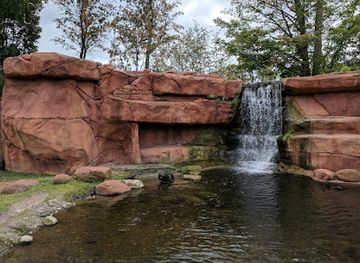
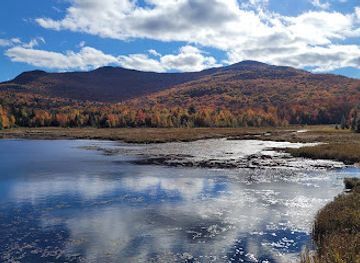
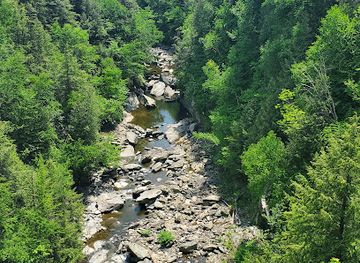
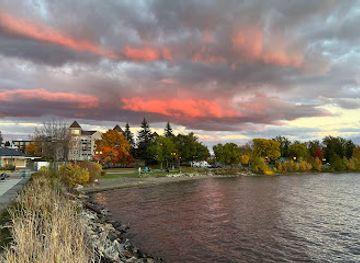
Explore Eastern Townships on the map
Plan your trip on one map. See where the top cities, national parks and sights are, and book hotels and experiences in a few clicks.
Best hotels in Eastern Townships
Best restaurants in Eastern Townships
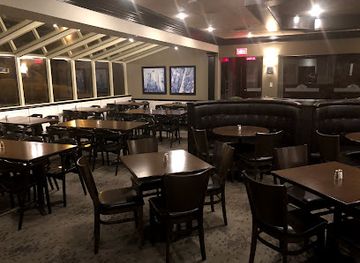
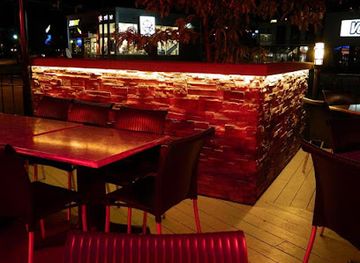
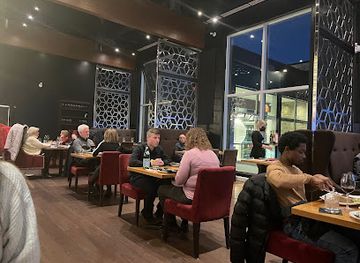
Dining in the Eastern Townships reflects Quebec's agricultural setting and the region's mixture of rural, Francophone and cross-border influences. Sherbrooke, Magog, Bromont and Sutton have the broadest choice of restaurants, cafés, bakeries and contemporary bistros, while village inns and country restaurants provide a slower rural style of dining. Local menus often draw on cheese, apples, berries, maple products, freshwater fish, meat, vegetables and other produce from surrounding farms, although dishes should not automatically be treated as exclusive regional inventions. Cider houses, vineyards, microbreweries, maple producers and farm shops are important parts of the food landscape, particularly along rural touring routes. Markets and seasonal stands are useful places to find preserves, baked goods, cheeses and fresh produce. Traditional Quebec specialities are widely available, alongside international and modern cooking in Sherbrooke and the larger resort communities. Opening patterns can be seasonal in the countryside, so advance checking is sensible outside the main towns.
-
Restaurant
Brasserie Fleurimont
Experience the best of seafood dining at Brasserie Fleurimont in Sherbrooke - where freshness meets flavor in every dish.
-
Grill
Brasserie Seigneurie, Steakhouse & Bar
Experience exquisite flavors at Brasserie Seigneurie - Sherbrooke's premier steakhouse offering grilled delights and fresh seafood in an inviting setting.
-
Belgian
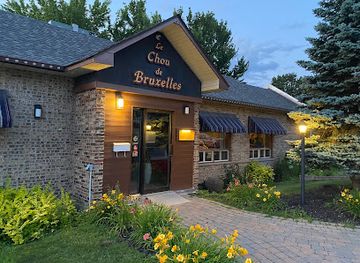
Le Chou de Bruxelles
Experience authentic Belgian cuisine at Le Chou de Bruxelles in Sherbrooke - where every dish tells a story.
-
Restaurant
Boefish
Discover the art of barbecue at Boefish in Sherbrooke - where gourmet meets grill in an unforgettable dining experience.
Best bars in Eastern Townships
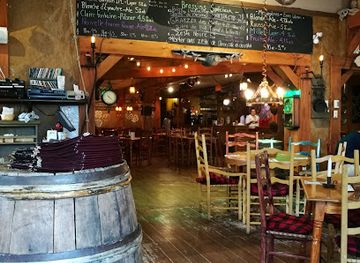
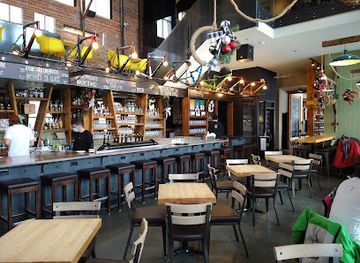
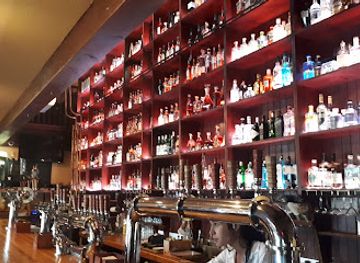
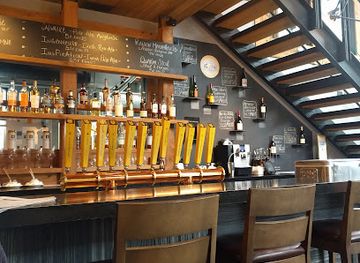
Evening life in the Eastern Townships is concentrated in Sherbrooke, Magog, Bromont and a few larger resort communities rather than spread evenly across the countryside. Sherbrooke has the region's widest selection of bars, breweries, cafés, live music and cultural performances, with a youthful atmosphere influenced partly by its universities. Magog and Bromont offer restaurants, pubs, wine bars and breweries suited to evenings after time on the lake or mountain, while Sutton has a modest music and arts scene alongside traditional bars and eateries. In smaller villages, the social centre is more likely to be a pub, café, microbrewery or restaurant than a nightclub. Summer and ski-season activity can be busier than the quieter months, but venues and events change, so current arrangements should be checked locally. Responsible drinking and pre-arranged transport are important when staying in rural areas.
-
Brewpub
La Memphré - Microbrasserie / Pub
Discover the heart of Quebec's craft beer scene at La Memphré Microbrasserie, where flavorful brews and local cuisine come together in a welcoming atmosphere.
-
Brewpub
Siboire Dépôt
Discover the charm of Siboire Dépôt, a historic brewpub in Sherbrooke, Quebec, offering craft beers and local cuisine in a warm, inviting atmosphere.
-
Bar
The King Hall
Experience the vibrant nightlife at The King Hall, Sherbrooke's premier bar with local craft drinks and lively events.
-
Brewpub
Siboire - Microbrasserie / Pub Jacques-Cartier
Discover Siboire in Sherbrooke, a brewpub offering unique craft beers and a cozy atmosphere perfect for socializing and savoring local flavors.
Best nightclubs in Eastern Townships
Evening life in the Eastern Townships is concentrated in Sherbrooke, Magog, Bromont and a few larger resort communities rather than spread evenly across the countryside. Sherbrooke has the region's widest selection of bars, breweries, cafés, live music and cultural performances, with a youthful atmosphere influenced partly by its universities. Magog and Bromont offer restaurants, pubs, wine bars and breweries suited to evenings after time on the lake or mountain, while Sutton has a modest music and arts scene alongside traditional bars and eateries. In smaller villages, the social centre is more likely to be a pub, café, microbrewery or restaurant than a nightclub. Summer and ski-season activity can be busier than the quieter months, but venues and events change, so current arrangements should be checked locally. Responsible drinking and pre-arranged transport are important when staying in rural areas.
-
Hiking area
Parc régional du Mont Ham
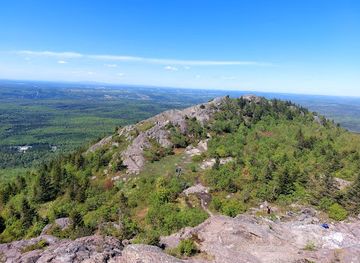
Explore the breathtaking trails and stunning views at Parc régional du Mont Ham, a premier hiking destination in the heart of Quebec's picturesque landscape.
-
Night club
LOUBARDS
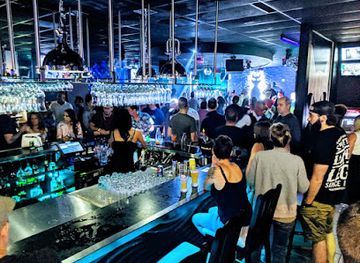
Discover Loubards, Sherbrooke's premier night club, where unforgettable experiences meet a vibrant atmosphere and diverse entertainment.
-
Bar
Taverne Urbaine Sherbrooke
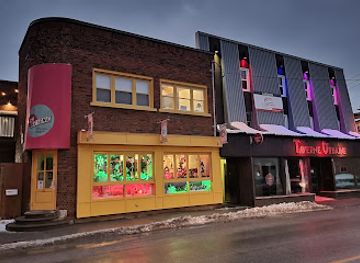
Discover a lively bar and karaoke experience at Taverne Urbaine Sherbrooke, the ultimate spot for fun nights in Quebec!
-
Bar
Bar du Chat Noir
Discover the vibrant nightlife at Bar du Chat Noir in Sherbrooke, where unique cocktails and lively events await you!
Best shops in Eastern Townships
Shopping in the Eastern Townships is strongest in Sherbrooke, Magog, Bromont, Sutton and the region's historic market villages. Sherbrooke provides the broadest mix of national retailers, independent shops, books, galleries and everyday services, while smaller centres are better suited to browsing local clothing, crafts, antiques, art and homeware. Farm shops and seasonal markets are central to the visitor experience, offering maple products, cheeses, cider, wine, preserves, baked goods and other regional produce. Bromont and Sutton have a noticeable concentration of outdoor clothing, sports equipment, galleries and independent boutiques linked to their mountain and arts communities. Stanstead and Knowlton are particularly suited to architectural browsing combined with antiques, books and small specialist shops, though opening days vary. Rather than expecting a large luxury-shopping scene, visitors should look for locally made ceramics, textiles, jewellery, woodwork and food products that reflect the region's rural economy and craft traditions.
-
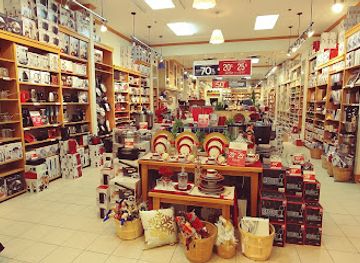
Shopping mall
Carrefour de l'Estrie
Explore Carrefour de l'Estrie in Sherbrooke for an unforgettable shopping and dining experience, perfect for all tourists.
-
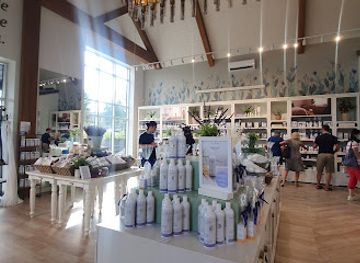
Gift shop
Bleu Lavande (Blue Lavender)
Visit Bleu Lavande for a serene escape into lavender fields, unique gifts, and a vibrant garden experience in the heart of Magog, Quebec.
-
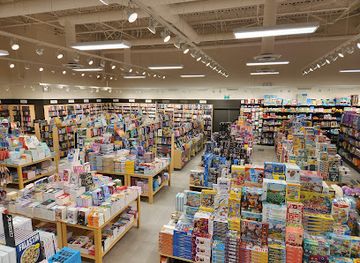
Gift shop
Renaud-Bray
Explore Renaud-Bray in Sherbrooke, a beloved gift shop brimming with books, toys, and stationery that celebrate Quebec's literary heritage.
-
Shopping mall
Galeries Orford
Discover Galeries Orford in Magog - an exciting shopping mall offering a variety of stores, dining options, and entertainment for the whole family.
Get your free copy of our complete guide to Eastern Townships, delivered straight to you.
Everything on this page, from attractions and restaurants to essentials and local phrases, in one PDF you can read offline, print or share.
Already have an account? Sign in
Your Eastern Townships guide is ready.
We'll send it to · Not you? Sign out

Getting your guide ready…
We are putting together a fresh copy of the Eastern Townships guide. This can take up to a minute.
This can take a few moments. If your browser asks, choose Allow so the download can start. You'll find the guide in your Downloads folder.
Nothing happened? Download it again
Sorry, the guide is taking longer than usual. Please try again in a minute, or get it by email instead.
Eastern Townships essentials
Currency and Payment
Safety
Emergency Situations
Do's and Don'ts
Local Tips
From Eve
Local phrases worth knowing
You don't need to get them perfect. A few words go a long way, and locals appreciate the effort.
Basics
| English | Local | Say it |
|---|---|---|
| Hello | Salut | [sah-loo] |
| Goodbye | Au revoir | [oh ruh-vwahr] |
| Yes | Oui | [wee] |
| No | Non | [noh] |
| Please/You're welcome | S'il vous plaît | [seel voo pleh] |
| Thank you | Merci | [mehr-see] |
| Excuse me/Sorry | Excusez-moi | [ehk-skew-zay mwah] |
| How are you? | Comment ça va? | [koh-mahn sah vah] |
| Fine. And you? | Bien. Et toi? | [byehn. eh twa] |
| Do you speak English? | Parlez-vous anglais? | [par-lay voo ahn-glay] |
| I don't understand | Je ne comprends pas | [zhuh nuh kohm-prahn pah] |
Eating & Drinking
| English | Local | Say it |
|---|---|---|
| I'd like to see the menu, please | Je voudrais voir le menu, s'il vous plaît | [zhuh voo-dray vwar luh meh-nu, seel voo pleh] |
| I don't eat meat | Je ne mange pas de viande | [zhuh nuh mahnj pah duh vyahnd] |
| Cheers! | Santé! | [sahn-tay] |
| I would like to pay, please | Je voudrais payer, s'il vous plaît | [zhuh voo-dray pay-ay, seel voo pleh] |
Emergencies
| English | Local | Say it |
|---|---|---|
| Help! | Au secours! | [oh seh-koor] |
| Go away! | Va-t'en! | [vah-tahn] |
| Call the Police! | Appelez la police! | [ah-peh-lay lah poh-lees] |
| Call a doctor! | Appelez un médecin! | [ah-peh-lay uhn may-deh-sin] |
| I'm lost | Je suis perdu | [zhuh swee pair-doo] |
| I'm ill | Je suis malade | [zhuh swee mah-lahd] |
Shopping
| English | Local | Say it |
|---|---|---|
| I'd like to buy... | Je voudrais acheter... | [zhuh voo-dray ah-sheh-tay] |
| I'm just looking | Je regarde juste | [zhuh ruh-gard zhoost] |
| How much is it? | C'est combien? | [seh kohm-byen] |
| That's too expensive | C'est trop cher | [seh troh shair] |
| Can you lower the price? | Pouvez-vous baisser le prix? | [poo-vay voo beh-say luh pree] |
Time & Numbers
| English | Local | Say it |
|---|---|---|
| What time is it? | Quelle heure est-il? | [kel uhr eh-teel] |
| It's one o'clock | Il est une heure | [eel eht uhn uhr] |
| Half past (10) | Dix heures et demie | [dees uhr eh deh-mee] |
| Morning | Matin | [mah-tahn] |
| Afternoon | Après-midi | [ah-preh mee-dee] |
| Evening | Soir | [swahr] |
| Yesterday | Hier | [ee-air] |
| Today | Aujourd'hui | [oh-zhoor-dwee] |
| Tomorrow | Demain | [duh-man] |
| 1 | Un | [uhn] |
| 2 | Deux | [duh] |
| 3 | Trois | [trwah] |
| 4 | Quatre | [katr] |
| 5 | Cinq | [sank] |
| 6 | Six | [sees] |
| 7 | Sept | [set] |
| 8 | Huit | [weet] |
| 9 | Neuf | [nuhf] |
| 10 | Dix | [dees] |
Transport & Directions
| English | Local | Say it |
|---|---|---|
| Where's a/the...? | Où est un/une...? | [oo eh uhn/oon] |
| What's the address? | Quelle est l'adresse? | [kel eh l'a-dress] |
| Can you show me (on the map)? | Pouvez-vous me montrer (sur la carte)? | [poo-vay voo muh mohn-tray (sur lah kart)] |
| When's the next (bus)? | Quand est le prochain (bus)? | [kahn eh luh pro-shen (boos)] |
| A ticket (to ....) | Un billet (pour ....) | [uhn bee-yay (poor ....)] |
History of Eastern Townships
Abenaki Homelands and Indigenous Place Names
The Eastern Townships form part of the traditional homeland and travel territory of the Abenaki, particularly the communities associated with the Wabanaki Confederacy. Rivers, lakes and mountain routes connected the area before European settlement, and Indigenous knowledge shaped movement through its forests and waterways. Names such as Memphremagog and Massawippi preserve elements of this earlier geography, although their meanings and histories are more complex than simplified tourist translations often suggest. Contemporary visitors should understand the region's later colonial landscape alongside the continuing presence and cultural rights of Abenaki communities.
Township Settlement after the American Revolution
Unlike much of the seigneurial St Lawrence valley, the Eastern Townships were surveyed into townships under a British system of land division. After the American Revolution, Loyalists and other settlers moved north from the United States, particularly from New England, and established farms, mills, villages and churches. The first settlement period from the late eighteenth century created much of the region's early English-speaking character. Roads were limited and communities were often organised around rivers, small agricultural clearings and emerging local institutions.
Nineteenth-Century Agriculture and Industry
During the nineteenth century, the Townships developed a mixed economy based on farming, timber, iron, textiles, milling and small manufacturing. Rivers supplied power for mills, while growing villages became commercial and administrative centres. Stone churches, Protestant meeting houses, farm buildings and covered bridges date in part from this period. The arrival of railways connected communities such as Sherbrooke, Magog, Coaticook and Stanstead with Montreal, Quebec and American markets, accelerating trade and tourism as well as the movement of people.
Borderland Trade and Cultural Change
The region's proximity to Vermont and New Hampshire made the Eastern Townships a zone of cross-border commerce, family connections and cultural exchange. Stanstead and nearby communities developed an especially distinctive international identity, while customs controls and changing political boundaries shaped local life. Over time, French-speaking settlers and families from neighbouring Quebec communities became increasingly prominent. The linguistic balance consequently shifted, and many former English institutions now stand within a predominantly Francophone regional society.
Railway Tourism and Lakeside Resorts
From the late nineteenth century into the early twentieth, railway access helped establish the Eastern Townships as a summer resort area for visitors from Montreal, Quebec and the northeastern United States. Lakes Memphremagog, Massawippi and Brome attracted hotels, villas, steamboat excursions and seasonal communities. North Hatley, Magog and other lakeside settlements still display traces of this resort era in their streetscapes and architecture. Tourism later broadened from elegant summer retreats to skiing, camping, hiking and nature-based travel.
Modern Francophone Regional Identity
The twentieth century brought further industrialisation, urban growth and the consolidation of French-language public life across Quebec. Sherbrooke became the region's principal educational, cultural and economic centre, while smaller towns adapted to changes in manufacturing, agriculture and rail transport. Former industrial sites and railway corridors have acquired new uses as museums, cultural venues, cycling routes and public spaces. Today, the Eastern Townships combine a strongly Francophone civic identity with enduring Abenaki, British-American and rural architectural influences.
Eastern Townships in Photos
Browse through our photo collection highlighting the charm and character of the destination.
Neighbouring regions of Eastern Townships
The closest regions to Eastern Townships, if you have time for more than one.
-
-

-
-

-


Swipe for more regions
Explore more
Explore more of Canada
Discover Canada's breathtaking landscapes, diverse cities, and rich cultural heritage. A must-visit destination for outdoor adventures and vibrant urban experiences.
Explore Canada