Free Northwest Territories Travel Guide & Mobile App
Explore Northwest Territories with free travel guides. Discover regional history, expert tips, proposed trips, and audio guides on web or mobile app.


Explore Northwest Territories for auroras, vast lakes, Indigenous culture, Arctic coastlines and remote national parks shaped by northern light.
Read more about Northwest Territories
When is the best time to visit Northwest Territories?
Best: June–August · 15–20°C| Month | High (°C) | Rainfall (mm) |
|---|---|---|
| January | -20 | 10 |
| February | -18 | 10 |
| March | -10 | 15 |
| April | 0 | 15 |
| May | 10 | 20 |
| June (best) | 15 | 25 |
| July (best) | 20 | 30 |
| August (best) | 20 | 30 |
| September | 15 | 25 |
| October | 5 | 20 |
| November | -10 | 15 |
| December | -15 | 10 |
Getting to and around Northwest Territories
How to get there
Transportation
Best landmarks in Northwest Territories
The Northwest Territories' landmarks are often geographical as much as architectural. Yellowknife's rocky shoreline and former gold-mining landscape, including the historic Old Town area, express the city's growth around Great Slave Lake and mining. The Prince of Wales Northern Heritage Centre is an important civic and cultural landmark, interpreting the territory's Indigenous, natural and political history. In Fort Smith, the Slave River's rapids and the nearby network of channels and wetlands form a defining natural setting, while Wood Buffalo National Park preserves a landscape of international ecological importance across the Northwest Territories and Alberta. Farther north, Virginia Falls on the South Nahanni River is one of the territory's most recognisable natural landmarks, dropping through a dramatic canyon within Nahanni National Park Reserve. The Mackenzie River is a defining national waterway whose communities, transport history and delta landscapes shape the western Arctic. Around Tuktoyaktuk, the Beaufort Sea coast and nearby pingos—ice-cored hills created by permafrost processes—illustrate the distinctive geology of the Arctic coastal plain. Many of these landmarks are remote, and their significance is inseparable from Indigenous relationships with the land and from the practical realities of northern access.
Explore Northwest Territories on the map
Plan your trip on one map. See where the top cities, national parks and sights are, and book hotels and experiences in a few clicks.
Best hotels in Northwest Territories
Best restaurants in Northwest Territories
Dining in the Northwest Territories reflects both Canada's wider northern supply challenges and the foods, knowledge and hospitality of its communities. Yellowknife has the broadest choice, including cafés, casual restaurants, hotel dining rooms and places that incorporate northern ingredients such as lake fish, game, berries and wild herbs when available. Arctic char, whitefish and pickerel are associated with northern waters, while locally harvested moose, caribou and bison may appear seasonally and subject to supply and regulation. In smaller communities, dining is often centred on general stores, cafés, restaurants attached to accommodation and community gatherings rather than a large independent restaurant scene. Indigenous food traditions vary between Dene, Inuvialuit, Gwich'in, Tłı̨chǫ and other communities, so regional descriptions should not flatten them into a single cuisine. Visitors may encounter dry fish, bannock, preserves and berry-based preparations, but availability changes with season and local access. Bring provisions for road and remote journeys, and ask locally about ethical, legal and culturally appropriate ways to experience harvested foods.
Best bars in Northwest Territories
Nightlife is concentrated in Yellowknife, where the evening scene includes pubs, hotel bars, casual restaurants, live music, karaoke and occasional cultural or performance events. The city's mining and northern working heritage gives some venues an informal local character, but it does not operate like a large Canadian metropolitan nightlife district. Hay River, Fort Smith and Inuvik offer a smaller selection of pubs, lounges and community-oriented evening venues, with activity often shaped by local events, season and touring performers. In remote settlements, evenings are more likely to centre on community facilities, private gatherings or accommodation dining than on nightclubs. Aurora viewing, winter festivals, live music and arts events can be more distinctive ways to spend an evening than bar-hopping. Check current arrangements locally, as opening patterns and entertainment schedules can change, particularly outside Yellowknife.
-
Cocktail bar
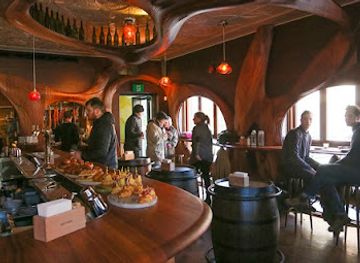
Bar Raval
Discover Bar Raval, a cocktail bar in Toronto where exquisite drinks and tapas bring a taste of Spain to your nightlife experience.
-
Cocktail bar
BarChef
Experience the artistry of cocktails at BarChef, Toronto's premier destination for innovative drinks and vibrant nightlife.
-
American
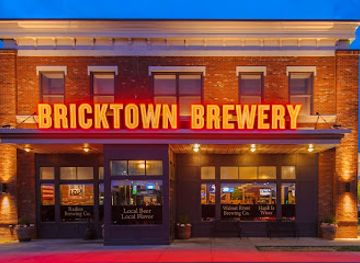
Bricktown Brewery
Explore the flavors of America at Bricktown Brewery, where craft beer meets delicious American cuisine in a lively setting.
-
Bar
Atwater Cocktail Club
Experience the charm of Atwater Cocktail Club, where expertly crafted cocktails meet a unique speakeasy vibe in the heart of Montreal.

Best nightclubs in Northwest Territories
Nightlife is concentrated in Yellowknife, where the evening scene includes pubs, hotel bars, casual restaurants, live music, karaoke and occasional cultural or performance events. The city's mining and northern working heritage gives some venues an informal local character, but it does not operate like a large Canadian metropolitan nightlife district. Hay River, Fort Smith and Inuvik offer a smaller selection of pubs, lounges and community-oriented evening venues, with activity often shaped by local events, season and touring performers. In remote settlements, evenings are more likely to centre on community facilities, private gatherings or accommodation dining than on nightclubs. Aurora viewing, winter festivals, live music and arts events can be more distinctive ways to spend an evening than bar-hopping. Check current arrangements locally, as opening patterns and entertainment schedules can change, particularly outside Yellowknife.
Best shops in Northwest Territories
Shopping in the Northwest Territories is strongest in Yellowknife, where visitors find independent galleries, craft outlets, bookshops, outdoor retailers and stores selling northern food products, clothing and practical equipment. Indigenous-made art is an important purchase, including beadwork, carving, sewn goods, prints and other work; look for clear information about the artist, community and materials rather than assuming that any object marketed as northern is locally made. Yellowknife's Old Town and central areas have the greatest concentration of visitor-oriented retail, while Hay River, Fort Smith and Inuvik provide more modest local shopping and supplies. Inuvik is a useful place to look for western Arctic arts and crafts, though stock varies and remote communities may have limited retail hours. Regional food products can include preserved fish, berry goods and locally produced items when available. Because distances are large and commercial choice is limited outside main centres, buy specialist outdoor supplies, fuel and essential provisions before leaving a major hub.
-
Shopping mall
The Shops At Fallen Timbers
Explore unique stores, delightful dining, and seasonal events at The Shops At Fallen Timbers in Maumee, Ohio, a premier shopping destination.
-
Discount supermarket
Food Basics
Discover the best of local flavors and budget-friendly groceries at Food Basics, Mississauga's premier discount supermarket.
-
 Extended stay hotel
Homewood Suites by Hilton Waterloo/St. Jacobs, Ontario, Canada
Discover the charm of Waterloo at Homewood Suites by Hilton, where comfort meets convenience for every traveler.
-
Gift shop
The Breaking Bad Store ABQ
Discover a treasure trove of Breaking Bad memorabilia at The Breaking Bad Store ABQ in Albuquerque, where fans embrace the iconic show's legacy.

Get your free copy of our complete guide to Northwest Territories, delivered straight to you.
Everything on this page, from attractions and restaurants to essentials and local phrases, in one PDF you can read offline, print or share.
Already have an account? Sign in
Your Northwest Territories guide is ready.
We'll send it to · Not you? Sign out

Getting your guide ready…
We are putting together a fresh copy of the Northwest Territories guide. This can take up to a minute.
This can take a few moments. If your browser asks, choose Allow so the download can start. You'll find the guide in your Downloads folder.
Nothing happened? Download it again
Sorry, the guide is taking longer than usual. Please try again in a minute, or get it by email instead.
Northwest Territories essentials
Currency and Payment
Safety
Emergency Situations
Do's and Don'ts
Local Tips
From Eve
Local phrases worth knowing
You don't need to get them perfect. A few words go a long way, and locals appreciate the effort.
Basics
| English | Local | Say it |
|---|---|---|
| Hello | T’áá shí éí | [Tah shih ay] |
| Goodbye | Hágoónee’ | [Hah-goo-nee] |
| Yes | Aoo | [Ah-oo] |
| No | Dííjį́ | [Dee-jee] |
| Please/You’re welcome | Ahéhee’ | [Ah-hay-hee] |
| Thank you | Ahéhee’ | [Ah-hay-hee] |
| Excuse me/Sorry | T’áá shí éí doo yá’át’éeh | [Tah shee eh doo yah-tay] |
| How are you? | Nihíji’ shikaadéé? | [Nih-ee-hee shee-kah-day] |
| Fine. And you? | Ayóó anííníshní | [Ah-yoh ah-nee-nee-shnee] |
| Do you speak English? | T’áá shí éí naashá? | [Tah shee eh nah-shah] |
| I don’t understand | Dííjį́ t’áá shikaadéé | [Dee-jee tah shee-kah-day] |
Eating & Drinking
| English | Local | Say it |
|---|---|---|
| I’d like to see the menu, please | Dóó biniiyéé’ nishááh, ahéhee’ | [Doh bih-nee-yeh nish-ah ah-hay-hee] |
| I don’t eat meat | Dííjį́ dóó ts’íiyisí | [Dee-jee doh tsee-yee-see] |
| Cheers! | Hágoónee’ | [Hah-goo-nee] |
| I would like to pay, please | Dóó t’áá shí éí doo naníít’éé’, ahéhee’ | [Doh tah shee eh doo nah-nee-tay ah-hay-hee] |
Emergencies
| English | Local | Say it |
|---|---|---|
| Help! | T’áá shí éí nishłį́į́’! | [Tah shee eh nish-lin] |
| Go away! | T’áá shí éí doo yá’át’éeh! | [Tah shee eh doo yah-tay] |
| Call the Police! | T’áá shí éí naaltsoos nishłį́į́’! | [Tah shee eh nahl-tsoos nish-lin] |
| Call a doctor! | T’áá shí éí biniiyéé’ nishłį́į́’! | [Tah shee eh bih-nee-yeh nish-lin] |
| I’m lost | Dííjį́ t’áá shikaadéé | [Dee-jee tah shee-kah-day] |
| I’m ill | Dííjį́ t’áá shikaadéé | [Dee-jee tah shee-kah-day] |
Shopping
| English | Local | Say it |
|---|---|---|
| I’d like to buy... | Dóó t’áá shí éí yá’át’éeh... | [Doh tah shee eh yah-tay] |
| I’m just looking | Dóó yá’át’éeh | [Doh yah-tay] |
| How much is it? | Dóó háshne’? | [Doh hah-shnay] |
| That’s too expensive | Dóó shikaadéé t’áá háshne’ | [Doh shee-kah-day tah hah-shnay] |
| Can you lower the price? | T’áá shí éí doo yá’át’éeh t’áá háshne’? | [Tah shee eh doo yah-tay tah hah-shnay] |
Time & Numbers
| English | Local | Say it |
|---|---|---|
| What time is it? | T’áá shí éí nits’ííd? | [Tah shee eh nit-see-id] |
| It’s one o’clock | T’áá shí éí nits’ííd dį́į́’ | [Tah shee eh nit-see-id din] |
| Half past (10) | Dóó dį́į́’ yá’át’éeh | [Doh din yah-tay] |
| Morning | Dííjį́ | [Dee-jee] |
| Afternoon | Nihíji’ | [Nih-ee-hee] |
| Evening | T’áá shí éí nihíji’ | [Tah shee eh nih-ee-hee] |
| Yesterday | T’áá shí éí naashá | [Tah shee eh nah-shah] |
| Today | T’áá shí éí | [Tah shee eh] |
| Tomorrow | T’áá shí éí naashá | [Tah shee eh nah-shah] |
| 1 | T’áá’í | [Tah-ee] |
| 2 | Naaki | [Nah-kee] |
| 3 | T’áá’í naaki | [Tah-ee nah-kee] |
| 4 | Doo naaki | [Doh nah-kee] |
| 5 | Naak’eh | [Nah-kay] |
| 6 | T’áá’í naak’eh | [Tah-ee nah-kay] |
| 7 | Naaki naak’eh | [Nah-kee nah-kay] |
| 8 | Doo naak’eh | [Doh nah-kay] |
| 9 | T’áá’í doo naak’eh | [Tah-ee doh nah-kay] |
| 10 | Doo naaki | [Doh nah-kee] |
Transport & Directions
| English | Local | Say it |
|---|---|---|
| Where's a/the...? | Nihíji’ t’áá shí éí...? | [Nih-ee-hee tah shee eh] |
| What’s the address? | Nihíji’ t’áá shí éí biniiyéé’? | [Nih-ee-hee tah shee eh bih-nee-yeh] |
| Can you show me (on the map)? | T’áá shí éí doo yá’át’éeh (t’áá biniiyéé’)? | [Tah shee eh doo yah-tay tah bih-nee-yeh] |
| When's the next (bus)? | T’áá shí éí doo yá’át’éeh t’áá biniiyéé’? | [Tah shee eh doo yah-tay tah bih-nee-yeh] |
| A ticket (to ....) | Dóó biniiyéé’ (do...) | [Doh bih-nee-yeh do] |
History of Northwest Territories
Indigenous Nations and Ancient Land Use
The Northwest Territories have been occupied and travelled by Indigenous peoples for thousands of years. Dene communities developed extensive knowledge of the boreal forest, rivers and lakes, while Inuvialuit, Gwich'in and other western and northern peoples adapted to coastal, riverine and tundra environments. Tłı̨chǫ, Sahtu, Dehcho, Akaitcho and other Dene regions retain distinct histories, languages and political identities. Seasonal movement, harvesting, trade and storytelling shaped relationships with the land long before European arrival, and Indigenous governments remain central to contemporary governance, conservation and cultural life.
Fur Trade and the Mackenzie River, Eighteenth and Nineteenth Centuries
European commercial expansion brought new trading networks into the Mackenzie basin and the western Arctic. The North West Company and later the Hudson's Bay Company established posts and routes that depended heavily on Indigenous knowledge, guides and trading relationships. Forts and transportation corridors connected the interior with the Arctic coast, although the trade also introduced disease, economic pressures and changing political relationships. The Mackenzie River became both a practical route and a defining geographical axis, a role it continues to play in regional transport and identity.
Treaties, Administration and Mission Settlements
During the nineteenth and early twentieth centuries, Canadian state administration expanded through treaty-making, the establishment of missions, mounted police posts and government services. Treaties including Treaty 8 and Treaty 11 affected large parts of the present territory, while the Inuvialuit Final Agreement later addressed land and political rights in the western Arctic. Mission schools and residential schools caused profound disruption to Indigenous families, languages and cultures. Their legacy remains an important part of the territory's public history and of ongoing reconciliation.
Territorial Formation and Northern Government
The Northwest Territories entered Confederation-era Canadian administration in 1870, when Rupert's Land and the North-Western Territory were transferred to Canada. Its boundaries and governance changed repeatedly as Manitoba, Saskatchewan, Alberta, Yukon and Nunavut were created or reorganised. Yellowknife became the territorial capital in 1967, reflecting the growing importance of the western interior and its mining economy. Modern territorial government operates alongside Indigenous governments and land-claim bodies, producing a particularly complex political landscape.
Gold Mining and Yellowknife's Rise
Gold discoveries near the north shore of Great Slave Lake in the 1930s transformed Yellowknife from a small northern settlement into the territory's principal urban centre. Mining drew workers, businesses and transport links, while the wartime and post-war periods accelerated infrastructure and population growth. The city's distinctive rocky streetscapes, former mine workings and mining heritage reflect this era. Gold remained a major economic force for decades, although its dominance later declined as the territory diversified into diamonds, government services, tourism and other resource industries.
Diamonds, Devolution and Contemporary Northern Identity
The opening of diamond mines north of Yellowknife in the 1990s created a major new industry and placed the territory within global mineral markets. In 1999, Nunavut was created from the eastern part of the Northwest Territories, marking one of Canada's most significant territorial changes. The subsequent transfer of several land and resource responsibilities to the territorial government, alongside Indigenous self-government agreements, strengthened local decision-making. Today the Northwest Territories combine resource development, Indigenous governance, conservation, tourism and the practical challenges of climate change.
Northwest Territories in Photos
Browse through our photo collection highlighting the charm and character of the destination.
Neighbouring regions of Northwest Territories
The closest regions to Northwest Territories, if you have time for more than one.
-

-

-

-

-


Swipe for more regions