

Free Ouaka Travel Guide & Mobile App
Explore Ouaka with free travel guides. Discover regional history, expert tips, proposed trips, and audio guides on web or mobile app.


Ouaka travel guide covering Bambari, river landscapes, Central African history, local culture, practical access and essential security advice.
Read more about Ouaka
When is the best time to visit Ouaka?
Best: December–February · 31–33°C| Month | High (°C) | Rainfall (mm) |
|---|---|---|
| January (best) | 32 | 2 |
| February (best) | 33 | 4 |
| March | 34 | 10 |
| April | 32 | 20 |
| May | 31 | 40 |
| June | 30 | 60 |
| July | 29 | 80 |
| August | 28 | 100 |
| September | 29 | 80 |
| October | 29 | 60 |
| November | 30 | 40 |
| December (best) | 31 | 20 |
Getting to and around Ouaka
How to get there
Transportation
Explore Ouaka on the map
Plan your trip on one map. See where the top cities, national parks and sights are, and book hotels and experiences in a few clicks.
Best hotels in Ouaka
Best restaurants in Ouaka
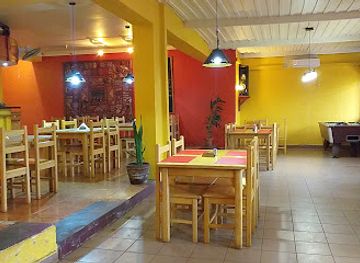
Dining in Ouaka is practical and local rather than aimed at international tourism. In Bambari, meals may be available through accommodation providers, work compounds, local eateries or informal food sellers, but choice, hygiene arrangements and supply can vary considerably. Common staples in the Central African Republic include cassava, maize, rice, groundnuts, beans, leafy vegetables and seasonal fruit; meat or fish may be available according to local supply, while preparation differs between households and communities. Local markets are important for fresh produce, although visitors should use trusted advice about water, raw foods and food handling. Outside Bambari, food options may be extremely limited, so approved travellers need to carry suitable reserves and safe drinking water. The region does not have a recognised restaurant district or established fine-dining scene, and commercial claims about particular establishments should be checked locally rather than assumed from older information.
-
 Restaurant
The Toppings
Experience authentic Central African cuisine at The Toppings in Bambari - where every dish is crafted with local flair.
-
Restaurant
Restaurant Chez Chantou
Discover authentic Central African flavors at Restaurant Chez Chantou in Bambari - where every meal tells a story.
-
African
Restaurant Chez Mère SATE
Experience authentic African flavors at Restaurant Chez Mère SATE in Bambari – where every dish tells a story.

Best bars in Ouaka
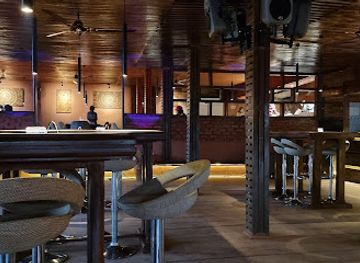
Ouaka has no established nightlife industry for visitors. Evening social life is more likely to centre on private gatherings, local eateries, modest drinking places and community interaction than on formal clubs or a concentrated bar scene. Bambari may offer limited informal venues, but opening arrangements, security conditions and availability can change without notice. In smaller settlements, evening activity is generally constrained by electricity, transport, insecurity and the need for people to return home before dark. Visitors should not move between venues at night, drink alcohol in ways that impair judgement or treat local social spaces as tourist entertainment. Any authorised visitor should follow the curfew, movement rules and accommodation procedures set by a responsible local organisation, and should not assume that a venue reported by a previous traveller remains open or accessible.
-
Restaurant
Relais des Chasses
Experience the heart of Bangui at Relais des Chasses, where local flavors and warm hospitality meet in a cozy setting.
-
Restaurant
5 FOURCHETTES
Discover the vibrant flavors of Bangui at 5 Fourchettes, where culinary traditions meet contemporary cuisine in a welcoming atmosphere.
-
Restaurant
Cafrina
Experience the vibrant flavors of Central African cuisine at Cafrina, a must-visit restaurant in Bangui for local and international travelers.
-
Restaurant
SANGO
Discover the vibrant flavors of Central Africa at SANGO, a must-visit restaurant in Bangui for an authentic culinary experience.


Best shops in Ouaka
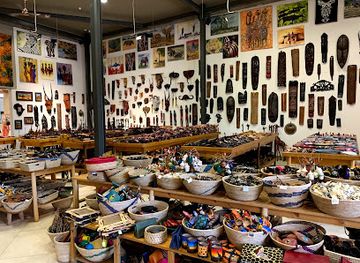
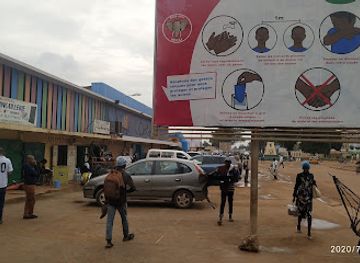
Shopping in Ouaka is centred on local markets and small trading businesses rather than established retail streets or shopping centres. Bambari is the most likely place to find everyday provisions, locally grown food, household goods, clothing and basic transport supplies, while smaller settlements have more limited and irregular choices. Cassava products, maize, groundnuts, seasonal fruit and other agricultural goods reflect the prefecture's rural economy, but availability depends on harvests, roads and security. Visitors should not expect a dependable craft market, export-quality souvenir range or card-payment infrastructure. Purchases should be made respectfully, with fair negotiation where appropriate and without photographing traders or goods without consent. For authorised travellers, the most useful shopping is usually practical: safe food, water, batteries, hygiene items and fuel-related supplies arranged through trusted local contacts. Any valuable or culturally sensitive object should be obtained only through lawful, transparent channels.
-
Souvenir store
African Galleria
Discover authentic African crafts and unique souvenirs at the African Galleria in Usangi, a must-visit for all travelers seeking local treasures.
-
Shopping mall
Bangui Mall
Discover a vibrant shopping experience at Bangui Mall, featuring local crafts, international brands, dining delights, and entertainment for all.
-
Grocery store
Corail
Explore Corail Grocery Store in Bangui for a taste of local flavors and vibrant Central African culture, perfect for your travel adventure.
-
Gift shop
Definition Africa
Explore authentic African gifts, clothing, and handicrafts at Definition Africa in Kampala - a vibrant hub for unique treasures.


Get your free copy of our complete guide to Ouaka, delivered straight to you.
Everything on this page, from attractions and restaurants to essentials and local phrases, in one PDF you can read offline, print or share.
Already have an account? Sign in
Your Ouaka guide is ready.
We'll send it to · Not you? Sign out

Getting your guide ready…
We are putting together a fresh copy of the Ouaka guide. This can take up to a minute.
This can take a few moments. If your browser asks, choose Allow so the download can start. You'll find the guide in your Downloads folder.
Nothing happened? Download it again
Sorry, the guide is taking longer than usual. Please try again in a minute, or get it by email instead.
Ouaka essentials
Currency and Payment
Safety
Emergency Situations
Do's and Don'ts
Local Tips
From Eve
Local phrases worth knowing
You don't need to get them perfect. A few words go a long way, and locals appreciate the effort.
Basics
| English | Local | Say it |
|---|---|---|
| Hello | Mbote | [m-bo-te] |
| Goodbye | Kondé | [kon-de] |
| Yes | E | [e] |
| No | Te | [te] |
| Please/You're welcome | S'il vous plaît | [seel voo pleh] |
| Thank you | Mérci | [mehr-see] |
| Excuse me/Sorry | Pardon | [par-don] |
| How are you? | Oyo o na ngana? | [o-yo o na ngan-a] |
| Fine. And you? | Mokili. Na yo? | [mo-kee-li na yo] |
| Do you speak English? | Oko lobá English? | [o-ko lo-ba in-glish] |
| I don't understand | Nani na yé | [na-ni na ye] |
Eating & Drinking
| English | Local | Say it |
|---|---|---|
| I'd like to see the menu, please | Nani na banga komi menu, s'il vous plaît | [na-ni na ban-ga ko-mee meh-nu seel voo pleh] |
| I don't eat meat | Nani na kosi nyama | [na-ni na ko-si nya-ma] |
| Cheers! | Téé! | [teh-eh] |
| I would like to pay, please | Nani na banga tinda, s'il vous plaît | [na-ni na ban-ga tin-da seel voo pleh] |
Emergencies
| English | Local | Say it |
|---|---|---|
| Help! | Yambé! | [yam-be] |
| Go away! | Yaka na mboka! | [ya-ka na mbo-ka] |
| Call the Police! | Koma Polisi! | [ko-ma po-li-si] |
| Call a doctor! | Koma nganga! | [ko-ma ngan-ga] |
| I'm lost | Nani na sanga | [na-ni na san-ga] |
| I'm ill | Nani na yoka | [na-ni na yo-ka] |
Shopping
| English | Local | Say it |
|---|---|---|
| I'd like to buy... | Nani na banga bangu... | [na-ni na ban-ga ban-gu] |
| I'm just looking | Nani na loba kaka | [na-ni na lo-ba ka-ka] |
| How much is it? | Oyo mbongo ezali? | [o-yo m-bon-go e-za-li] |
| That's too expensive | Eza ezali mbongo mingi | [e-za e-za-li m-bon-go min-gi] |
| Can you lower the price? | Oko sala mbongo moke? | [o-ko sa-la m-bon-go mo-ke] |
Time & Numbers
| English | Local | Say it |
|---|---|---|
| What time is it? | Oyo ntango ezali? | [o-yo n-tan-go e-za-li] |
| It's one o'clock | Eza ntango moko | [e-za n-tan-go mo-ko] |
| Half past (10) | Yango ya (10) | [yan-go ya (10)] |
| Morning | Mokolo | [mo-ko-lo] |
| Afternoon | Mokolo ya nsuka | [mo-ko-lo ya n-su-ka] |
| Evening | Mokolo ya lobi | [mo-ko-lo ya lo-bi] |
| Yesterday | Lobi | [lo-bi] |
| Today | Leza | [le-za] |
| Tomorrow | Lobi ya sima | [lo-bi ya si-ma] |
| 1 | Moko | [mo-ko] |
| 2 | Mibale | [mi-ba-le] |
| 3 | Misato | [mi-sa-to] |
| 4 | Minei | [mi-nei] |
| 5 | Mitano | [mi-ta-no] |
| 6 | Mokolo | [mo-ko-lo] |
| 7 | Mokoto | [mo-ko-to] |
| 8 | Mibale na moko | [mi-ba-le na mo-ko] |
| 9 | Mibale na misato | [mi-ba-le na mi-sa-to] |
| 10 | Mibale na minei | [mi-ba-le na mi-nei] |
Transport & Directions
| English | Local | Say it |
|---|---|---|
| Where's a/the...? | Wapi ...? | [wa-pi] |
| What's the address? | Oyo adresse? | [o-yo a-dres-se] |
| Can you show me (on the map)? | Oko sala na ngai (na plan)? | [o-ko sa-la na ngai na plan] |
| When's the next (bus)? | Ntango oyo bus ya sima? | [n-tan-go o-yo bus ya si-ma] |
| A ticket (to ....) | Billet (na ...) | [bi-yet na ...] |
History of Ouaka
Precolonial Banda and Regional Trade Networks
Before European colonial rule, the area now known as Ouaka was occupied and connected by communities whose political, linguistic and commercial networks extended across the central savannahs. Banda-speaking peoples are especially important to the region's cultural history, while trade linked agricultural communities with pastoral groups and markets to the north and east. Authority was generally organised through local political structures rather than a single state corresponding to the modern prefecture. These networks influenced settlement patterns, movement and exchange well before the boundaries later imposed by colonial administration.
French Rule in Oubangui-Chari
During the late nineteenth and early twentieth centuries, the territory became part of the French colonial system in Central Africa and was administered within Oubangui-Chari, the colony that later became the Central African Republic. Colonial rule introduced new administrative divisions, taxation, labour demands, mission activity and transport priorities. Bambari developed increased importance as an administrative and commercial centre, although colonial infrastructure remained limited and was designed primarily to serve state control and the extraction and movement of resources. The period also reshaped relations between local communities and outside authorities.
Independence and Post-Colonial State-Building
The Central African Republic became independent from France in 1960. Ouaka thereafter formed part of the new republic's effort to extend administration, education, healthcare and economic services beyond Bangui. Bambari retained its role as a regional centre, while most of the prefecture remained rural and dependent on agriculture, local trade and seasonal transport. National political instability, weak infrastructure and limited state presence affected the pace and reliability of development. These long-term conditions help explain why travel, public services and security remain uneven across the prefecture.
Agriculture, Pastoral Movement and Local Commerce
Ouaka's economy has traditionally relied on smallholder farming, livestock keeping and trade between rural settlements and market towns. Cassava, maize, groundnuts, rice and other food crops support household consumption and local exchange, while pastoral movement has connected the prefecture with wider Central African trading routes. Seasonal rainfall, road conditions and insecurity all influence market access. The region's commercial life therefore depends less on large formal industries than on dispersed production, transport by road and the regular circulation of farmers, traders and livestock keepers.
Conflict and Humanitarian Crisis since 2013
The national crisis that began in 2013 had a profound effect on Ouaka. Bambari and surrounding areas were affected by armed-group competition, displacement, disrupted markets and damage to public services. Communities experienced insecurity in different ways, and humanitarian organisations became important providers of protection and assistance. International peacekeeping efforts, including the United Nations mission in the Central African Republic, have operated in the wider region. Although security conditions can change quickly and local experiences differ, the conflict remains essential context for understanding the prefecture's present-day travel constraints and social landscape.
Contemporary Recovery and Continuing Fragility
Recent years have brought efforts to restore local administration, markets, roads, schools and health services, alongside peace and reconciliation initiatives. Progress has not been uniform, and recovery remains vulnerable to renewed violence, displacement, poor infrastructure and limited public resources. Bambari continues to function as an important regional centre, but the prefecture's future depends on security, humanitarian access, agricultural livelihoods and stronger links between communities and public institutions. For visitors, this is a living historical context rather than a completed chapter.
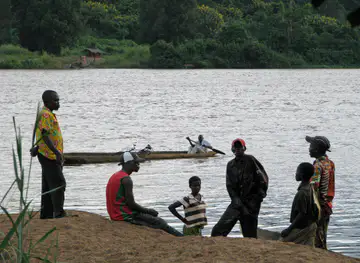
Ouaka in Photos
Browse through our photo collection highlighting the charm and character of the destination.
Neighbouring regions of Ouaka
The closest regions to Ouaka, if you have time for more than one.
-

-

-

-

-


Swipe for more regions
Explore more

Explore more of Central African Republic
Explore the Central African Republic: A land of untamed wilderness, rich culture, and unforgettable adventures in the heart of Africa.
Explore Central African Republic