

Free Ouham Travel Guide & Mobile App
Explore Ouham with free travel guides. Discover regional history, expert tips, proposed trips, and audio guides on web or mobile app.


Ouham in the Central African Republic combines Bossangoa, Ouham River landscapes and Gbaya heritage, but requires exceptional security preparation.
Read more about Ouham
When is the best time to visit Ouham?
Best: December–February · 30–32°C| Month | High (°C) | Rainfall (mm) |
|---|---|---|
| January (best) | 31 | 5 |
| February (best) | 32 | 10 |
| March | 34 | 20 |
| April | 34 | 40 |
| May | 34 | 80 |
| June | 33 | 100 |
| July | 32 | 120 |
| August | 32 | 120 |
| September | 31 | 100 |
| October | 31 | 80 |
| November | 30 | 40 |
| December (best) | 30 | 10 |
Getting to and around Ouham
How to get there
Transportation
Best attractions in Ouham
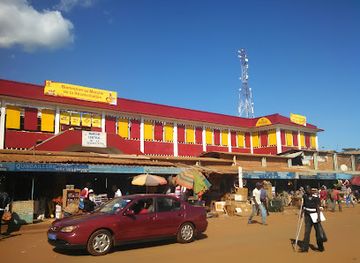
Ouham does not have a developed attraction circuit or a dependable tourism economy. Its principal points of interest are the riverine and savanna landscapes around the Ouham River, the agricultural countryside and the everyday cultural life of Bossangoa and surrounding settlements. The town's markets, churches and administrative streets can help explain how the prefecture functions, but they should be visited only with local permission and appropriate security arrangements. Rural observation of farming, seasonal waterways and woodland requires particular caution because roads, communications and emergency services are limited. There are no established national-park facilities or broadly accessible visitor sites in the prefecture comparable with the Central African Republic's better-known protected areas elsewhere in the country. For researchers and authorised visitors, the strongest interest lies in the relationship between landscape, farming, displacement and local trade rather than in packaged excursions. Current insecurity means that potential cultural or environmental visits may be impossible, and information from older travel accounts should not be treated as evidence that access is presently safe.
-
Tourist attraction
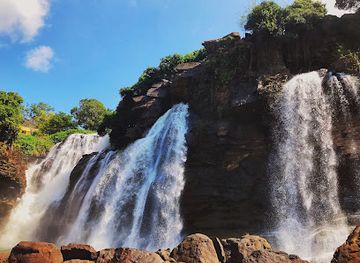
Chutes de Boali
Discover the breathtaking Chutes de Boali, a stunning waterfall in the Central African Republic, perfect for nature lovers and adventure seekers alike.
Explore Ouham on the map
Plan your trip on one map. See where the top cities, national parks and sights are, and book hotels and experiences in a few clicks.
Best hotels in Ouham
Best restaurants in Ouham
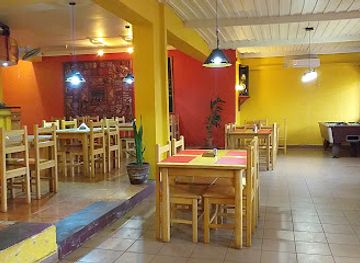
Ouham has no established international dining scene, and food arrangements for visitors are normally managed through private residences, missions, organisations or accommodation providers rather than a choice of restaurants. Bossangoa markets commonly support trade in staple crops and other locally available produce, but supplies, hygiene conditions and opening patterns can vary considerably. Meals are likely to reflect Central African home cooking, with locally sourced grains, cassava, plantain, vegetables and occasional meat or fish where available; preparation differs between communities and households. Visitors with an essential reason to travel should bring appropriate dietary supplies and confirm safe drinking-water arrangements in advance. Do not assume that refrigeration, imported products, specialist diets or dependable restaurant service will be available outside a small number of organised settings. Market purchases should be made with local guidance, and food and water decisions should follow professional medical or organisational advice.
-
Restaurant
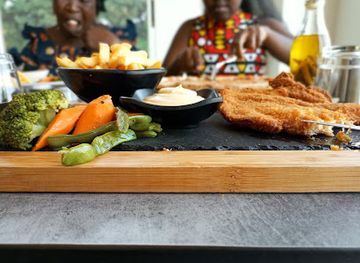
Cuisine A
Experience the vibrant flavors of Central Africa at Cuisine A in Bangui – where every dish tells a story.
Best bars in Ouham
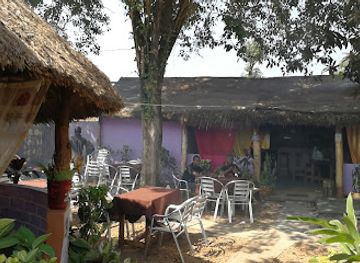
Ouham has no reliable tourist nightlife circuit. In Bossangoa, evening social life may centre on informal cafés, local drinking places, music and private gatherings, while rural communities have fewer public venues and may follow very different rhythms. Availability, safety and opening arrangements can change quickly, and visitors should not move around after dark or treat nightlife as an independent activity. Alcohol is not necessary for engaging respectfully with local communities, and visitors should follow the guidance of hosts or security managers about appropriate places and times. There is no sound basis for recommending particular clubs, bars or events without current local verification.
-
Restaurant
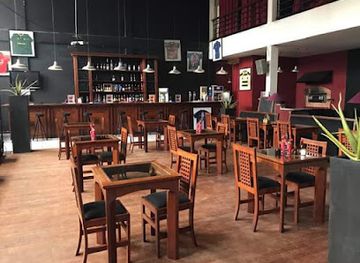
Le Boj, Douala
Discover the vibrant flavors of Douala at Le Boj, a premier restaurant and lounge offering exquisite cuisine and a lively nightlife experience.
-
Restaurant
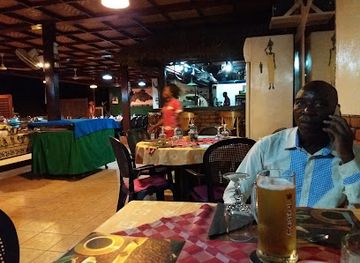
Relais des Chasses
Discover the authentic flavors of Bangui at Relais des Chasses, a cozy restaurant and bed & breakfast blending local cuisine with warm hospitality.
-
Restaurant
5 FOURCHETTES
Experience the vibrant flavors of Bangui at 5 Fourchettes, a culinary haven offering traditional Central African dishes in a welcoming atmosphere.
-
Restaurant
Cafrina
Discover the heart of Bangui's culinary scene at Cafrina, where traditional flavors and warm hospitality create an unforgettable dining experience.
Best nightclubs in Ouham
Ouham has no reliable tourist nightlife circuit. In Bossangoa, evening social life may centre on informal cafés, local drinking places, music and private gatherings, while rural communities have fewer public venues and may follow very different rhythms. Availability, safety and opening arrangements can change quickly, and visitors should not move around after dark or treat nightlife as an independent activity. Alcohol is not necessary for engaging respectfully with local communities, and visitors should follow the guidance of hosts or security managers about appropriate places and times. There is no sound basis for recommending particular clubs, bars or events without current local verification.
-
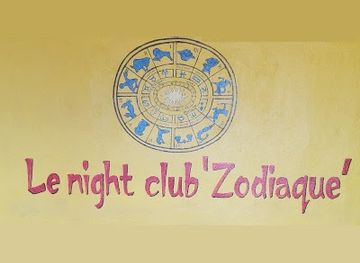
Night club
Zodiaque
Experience the vibrant nightlife of Bangui at Zodiaque, a top night club with electrifying music and an unforgettable atmosphere.
Best shops in Ouham
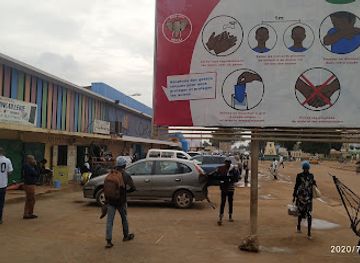
Shopping in Ouham is primarily practical and market-based rather than oriented towards souvenirs or specialist retail. Bossangoa is the main place to find stalls and small shops selling food, household necessities, clothing, tools and locally traded agricultural produce, while rural markets serve more immediate community needs and may operate irregularly. Visitors with an essential reason to travel should not expect established craft boutiques, galleries, department stores or dependable supplies of imported goods. Locally available produce can provide insight into the prefecture's agricultural economy, but purchases should be made with trusted local assistance and appropriate hygiene precautions. Cash in Central African CFA francs is normally necessary, and stock, prices and market access can change with insecurity, harvest conditions, fuel supply and displacement. Avoid photographing traders or market activity without permission and do not treat humanitarian distributions or displaced-person sites as shopping venues.
-
Shopping mall
Bangui Mall
Explore Bangui Mall, the ultimate shopping experience in the heart of Central African Republic, blending local culture with modern retail pleasures.
-
Grocery store
Corail
Explore the authentic flavors of Central Africa at Corail, a vibrant grocery store in Bangui offering local produce and unique culinary delights.
-
 Hotel
HotelHotel Levy's
Discover comfort and culture at Hotel Levy's, the ideal retreat in the heart of Bangui, Central African Republic.
-
Cosmetics and perfumes supplier
Marché Central
Explore the vibrant Marché Central in Bangui for unique cosmetics and perfumes, immersing yourself in local culture and craftsmanship.

Get your free copy of our complete guide to Ouham, delivered straight to you.
Everything on this page, from attractions and restaurants to essentials and local phrases, in one PDF you can read offline, print or share.
Already have an account? Sign in
Your Ouham guide is ready.
We'll send it to · Not you? Sign out

Getting your guide ready…
We are putting together a fresh copy of the Ouham guide. This can take up to a minute.
This can take a few moments. If your browser asks, choose Allow so the download can start. You'll find the guide in your Downloads folder.
Nothing happened? Download it again
Sorry, the guide is taking longer than usual. Please try again in a minute, or get it by email instead.
Ouham essentials
Currency and Payment
Safety
Emergency Situations
Do's and Don'ts
Local Tips
From Eve
Local phrases worth knowing
You don't need to get them perfect. A few words go a long way, and locals appreciate the effort.
Basics
| English | Local | Say it |
|---|---|---|
| Hello | Nde | [Nday] |
| Goodbye | A la prochaine | [A la pro-shen] |
| Yes | O | [Oh] |
| No | Naan | [Naan] |
| Please/You're welcome | S'il vous plaît | [Seel voo pleh] |
| Thank you | Merci | [Mehr-see] |
| Excuse me/Sorry | Pardon | [Par-dohn] |
| How are you? | Comment ça va? | [Koh-moh sah vah] |
| Fine. And you? | Bien. Et vous? | [Byan. Ay voo] |
| Do you speak English? | Parlez-vous anglais? | [Par-lay voo ahn-glay] |
| I don't understand | Je ne comprends pas | [Zhuh nuh kom-prahn pah] |
Eating & Drinking
| English | Local | Say it |
|---|---|---|
| I'd like to see the menu, please | Je voudrais voir le menu, s'il vous plaît | [Zhuh voo-dray vwar luh meh-new, seel voo pleh] |
| I don't eat meat | Je ne mange pas de viande | [Zhuh nuh mahnj pah duh vyahnd] |
| Cheers! | Santé! | [Sahn-tay] |
| I would like to pay, please | Je voudrais payer, s'il vous plaît | [Zhuh voo-dray pay-ay, seel voo pleh] |
Emergencies
| English | Local | Say it |
|---|---|---|
| Help! | Au secours! | [Oh seh-coor] |
| Go away! | Allez-vous en dehors! | [Ah-lay voo ahn deh-or] |
| Call the Police! | Appelez la police! | [Ah-peh-lay lah poh-lees] |
| Call a doctor! | Appelez un médecin! | [Ah-peh-lay uhn may-deh-seen] |
| I'm lost | Je suis perdu | [Zhuh swee pair-doo] |
| I'm ill | Je suis malade | [Zhuh swee mah-lahd] |
Shopping
| English | Local | Say it |
|---|---|---|
| I'd like to buy... | Je voudrais acheter... | [Zhuh voo-dray ah-she-tay] |
| I'm just looking | Je regarde juste | [Zhuh reh-gard zhust] |
| How much is it? | C'est combien? | [Say kom-byen] |
| That's too expensive | C'est trop cher | [Say troh share] |
| Can you lower the price? | Pouvez-vous baisser le prix? | [Poo-vay voo beh-say luh pree] |
Time & Numbers
| English | Local | Say it |
|---|---|---|
| What time is it? | Quelle heure est-il? | [Kel uhr eh-teel] |
| It's one o'clock | Il est une heure | [Eel eh oon uhr] |
| Half past (10) | Dix heures et demie | [Deezer et duh-mee] |
| Morning | Matin | [Mah-tahn] |
| Afternoon | Après-midi | [Ah-pray mee-dee] |
| Evening | Soir | [Swahr] |
| Yesterday | Hier | [Yair] |
| Today | Aujourd'hui | [Oh-zhoor dwee] |
| Tomorrow | Demain | [Duh-mahn] |
| 1 | Un | [Uhn] |
| 2 | Deux | [Duh] |
| 3 | Trois | [Trois] |
| 4 | Quatre | [Kah-truh] |
| 5 | Cinq | [Sank] |
| 6 | Six | [Sees] |
| 7 | Sept | [Set] |
| 8 | Huit | [Wheet] |
| 9 | Neuf | [Nurf] |
| 10 | Dix | [Dee] |
Transport & Directions
| English | Local | Say it |
|---|---|---|
| Where's a/the...? | Où est un/une...? | [Oo eh uhn/oon] |
| What's the address? | Quelle est l'adresse? | [Kel eh luh-dress] |
| Can you show me (on the map)? | Pouvez-vous me montrer (sur la carte)? | [Poo-vay voo muh mon-tray (sur lah kart)] |
| When's the next (bus)? | Quand est le prochain (bus)? | [Kahn eh luh pro-shen (boos)] |
| A ticket (to ....) | Un billet (pour ....) | [Uhn bee-yay (poor ....)] |
History of Ouham
Gbaya communities and precolonial exchange
Before colonial rule, the area now administered as Ouham was inhabited largely by Gbaya communities alongside other groups whose movements and relationships extended across present-day Central African Republic, Cameroon and Chad. Farming, hunting, local craft production and exchange connected villages to wider regional networks. Political authority was generally organised through communities and local leaders rather than a single state covering the modern prefecture. These earlier patterns remain important for understanding the region's languages, settlement geography and cross-border cultural connections.
French conquest and Ubangi-Shari administration
French expansion into the north-west of the present Central African Republic took place during the late nineteenth and early twentieth centuries. The territory became part of French Equatorial Africa and was administered within Ubangi-Shari. Colonial rule introduced new administrative boundaries, military structures, taxation and labour systems, often with limited regard for older local political geography. Mission activity and the growth of administrative centres helped establish institutions that later influenced towns such as Bossangoa.
Cotton and the colonial rural economy
During the colonial period and after independence, cotton became an important commercial crop in parts of the north-west, including Ouham. Production linked rural households to state-backed purchasing systems and transport networks, while food cultivation remained essential to local livelihoods. Cotton's importance varied with prices, weather, insecurity and agricultural policy. The legacy can be seen in the region's dependence on rural roads and seasonal markets, as well as in the economic vulnerability created when conflict or poor infrastructure interrupts farming and trade.
Independence and the Central African Republic
The Central African Republic became independent from France in 1960, and Ouham thereafter formed part of the country's changing provincial and prefectural administration. National political instability, limited public investment and weak transport links affected the prefecture's development. Bossangoa grew as an administrative and commercial centre, but the surrounding countryside remained dependent on agriculture and precarious road connections. Schools, churches and local markets became important institutions in communities where state services were often thinly distributed.
Conflict and displacement in the twenty-first century
Ouham has been repeatedly affected by armed conflict since the early 2000s, including violence involving rebel movements, self-defence groups and other armed actors. Bossangoa and rural areas have experienced insecurity, displacement, disrupted farming and damage to public services. The prefecture has also hosted people displaced from other parts of the country. These events are not merely recent political episodes: they have altered settlement patterns, access to markets and roads, and the practical conditions for travel throughout the region.
Recent political crisis and humanitarian pressures
The national crisis surrounding the 2013 overthrow of President François Bozizé, followed by later armed confrontations and the 2020–21 electoral period, intensified insecurity in several parts of the Central African Republic, including Ouham. Humanitarian organisations have supported displaced and vulnerable communities, but access remains dependent on security conditions and the state of roads. Contemporary Ouham is therefore best understood through both its cultural and agricultural history and the continuing effects of conflict on mobility, services and everyday economic life.
Ouham in Photos
Browse through our photo collection highlighting the charm and character of the destination.
Neighbouring regions of Ouham
The closest regions to Ouham, if you have time for more than one.
-

-

-

-

-


Swipe for more regions
Explore more

Explore more of Central African Republic
Explore the Central African Republic: A land of untamed wilderness, rich culture, and unforgettable adventures in the heart of Africa.
Explore Central African Republic