

Sila, Chad Travel Guide
Explore Sila in Chad: A natural paradise with majestic landscapes, rich wildlife, and vibrant cultural heritage. Discover the hidden beauty of this captivating region.
Sila, located in the eastern part of Chad, is a hidden gem that offers a unique blend of natural beauty and cultural richness. This region is known for its vast landscapes, which include majestic mountains, sprawling savannas, and lush valleys. The natural beauty of Sila is complemented by its diverse wildlife, making it a paradise for nature enthusiasts and adventurers alike. One of the main attractions in Sila is the Zakouma National Park, a protected area that is home to a wide variety of animals, including elephants, lions, and giraffes. The park offers an authentic safari experience, allowing visitors to witness these magnificent creatures in their natural habitat. In addition to its wildlife, Zakouma is also home to numerous bird species, making it a haven for bird watchers. The cultural heritage of Sila is equally captivating. The region is inhabited by various ethnic groups, each with their own unique traditions and customs. Visitors can immerse themselves in the local culture by interacting with the friendly inhabitants, exploring traditional markets, and participating in local festivals. The town of Goz Beida, the capital of Sila, serves as a gateway to the region's cultural and natural attractions, offering a glimpse into the daily lives of the local people. For those seeking adventure, Sila offers numerous outdoor activities such as hiking, trekking, and camping. The region's rugged terrain provides the perfect backdrop for these activities, allowing visitors to explore its scenic beauty up close. Whether you are an adventure seeker, a nature lover, or someone looking to experience a different culture, Sila has something to offer everyone.

Know before you go
Hi, I'm Eve. Here are a few practical things to know before exploring Sila.
- Visit Zakouma National Park early in the morning for the best chance to see wildlife.
- Hire a local guide to explore the region's cultural sites and learn about the traditions of the local ethnic groups.
- Pack light and breathable clothing, as the climate in Sila can be quite hot and dry.
- Bring binoculars for bird watching in Zakouma National Park.
- Stay hydrated and carry plenty of water, especially when engaging in outdoor activities.
Explore Sila: Things to Do, Places to Eat, Hotels & More
Handpicked recommendations for top attractions, local dining, accommodations, and more

Top Attractions & Sightseeing in Sila


Best landmarks in Sila
Top-rated picks
Best Landmarks

N'Djamena Grand Mosque
Discover the N'Djamena Grand Mosque, a striking architectural gem and spiritual center in Chad's capital, offering a glimpse into local culture and tradition.

National Museum of Chad
Discover the captivating history and culture of Chad at the National Museum, a must-visit destination for every traveler.

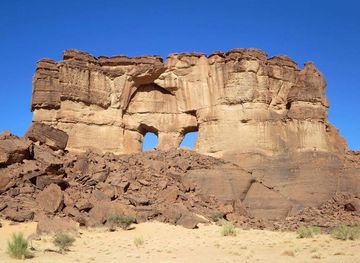
Aloba Arch
Explore the breathtaking Aloba Arch in Chad, a colossal sandstone marvel set against the stunning Sahara Desert, perfect for adventure seekers and nature lovers.

Zakouma National Park
Discover Zakouma National Park: A remarkable African conservation story with thriving wildlife and stunning landscapes.

Best restaurants in Sila
Top-rated picks
Best Restaurants

Layalina
Discover the rich flavors of Chad at Layalina – a must-visit restaurant in N'Djamena offering authentic cuisine and warm hospitality.

Perception Pub-Restaurant
Experience the vibrant atmosphere and delicious flavors at Perception Pub-Restaurant in N'Djamena – where every meal is a celebration.

Au Bout Des Doigts
Discover the flavors of Chad at Au Bout Des Doigts - an unforgettable dining experience in N'Djamena with local dishes and warm hospitality.

Le Central Bar Restaurant Hôtel Pizzeria
Savor local and international cuisine at Le Central Bar Restaurant Hôtel Pizzeria in N'Djamena - where comfort meets culinary excellence.

Best bars in Sila
Top-rated picks
Best Bars

Layalina
Discover Layalina, where the flavors of Chad come alive in a cozy setting, perfect for a memorable dining experience in N'Djamena.

Perception Pub-Restaurant
Experience the vibrant atmosphere and delicious cuisine at Perception Pub-Restaurant in N'Djamena, where local flavors meet lively social scenes.

Le Central Bar Restaurant Hôtel Pizzeria
Discover the flavors of Chad at Le Central Bar Restaurant Hôtel Pizzeria in N'Djamena, where hospitality meets culinary excellence.

La CAVE
Experience the finest pizza and a warm atmosphere at La CAVE in N'Djamena, the perfect spot for food lovers and social gatherings.

Best nightclubs in Sila
Top-rated picks
Best Nightclubs

Platinium bling bling
Discover N'Djamena's nightlife at Platinium Bling Bling – a lively night club with great music, drinks, and a vibrant atmosphere.

Le QG
Experience the vibrant nightlife at Le QG, N'Djamena's premier recreation center, where music, drinks, and fun come together under one roof.

Le VIP
Experience the pulse of N'Djamena's vibrant nightlife at Le VIP, the go-to disco club for music, dancing, and unforgettable memories.

Best shops in Sila
Top-rated picks
Best Shops
Hôtel Irrisor
Experience N'Djamena's hospitality at Hôtel Irrisor, your comfortable retreat in Chad's vibrant capital with modern amenities and local charm.

Chadian Handicraft and Art Marketplace
Immerse yourself in the vibrant culture of Chad at the Chadian Handicraft and Art Marketplace, where each artisan's creation tells a unique story.
Kalsoum Shop
Discover the vibrant culture of Chad at Kalsoum Shop, N'Djamena's premier clothing store offering unique traditional and modern attire.
LANADA Shop
Discover shopping bliss at LANADA Shop in N'Djamena, where local charm meets modern retail for an unforgettable experience.

Explore Sila on the Map
A handpicked selection of must-see spots in Sila, mapped for you.
Sila Essentials
-
Sila is located in the eastern part of Chad. The nearest major airport is N'Djamena International Airport in the capital city, N'Djamena. From N'Djamena, you can take a domestic flight to Abéché Airport, which is the closest airport to Sila. From Abéché, Sila can be reached by road via hired taxis or buses. The journey by road usually takes several hours depending on the condition of the roads.
-
Transportation within Sila primarily consists of minibuses, taxis, and motorbike taxis (known locally as 'boda-bodas'). Renting a 4x4 vehicle is also an option for those who prefer more control over their travel itinerary. Be prepared for unpaved roads and varying road conditions, especially during the rainy season.
-
The official currency in Chad is the Central African CFA franc (XAF). Credit cards are not widely accepted in Sila, so it is advisable to carry enough cash for your expenses. ATMs are scarce and may not always be operational, so it is recommended to withdraw sufficient cash in N'Djamena before traveling to Sila.
-
Sila is generally safe for tourists, but it is advisable to take standard precautions. Avoid traveling alone at night and keep your belongings secure in crowded places. There have been occasional reports of banditry on remote roads, so it is best to travel with a local guide or in a group when exploring rural areas. Always stay informed about the current security situation and follow local advice.
-
In case of an emergency, dial 17 for police assistance and 18 for medical emergencies. The local police station and medical facilities are available in the major towns of Sila, but they may be limited in remote areas. It is highly recommended to have travel insurance that covers medical emergencies and evacuation. For minor health issues, there are pharmacies in the larger towns where you can purchase basic medications.
-
Fashion: Do dress modestly, especially in rural areas and when visiting religious sites. Avoid wearing revealing clothing. Religion: Do respect local customs and traditions, particularly Islamic practices. Always ask for permission before photographing people or religious sites. Public Transport: Do be courteous and respectful to other passengers. Don't eat or drink on public transport. Greetings: Do greet people with a handshake. A slight nod of the head is also a sign of respect. Eating & Drinking: Do try local dishes and accept food offerings graciously. Don’t refuse hospitality, as it is considered impolite.
-
To experience Sila like a local, visit the local markets where you can buy fresh produce and traditional Chadian goods. Engage with the local community, as they are often friendly and eager to share stories about their culture and history. Don’t miss visiting the Goz Beïda National Park, which offers opportunities for wildlife viewing and experiencing the natural beauty of the region. Participate in local festivals and events to get a deeper understanding of the local culture.
When is the best time to visit Sila?
Useful Local Phrases for Sila
You don't need to speak the language perfectly. Even learning a few simple words can make conversations warmer—and locals usually appreciate the effort.
— Eve

Here are the phrases I use most often in Sila. Try a few—you'll be surprised how far they go! 😊
❤️
-
- HelloNǐ
[nee] - GoodbyeZàijiàn
[zai-jyan] - YesShì
[shir] - NoBù
[boo] - Please/You're welcomeQǐng
[ching] - Thank youXièxiè
[shyeh-shyeh] - Excuse me/SorryDuìbùqǐ
[dway-boo-chee] - How are you?Nǐ hǎo ma?
[nee how mah] - Fine. And you?Hěn hǎo. Nǐ ne?
[hen how. nee nuh] - Do you speak English?Nǐ huì shuō yīngyǔ ma?
[nee hway shwo ying-yoo mah] - I don't understandWǒ bù dǒng
[wo boo dong]
- HelloNǐ
-
- I'd like to see the menu, pleaseWǒ xiǎng kàn cài dān, qǐng
[wo syang kan tsai dan, ching] - I don't eat meatWǒ bù chī ròu
[wo boo chir row] - Cheers!Gānbēi!
[gan-bay] - I would like to pay, pleaseWǒ xiǎng fù qián, qǐng
[wo syang foo chyan, ching]
- I'd like to see the menu, pleaseWǒ xiǎng kàn cài dān, qǐng
-
- Help!Bāngzhù!
[bang-joo] - Go away!Qù zhè lǐ!
[choo zher lee] - Call the Police!Dǎ diànhuà gào sù jǐngchá!
[da dyen-hwa gow-soo jing-cha] - Call a doctor!Dǎ diànhuà gào sù yīshēng!
[da dyen-hwa gow-soo ee-shung] - I'm lostWǒ mílùle
[wo mee-loo-luh] - I'm illWǒ shēntǐ bù hǎo
[wo shen-tee boo how]
- Help!Bāngzhù!
-
- I'd like to buy...Wǒ xiǎng mǎi...
[wo syang my...] - I'm just lookingWǒ zhǐ shì zài kàn
[wo zhir shir zai kan] - How much is it?Zhège duōshǎo qián?
[juh-guh dwo-shaow chyan] - That's too expensiveTài guìle
[tie gway-luh] - Can you lower the price?Nǐ néng jiàng jià ma?
[nee neng jiang jya mah]
- I'd like to buy...Wǒ xiǎng mǎi...
-
- What time is it?Xiànzài jǐ diǎn?
[syen-zai jee dyen] - It's one o'clockYī diǎn
[ee dyen] - Half past (10)Shí diǎn bàn
[shir dyen ban] - MorningZǎoshang
[zaow-shang] - AfternoonXiàwǔ
[shya-woo] - EveningWǎnshang
[wan-shang] - YesterdayZuótiān
[dzwo-tyen] - TodayJīntiān
[jeen-tyen] - TomorrowMíngtiān
[ming-tyen] - 1Yī
[ee] - 2Èr
[ar] - 3Sān
[sahn] - 4Sì
[suh] - 5Wǔ
[woo] - 6Liù
[lyo] - 7Qī
[chee] - 8Bā
[bah] - 9Jiǔ
[jyo] - 10Shí
[shir]
- What time is it?Xiànzài jǐ diǎn?
-
- Where's a/the...?Nǎlǐ yǒu...?
[nah-lee yo...?] - What's the address?Dìzhǐ shì shénme?
[dee-zhr shih shen-ma] - Can you show me (on the map)?Nǐ néng gěi wǒ zhǎnshì (zài dìtú shàng)?
[nee neng gay wo zhan-shi (zai dee-too shang)?] - When's the next (bus)?Xià yī liàng (gōngjiāo chē) shì shénme shíhòu?
[shyah ee lyang (gong-jyao che) shih shen-mo shir-ho] - A ticket (to ....)Yī zhāng piào (dào....)
[ee zhang pyao (dao....)]
- Where's a/the...?Nǎlǐ yǒu...?
History of Sila
-
The region of Sila in Chad has been inhabited since ancient times, with archaeological evidence suggesting early human settlements dating back to the Neolithic era. These early inhabitants were primarily hunter-gatherers who later adopted agricultural practices. The area's strategic location facilitated the rise of several ancient kingdoms, including the Sao civilization, which is believed to have thrived between the 6th and 16th centuries. The Sao people were known for their advanced metallurgy, pottery, and impressive city structures.
-
In the 11th century, the Kanem-Bornu Empire, a powerful Islamic state, began to extend its influence into the region of Sila. The spread of Islam brought significant cultural and social changes, including the introduction of Arabic writing and Islamic education. The Kanem-Bornu Empire played a crucial role in the trans-Saharan trade routes, connecting Sila to North Africa and the Mediterranean world. This period saw the flourishing of trade in gold, slaves, and salt.
-
In the late 19th century, Sila, along with the rest of Chad, became a target of European colonial ambitions. By 1900, French forces had established control over the region, marking the beginning of the colonial era. Under French administration, Sila experienced significant changes, including the introduction of new administrative structures, infrastructure development, and the imposition of taxes. The colonial period also saw resistance from local populations, who sought to preserve their autonomy and cultural identity.
-
Chad gained independence from France on August 11, 1960. The post-colonial era in Sila, as in much of Chad, was marked by political instability, ethnic tensions, and economic challenges. The region experienced intermittent conflicts, including the Chadian Civil War, which had a profound impact on local communities. Despite these challenges, the people of Sila have demonstrated resilience and a strong sense of community, working towards peace and development.
-
Sila is a region rich in cultural heritage, with diverse ethnic groups such as the Maba, Dadjo, and Kibet, each contributing to the area's vibrant cultural tapestry. Traditional music, dance, and oral storytelling are integral parts of the local culture, passed down through generations. The region is also known for its unique crafts, including pottery, weaving, and leatherwork. Festivals and ceremonies, often linked to agricultural cycles and religious practices, play a significant role in community life.
-
In recent years, Sila has seen efforts to improve infrastructure and promote tourism. The region's natural beauty, including its diverse landscapes and wildlife, offers significant potential for eco-tourism. Historical sites, such as ancient settlements and colonial-era buildings, attract history enthusiasts. Local initiatives focus on preserving cultural heritage while fostering sustainable development, aiming to boost the economy and improve the quality of life for residents.
Neighbouring Regions of Sila
The closest regions to Sila, if you have time for more than one.



Your all‑in‑one travel companion app
Explore expert travel guides, compare and book tours, experiences, hotels, and more—all from the palm of your hand. Download now for seamless trip planning wherever your wanderlust takes you.


Explore More of Chad

Looking beyond Sila? Discover Chad for broader travel guides, local hot-spots, and regional highlights.
Explore ChadSila in Photos
Browse through our photo collection highlighting the charm and character of the destination.


Sila: The Heartbeat of Chad's Natural Beauty
Sila, located in the eastern part of Chad, is a hidden gem that offers a unique blend of natural beauty and cultural richness. This region is known for its vast landscapes, which include majestic mountains, sprawling savannas, and lush valleys. The natural beauty of Sila is complemented by its diverse wildlife, making it a paradise for nature enthusiasts and adventurers alike. One of the main attractions in Sila is the Zakouma National Park, a protected area that is home to a wide variety of animals, including elephants, lions, and giraffes. The park offers an authentic safari experience, allowing visitors to witness these magnificent creatures in their natural habitat. In addition to its wildlife, Zakouma is also home to numerous bird species, making it a haven for bird watchers. The cultural heritage of Sila is equally captivating. The region is inhabited by various ethnic groups, each with their own unique traditions and customs. Visitors can immerse themselves in the local culture by interacting with the friendly inhabitants, exploring traditional markets, and participating in local festivals. The town of Goz Beida, the capital of Sila, serves as a gateway to the region's cultural and natural attractions, offering a glimpse into the daily lives of the local people. For those seeking adventure, Sila offers numerous outdoor activities such as hiking, trekking, and camping. The region's rugged terrain provides the perfect backdrop for these activities, allowing visitors to explore its scenic beauty up close. Whether you are an adventure seeker, a nature lover, or someone looking to experience a different culture, Sila has something to offer everyone.