

Free Easter Island Travel Guide & Mobile App
Explore Easter Island with free travel guides. Discover regional history, expert tips, proposed trips, and audio guides on web or mobile app.


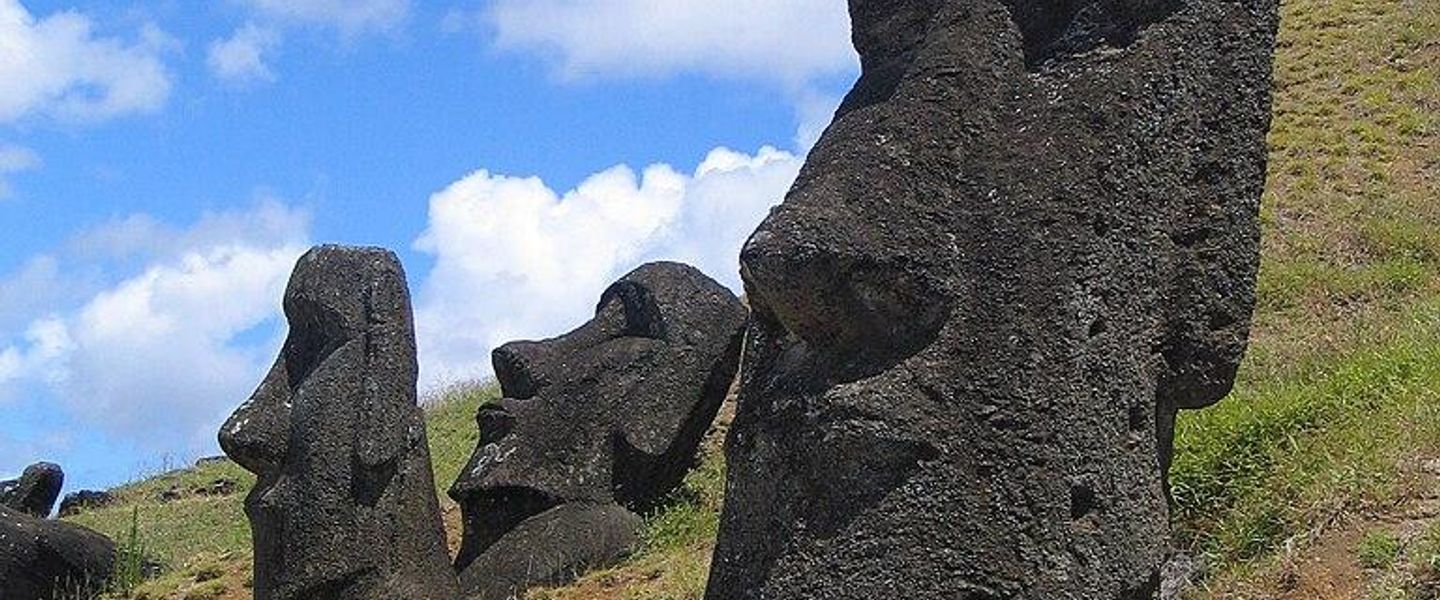


Explore Easter Island in Chile for moai, volcanic landscapes, Polynesian culture, archaeological sites and the wide Pacific horizons of Rapa Nui.
Read more about Easter Island
When is the best time to visit Easter Island?
Best: January, April, November · 25–27°C| Month | High (°C) | Rainfall (mm) |
|---|---|---|
| January (best) | 27 | 70 |
| February | 28 | 70 |
| March | 27 | 80 |
| April (best) | 25 | 90 |
| May | 24 | 100 |
| June | 23 | 110 |
| July | 22 | 110 |
| August | 23 | 110 |
| September | 23 | 100 |
| October | 24 | 90 |
| November (best) | 25 | 80 |
| December | 27 | 70 |
Getting to and around Easter Island
How to get there
Transportation
Best landmarks in Easter Island
The most recognisable landmark on Easter Island is the line of fifteen restored moai at Ahu Tongariki, whose scale and setting beside the Pacific make it a defining image of Rapa Nui. Rano Raraku is equally significant: its slopes and quarry faces contain unfinished and partly buried statues, making the volcanic landscape itself an essential historical monument. Rano Kau forms a vast crater at the island's south-western tip, with a lake-filled interior and steep cliffs leading towards Orongo, the ceremonial village associated with the birdman tradition. Near Hanga Roa, the restored Ahu Tahai complex offers several distinct ahu and one of the island's most accessible views of moai at sunset. Anakena's Ahu Nau Nau stands near a sandy beach and preserves carved figures with notable details on their backs. The island's three major volcanic massifs—Terevaka, Poike and Rano Kau—are geographical landmarks as well as foundations of its archaeological story. Together these places show that Rapa Nui's identity is formed by the relationship between stone monuments, volcanic terrain and an oceanic horizon.
-
Tourist attraction
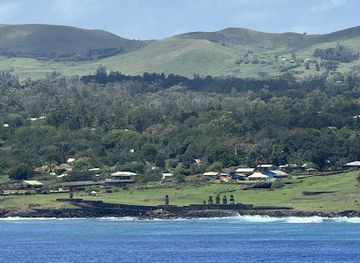
Easter Island Moai statue
Discover the ancient secrets of Easter Island through its iconic Moai statues, set against stunning landscapes and rich Polynesian culture.
Explore Easter Island on the map
Plan your trip on one map. See where the top cities, national parks and sights are, and book hotels and experiences in a few clicks.
Best hotels in Easter Island
Best restaurants in Easter Island
Dining on Easter Island reflects both Rapa Nui traditions and the practical realities of an isolated Chilean island. Hanga Roa has the widest choice, from informal cafés and family-run eateries to restaurants serving contemporary interpretations of local ingredients. Fish and seafood are prominent, with tuna and other Pacific catches commonly appearing alongside Chilean staples such as empanadas, rice and salads. Sweet potatoes, taro, bananas and seasonal tropical produce connect island cooking to wider Polynesian foodways, while umu, an earth-oven cooking tradition, may feature at cultural events or specially arranged meals rather than on every daily menu. Chilean wine, beer and pisco are widely available, and fresh fruit is useful for excursions. Prices and supply can vary because many ingredients travel long distances to reach the island. Markets and small shops in Hanga Roa are practical for provisions, but visitors should not expect the range or late opening patterns of a mainland city. Booking ahead is sensible for popular restaurants and cultural dinners, particularly during busy periods.
-
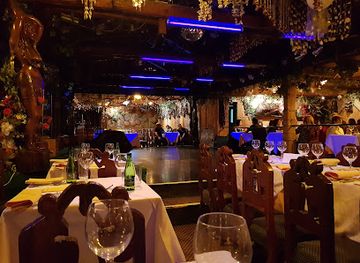
Polynesian restaurant
Bali Hai Chile
Discover the vibrant flavors of Polynesia at Bali Hai Chile in Santiago's Las Condes - a culinary paradise awaits!
Best bars in Easter Island
Evening life is concentrated in Hanga Roa and is relatively small-scale. Visitors will find bars attached to restaurants, casual places serving Chilean beer and pisco, and venues where music or dance forms part of a cultural programme. Some evenings may include live performances drawing on Rapa Nui song and dance, though schedules are seasonal and should be checked locally rather than assumed. Nightclubs do exist in a limited form, but Easter Island is not a destination for a large, late-night club circuit. Rural areas become quiet after dark, and driving outside Hanga Roa requires particular care because roads may be poorly lit and animals can be present. A relaxed dinner, conversation and an organised cultural performance usually represent the island's evening character better than bar-hopping. During Tapati Rapa Nui, public celebrations can create a busier atmosphere, but the programme and venues vary from year to year.
-
Hypermarket
Carrefour
Discover the vibrant shopping experience at Carrefour in Belo Horizonte, where local flavors meet global selections in a welcoming hypermarket setting.
-
Home goods store
Easy Quilicura
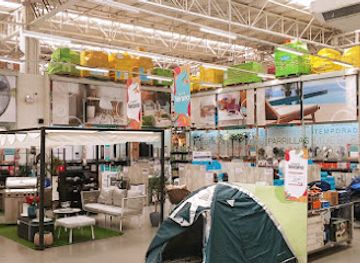
Explore Easy Quilicura for stylish home goods, unique furniture, and local decor treasures in the heart of Santiago Metropolitan Region.
-
Home goods store
Sodimac Homecenter Talca
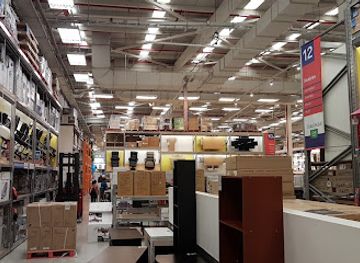
Explore Sodimac Homecenter Talca: Your one-stop destination for home goods, DIY supplies, and local treasures in the heart of Talca.
-
Home goods store
Easy La Serena
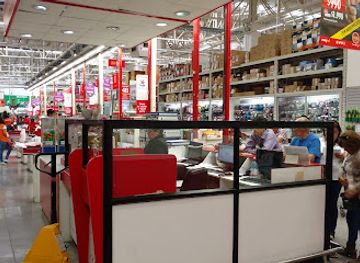
Shop at Easy La Serena for quality home goods, stylish furniture, and unique decor to enhance your living spaces in beautiful La Serena.
Best nightclubs in Easter Island
Evening life is concentrated in Hanga Roa and is relatively small-scale. Visitors will find bars attached to restaurants, casual places serving Chilean beer and pisco, and venues where music or dance forms part of a cultural programme. Some evenings may include live performances drawing on Rapa Nui song and dance, though schedules are seasonal and should be checked locally rather than assumed. Nightclubs do exist in a limited form, but Easter Island is not a destination for a large, late-night club circuit. Rural areas become quiet after dark, and driving outside Hanga Roa requires particular care because roads may be poorly lit and animals can be present. A relaxed dinner, conversation and an organised cultural performance usually represent the island's evening character better than bar-hopping. During Tapati Rapa Nui, public celebrations can create a busier atmosphere, but the programme and venues vary from year to year.
-
Disco club
Club Amanda
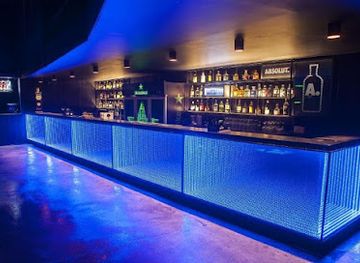
Discover the heart of Santiago's nightlife at Club Amanda, a vibrant disco club offering exceptional cocktails, lively music, and an unforgettable atmosphere.
Best shops in Easter Island
Shopping on Easter Island is centred on Hanga Roa, where small galleries, craft workshops, market stalls and general shops offer a more local experience than a conventional retail district. Rapa Nui-inspired wood carvings, stone work, jewellery, textiles, paintings and designs referring to moai or other island symbols are common, but visitors should ask about materials, provenance and whether an item can be legally exported. Handmade work by local artists makes a more meaningful purchase than mass-produced souvenirs, while quality and prices vary considerably. Food shops stock Chilean and imported provisions, and local produce may appear in modest markets or community sales rather than in a large permanent market hall. Useful purchases include snacks, water, sun protection and practical outdoor supplies before travelling to remote sites. Credit cards may not work everywhere, so Chilean pesos remain useful for small transactions. Avoid buying archaeological objects, old-looking stones or anything presented as removed from a ceremonial site; protected heritage must remain on the island.
-
Shopping mall
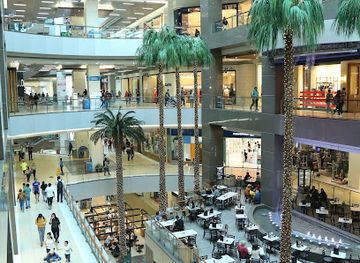
Cenco Costanera
Explore Cenco Costanera, Santiago's premier shopping mall blending fashion, cuisine, and culture in one vibrant destination.
-
Shopping mall
Parque Arauco
Explore Parque Arauco, Santiago's premier shopping hub offering a unique blend of fashion, culinary delights, and family-friendly entertainment.
-
Shopping mall
Mallplaza Oeste
Discover the ultimate shopping experience at Mallplaza Oeste, where a world of stores, dining, and entertainment awaits you in Santiago.
-
Market
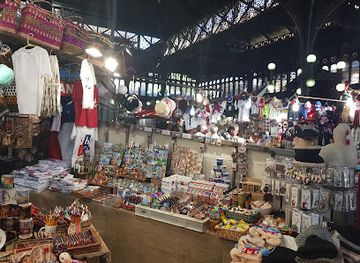
Central Market of Santiago
Experience the vibrant culture and delicious flavors at the Central Market of Santiago, a bustling hub for food lovers and culture enthusiasts alike.

Get your free copy of our complete guide to Easter Island, delivered straight to you.
Everything on this page, from attractions and restaurants to essentials and local phrases, in one PDF you can read offline, print or share.
Already have an account? Sign in
Your Easter Island guide is ready.
We'll send it to · Not you? Sign out

Getting your guide ready…
We are putting together a fresh copy of the Easter Island guide. This can take up to a minute.
This can take a few moments. If your browser asks, choose Allow so the download can start. You'll find the guide in your Downloads folder.
Nothing happened? Download it again
Sorry, the guide is taking longer than usual. Please try again in a minute, or get it by email instead.
Easter Island essentials
Currency and Payment
Safety
Emergency Situations
Do's and Don'ts
Local Tips
From Eve
Local phrases worth knowing
You don't need to get them perfect. A few words go a long way, and locals appreciate the effort.
Basics
| English | Local | Say it |
|---|---|---|
| Hello | Iorana | [ee-oh-rah-nah] |
| Goodbye | Nuku | [noo-koo] |
| Yes | Aia | [ah-ee-ah] |
| No | Ika | [ee-kah] |
| Please/You're welcome | Tōhā | [toh-hah] |
| Thank you | Māuruuru | [mah-oo-roo-roo] |
| Excuse me/Sorry | Aroha mai | [ah-roh-hah my] |
| How are you? | Pehe koe? | [peh-heh koh-eh] |
| Fine. And you? | Maika. E koe? | [my-kah. eh koh-eh] |
| Do you speak English? | E mea to koe i te reo Ingari? | [eh meh-ah toh koh-eh ee teh reh-oh in-gah-ree] |
| I don't understand | Aroha a’u | [ah-roh-hah ah-oo] |
Eating & Drinking
| English | Local | Say it |
|---|---|---|
| I'd like to see the menu, please | E ai a’u e kite i te menū, tōhā | [eh ai ah-oo eh kee-teh ee teh meh-noo, toh-hah] |
| I don't eat meat | Aroha a’u i te mīka | [ah-roh-hah ah-oo ee teh mee-kah] |
| Cheers! | Iorana! | [ee-oh-rah-nah] |
| I would like to pay, please | E ai a’u e utu, tōhā | [eh ai ah-oo eh oo-too, toh-hah] |
Emergencies
| English | Local | Say it |
|---|---|---|
| Help! | Aroha! | [ah-roh-hah] |
| Go away! | Haere atu! | [hai-reh ah-too] |
| Call the Police! | Tūhā i te Pōlū! | [too-hah ee teh poh-loo] |
| Call a doctor! | Tūhā i te tāngata rongoā! | [too-hah ee teh tah-ngah-tah roh-ngoh-ah] |
| I'm lost | E ngaro au | [eh nah-roh ow] |
| I'm ill | E ma’i au | [eh mah-ee ow] |
Shopping
| English | Local | Say it |
|---|---|---|
| I'd like to buy... | E ai a’u e hoko i... | [eh ai ah-oo eh ho-koh ee...] |
| I'm just looking | E nāna ana au | [eh nah-nah ah-nah ow] |
| How much is it? | E hia te utu? | [eh hee-ah teh oo-too] |
| That's too expensive | He nui te utu | [he noo-ee teh oo-too] |
| Can you lower the price? | E taea e koe te hāurangi i te utu? | [eh tah-eh eh koh-eh teh hah-oo-rah-nee ee teh oo-too] |
Time & Numbers
| English | Local | Say it |
|---|---|---|
| What time is it? | He aha te taime? | [he ah-hah teh tie-meh] |
| It's one o'clock | E tahi te taime | [eh tah-hee teh tie-meh] |
| Half past (10) | Hāngai (10) | [hah-ngai (ten)] |
| Morning | Aroha | [ah-roh-hah] |
| Afternoon | Tāna | [tah-nah] |
| Evening | Pō | [poh] |
| Yesterday | Inanahi | [ee-nah-nah-hee] |
| Today | I tēnei | [ee tay-neh] |
| Tomorrow | I tōmuri | [ee toh-moo-ree] |
| 1 | Tahi | [tah-hee] |
| 2 | Rua | [roo-ah] |
| 3 | Toru | [toh-roo] |
| 4 | Whā | [fah] |
| 5 | Rima | [ree-mah] |
| 6 | Ono | [oh-noh] |
| 7 | Whitu | [fee-too] |
| 8 | Waru | [wah-roo] |
| 9 | Ika | [ee-kah] |
| 10 | Tahi tekau | [tah-hee teh-kah-oo] |
Transport & Directions
| English | Local | Say it |
|---|---|---|
| Where's a/the...? | E hea te...? | [eh heh-ah teh...?] |
| What's the address? | He aha te wāhitau? | [he ah-hah teh wah-hee-tau] |
| Can you show me (on the map)? | E taea e koe e whakaatu mai (i te mapi)? | [eh tah-eh eh koh-eh eh fah-kah-ah-too my (ee teh mah-pee)?] |
| When's the next (bus)? | E pēhea te (pahi) e haere mai? | [eh peh-heh-ah teh (pah-hee) eh hai-reh my?] |
| A ticket (to ....) | He ti kete (ki ....) | [he tee keh-teh (kee ....)] |
History of Easter Island
Polynesian Settlement and Early Rapa Nui Society
Rapa Nui was settled by Polynesian voyagers, probably during the first millennium CE, who developed a society adapted to an isolated and challenging environment. Communities cultivated crops, managed scarce freshwater and built kin-based ceremonial traditions centred on ancestors and chiefly authority. Oral histories preserve important accounts of origins and migration, although archaeological scholarship continues to refine the chronology. Early settlement established the cultural foundations from which the island's monumental architecture and distinctive identity later developed.
The Ahu and Moai Tradition
Between approximately the thirteenth and seventeenth centuries, Rapa Nui communities carved and transported hundreds of moai, generally placing them on ahu along the coast with their faces directed inland towards settlements. The figures represented deified ancestors or powerful chiefly lineages rather than gods in a simple European sense. Their construction required sophisticated knowledge of stone, hauling, balance and communal organisation. Sites such as Tahai, Anakena and Ahu Tongariki preserve different stages and expressions of this ceremonial tradition.
Rano Raraku and the Monumental Landscape
The volcanic tuff quarry at Rano Raraku became the principal production centre for the island's moai. Statues in different stages of completion remain in and around the quarry, offering rare evidence of carving methods and the changing ambitions of Rapa Nui monument builders. The concentration of unfinished figures has encouraged many interpretations, but it should not be reduced to a single story of sudden collapse. The quarry forms part of a wider cultural landscape in which resources, ritual authority and community labour were closely connected.
European Contact and Eighteenth-Century Change
Dutch navigator Jacob Roggeveen recorded European contact on Easter Day in 1722, giving the island its widely used English name. Subsequent visits by European expeditions introduced new diseases, violence and disruptive forms of exchange, while outsiders often misunderstood or sensationalised Rapa Nui society. These encounters took place within an already changing island community and should not be treated as the sole explanation for every later development. Contact nevertheless began a period of profound demographic, political and cultural pressure.
Nineteenth-Century Raids, Missions and Depopulation
During the nineteenth century, slave-raiding expeditions, disease and forced removals severely reduced the Rapa Nui population. Christian missionaries arrived in the 1860s and contributed to religious and social transformation, while traditional authority structures were weakened. Much cultural knowledge survived through families, language and practice despite the demographic crisis. The period also saw the loss, displacement or reinterpretation of material heritage, leaving a complicated legacy that remains important to contemporary discussions of Rapa Nui identity and cultural ownership.
Land Concessions and the Chilean Annexation
Chile annexed Easter Island in 1888 through an agreement associated with Rapa Nui leaders and the Chilean state, although later relations were marked by unequal power and contested interpretations of land and sovereignty. Much of the island was subsequently controlled as a large sheep-ranching concession, while Rapa Nui people were restricted to an area around Hanga Roa for long periods. These policies shaped modern land claims, political activism and demands for greater control over heritage and local administration.
From Ranching Colony to Cultural and Heritage Destination
Twentieth-century developments gradually connected Rapa Nui more closely to mainland Chile, particularly through regular air travel and state administration. Archaeological research, conservation work and the restoration of major ahu helped bring international attention to the island, while Rapa Nui communities increasingly asserted their role as guardians and interpreters of their heritage. Today the island combines Chilean citizenship and institutions with a strong Polynesian identity, and tourism is both an important source of income and a subject of careful environmental and cultural debate.
Easter Island in Photos
Browse through our photo collection highlighting the charm and character of the destination.
Neighbouring regions of Easter Island
The closest regions to Easter Island, if you have time for more than one.
-

-

-

-

-


Swipe for more regions
Explore more

Explore more of Chile
Discover Chile: From the Atacama Desert to Patagonia's Glaciers, Experience Diverse Landscapes, Rich Culture, and World-Class Wine in This South American Gem.
Explore Chile